Brand Name

Baraclude

Generic Name
Entecavir
View Brand Information
FDA approval date: March 29, 2005
Classification: Hepatitis B Virus Nucleoside Analog Reverse Transcriptase Inhibitor
Form: Tablet, Solution

What is Baraclude (Entecavir)?

Entecavir tablets are indicated for the treatment of chronic hepatitis B virus infection in adults and pediatric patients 2 years of age and older with evidence of active viral replication and either evidence of persistent elevations in serum aminotransferases or histologically active disease. Entecavir is a hepatitis B virus nucleoside analogue reverse transcriptase inhibitor indicated for the treatment of chronic hepatitis B virus infection in adults and children at least 2 years of age with evidence of active viral replication and either evidence of persistent elevations in serum aminotransferases or histologically active disease.

Approved To Treat

Save this treatment for later
Sign Up
Not sure about your diagnosis?
Check Your Symptoms
Tired of the same old research?
Check Latest Advances

Related Clinical Trials

Long-term Outcomes of Anti-viral Therapies in Patients With Chronic Viral Hepatitis B: A Multicenter, Real-world Study

Summary: The goal of this observational, multicenter , real-world study is to evaluate the long-term outcomes of different antiviral therapies in adults with chronic hepatitis B (CHB). The main questions it aims to answer are: What is the 5-year incidence of hepatocellular carcinoma (HCC) under various treatment regimens? How do rates of HBsAg seroclearance, decompensated cirrhosis, liver fibrosis progress...

Observation Study on Reducing the Risk of Liver Cancer Associated With Hepatitis B (Zhiyuan) Project.

Summary: This study is a multicenter, prospective, observational real-world study designed to investigate and analyze the current treatment patterns of chronic hepatitis B (CHB) across 200 hospitals in China. By comparing patient outcomes under different therapeutic regimens, it aims to provide high-quality evidence-based medical data to optimize CHB treatment strategies and follow-up protocols, ultimately...

Real-world Study Evaluating the Long-term Outcomes of Pegylated Interferon α-2b Treatment in the Families With Clusters of HBV Infection and Unfavorable Prognosis - A Prospective, Controlled, Multicenter, Cohort Study

Summary: Chronic hepatitis B can develop into cirrhosis and liver cancer, which seriously endangers the life and health of people. In China, HBV is mainly transmitted from mother to child, showing the phenomenon of family clusters. Similarly, cirrhosis and hepatocellular carcinoma occur in familial clusters. Familial clusters of HBV infection with unfavorable prognoses refers to HBV-infected patients from ...

Brand Information

BARACLUDE (entecavir)
WARNING: SEVERE ACUTE EXACERBATIONS OF HEPATITIS B, PATIENTS CO-INFECTED WITH HIV AND HBV, and LACTIC ACIDOSIS AND HEPATOMEGALY
Severe acute exacerbations of hepatitis B have been reported in patients who have discontinued anti-hepatitis B therapy, including entecavir. Hepatic function should be monitored closely with both clinical and laboratory follow-up for at least several months in patients who discontinue anti-hepatitis B therapy. If appropriate, initiation of anti-hepatitis B therapy may be warranted
Limited clinical experience suggests there is a potential for the development of resistance to HIV (human immunodeficiency virus) nucleoside reverse transcriptase inhibitors if BARACLUDE is used to treat chronic hepatitis B virus (HBV) infection in patients with HIV infection that is not being treated. Therapy with BARACLUDE is not recommended for HIV/HBV co-infected patients who are not also receiving highly active antiretroviral therapy (HAART)
Lactic acidosis and severe hepatomegaly with steatosis, including fatal cases, have been reported with the use of nucleoside analogue inhibitors alone or in combination with antiretrovirals
1INDICATIONS AND USAGE
BARACLUDE
2DOSAGE FORMS AND STRENGTHS
  • BARACLUDE 0.5 mg film-coated tablets are white to off-white, triangular-shaped, and debossed with “BMS” on one side and “1611” on the other side.
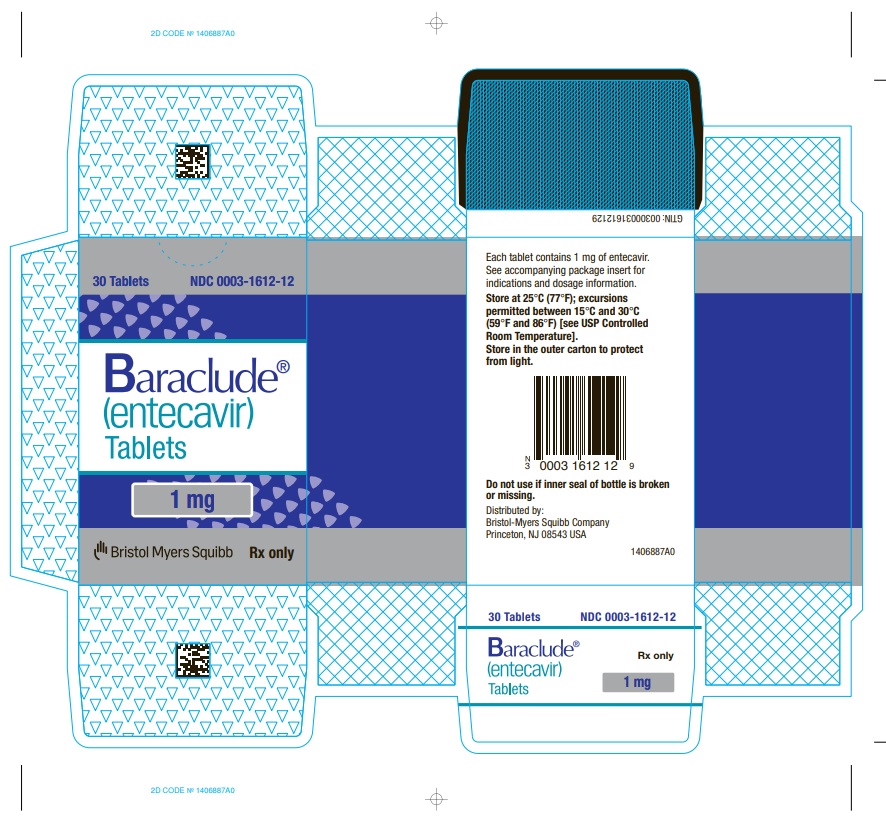
  • BARACLUDE 1 mg film-coated tablets are pink, triangular-shaped, and debossed with “BMS” on one side and “1612” on the other side.
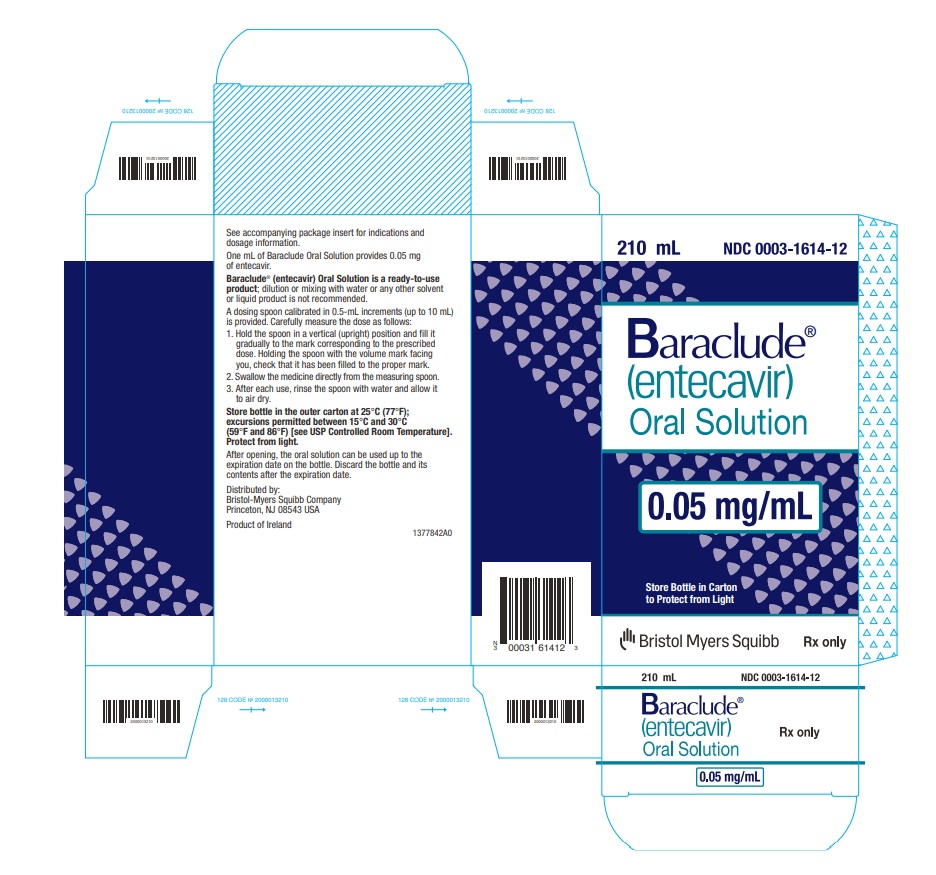
  • BARACLUDE oral solution, 0.05 mg/mL, is a ready-to-use, orange-flavored, clear, colorless to pale yellow, aqueous solution. Ten milliliters of the oral solution provides a 0.5 mg dose and 20 mL provides a 1 mg dose of entecavir.
3CONTRAINDICATIONS
None.
4ADVERSE REACTIONS
The following adverse reactions are discussed in other sections of the labeling:
  • Exacerbations of hepatitis after discontinuation of treatment
  • Lactic acidosis and severe hepatomegaly with steatosis
4.1Clinical Trial Experience
Because clinical trials are conducted under widely varying conditions, adverse reaction rates observed in the clinical trials of a drug cannot be directly compared to rates in the clinical trials of another drug and may not reflect the rates observed in practice.
Clinical Trial Experience in Adults
Compensated Liver Disease
Assessment of adverse reactions is based on four studies (AI463014, AI463022, AI463026, and AI463027) in which 1720 subjects with chronic hepatitis B virus infection and compensated liver disease received double-blind treatment with BARACLUDE 0.5 mg/day (n=679), BARACLUDE 1 mg/day (n=183), or lamivudine (n=858) for up to 2 years. Median duration of therapy was 69 weeks for BARACLUDE-treated subjects and 63 weeks for lamivudine-treated subjects in Studies AI463022 and AI463027 and 73 weeks for BARACLUDE-treated subjects and 51 weeks for lamivudine-treated subjects in Studies AI463026 and AI463014. The safety profiles of BARACLUDE and lamivudine were comparable in these studies.
The most common adverse reactions of any severity (≥3%) with at least a possible relation to study drug for BARACLUDE-treated subjects were headache, fatigue, dizziness, and nausea. The most common adverse reactions among lamivudine-treated subjects were headache, fatigue, and dizziness. One percent of BARACLUDE-treated subjects in these four studies compared with 4% of lamivudine-treated subjects discontinued for adverse events or abnormal laboratory test results.
Clinical adverse reactions of moderate-severe intensity and considered at least possibly related to treatment occurring during therapy in four clinical studies in which BARACLUDE was compared with lamivudine are presented in Table 3.
Laboratory Abnormalities
Frequencies of selected treatment-emergent laboratory abnormalities reported during therapy in four clinical trials of BARACLUDE compared with lamivudine are listed in Table 4.
Among BARACLUDE-treated subjects in these studies, on-treatment ALT elevations greater than 10 times the upper limit of normal (ULN) and greater than 2 times baseline generally resolved with continued treatment. A majority of these exacerbations were associated with a ≥2 log
Exacerbations of Hepatitis After Discontinuation of Treatment
An exacerbation of hepatitis or ALT flare was defined as ALT greater than 10 times ULN and greater than 2 times the subject’s reference level (minimum of the baseline or last measurement at end of dosing). For all subjects who discontinued treatment (regardless of reason), Table 5 presents the proportion of subjects in each study who experienced post-treatment ALT flares. In these studies, a subset of subjects was allowed to discontinue treatment at or after 52 weeks if they achieved a protocol-defined response to therapy. If BARACLUDE is discontinued without regard to treatment response, the rate of post-treatment flares could be higher.
Decompensated Liver Disease
Study AI463048 was a randomized, open-label study of BARACLUDE 1 mg once daily versus adefovir dipivoxil 10 mg once daily given for up to 48 weeks in adult subjects with chronic HBV infection and evidence of hepatic decompensation, defined as a Child-Turcotte-Pugh (CTP) score of 7 or higher
Eighteen of 102 (18%) subjects treated with BARACLUDE and 18/89 (20%) subjects treated with adefovir dipivoxil died during the first 48 weeks of therapy. The majority of deaths (11 in the BARACLUDE group and 16 in the adefovir dipivoxil group) were due to liver-related causes such as hepatic failure, hepatic encephalopathy, hepatorenal syndrome, and upper gastrointestinal hemorrhage. The rate of hepatocellular carcinoma (HCC) through Week 48 was 6% (6/102) for subjects treated with BARACLUDE and 8% (7/89) for subjects treated with adefovir dipivoxil. Five percent of subjects in either treatment arm discontinued therapy due to an adverse event through Week 48.
No subject in either treatment arm experienced an on-treatment hepatic flare (ALT >2 × baseline and >10 × ULN) through Week 48. Eleven of 102 (11%) subjects treated with BARACLUDE and 11/89 (13%) subjects treated with adefovir dipivoxil had a confirmed increase in serum creatinine of 0.5 mg/dL through Week 48.
HIV/HBV Co-infected
The safety profile of BARACLUDE 1 mg (n=51) in HIV/HBV co-infected subjects enrolled in Study AI463038 was similar to that of placebo (n=17) through 24 weeks of blinded treatment and similar to that seen in non-HIV infected subjects
Liver Transplant Recipients
Among 65 subjects receiving BARACLUDE in an open-label, post-liver transplant trial
Clinical Trial Experience in Pediatric Subjects
The safety of BARACLUDE in pediatric subjects 2 to less than 18 years of age is based on two clinical trials in subjects with chronic HBV infection (one Phase 2 pharmacokinetic trial [AI463028] and one Phase 3 trial [AI463189]). These trials provided experience in 168 HBeAg-positive subjects treated with BARACLUDE for a median duration of 72 weeks. The adverse reactions observed in pediatric subjects who received treatment with BARACLUDE were consistent with those observed in clinical trials of BARACLUDE in adults. Adverse drug reactions reported in greater than 1% of pediatric subjects included abdominal pain, rash events, poor palatability (“product taste abnormal”), nausea, diarrhea, and vomiting.
5DRUG INTERACTIONS
Since entecavir is primarily eliminated by the kidneys
6OVERDOSAGE
There is limited experience of entecavir overdosage reported in patients. Healthy subjects who received single entecavir doses up to 40 mg or multiple doses up to 20 mg/day for up to 14 days had no increase in or unexpected adverse events. If overdose occurs, the patient must be monitored for evidence of toxicity, and standard supportive treatment applied as necessary.
Following a single 1 mg dose of entecavir, a 4-hour hemodialysis session removed approximately 13% of the entecavir dose.
7DESCRIPTION
BARACLUDE
entecavir structure.jpg
Entecavir is a white to off-white powder. It is slightly soluble in water (2.4 mg/mL), and the pH of the saturated solution in water is 7.9 at 25° C ± 0.5° C.
BARACLUDE film-coated tablets are available for oral administration in strengths of 0.5 mg and 1 mg of entecavir. BARACLUDE 0.5 mg and 1 mg film-coated tablets contain the following inactive ingredients: lactose monohydrate, microcrystalline cellulose, crospovidone, povidone, and magnesium stearate. The tablet coating contains titanium dioxide, hypromellose, polyethylene glycol 400, polysorbate 80 (0.5 mg tablet only), and iron oxide red (1 mg tablet only). BARACLUDE Oral Solution is available for oral administration as a ready-to-use solution containing 0.05 mg of entecavir per milliliter. BARACLUDE Oral Solution contains the following inactive ingredients: maltitol, sodium citrate, citric acid, methylparaben, propylparaben, and orange flavor.
8HOW SUPPLIED/STORAGE AND HANDLING
BARACLUDE
BARACLUDE Oral Solution is a ready-to-use product; dilution or mixing with water or any other solvent or liquid product is not recommended. Each bottle of the oral solution is accompanied by a dosing spoon that is calibrated in 0.5 mL increments up to 10 mL.
Storage
BARACLUDE Tablets should be stored in a tightly closed container at 25°C (77°F); excursions permitted between 15°C and 30°C (59°F and 86°F) [see USP Controlled Room Temperature]. Store in the outer carton to protect from light.
BARACLUDE Oral Solution should be stored in the outer carton at 25°C (77°F); excursions permitted between 15°C and 30°C (59°F and 86°F) [see USP Controlled Room Temperature]. Protect from light. After opening, the oral solution can be used up to the expiration date on the bottle. The bottle and its contents should be discarded after the expiration date.
9PATIENT COUNSELING INFORMATION
See FDA-approved patient labeling (Patient Information).
Severe Acute Exacerbation of Hepatitis after Discontinuation of Treatment
Inform patients that discontinuation of anti-hepatitis B therapy, including BARACLUDE, may result in severe acute exacerbations of hepatitis B. Advise the patient to not discontinue BARACLUDE without first informing their healthcare provider
Risk of Development of HIV-1 Resistance in Patients with HIV-1 Coinfection
Inform patients that if they have or develop HIV infection and are not receiving effective HIV treatment, BARACLUDE may increase the risk of development of resistance to HIV medication
Lactic Acidosis and Severe Hepatomegaly
Lactic acidosis and severe hepatomegaly with steatosis, including fatal cases, have been reported with use of drugs similar to BARACLUDE. Advise patients to contact their healthcare provider immediately and stop BARACLUDE if they develop clinical symptoms suggestive of lactic acidosis or pronounced hepatotoxicity
Missed Dosage
Inform patients that it is important to take BARACLUDE on a regular dosing schedule on an empty stomach (at least 2 hours after a meal and 2 hours before the next meal) and to avoid missing doses as it can result in development of resistance
Treatment Duration
Advise patients that in the treatment of chronic hepatitis B, the optimal duration of treatment is unknown. The relationship between response and long-term prevention of outcomes such as hepatocellular carcinoma is not known.
Instructions for Use
Inform patients using the oral solution to hold the dosing spoon in a vertical position and fill it gradually to the mark corresponding to the prescribed dose. Rinsing of the dosing spoon with water is recommended after each daily dose. Some patients may find it difficult to accurately measure the prescribed dose using the provided dosing spoon; therefore, patients/caregivers should refer to the steps in the Patient Information section that demonstrate the correct technique of using the provided dosing spoon to measure the prescribed BARACLUDE dose.
Pregnancy Registry
Advise patients that there is a pregnancy exposure registry that monitors pregnancy outcomes in women exposed to BARACLUDE during pregnancy
10BARACLUDE 0.5 mg Tablets Representative Packaging
See
30 Tablets NDC 0003-1611-12
Bristol-Myers Squibb
Rx only
11BARACLUDE 1 mg Tablets Representative Packaging
30 Tablets NDC 0003-1612-12
barac-1mg-car.jpg.jpg
12BARACLUDE 0.05 mg/mL Oral Solution Representative Packaging
210 mL NDC 0003-1614-12
barac-os-halfmgml-car.jpg.jpg