Acute Myeloid Leukemia (AML) Treatments

Find Acute Myeloid Leukemia (AML) Treatments

Brand Name

Idamycin PFS

Generic Name
Idarubicin
View Brand Information
FDA approval date: February 17, 1997
Classification: Anthracycline Topoisomerase Inhibitor
Form: Injection, Solution

What is Idamycin PFS (Idarubicin)?

IDAMYCIN PFS Injection in combination with other approved antileukemic drugs is indicated for the treatment of acute myeloid leukemia in adults. This includes French-American-British classifications M1 through M7.
Save this treatment for later
Sign Up
Not sure about your diagnosis?
Check Your Symptoms
Tired of the same old research?
Check Latest Advances

Related Clinical Trials

Phase 1 Study to Determine the Safety and Tolerability of Ziftomenib Combinations for the Treatment of KMT2A-rearranged or NPM1-mutant Relapsed/Refractory Acute Myeloid Leukemia

Summary: The safety, tolerability, and antileukemic response of ziftomenib in combination with standard of care treatments for patients with relapsed/refractory acute myeloid leukemia will be examined with the following agents: FLAG-IDA, low-dose cytarabine, and gilteritinib.

IMPACT-AML: A Randomized Pragmatic Clinical Trial for Relapsed or Refractory Acute Myeloid Leukemia. IMPACT-AML RPCT

Summary: This is a multicenter, randomized, open-label, pragmatic low intervention clinical trial comparing high intensity reinduction chemotherapy with low intensity therapies in 1st or 2nd relapse Acute Myeloid Leukemia. The study is funded by European Commission (HORIZON-MISS-2022-CANCER-01-03, Project ID 101104421)

A Multicenter, Prospective, Single-Arm Clinical Trial of Venetoclax in Combination With Azacitidine, Cytarabine, Idarubicin and G-CSF (VA-CIG) for Patients With Previously Untreated Acute Myeloid Leukemia

Summary: This is a multicenter, prospective, single-arm clinical study designed to evaluate the efficacy and safety of the VA-CIG regimen (venetoclax combined with azacitidine, idarubicin, low-dose cytarabine and granulocyte colony-stimulating factor \[G-CSF\]) as induction therapy for previously untreated patients with fit acute myeloid leukemia (AML) who are eligible for intensive chemotherapy. This stud...

Brand Information

Idamycin PFS (idarubicin hydrochloride)
WARNING: CARDIOMYOPATHY, SECONDARY MALIGNANCIES, and EXTRAVASATION AND TISSUE NECROSIS
  • Cardiomyopathy: IDAMYCIN PFS can cause myocardial damage, including acute left ventricular failure, during or after termination of therapy. The risk of cardiomyopathy is increased in patients who have received prior anthracyclines or who have pre-existing cardiac disease. Assess left ventricular cardiac function prior to initiation of IDAMYCIN PFS and during and after treatment
  • Secondary Malignancies: Secondary acute myelogenous leukemia (AML) and myelodysplastic syndrome (MDS) occur at a higher incidence in patients treated with anthracyclines, including IDAMYCIN PFS
  • Extravasation and Tissue Necrosis: Extravasation of IDAMYCIN PFS during administration can result in local tissue injury and necrosis. Immediately terminate the infusion of IDAMYCIN PFS and institute the recommended management procedures ].
1INDICATIONS AND USAGE
IDAMYCIN PFS is indicated for the treatment of adult patients with acute myeloid leukemia (AML) as a component of a combination chemotherapy regimen.
2DOSAGE FORMS AND STRENGTHS
Injection: 5 mg/5 mL (1 mg/mL), 10 mg/10 mL (1 mg/mL), and 20 mg/20 mL (1 mg/mL) of idarubicin hydrochloride as a clear, orange-red, preservative-free aqueous solution in a single-dose vial.
3CONTRAINDICATIONS
None.
4ADVERSE REACTIONS
The following clinically significant adverse reactions are described elsewhere in the labeling:
  • Cardiomyopathy
  • Secondary Malignancies
  • Severe Local Tissue Necrosis with Extravasation
  • Severe Myelosuppression
  • Tumor Lysis Syndrome
  • Hypersensitivity
4.1Clinical Trials and Postmarketing Experience
Because clinical trials are conducted under widely varying conditions, adverse reaction rates observed in the clinical trials of a drug cannot be directly compared to rates in the clinical trials of another drug and may not reflect the rates observed in practice.
The safety of IDAMYCIN PFS in combination with cytarabine has been evaluated in four controlled clinical studies with 823 patients with AML randomized to receive idarubicin hydrochloride (n=401) or daunorubicin (n=422)
Southeastern Cancer Study Group (SEG)
Table 3 below lists the adverse reactions that occurred in patients with AML who received idarubicin hydrochloride in the Southeastern Cancer Study Group (SEG) study.
Clinically relevant adverse reactions in <5% of patients who received idarubicin hydrochloride included pulmonary allergy, seizure, and cerebellar adverse reactions.
Other Clinical Trials
The following additional adverse reactions associated with the use of idarubicin hydrochloride were identified in clinical studies or postmarketing reports. Because some of these reactions were reported voluntarily from a population of uncertain size, it is not always possible to reliably estimate their frequency or establish a causal relationship to drug exposure.
Cardiac
  • Asymptomatic declines in Left Ventricular Ejection Fraction (LVEF)
  • Chest pain
  • Congestive heart failure
  • Myocardial infarction
  • Serious arrhythmias including atrial fibrillation
Dermatologic
  • Bullous erythrodermatous rash (palms and soles)
  • Generalized rash
  • Radiation recall (skin reaction)
  • Urticaria
Gastrointestinal
  • Severe enterocolitis with perforation
Hepatic
  • Increased ALT/AST
Renal
  • Renal impairment
5OVERDOSAGE
There is no known antidote to idarubicin hydrochloride. Two cases of fatal overdosage in patients receiving therapy for AML have been reported. The doses were 135 mg/m
Based on multicompartment and extravascular distribution, tissue binding, and low unbound fraction available in plasma, hemodialysis or peritoneal dialysis are unlikely to significantly reduce exposure during an overdosage.
6DESCRIPTION
IDAMYCIN PFS contains idarubicin hydrochloride, which is an anthracycline topoisomerase inhibitor.
Chemically, idarubicin hydrochloride is 5, 12-Naphthacenedione, 9-acetyl-7-[(3-amino-2,3,6-trideoxy-α-L-lyxo-hexopyranosyl)oxy]-7,8,9,10-tetrahydro-6,9,11-trihydroxyhydrochloride, (7S-
chemical structure
C
IDAMYCIN PFS injection, for intravenous use, is a sterile, orange-red, isotonic parenteral preservative-free solution, available in 5 mL (5 mg), 10 mL (10 mg), and 20 mL (20 mg) single-dose only vials.
Each mL contains idarubicin hydrochloride, USP 1 mg (equivalent to 0.93 mg idarubicin free base) and the following inactive ingredients: Glycerin, USP 25 mg and Water for Injection, USP q.s. Hydrochloric Acid, NF is used to adjust the pH to a target of 3.5.
7CLINICAL STUDIES
The efficacy of IDAMYCIN PFS was evaluated in four randomized, controlled clinical studies (Memorial Sloan Kettering Cancer Center (MSKCC), Southeastern Cancer Study Group (SEG), US Multicenter, and Gruppo Italiano Malattie Ematologiche Maligne dell’Adulto (GIMEMA) trials) of 823 adult patients with newly-diagnosed AML. Patients were randomized to receive either idarubicin hydrochloride (IDR) or daunorubicin (DNR) in combination with cytarabine (Ara C) as induction therapy. Median age for IDR versus DNR in the MSKCC, SEG, US Multicenter, and GIMEMA studies was 36 versus 41, 60 versus 61, 56 versus 55, and 63 versus 62 years, respectively. Incidence of male sex was 45% versus 46%, 53% versus 47%, 57% versus 56%, and 52% versus 59%, respectively.
Idarubicin hydrochloride was administered as an induction regimen of 12 mg/m
Patients received the same anthracycline for consolidation as was used for induction, in combination with cytarabine (and 6-thioguanine for the SEG study only). The SEG study also included maintenance therapy with the same anthracycline used in induction in combination with cytarabine. The efficacy or safety have not been established for IDAMYCIN PFS for use as consolidation or maintenance therapy. Efficacy results for the four trials are provided in Table 4.
8REFERENCES
1. "OSHA Hazardous Drugs." OSHA.
9HOW SUPPLIED/STORAGE AND HANDLING
How Supplied
IDAMYCIN PFS (idarubicin hydrochloride) injection is a clear, orange-red, aqueous, preservative-free solution available as follows:
Single-dose Cytosafe™ vials:
Single-dose glass vials:
Storage and Handling
Store refrigerated at 2ºC to 8ºC (36ºF to 46ºF). Store and dispense in the original carton until time of use to protect from light.
IDAMYCIN PFS is a hazardous drug. Follow applicable special handling and disposal procedures.
10PATIENT COUNSELING INFORMATION
Cardiomyopathy
Inform patients that IDAMYCIN PFS can cause irreversible myocardial damage. Advise patients to immediately contact their healthcare provider during or after treatment with IDAMYCIN PFS for symptoms of heart failure, including new onset or worsening shortness of breath, cough, swelling of the ankles/legs, swelling of the face, palpitations, weight gain of more than 5 pounds in 24 hours, dizziness, or loss of consciousness
Secondary Malignancies
Inform patients that there is an increased risk of secondary malignancies with IDAMYCIN PFS
Extravasation and Tissue Necrosis
Inform patients that IDAMYCIN PFS can cause severe injection site reactions. Advise patients to contact a healthcare provider if injection site pain occurs after receiving IDAMYCIN PFS
Severe Myelosuppression
Inform patients that IDAMYCIN PFS causes bone marrow suppression at therapeutic doses resulting in an increased risk of infection or hemorrhage. Advise patients to contact their healthcare provider for new onset fever or symptoms of infection or hemorrhage
Tumor Lysis Syndrome
Advise patients to contact their healthcare provider promptly to report any signs and symptoms of tumor lysis syndrome (fever, chills, nausea, vomiting, confusion, shortness of breath, seizure, irregular heartbeat, dark or cloudy urine, unusual tiredness, muscle pain, and/or joint discomfort)
Alopecia
Inform patients that IDAMYCIN PFS causes alopecia (usually reversible) in most patients
Red Discoloration of Bodily Fluids
Inform patients that IDAMYCIN PFS may transiently impart a red coloration to bodily fluids, including the urine, after administration.
Gastrointestinal Adverse Reactions
Inform patients that IDAMYCIN PFS can cause nausea, vomiting, diarrhea, and mucositis. Advise patients to contact a healthcare provider if nausea, vomiting, diarrhea, or mucositis occur
Embryo-Fetal Toxicity
IDAMYCIN PFS can cause fetal harm. Advise females of reproductive potential to inform their healthcare provider of a known or suspected pregnancy
Advise female patients of reproductive potential to use effective contraception during treatment with IDAMYCIN PFS and for 6.5 months after the last dose
Advise male patients with female partners of reproductive potential to use effective contraception during treatment and for 3.5 months after the last dose of IDAMYCIN PFS.
Lactation
Advise women not to breastfeed during treatment with IDAMYCIN PFS and for 14 days after the last dose
Infertility
Advise male and female patients of reproductive potential that IDAMYCIN PFS may impair fertility
This product’s labeling may have been updated. For the most recent prescribing information, please visit
Logo
LAB-0131-10.0
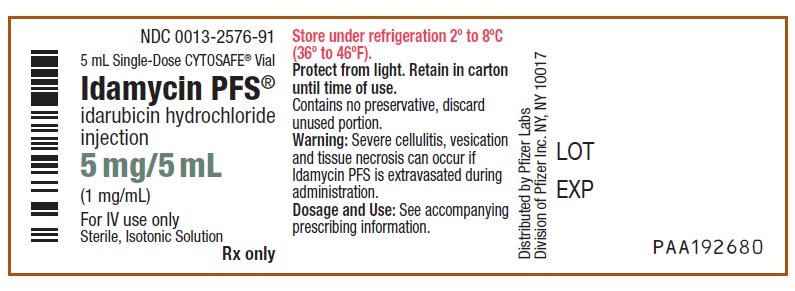
11PRINCIPAL DISPLAY PANEL - 5 mg/5 mL Vial Label
NDC 0013-2576-91
5 mL Single-Dose CYTOSAFE
Idamycin PFS
idarubicin hydrochloride
injection
5 mg/5 mL
(1 mg/mL)
For IV use only
Rx only
PRINCIPAL DISPLAY PANEL - 5 mg/5 mL Vial Label
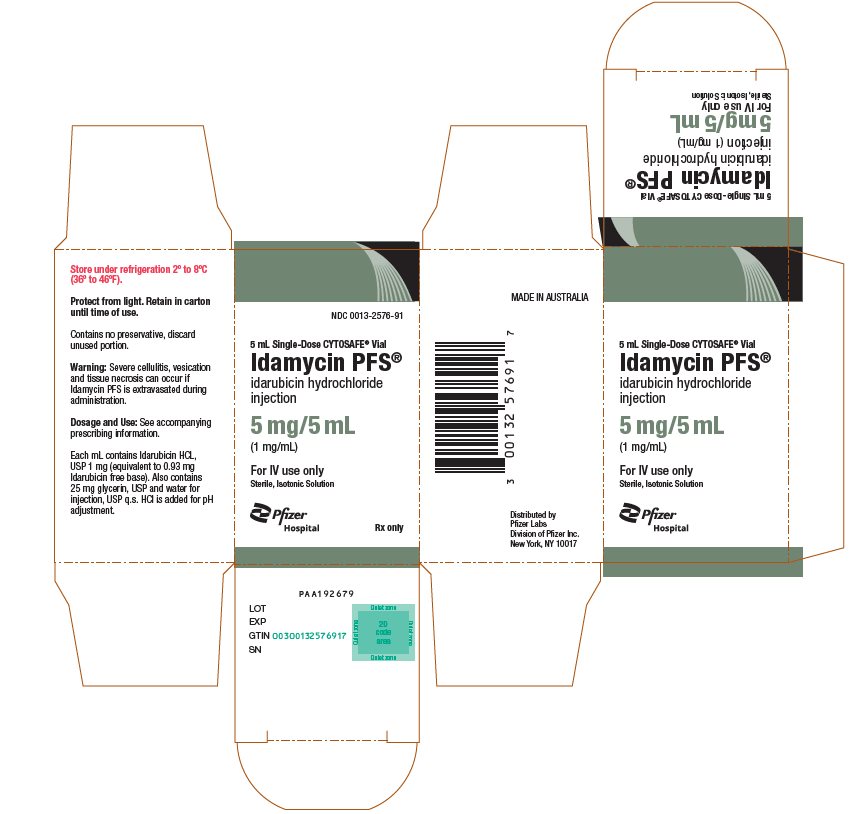
12PRINCIPAL DISPLAY PANEL - 5 mL Vial Carton
NDC 0013-2576-91
5 mL Single-Dose CYTOSAFE
Idamycin PFS
idarubicin hydrochloride
injection
5 mg/5 mL
(1 mg/mL)
For IV use only
Pfizer Hospital
Rx only
PRINCIPAL DISPLAY PANEL - 5 mL Vial Carton
13PRINCIPAL DISPLAY PANEL - 5 mg/5 mL Glass Vial Label
NDC 0013-2576-05
5 mL Single-Dose Vial
Idamycin PFS
5 mg/5 mL
Rx only
PRINCIPAL DISPLAY PANEL - 5 mg/5 mL Glass Vial Label
14PRINCIPAL DISPLAY PANEL - 5 mg/5 mL Glass Vial Carton
NDC 0013-2576-05
5 mL Single-Dose Vial
Idamycin PFS
5 mg/5 mL
For Intravenous Use Only
Pfizer
Rx only
PRINCIPAL DISPLAY PANEL - 5 mg/5 mL Glass Vial Carton
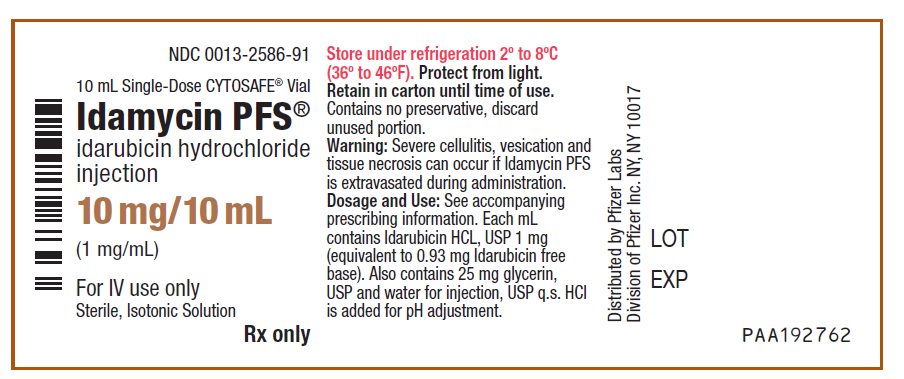
15PRINCIPAL DISPLAY PANEL - 10 mg/10 mL Vial Label
NDC 0013-2586-91
10 mL Single-Dose CYTOSAFE
Idamycin PFS
idarubicin hydrochloride
injection
10 mg/10 mL
(1 mg/mL)
For IV use only
Rx only
PRINCIPAL DISPLAY PANEL - 10 mg/10 mL Vial Label
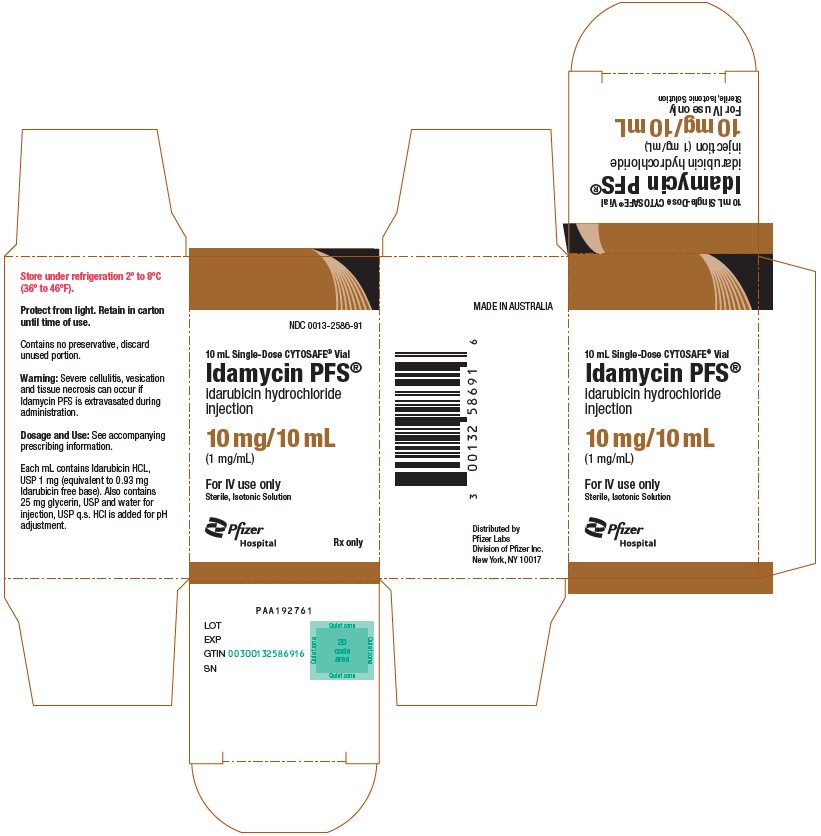
16PRINCIPAL DISPLAY PANEL - 10 mL Vial Carton
NDC 0013-2586-91
10 mL Single-Dose CYTOSAFE
Idamycin PFS
idarubicin hydrochloride
injection
10 mg/10 mL
(1 mg/mL)
For IV use only
PfizerHospital
Rx only
PRINCIPAL DISPLAY PANEL - 10 mL Vial Carton
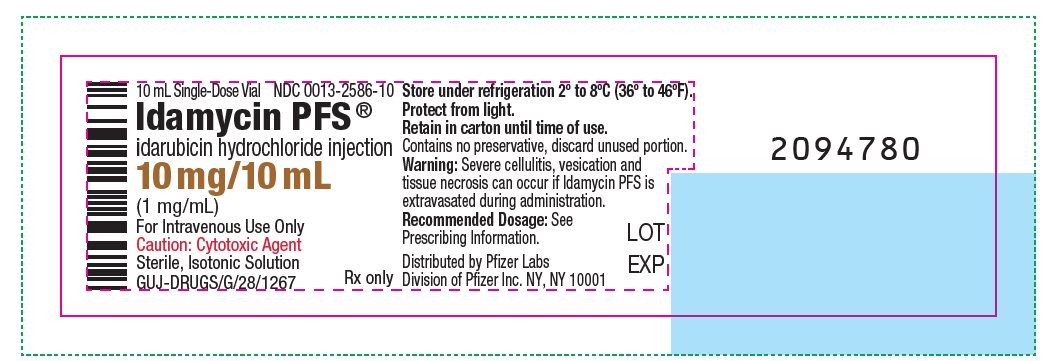
17PRINCIPAL DISPLAY PANEL - 10 mg/10 mL Glass Vial Label
10 mL Single- Dose Vial
Idamycin PFS®
10 mg/10 mL
PRINCIPAL DISPLAY PANEL - 10 mg/10 mL Glass Vial Label
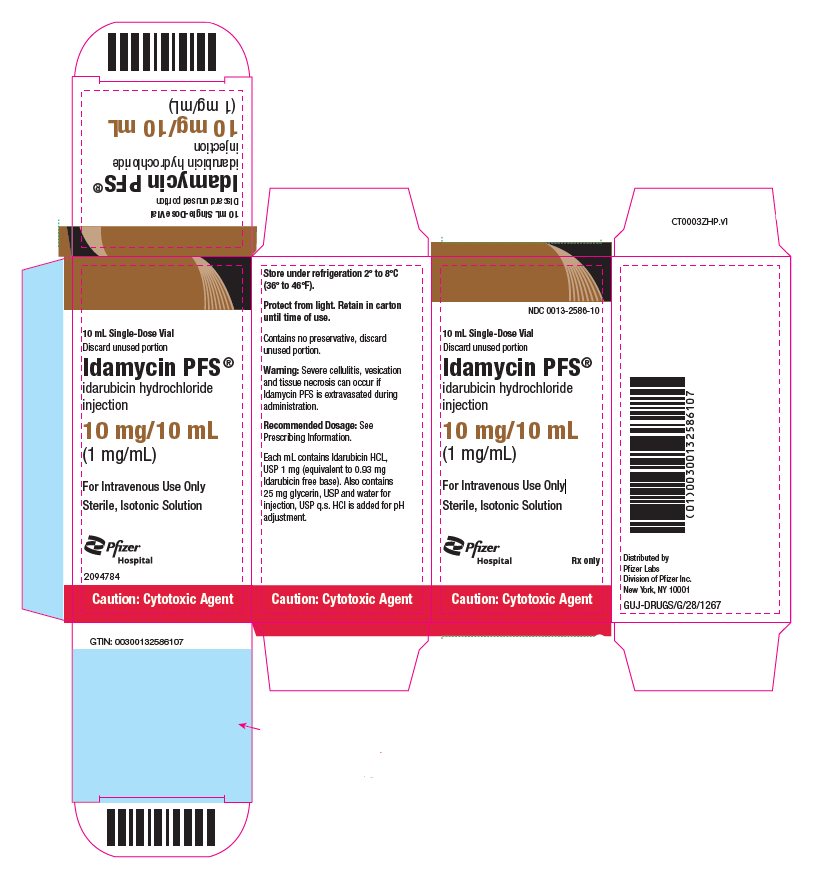
18PRINCIPAL DISPLAY PANEL - 10 mg/10 mL Glass Vial Carton
NDC 0013-2586-10
10 mL Single-Dose Vial
Discard unused portion
Idamycin PFS
10 mg/10 mL
For Intravenous Use Only
Pfizer
Rx only
PRINCIPAL DISPLAY PANEL - 10 mg/10 mL Glass Vial Carton
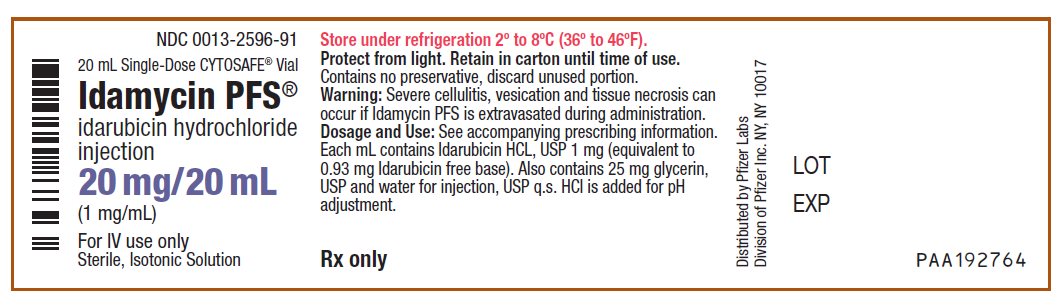
19PRINCIPAL DISPLAY PANEL - 20 mg/20 mL Vial Label
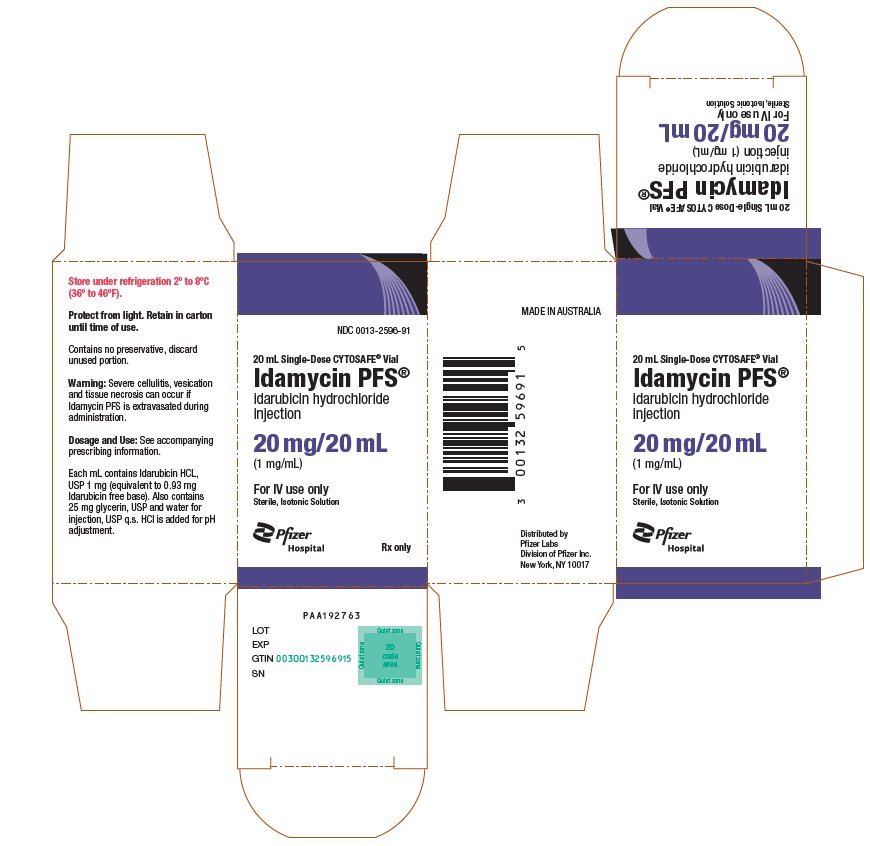
NDC 0013-2596-91
20 mL Single-Dose CYTOSAFE
Idamycin PFS
idarubicin hydrochloride
injection
20 mg/20 mL
(1 mg/mL)
For IV use only
PRINCIPAL DISPLAY PANEL - 20 mg/20 mL Vial Label
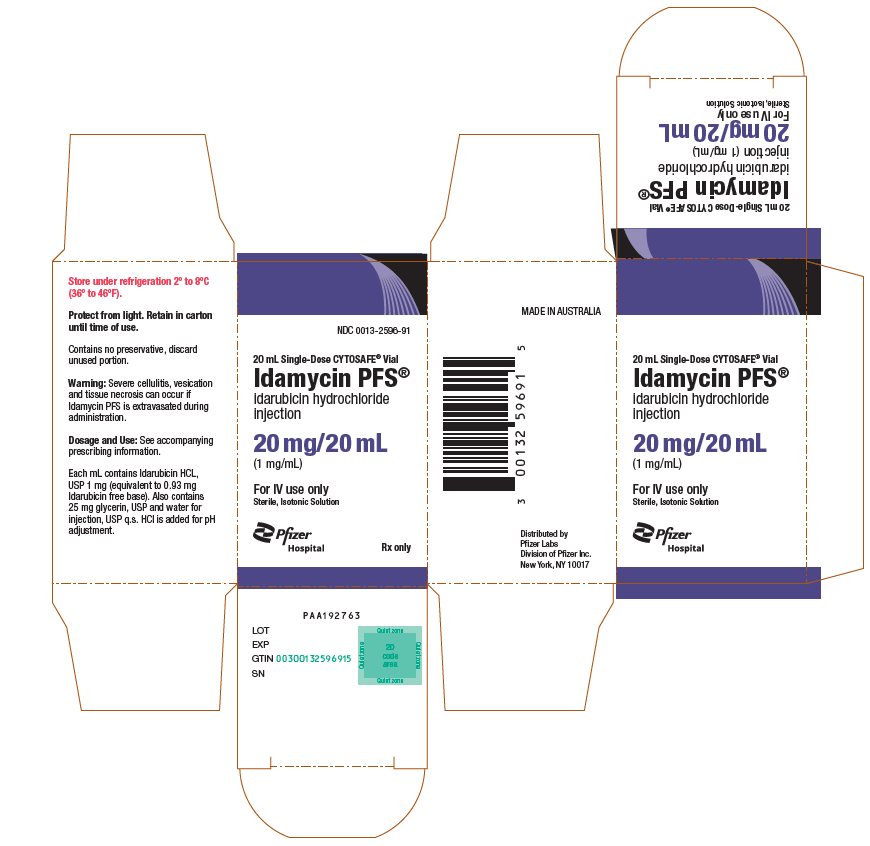
20PRINCIPAL DISPLAY PANEL - 20 mL Vial Carton
NDC 0013-2596-91
20 mL Single-Dose CYTOSAFE
Idamycin PFS
idarubicin hydrochloride
injection
20 mg/20 mL
(1 mg/mL)
For IV use only
PfizerHospital
Rx only
PRINCIPAL DISPLAY PANEL - 20 mL Vial Carton
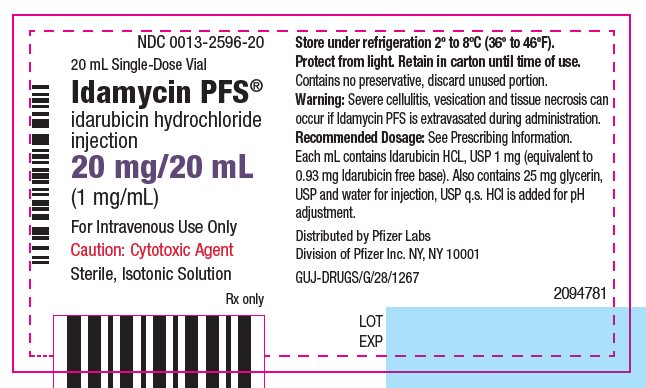
21PRINCIPAL DISPLAY PANEL - 20 mg/20 mL Glass Vial Label
NDC 0013-2596-20
20 mL Single-Dose Vial
Idamycin PFS
20 mg/20 mL
For Intravenous Use Only
Rx only
PRINCIPAL DISPLAY PANEL - 20 mg/20 mL Glass Vial Label
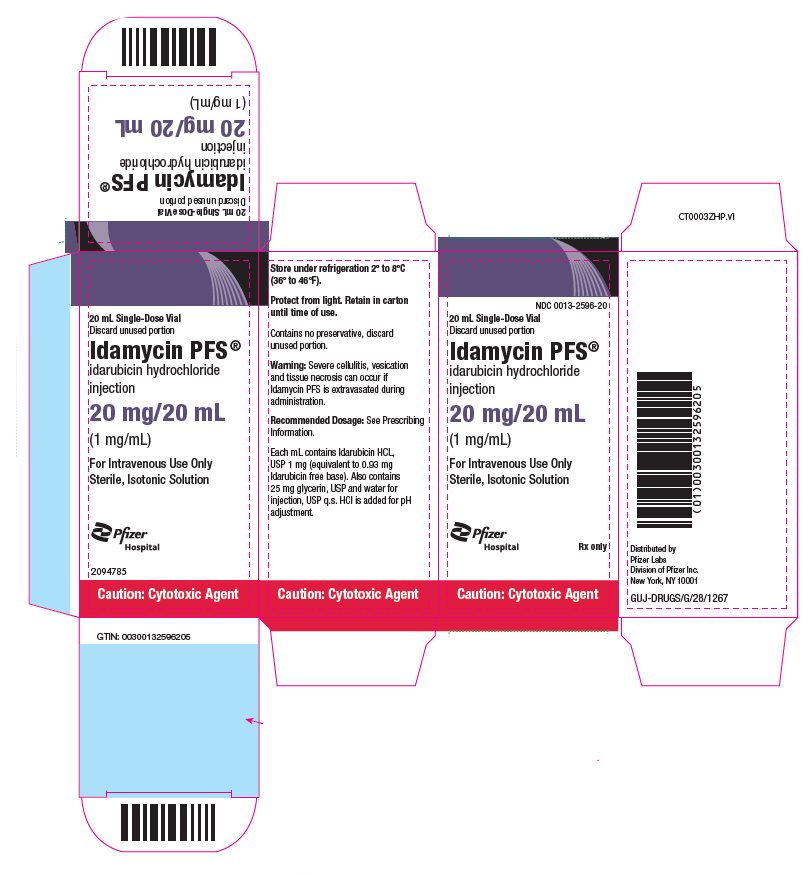
22PRINCIPAL DISPLAY PANEL - 20 mg/20 mL Glass Vial Carton
NDC 0013-2596-20
20 mL Single-Dose Vial
Idamycin PFS
20 mg/20 mL
For Intravenous Use Only
Pfizer
Rx only
PRINCIPAL DISPLAY PANEL - 20 mg/20 mL Glass Vial Carton