Acute Respiratory Distress Syndrome (ARDS)Symptoms, Doctors, Treatments, Advances & More
Learn About Acute Respiratory Distress Syndrome (ARDS)
Acute respiratory distress syndrome (ARDS) is a life-threatening lung condition that prevents enough oxygen from getting to the lungs and into the blood. Most cases occur in adults, but infants can also have acute respiratory distress syndrome.
Noncardiogenic pulmonary edema; Increased-permeability pulmonary edema; ARDS; Acute lung injury
ARDS can be caused by any major direct or indirect injury to the lung. Common causes include:
- Breathing vomit into the lungs (aspiration)
- Inhaling chemicals
- Lung transplant
- Pancreatitis (acute)
- Pneumonia, including COVID-19 infection
- Septic shock (infection throughout the body)
- Transfusions (multiple)
- Trauma
Depending on the amount of oxygen in the blood and during breathing, the severity of ARDS is classified as:
- Mild
- Moderate
- Severe
ARDS leads to a buildup of fluid in the air sacs (alveoli). This fluid prevents enough oxygen from passing into the bloodstream.
The fluid buildup also makes the lungs heavy and stiff. This decreases the lungs' ability to expand. The level of oxygen in the blood can stay dangerously low, even if the person receives oxygen from a breathing machine (ventilator) through a breathing tube (endotracheal tube).
ARDS often occurs along with the failure of other organ systems, such as the heart, liver or kidneys. Cigarette smoking and heavy alcohol use may be risk factors for its development.
Symptoms usually develop within 24 to 48 hours of the injury or illness. Often, people with ARDS are so sick they cannot report symptoms. Symptoms can include any of the following:
- Shortness of breath
- Fast heartbeat
- Low blood pressure and organ failure
- Rapid breathing
ARDS often needs to be treated in an intensive care unit (ICU).
The goal of treatment is to provide breathing support and treat the cause of ARDS. This may involve medicines to treat infections, reduce inflammation, and remove fluid from the lungs.
A ventilator is used to deliver high doses of oxygen and positive pressure to the damaged lungs. People often need to be deeply sedated with medicines. During treatment, your health care providers make every effort to protect your lungs from further damage. Certain ways of using the ventilator can protect your lungs better and improve chances of recovery. Treatment is mainly supportive until the lungs recover.
Sometimes, a treatment called extracorporeal membrane oxygenation (ECMO) is used. During ECMO, blood is filtered through a machine to provide oxygen and remove carbon dioxide.
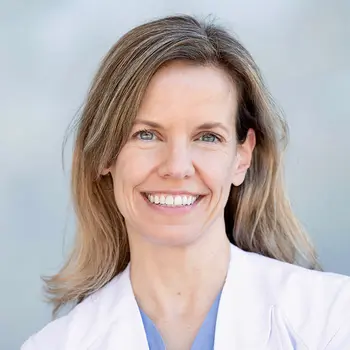
University Anesthesia Medical Group
Dr. Carolyn S. Calfee is a pulmonologist who cares for patients in UCSF's intensive care units. Calfee's research focuses on the causes and treatment of acute respiratory distress syndrome (ARDS). Her projects include studying the biologic differences within ARDS and how to target those differences by personalizing treatment; the role of environmental exposure, including to cigarette smoke and air pollution, in susceptibility to lung injury; and novel treatments for ARDS. During the coronavirus pandemic, she led research at UCSF to investigate how the immune system responds to COVID and to test promising new treatments for COVID-19-associated ARDS. Calfee earned her medical degree from the University of Pennsylvania Perelman School of Medicine. At UCSF, she completed a residency in internal medicine, serving as chief resident, followed by a fellowship in pulmonary and critical care medicine. She also earned a master of advanced study degree in clinical research at UCSF. She joined the UCSF faculty in 2007 and is a member of the UCSF Center for Tobacco Control Research and Education. Dr. Calfee is rated as an Elite provider by MediFind in the treatment of Acute Respiratory Distress Syndrome (ARDS). She is also highly rated in 6 other conditions, according to our data. Her clinical expertise encompasses Acute Respiratory Distress Syndrome (ARDS), COVID-19, Pneumonia, Severe Acute Respiratory Syndrome (SARS), and Lung Transplant. Dr. Calfee is board certified in American Board Of Internal Medicine, Critical Care Medicine and American Board Of Internal Med/Pulmonary Disease, Pulmonary Disease.

Taubman Center
Dr. Sjoding is a member of the Division of Pulmonary and Critical Care at the University of Michigan. He received a degree in Biochemistry from Valparaiso University in Indiana, and a medical degree from Loyola Stritch School of Medicine in Chicago. He completed his internal medicine residency at the University of Chicago.Dr. Sjoding’s health services research interests concern pulmonary and critical care and hospital medicine, with a focus on inpatient hospital quality measures and their unintended consequences, the epidemiology of critical illness, and methods for critical care delivery. He is also interested in leveraging “Big Data” to enhance critical care research and care, and health service research methods including the use of both clinical and large-scale administrative databases, statistical simulation, causal analysis, and multi-level modeling. Dr. Sjoding is rated as an Elite provider by MediFind in the treatment of Acute Respiratory Distress Syndrome (ARDS). He is also highly rated in 7 other conditions, according to our data. His clinical expertise encompasses Acute Respiratory Distress Syndrome (ARDS), Cerebral Hypoxia, Chronic Obstructive Pulmonary Disease (COPD), and Pneumonia.
Office
Lorraine Ware is an Intensive Care Medicine provider practicing medicine in Nashville, Tennessee. Dr. Ware is rated as an Elite provider by MediFind in the treatment of Acute Respiratory Distress Syndrome (ARDS). She is also highly rated in 5 other conditions, according to our data. Her clinical expertise encompasses Acute Respiratory Distress Syndrome (ARDS), Pneumonia, Pulmonary Fibrosis, Cerebral Hypoxia, and Lung Transplant.
Many family members of people with ARDS are under extreme stress. They can often relieve this stress by joining support groups where members share common experiences and problems.
The following organizations are good resources for information on lung disease:
- ARDS Alliance -- ardsalliance.org/
- American Lung Association -- www.lung.org
- National Heart, Lung, and Blood Institute -- www.nhlbi.nih.gov
About one third of people with ARDS die of the disease. Those who live often get back most of their normal lung function, but many people have permanent (usually mild) lung damage.
Many people who survive ARDS have memory loss or other quality-of-life problems after they recover. This is due to brain damage that occurred when the lungs were not working properly and the brain was not getting enough oxygen. Some people can also have post-traumatic stress after surviving ARDS.
Problems that may result from ARDS or its treatment include:
- Failure of many organ systems
- Lung damage, such as a collapsed lung (also called pneumothorax) due to injury from the breathing machine needed to treat the disease
- Pulmonary fibrosis (scarring of the lung)
- Ventilator-associated pneumonia
ARDS most often occurs during another illness, for which the person is already in the hospital. In some cases, a healthy person has severe pneumonia that gets worse and becomes ARDS. If you have trouble breathing, call the local emergency number (such as 911) or go to the emergency room.
Summary: BTI-203 is a randomized, double-blind, placebo-controlled, multicenter, Phase 2 proof-of-concept (POC) study to evaluate the efficacy and safety of rhu-pGSN plus standard of care (SOC) in subjects with moderate-to-severe ARDS (P/F ratio ≤150) due to pneumonia or other infections. Potential subjects hospitalized with pneumonia or other infections are to be screened within 24 hours of diagnosis of A...
Summary: This study is a randomized, blank-controlled, open-label, single-dose, dose-escalation clinical study of rhKGF-2 in patients with ARDS. The trial is designed with three dose groups (5 mg, 10 mg, and 15 mg), which will be escalated sequentially from the lowest dose group to the highest dose group. Each dose group will enroll 8 subjects, randomized in a 6:2 ratio according to the order of enrollment...
Published Date: October 14, 2025
Published By: Andrew Schriber, MD, FCCP, Specialist in Pulmonary, Critical Care, and Sleep Medicine, Virtua Memorial Hospital, Mount Holly, New Jersey. Review provided by VeriMed Healthcare Network. Also reviewed by David C. Dugdale, MD, Medical Director, Brenda Conaway, Editorial Director, and the A.D.A.M. Editorial team.
Binnie A, Herridge MS, Lee WL. Acute respiratory distress syndrome. In: Broaddus VC, Ernst JD, King TE, et al, eds. Murray and Nadel's Textbook of Respiratory Medicine. 7th ed. Philadelphia, PA: Elsevier; 2022:chap 134.
Matthay MA, Ware LB. Acute respiratory failure. In: Goldman L, Cooney KA, eds. Goldman-Cecil Medicine. 27th ed. Philadelphia, PA: Elsevier; 2024:chap 90.
Seigel TA, Johnson NJ. Mechanical ventilation and noninvasive ventilatory support. In: Walls RM, ed. Rosen's Emergency Medicine: Concepts and Clinical Practice. 10th ed. Philadelphia, PA: Elsevier; 2023:chap 2.