Advise the patient to read the FDA-approved patient labeling (Medication Guide).
Malignancies
Inform patients that MAVENCLAD may increase their risk of malignancies. Instruct patients to follow standard cancer screening guidelines
Risk of Teratogenicity
Inform patients that MAVENCLAD may cause fetal harm. Discuss with females of reproductive potential whether they are pregnant, might be pregnant, or are trying to become pregnant. Before initiating each treatment course, inform patients about the potential risk to the fetus if female patients or partners of male patients get pregnant during MAVENCLAD dosing or within 6 months after the last dose for female patients, and within 14 weeks after the last dose for male patients, in each treatment course
Instruct females of reproductive potential to use effective contraception during MAVENCLAD dosing and for at least 6 months after the last dose in each treatment course to avoid pregnancy.
Instruct males of reproductive potential to take precautions to prevent pregnancy of their partner during MAVENCLAD dosing and for at least 14 weeks after the last dose in each treatment course.
Advise patients that female patients or partners of male patients who get pregnant to immediately inform their healthcare provider.
Advise patients that there is a pregnancy safety study that monitors the pregnancy outcomes in female patients exposed to cladribine during pregnancy or within 6 months before conception, as well as pregnancies fathered by male patients exposed to cladribine within 14 weeks before conception, and they can report the pregnancy by calling EMD Serono's Adverse Event reporting line at 1-800-283-8088 ext. 5563 or by faxing 1-781-681-2961
Lactation
Inform women that they cannot breastfeed on a MAVENCLAD treatment day and for 10 days after the last dose
Lymphopenia and Other Hematologic Toxicity
Inform patients that MAVENCLAD decreases lymphocyte counts and may also decrease counts of other blood cells. A blood test should be obtained before starting a treatment course, 2 and 6 months after start of treatment in each treatment course, periodically thereafter, and when clinically needed. Advise patients to keep all appointments for lymphocyte monitoring during and after MAVENCLAD treatment
Infections
Inform patients that infections, some of which were serious, have been reported in patients receiving MAVENCLAD. Instruct patients to notify their healthcare provider promptly if fever or other signs of infection such as aching, painful muscles, headache, generally feeling unwell or loss of appetite occur while on therapy or after a course of treatment
Advise patients that PML has happened with parenteral cladribine used in oncologic indications. Inform the patient that PML is characterized by a progression of deficits and usually leads to death or severe disability over weeks or months. Instruct the patient of the importance of contacting their doctor if they develop any symptoms suggestive of PML. Inform the patient that typical symptoms associated with PML are diverse, progress over days to weeks, and include progressive weakness on one side of the body or clumsiness of limbs, disturbance of vision, and changes in thinking, memory, and orientation leading to confusion and personality changes
Advise patients that some vaccines containing live virus (live attenuated vaccines) should be avoided during and after treatment with MAVENCLAD. Advise patients to complete any live or live-attenuated vaccinations at least 4 to 6 weeks prior to initiation of MAVENCLAD. Instruct patients to contact their healthcare provider prior to receiving any vaccinations.
Liver Injury
Inform patients that liver injury has been reported in patients receiving MAVENCLAD. Instruct patients treated with MAVENCLAD to report promptly any symptoms that may indicate liver injury, including fatigue, anorexia, right upper abdominal discomfort, dark urine, or jaundice. A blood test should be obtained prior to each treatment cycle and course with MAVENCLAD and as clinically indicated thereafter
Hypersensitivity
Advise patients to seek immediate medical attention if they experience any symptoms of serious or severe hypersensitivity reactions, including skin reactions
Cardiac Failure
Advise patients that MAVENCLAD may cause cardiac failure. Instruct patients to seek medical advice if they experience symptoms of cardiac failure (e.g., shortness of breath, rapid or irregular heartbeat, swelling)
Treatment Handling and Administration
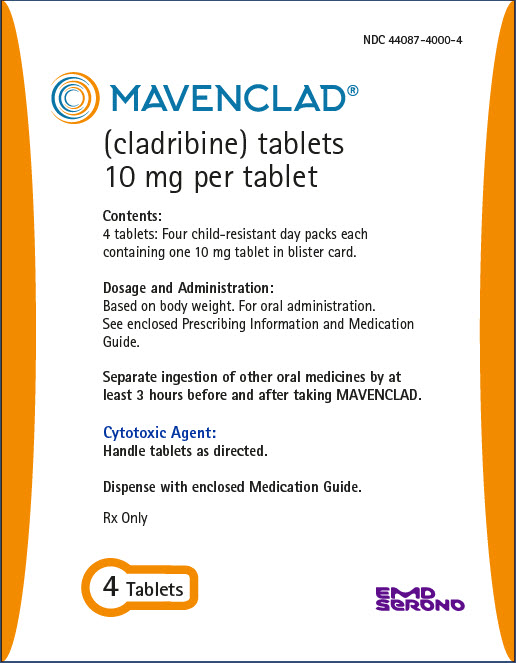
Instruct patients that MAVENCLAD is a cytotoxic drug and to use care when handling MAVENCLAD tablets, limit direct skin contact with the tablets, and wash exposed areas thoroughly. Advise patients to keep the tablets in the original package until just prior to each scheduled dose and consult their pharmacist on the proper disposal of unused tablets