Atopic Dermatitis Treatments
Find Atopic Dermatitis Treatments
Generic Name
Tacrolimus
Brand Names
Astagraf, Envarsus, Prograf
FDA approval date: April 08, 1994
Classification: Calcineurin Inhibitor Immunosuppressant
Form: Ointment, Injection, Tablet, Granule, Capsule
What is Astagraf (Tacrolimus)?
ASTAGRAF XL ® is indicated for the prophylaxis of organ rejection in kidney transplant patients in combination with other immunosuppressants in adult and pediatric patients who can swallow capsules intact [see Use in Specific Populations.
Approved To Treat


Save this treatment for later
Not sure about your diagnosis?
Tired of the same old research?
Related Clinical Trials
A Phase 2, Randomized, Partially Blinded, Controlled, Dose-ranging Study to Evaluate the Safety, Tolerability, Pharmacokinetics, Pharmacodynamics and Preliminary Efficacy of VEL-101 in Kidney Transplant Recipients.
Summary: This study will evaluate the safety and efficacy of VEL-101 compared with tacrolimus in patients undergoing kidney transplantation.
A Phase 1b, Multicenter, Dose Escalation, Evaluation of Safety and Tolerability of ASP7317 for Geographic Atrophy Secondary to Age-related Macular Degeneration
Summary: Age-related macular degeneration (AMD) is an eye disease which causes people to lose their sharp central vision over time. Aging damages the macula, which is in the middle of the retina - the light-sensitive part at the back of the eye. There are 2 types of AMD - wet AMD and dry AMD. The advanced stage of dry AMD causes vision loss. This is known as geographic atrophy. AMD makes everyday tasks lik...
A Phase 2b/3 Adaptive, Randomized, Active-controlled Study Evaluating the Efficacy, Safety, and Tolerability of Povetacicept Versus Calcineurin Inhibitor in the Treatment of Primary Membranous Nephropathy
Summary: The purpose of this study is to evaluate the efficacy, safety, and tolerability of povetacicept in participants with primary membranous nephropathy (pMN).
Related Latest Advances
Brand Information
ASTAGRAF XL (tacrolimus extended-release capsules)
WARNING: MALIGNANCIES AND SERIOUS INFECTIONS IN TRANSPLANT PATIENTS; AND INCREASED MORTALITY IN FEMALE LIVER TRANSPLANT PATIENTS
- Increased risk for developing serious infections and malignancies with ASTAGRAF XL
- Increased mortality in female liver transplant patients with ASTAGRAF XL. ASTAGRAF XL is not approved for use in liver transplantation. [see
1INDICATIONS AND USAGE
ASTAGRAF XL
2DOSAGE FORMS AND STRENGTHS
ASTAGRAF XL CAPSULES:
• 0.5 mg: light yellow cap and orange body branded with red “
• 1 mg: white cap and orange body branded with red “
• 5 mg: grayish-red cap and orange body branded with red “
3CONTRAINDICATIONS
ASTAGRAF XL is contraindicated in patients with known hypersensitivity to tacrolimus
4ADVERSE REACTIONS
The following clinically significant adverse drug reactions are discussed in greater detail in other sections of labeling:
- Lymphoma and Other Malignancies
- Serious Infections
- Increased Mortality in Female Liver Transplant Patients
- New Onset Diabetes after Transplant
- Nephrotoxicity due to ASTAGRAF XL and Drug Interactions
- Neurotoxicity
- Hyperkalemia
- Hypertension
- QT Prolongation
- Pure Red Cell Aplasia
- Thrombotic Microangiopathy, Including Hemolytic Uremic Syndrome and Thrombotic Thrombocytopenic Purpura
4.1Clinical Studies Experience
Because clinical trials are conducted under widely varying conditions, adverse reaction rates observed in the clinical trials of a drug cannot be directly compared to rates in the clinical trials of another drug and may not reflect the rates observed in practice. In addition, the clinical trials were not designed to establish comparative differences across study arms with regards to the adverse reactions discussed below.
Kidney transplant patients were treated with ASTAGRAF XL (N=214) or tacrolimus immediate-release product (N=212) and concomitant immunosuppressants (median duration of exposure of 12 months) in a randomized, open-label, active-controlled trial of mostly U.S. patients (Study 1)
In Study 1, the proportion of patients who discontinued treatment due to adverse reactions was 9% and 11% in the ASTAGRAF XL and tacrolimus immediate-release treatment groups, respectively, through 12 months of treatment. The most common adverse reactions leading to discontinuation in ASTAGRAF XL-treated patients were related to infections or renal/urinary disorders.
Infections
The overall incidence of infections, serious infections, and infections with identified etiology reported in patients treated with the ASTAGRAF XL or tacrolimus immediate-release product in Study 1 are shown in Table 2.
The overall incidence of infections, serious infections, and infections with identified etiology reported in patients treated with the ASTAGRAF XL or tacrolimus immediate-release product in Study 1 are shown in Table 2.
New Onset Diabetes After Transplant (NODAT)
The incidence of new onset diabetes after transplantation (defined by the composite occurrence of ≥ 2 fasting plasma glucose values that were > 126 mg/dL at ≥ 30 days apart, insulin use for ≥ 30 consecutive days, oral hypoglycemic use for ≥ 30 consecutive days, and/or HbA1C ≥ 6.5%) is summarized in Table 3 below for Study 1 through one year post-transplant [see
The incidence of new onset diabetes after transplantation (defined by the composite occurrence of ≥ 2 fasting plasma glucose values that were > 126 mg/dL at ≥ 30 days apart, insulin use for ≥ 30 consecutive days, oral hypoglycemic use for ≥ 30 consecutive days, and/or HbA1C ≥ 6.5%) is summarized in Table 3 below for Study 1 through one year post-transplant [see
Hyperkalemia
In Study 1 [see , 73 of 214 (34.1%) patients on ASTAGRAF XL had a serum potassium level greater than 5.4 up to 6.4 mEq/L, and 8 out of 214 (3.7%) patients had a serum potassium level greater than 6.4 mEq/L [see .
In Study 1 [see , 73 of 214 (34.1%) patients on ASTAGRAF XL had a serum potassium level greater than 5.4 up to 6.4 mEq/L, and 8 out of 214 (3.7%) patients had a serum potassium level greater than 6.4 mEq/L [see .
Common Adverse Reactions
The most common (≥ 30%) adverse reactions observed with ASTAGRAF XL in Study 1 were: diarrhea, constipation, nausea, peripheral edema, tremor, and anemia. The incidence of adverse reactions that occurred in ≥ 15% of ASTAGRAF XL-treated patients compared to tacrolimus immediate-release product through one year of treatment in Study 1 is shown by treatment groups in Table 4.
The most common (≥ 30%) adverse reactions observed with ASTAGRAF XL in Study 1 were: diarrhea, constipation, nausea, peripheral edema, tremor, and anemia. The incidence of adverse reactions that occurred in ≥ 15% of ASTAGRAF XL-treated patients compared to tacrolimus immediate-release product through one year of treatment in Study 1 is shown by treatment groups in Table 4.
Less Frequently Reported Adverse Reactions (< 15% in ASTAGRAF XL-treated patients) by System Organ Class
The following adverse reactions were reported in clinical studies of kidney transplant patients who were treated with ASTAGRAF XL, MMF, and steroids (Studies 1 and 2):
- Blood and Lymphatic System Disorders: Hemolytic anemia, leukocytosis, neutropenia, thrombocytopenia, thrombotic microangiopathy
- Cardiac Disorders: Atrial fibrillation, atrial flutter, tachycardia
- Ear Disorders: Tinnitus
- Eye Disorders: Vision blurred, conjunctivitis
- Gastrointestinal Disorders: Abdominal distension, abdominal pain, aphthous stomatitis, dyspepsia, esophagitis, flatulence, gastritis, gastroesophageal reflux disease
- General Disorders and Administration Site Conditions: Anasarca, asthenia, edema, pyrexia
- Hepatobiliary Disorders: Abnormal hepatic function, cholestasis, hepatitis (acute and chronic), hepatotoxicity
- Infections and Infestations: Condyloma acuminatum, tinea versicolor
- Injury: Fall
- Investigations: Increased blood lactate dehydrogenase, increased blood urea, increased hepatic enzyme
- Metabolism and Nutrition Disorders: Anorexia, hyperphosphatemia, hyperuricemia, hypokalemia, hyponatremia, metabolic acidosis
- Musculoskeletal and Connective Tissue Disorders: Arthralgia, osteopenia, osteoporosis
- Neoplasms: Kaposi’s sarcoma
- Nervous System Disorders: Convulsion, dizziness, hypoesthesia, neurotoxicity, paresthesia, peripheral neuropathy
- Psychiatric Disorders: Agitation, anxiety, confusional state, depression, hallucination, mood swings, nightmare
- Renal and Urinary Disorders: Anuria, oliguria, proteinuria, renal failure, renal tubular necrosis, toxic nephropathy
- Respiratory, Thoracic and Mediastinal Disorders: Acute respiratory distress syndrome, dyspnea, pulmonary edema, productive cough
- Skin and Subcutaneous Tissue Disorders: Acne, alopecia, dermatitis, hyperhidrosis, hypotrichosis, pruritus, rash
- Vascular Disorders: Deep vein thrombosis, flushing
Pediatrics
De Novo Pediatric Transplant Patients
A study was conducted in 44
Stable Pediatric Transplant Patients
Another study was conducted in 81 stable pediatric allograft recipients (including 48 kidney transplant patients) 5 to 16 years of age converted 1:1 (mg:mg) from Prograf to ASTAGRAF XL. Seventy-six (76) pediatric patients completed at least one year of ASTAGRAF XL-based treatment. Treatment-related adverse reactions were reported in 35%, including 13% serious adverse reactions. The most frequent adverse reactions by system organ class were infections (55.7%), followed by gastrointestinal disorders (27.8%), skin and subcutaneous tissue disorders (21.5%), respiratory, thoracic and mediastinal disorders (20.3% each). The most common adverse reactions were diarrhea (13.9%), headache (13.9%) and cough (11.4%).
4.2Postmarketing Experience
The following adverse reactions have been reported from marketing experience with tacrolimus in the U.S. and outside the U.S. Because these reactions are reported voluntarily from a population of uncertain size, it is not always possible to reliably estimate their frequency or establish a causal relationship to drug exposure. These reactions have been chosen for inclusion due to either their seriousness, frequency of reporting or causal connection to ASTAGRAF XL:
- Blood and Lymphatic System Disorders: Agranulocytosis, disseminated intravascular coagulation, hemolytic uremic syndrome, febrile neutropenia, pancytopenia, pure red cell aplasia
- Cardiac Disorders: Cardiac arrest, myocardial infarction, ventricular fibrillation, congestive cardiac failure, hypertrophic cardiomyopathy, pericardial effusion, angina pectoris, supraventricular extrasystoles, supraventricular tachycardia, bradycardia,
- Ear Disorders: Hearing loss
- Eye Disorders: Blindness, optic neuropathy, optic atrophy, photophobia
- Gastrointestinal Disorders: Gastrointestinal hemorrhage, gastrointestinal perforation, pancreatitis, peritonitis, stomach ulcer, intestinal obstruction, ascites, colitis, ileus, impaired gastric emptying, dysphagia
- Hepatobiliary Disorders: Hepatic failure, hepatic necrosis, cirrhosis, cholangitis, venoocclusive liver disease, bile duct stenosis, hepatic steatosis, jaundice
- Hypersensitivity Reactions: Hypersensitivity, Stevens-Johnson syndrome, toxic epidermal necrolysis, urticaria
- Immune System Disorders: Graft versus host disease (acute and chronic)
- Investigations: Increased international normalized ratio
- Metabolism and Nutrition Disorders: Hypoproteinemia
- Musculoskeletal and Connective Tissue Disorders: Rhabdomyolysis, myalgia, polyarthritis, pain in extremity including Calcineurin-Inhibitor Induced Pain Syndrome (CIPS)
- Neoplasms: Lymphoma including EBV-associated lymphoproliferative disorder, hepatosplenic T-cell lymphoma, PTLD
- Nervous System Disorders: Cerebral infarction, progressive multifocal leukoencephalopathy (PML) sometimes fatal
- Psychiatric Disorders: Mental status changes
- Renal and Urinary Disorders: Hemorrhagic cystitis, hematuria, urinary retention, urinary incontinence
- Respiratory, Thoracic and Mediastinal Disorders: Interstitial lung disease, pulmonary hypertension, lung infiltration, rhinitis allergic, hiccups
- Skin and Subcutaneous Tissue Disorders: Hyperpigmentation, photosensitivity
- Vascular Disorders: Hemorrhage
5OVERDOSAGE
Postmarketing cases of overdose with tacrolimus have been reported. Overdosage adverse reactions included:
- nervous system disorders (tremor, headache, confusional state, balance disorders, encephalopathy, lethargy and somnolence)
- gastrointestinal disturbances (nausea, vomiting, and diarrhea)
- abnormal renal function (increased blood urea nitrogen and elevated serum creatinine)
- urticaria
- hypertension
- peripheral edema, and
- infections [one fatal postmarketing case of bilateral pneumopathy and CMV infection was attributed to tacrolimus (extended-release) overdose].
Based on the poor aqueous solubility and extensive erythrocyte and plasma protein binding, it is anticipated that tacrolimus is not dialyzable to any significant extent; there is no experience with charcoal hemoperfusion. The oral use of activated charcoal has been reported in treating acute overdoses, but experience has not been sufficient to warrant recommending its use. General supportive measures and treatment of specific symptoms should be followed in all cases of overdosage.
6DESCRIPTION
Tacrolimus is the active ingredient in ASTAGRAF XL. Tacrolimus is a calcineurin-inhibitor immunosuppressant produced by
The chemical structure of tacrolimus is:
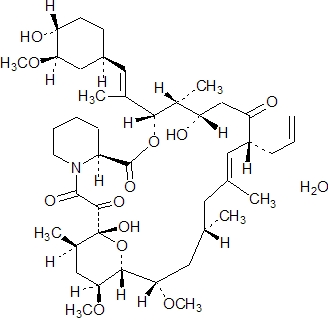
Tacrolimus has an empirical formula of C
ASTAGRAF XL is available for oral administration as hard gelatin capsules (tacrolimus extended-release capsules) containing the equivalent of 0.5 mg, 1 mg or 5 mg of anhydrous tacrolimus, USP. Inactive ingredients include ethylcellulose NF, hypromellose USP, magnesium stearate NF and lactose monohydrate NF. The ingredients are directly proportional across all capsule strengths. The capsule shell contains gelatin NF, titanium dioxide USP, ferric oxide NF, and sodium lauryl sulfate.
7HOW SUPPLIED/STORAGE AND HANDLING
ASTAGRAF XL (tacrolimus) extended-release capsules are supplied in short, square bottles (see
Store and Dispense
Store at 25°C (77°F); excursions permitted to 15°C to 30°C (59°F to 86°F) [see USP Controlled Room Temperature].
8PATIENT COUNSELING INFORMATION
Advise the patient to read the FDA-approved patient labeling (Medication Guide).
8.1Administration
Advise patients or caregivers to:
- Inspect their ASTAGRAF XL medicine when they receive a new prescription and before taking it. If the appearance of the capsule is not the same as usual, or if dosage instructions have changed, advise patients to contact their healthcare provider as soon as possible to make sure that they have the right medicine. Other tacrolimus products cannot be substituted for ASTAGRAF XL
- Take ASTAGRAF XL at the same time every day to achieve consistent blood concentrations.
- Take ASTAGRAF XL in the morning, on an empty stomach at least 1 hour before or at least 2 hours after breakfast, to achieve maximum possible blood concentrations of the drug.
- Swallow capsule whole with liquid. Do not chew, divide or crush capsule.
- Avoid alcoholic beverages, grapefruit, and grapefruit juice while on ASTAGRAF XL
- Take a missed dose of ASTAGRAF XL as soon as possible but not more than 14 hours after the scheduled time (i.e., for a missed 8 AM dose, take by 10 PM). Beyond the 14-hour timeframe, instruct the patient to wait until the usual scheduled time the following morning to take the next scheduled dose. Do not take 2 doses at the same time.
8.2Development of Lymphoma and Other Malignancies
Inform patients that they are at an increased risk of developing lymphomas and other malignancies, particularly of the skin, due to immunosuppression. Advise patients to limit exposure to sunlight and ultraviolet (UV) light by wearing protective clothing and using a broad spectrum sunscreen with a high protection factor
8.3Increased Risk of Infection
Inform patients that they are at an increased risk of developing a variety of infections, including opportunistic infections, due to immunosuppression and to contact their physician if they develop any symptoms of infection such as fever, sweats or chills, cough or flu-like symptoms, muscle aches, or warm, red, painful areas of the skin
8.4New Onset Diabetes after Transplant
Inform patients that ASTAGRAF XL can cause diabetes mellitus and should be advised to contact their physician if they develop frequent urination, increased thirst or hunger
8.5Nephrotoxicity
Inform patients that ASTAGRAF XL can have toxic effects on the kidney that should be monitored. Advise patients to attend all visits and complete all blood tests ordered by their medical team
8.6Neurotoxicity
Inform patients that they are at risk of developing adverse neurologic reactions including seizure, altered mental status, and tremor. Advise patients to contact their physician should they develop vision changes, delirium, or tremors
8.7Hyperkalemia
Inform patients that ASTAGRAF XL can cause hyperkalemia. Monitoring of potassium levels may be necessary, especially with concomitant use of other drugs known to cause hyperkalemia
8.8Hypertension
Inform patients that ASTAGRAF XL can cause high blood pressure which may require treatment with anti-hypertensive therapy
8.9Thrombotic Microangiopathy
Inform patients that ASTAGRAF XL can cause blood clotting problems. The risk of this occurring increases when patients take ASTAGRAF XL and sirolimus or everolimus concomitantly, or when patients develop certain infections. Advise them to seek medical attention promptly if they develop fever, petequiae or bruises, fatigue, confusion, jaundice, oliguria
8.10Drug Interactions
Instruct patients to tell their healthcare providers when they start or stop taking any medicines, including prescription and nonprescription medicines, herbal and dietary supplements. Some medications could alter tacrolimus concentrations in the blood and thus may require the adjustment of the dosage of ASTAGRAF XL. Advise patients to avoid grapefruit, grapefruit juice and alcoholic beverages
8.11Pregnancy, Lactation and Infertility
Inform women of childbearing potential that ASTAGRAF XL can harm the fetus. Instruct male and female patients to discuss with their healthcare provider family planning options including appropriate contraception. Also, discuss with pregnant patients the risks and benefits of breastfeeding their infant
Encourage female transplant patients who become pregnant and male patients who have fathered a pregnancy, exposed to immunosuppressants including tacrolimus, to enroll in the voluntary Transplantation Pregnancy Registry International. To enroll or register, patients can call the toll free number 1-877-955-6877 or
Based on animal studies, ASTAGRAF XL may affect fertility in males and females
8.12Immunizations
Inform patients that ASTAGRAF XL can interfere with the usual response to immunizations and that they should avoid live vaccines
Product of Japan
Distributed by:
ASTAGRAF XL
398977-AST
9PACKAGE/LABEL PRINCIPAL DISPLAY PANEL – 0.5 mg carton label
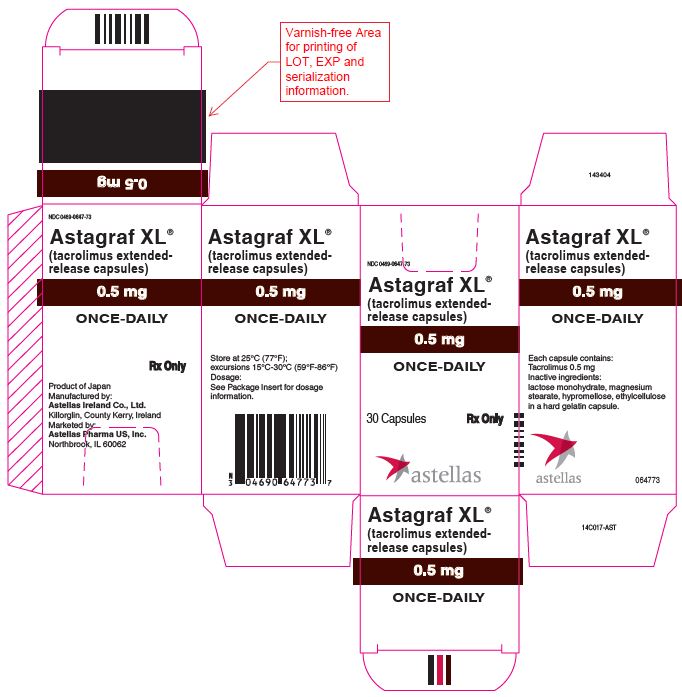
NDC 0469-
Astagraf XL
(tacrolimus extended-release capsules)
(tacrolimus extended-release capsules)
0.5 mg
ONCE-DAILY
30 Capsules
Rx Only
10PACKAGE/LABEL PRINCIPAL DISPLAY PANEL – 1 mg carton label
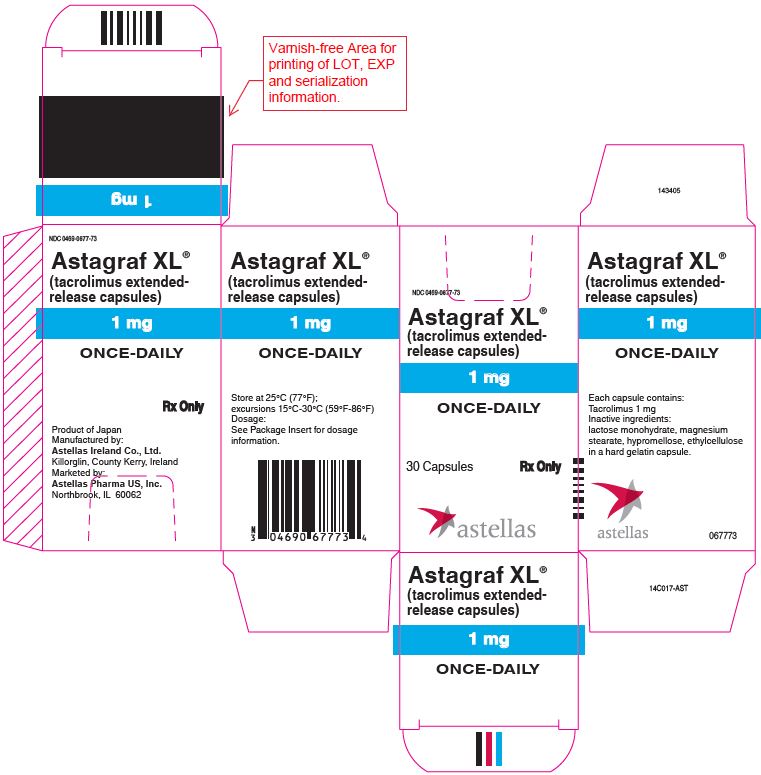
NDC 0469-
Astagraf XL
(tacrolimus extended-release capsules)
(tacrolimus extended-release capsules)
1 mg
ONCE-DAILY
30 Capsules
Rx Only
11PACKAGE/LABEL PRINCIPAL DISPLAY PANEL – 5 mg carton label
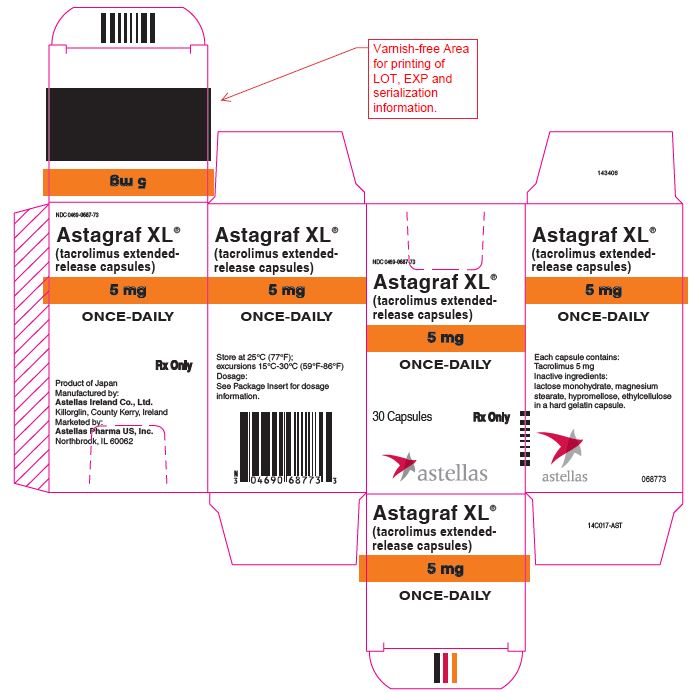
NDC 0469-
Astagraf XL
(tacrolimus extended-release capsules)
(tacrolimus extended-release capsules)
5 mg
ONCE-DAILY
30 Capsules
Rx Only