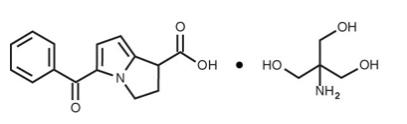
Generic Name

Ketorolac Tromethamine

Brand Names
Acular, Acuvail, Ketorocaine, Sprix, Toronova, Toronova SUIK
FDA approval date: December 01, 1992
Classification: Nonsteroidal Anti-inflammatory Drug
Form: Injection, Spray, Tablet, Kit, Solution

What is Acular (Ketorolac Tromethamine)?

ACULAR LS ophthalmic solution is indicated for the reduction of ocular pain and burning/stinging following corneal refractive surgery. ACULAR LS ophthalmic solution is a nonsteroidal, anti-inflammatory drug indicated for the reduction of ocular pain and burning/stinging following corneal refractive surgery.
Save this treatment for later
Sign Up
Not sure about your diagnosis?
Check Your Symptoms
Tired of the same old research?
Check Latest Advances

Related Clinical Trials

Autonomic Control of the Circulation and the Venous Distension Reflex

Summary: The study objective of this project is to examine the mechanisms of the venous distension reflex (VDR) in humans. We hypothesize that COX blockade with ketorolac tromethamine, an intravenous NSAID, will attenuate the muscle sympathetic nerve activity (MSNA) response to limb venous distension. To gain further insight into whether the COX byproducts directly stimulate chemically-sensitive afferents,...

Low-Dose Short-Term Ketorolac to Reduce Chronic Opioid Use in Orthopaedic Polytrauma Patients

Summary: The goal of this randomized clinical trial is to learn if the use of a low-dose nonsteroidal anti-inflammatory drug (NSAID), ketorolac, reduces the rate of chronic opioid use in orthopaedic trauma patients. The main questions this study aims to answer are: 1. Are patients who are given scheduled ketorolac during the first five days of the perioperative period in combination with standard of care (...

Pharmacokinetics of Anesthetics and Analgesics in Children and Adolescent

Summary: The purpose of this study is to characterize the pharmacokinetic (PK) and safety profile of anesthetics and analgesics in children and adolescents.

Brand Information

    ACULAR LS (Ketorolac Tromethamine)
    1INDICATIONS AND USAGE
    ACULAR LS
    2DOSAGE FORMS AND STRENGTHS
    Ophthalmic solution containing ketorolac tromethamine 0.4% (4 mg/mL).
    3CONTRAINDICATIONS
    ACULAR LS ophthalmic solution is contraindicated in patients with previously demonstrated hypersensitivity to any of the ingredients in the formulation 
    4ADVERSE REACTIONS
    The following serious adverse reactions are described elsewhere in the labeling:
    • Delayed Healing
    • Cross-Sensitivity or Hypersensitivity 
    • Increased Bleeding Time
    • Corneal Effects 
    4.1Clinical Trials Experience
    Because clinical trials are conducted under widely varying conditions, adverse reaction rates observed in the clinical trials of a drug cannot be directly compared to rates in the clinical trials of another drug and may not reflect the rates observed in practice.
    The most frequently reported adverse reactions for ACULAR LS ophthalmic solution occurring in approximately 1 to 5% of the overall study population were conjunctival hyperemia, corneal infiltrates, headache, ocular edema, and ocular pain.
    The most frequent adverse reactions reported with the use of ketorolac tromethamine ophthalmic solutions have been transient stinging and burning on instillation. These reactions were reported by up to 40% of patients participating in clinical trials.
    Other adverse reactions occurring approximately in 1 to 10% of the time during treatment with other ketorolac tromethamine ophthalmic solutions included allergic reactions (including eye swelling, eyelid edema, and hyperemia), corneal edema, iritis, ocular inflammation, ocular irritation, superficial keratitis, and superficial ocular infections.
    Other adverse reactions reported rarely with the use of ketorolac tromethamine ophthalmic solutions included: corneal ulcer, eye dryness, and visual disturbance (blurry vision).
    4.2Postmarketing Experience
    The following adverse reactions have been identified during postmarketing use of ketorolac tromethamine ophthalmic solutions in clinical practice. Because they are reported voluntarily from a population of unknown size, estimates of frequency cannot be made. The reactions, which have been chosen for inclusion due to either their seriousness, frequency of reporting, possible causal connection to topical ketorolac tromethamine ophthalmic solutions or a combination of these factors, include bronchospasm or exacerbation of asthma, corneal erosion, corneal perforation, corneal thinning and corneal melt, and epithelial breakdown
    5DESCRIPTION
    ACULAR LS (ketorolac tromethamine ophthalmic solution) 0.4% is a member of the pyrrolo-pyrrole group of nonsteroidal anti-inflammatory drugs (NSAIDs) for ophthalmic use. Its chemical name is (±)-5-Benzoyl-2,3-dihydro-1
    Chemical Structure
    ACULAR LS ophthalmic solution is supplied as a sterile isotonic aqueous 0.4% solution, with a pH of approximately 7.4. ACULAR LS ophthalmic solution contains a racemic mixture of R-(+) and S-(-)- ketorolac tromethamine. Ketorolac tromethamine may exist in three crystal forms. All forms are equally soluble in water. The pKa of ketorolac is 3.5. This white to off-white crystalline substance discolors on prolonged exposure to light. The osmolality of ACULAR LS ophthalmic solution is 290 mOsmol/kg.
    Each mL of ACULAR LS ophthalmic solution contains:
    6CLINICAL STUDIES
    In two double-masked, multi-centered, parallel-group studies, 313 patients who had undergone photorefractive keratectomy received ACULAR LS 0.4% or its vehicle QID for up to 4 days. Significant differences favored ACULAR LS for the reduction of ocular pain and burning/stinging following photorefractive keratectomy surgery.
    Results from clinical studies indicate that ketorolac tromethamine has no significant effect upon intraocular pressure.
    The safety and effectiveness of ACULAR LS in post-cataract surgery patients has not been established.
    7HOW SUPPLIED/STORAGE AND HANDLING
    ACULAR LS (ketorolac tromethamine ophthalmic solution) 0.4% is supplied sterile, in white opaque plastic LDPE bottles with  white droppers, with a gray high impact polystyrene (HIPS) caps as follows:
    5 mL in 10 mL bottle             NDC 0023-9277-05
    Storage: Store at 15oC to 25oC (59oF to 77oF). Protect from light. After opening, ACULAR LS can be used until the expiration date on the bottle.
    8PATIENT COUNSELING INFORMATION
    Slow or Delayed Healing
    Inform patients of the possibility that slow or delayed healing may occur while using nonsteroidal anti-inflammatory drugs (NSAIDs).
    Avoiding Contamination of the Product
    Instruct patients to avoid allowing the tip of the bottle to contact the eye or surrounding structures because this could cause the tip to become contaminated by common bacteria known to cause ocular infections. Serious damage to the eye and subsequent loss of vision may result from using contaminated solutions.
    Contact Lens Wear
    Advise patients that ACULAR LS ophthalmic solution should not be administered while wearing contact lenses.
    Intercurrent Ocular Conditions
    Advise patients that if they develop an intercurrent ocular condition (e.g., trauma or infection) or have ocular surgery, they should immediately seek their physician’s advice concerning the continued use of ACULAR LS.
    Concomitant Topical Ocular Therapy
    Advise patients that if more than one topical ophthalmic medication is being used, the medicines should be administered at least 5 minutes apart.
    Distributed by:
    © 2024 AbbVie. All rights reserved.
    Shape

Description automatically generated
    V2.1USPI9277