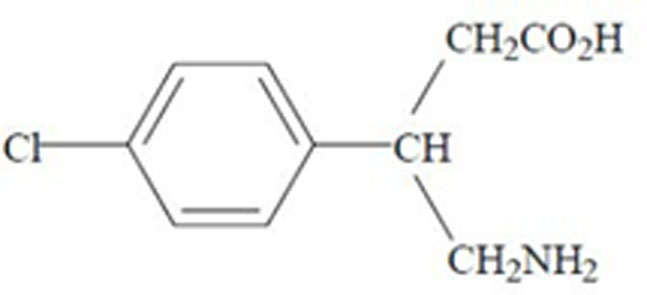
Baclofen
What is Lyvispah (Baclofen)?
Top Global Experts


Related Clinical Trials
Summary: Approximately 305,000 people live with a spinal cord injury (SCI) in the United States. Sixty percent of these individuals have tetraplegia, which can cause significant dysfunction of the arms and hands. One of the consequences of SCI is spasticity - involuntary activation of muscles that can hinder bodily functions and negatively affect participation in various aspects of life. Spasticity can lea...
Summary: Herpes zoster (HZ) is characterized by a painful dermatomal rash and significantly affects quality of life, with acute pain increasing the risk of postherpetic neuralgia. Although early antiviral therapy limits viral replication, its analgesic effect is insufficient, and many patients experience inadequate relief despite stepwise use of non-opioids and opioids. Recent attention has focused on the ...
Summary: Benzodiazepines and related molecules are among the most prescribed psychotropic treatments in France and Europe. 13.4% of the French population had at least one reimbursement of benzodiazepines in 2015, which places France second in Europe. However, the chronic use of benzodiazepines is a source of numerous complications, particularly addictive. To date, there is no authorized pharmacological tre...
Related Latest Advances
Brand Information
- Adverse Reactions from Abrupt Withdrawal of LYVISPAH
- Neonatal Withdrawal Symptoms
- Drowsiness and Sedation
- Poor Tolerability in Stroke Patients
- Exacerbation of Psychotic Disorders, Schizophrenia, or Confusional States
- Exacerbation of Autonomic Dysreflexia
- Exacerbation of Epilepsy
- Posture and Balance Effects
- Ovarian Cysts
- Flush the feeding tube with up to 15 mL (one tablespoonful) of water.
- Open and empty the full contents of one packet of LYVISPAH in 15 mL (one tablespoonful) of the preferred liquid. Stir the suspension to ensure all granules are wetted.
- Draw up the suspension of granules into a dosing syringe immediately after stirring and administer the dose via the feeding tube. Administer no longer than two hours after mixing.
- Refill the dosing syringe with 15 mL (one tablespoonful) of water and flush the feeding tube with the remaining contents.
- Any unused suspensions should be discarded.
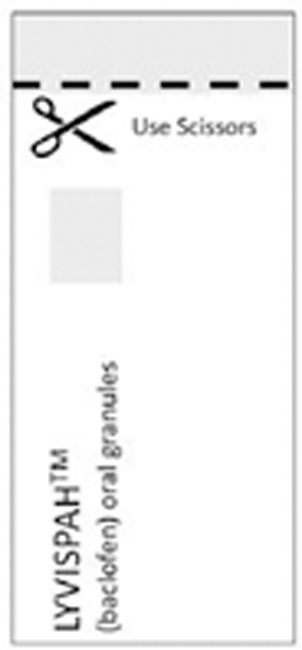
- Open 1 packet of LYVISPAH (see the figure above).
- Empty the full contents of the LYVISPAH packet into 1 tablespoon (15 mL) liquid or soft food and mix it.
- Take LYVISPAH within 2 hours of mixing into liquids or soft foods.
- If more than 1 packet of LYVISPAH is needed for your prescribed dose, mix each packet with a separate amount of liquid or soft food.
- Flush the feeding tube with up to 1 tablespoon (15 mL) of water using a catheter tip syringe.
- Open and empty the full contents of 1 packet of LYVISPAH into a clean container and mix with 1 tablespoon (15 mL) of liquid (apple juice or milk).
- Stir the mixture to make sure all the granules are wet.
- Draw up the mixture of granules into a dosing syringe right away after stirring.
- Give the dose of LYVISPAH through the feeding tube within 2 hours after mixing. If the mixture is in the dosing syringe for 15 minutes and not given, turn the dosing syringe upside down 3 times before you give the dose.
- Fill the dosing syringe with 1 tablespoon (15 mL) of water and flush the feeding tube.
- If more than 1 packet of LYVISPAH is needed for the prescribed dose, mix each packet with a separate amount of liquid.
- Throw away (dispose of) any unused mixture.