Brand Name

Lytgobi

Generic Name
Futibatinib
View Brand Information
FDA approval date: February 03, 2023
Classification: Kinase Inhibitor
Form: Tablet

What is Lytgobi (Futibatinib)?

LYTGOBI is indicated for the treatment of adult patients with previously treated, unresectable, locally advanced or metastatic intrahepatic cholangiocarcinoma harboring fibroblast growth factor receptor 2 gene fusions or other rearrangements [see Dosage and Administration.
Save this treatment for later
Sign Up
Not sure about your diagnosis?
Check Your Symptoms
Tired of the same old research?
Check Latest Advances

Related Clinical Trials

Phase 2 Study of Futibatinib 20 mg and 16 mg in Patients With Advanced Cholangiocarcinoma With FGFR2 Fusions or Rearrangements

Summary: This is an open-label, multinational, randomized Phase 2 study confirming the clinical benefit of 20 mg futibatinib and evaluating the safety and efficacy of 16 mg futibatinib in previously treated CCA harboring FGFR2 gene fusions and other rearrangements.

An Open-Label, Multicenter, First-in-Human, Dose-Escalation and Dose-Expansion, Phase 1/2 Study of BBI-355 and BBI-355 in Combination With Select Targeted Therapies in Subjects With Locally Advanced or Metastatic Solid Tumors With Oncogene Amplifications

Summary: BBI-355 is an oral, potent, selective checkpoint kinase 1 (or CHK1) small molecule inhibitor in development as an ecDNA (extrachromosomal DNA) directed therapy (ecDTx). BBI-825 is an oral, potent, selective ribonucleotide reductase (or RNR) small molecule inhibitor. This is a first-in-human, open-label, 2-part, Phase 1/2 study to determine the safety profile and identify the maximum tolerated dose...

A Phase II Trial of Futibatinib in Combination With Durvalumab (MEDI4736) Administered to Cisplatin-Ineligible Patients With Muscle-Invasive Bladder Cancer Before Cystectomy

Summary: This phase II trial tests how well the combination of futibatinib and durvalumab given before cystectomy works in treating patients with muscle-invasive bladder cancer (MIBC) who are ineligible for cisplatin-based therapy. Cisplatin-based therapy is the standard of care for patients with MIBC. However, many patients cannot receive standard therapy due to poor renal function, peripheral neuropathy,...

Brand Information

1INDICATIONS AND USAGE
LYTGOBI is indicated for the treatment of adult patients with previously treated, unresectable, locally advanced or metastatic intrahepatic cholangiocarcinoma harboring fibroblast growth factor receptor 2 (FGFR2) gene fusions or other rearrangements
This indication is approved under accelerated approval based on overall response rate and duration of response
2DOSAGE FORMS AND STRENGTHS
Tablets:
4 mg, round, white, film-coated tablets debossed with “4MG” on one side, and “FBN” on the other side.
16 mg, round, white, film-coated tablets debossed with "16MG" on one side and "FBN" on the other side
3CONTRAINDICATIONS
None.
4ADVERSE REACTIONS
The following adverse reactions are discussed elsewhere in the labeling:
  • Ocular Toxicity
  • Hyperphosphatemia and Soft Tissue Mineralization
4.1Clinical Trials Experience
Because clinical trials are conducted under widely varying conditions, adverse reaction rates observed in the clinical trials of a drug cannot be directly compared to rates in the clinical trials of another drug and may not reflect the rates observed in practice.
The pooled safety population described in the WARNINGS AND PRECAUTIONS reflect exposure to LYTGOBI as a single agent at 20 mg orally once daily in 318 patients including 145 patients with cholangiocarcinoma and 173 patients with other advanced solid tumors. Among 318 patients who received LYTGOBI, 37% were exposed for 6 months or longer and 13% were exposed for greater than 12 months.
Previously Treated, Unresectable Locally Advanced or Metastatic Intrahepatic Cholangiocarcinoma
The safety of LYTGOBI was evaluated in Study TAS-120-101, which included 103 patients with previously treated, unresectable locally advanced or metastatic intrahepatic cholangiocarcinoma harboring FGFR2 fusions or other gene rearrangements
Serious adverse reactions occurred in 39% of patients receiving LYTGOBI. Serious adverse reactions in ≥2% of patients who received LYTGOBI included pyrexia (3.9%), gastrointestinal hemorrhage (3.9%), ascites (2.9%), musculoskeletal pain (2.9%), and bile duct obstruction (2.9%).
Permanent discontinuation due to an adverse reaction occurred in 4.9% of patients who received LYTGOBI. Adverse reactions requiring permanent discontinuation of LYTGOBI in one patient each were esophagitis, oral dysesthesia, bile duct obstruction, dizziness, and anemia.
Dosage interruptions due to an adverse reaction occurred in 66% of patients who received LYTGOBI. Adverse reactions requiring dosage interruption in ≥5% of patients included hyperphosphatemia, palmar-plantar erythrodysesthesia syndrome, increased alanine aminotransferase, increased aspartate aminotransferase, and fatigue.
Dose reductions due to an adverse reaction occurred in 58% of patients who received LYTGOBI. Adverse reactions requiring dosage reductions in ≥2% of patients who received LYTGOBI included hyperphosphatemia, palmar-plantar erythrodysesthesia syndrome, fatigue, increased alanine aminotransferase, increased aspartate aminotransferase, nail toxicity, and stomatitis.
The most common (≥20%) adverse reactions were nail toxicity, musculoskeletal pain, constipation, diarrhea, fatigue, dry mouth, alopecia, stomatitis, abdominal pain, dry skin, arthralgia, dysgeusia, dry eye, nausea, decreased appetite, urinary tract infection, palmar-plantar erythrodysesthesia syndrome, and vomiting.
The most common laboratory abnormalities (≥20%) were increased phosphate, increased creatinine, decreased hemoglobin, increased glucose, increased calcium, decreased sodium, decreased phosphate, increased alanine aminotransferase, increased alkaline phosphatase, decreased lymphocyte, increased aspartate aminotransferase, decreased platelets, increased activated partial thromboplastin time, decreased leukocytes, decreased albumin, decreased neutrophils, increased creatine kinase, increased bilirubin, decreased glucose, increased prothrombin international normalized ratio, and decreased potassium.
Table 3 summarizes the adverse reactions in TAS-120-101. Table 4 summarizes laboratory abnormalities in TAS-120-101.
Clinically relevant adverse reactions occurring in ≤15% of patients included retinal pigment epithelial detachment (RPED, 7.8%).
5DESCRIPTION
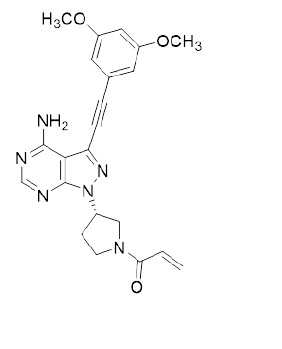
Futibatinib is a kinase inhibitor with the chemical name 1-[(3
Futibatinib Str
Futibatinib is a white crystalline powder. The solubility of futibatinib is pH dependent with decreasing solubility with increasing pH, being practically insoluble at pH 3 or higher. Futibatinib is insoluble in water and poorly soluble in common solvents. LYTGOBI is supplied as 4 mg and 16 mg film-coated tablets for oral administration. Each tablet contains inactive ingredients of corn starch, crospovidone, hydroxypropyl cellulose, lactose monohydrate, magnesium stearate, mannitol, microcrystalline cellulose, and sodium lauryl sulfate. The film coating material contains hypromellose, magnesium stearate, polyethylene glycol, and titanium dioxide.
6HOW SUPPLIED/STORAGE AND HANDLING
LYTGOBI tablets are round, white, and film-coated. The 4 mg tablets are debossed with “4MG” on one side, and “FBN” on the other side. The 16 mg tablets are debossed with “16MG” on one side, and “FBN” on the other. Tablets are packaged in blister cards and supplied in child-resistant DosePak
  • 20 mg daily dose: Each carton contains 1 blister card containing a 7-day supply (35 tablets; 4 mg futibatinib per tablet). [NDC-64842-0120-6]
  • 20 mg daily dose: Each carton contains 1 blister card containing a 7-day supply (14 tablets; 7 tablets each of 4 mg and 16 mg futibatinib per tablet). [NDC-64842-0120-8]
  • 16 mg daily dose: Each carton contains 1 blister card containing a 7-day supply (28 tablets; 4 mg futibatinib per tablet). [NDC-64842-0120-5]
  • 16 mg daily dose: Each carton contains 1 blister card containing a 7-day supply (7 tablets; 16 mg futibatinib per tablet). [NDC-64842-0120-7]
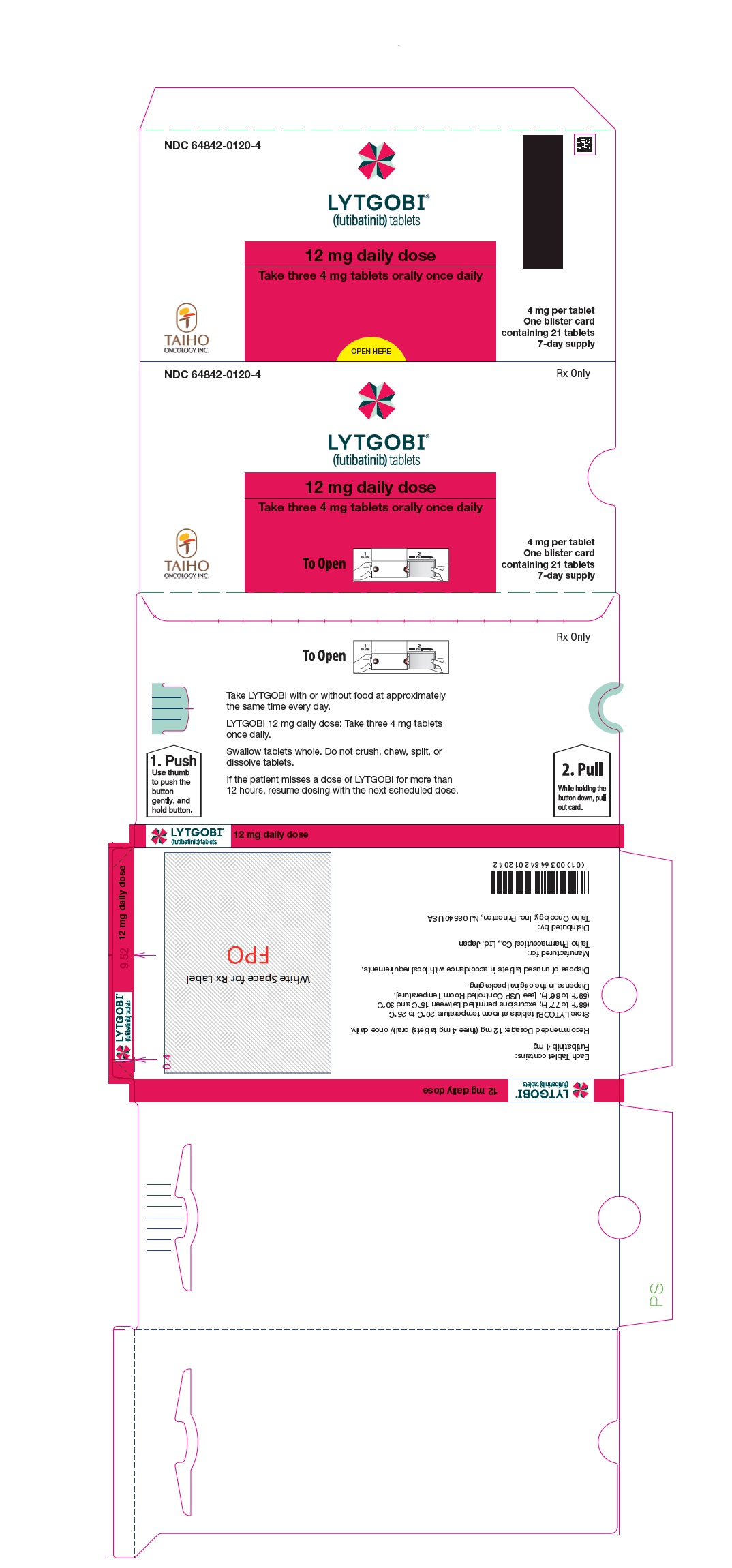
  • 12 mg daily dose: Each carton contains 1 blister card containing a 7-day supply (21 tablets; 4 mg futibatinib per tablet). [NDC-64842-0120-4]
Store LYTGOBI tablets at room temperature 20°C to 25°C (68°F to 77°F); excursions permitted between 15°C and 30°C (59°F to 86°F).
7PATIENT COUNSELING INFORMATION
Advise the patient to read the FDA-approved patient labeling (
Ocular Toxicity
Advise patients that LYTGOBI may cause ocular toxicity including RPED and to immediately inform their healthcare provider if they experience any visual changes
Hyperphosphatemia and Soft Tissue Mineralization
Inform patients that LYTGOBI may cause hyperphosphatemia and soft tissue mineralization and to immediately inform their healthcare provider of any symptoms related to acute change in phosphate levels such as muscle cramps, numbness, or tingling around the mouth
Nail Disorders
Advise patients that LYTGOBI may cause nail disorders
Embryo-Fetal Toxicity
  • Advise females to inform their healthcare provider if they are pregnant or become pregnant. Inform female patients of the risk to a fetus and potential loss of pregnancy
  • Advise females of reproductive potential to use effective contraception while on LYTGOBI and for 1 week after the last dose
  • Advise males with female partners of reproductive potential or who are pregnant to use effective contraception during treatment and for 1 week after receiving the last dose of LYTGOBI
Lactation
  • Advise patients not to breastfeed during treatment with LYTGOBI and for 1 week after the last dose
Administration
  • Instruct patients to not crush, chew, split or dissolve tablets.
  • Instruct patients if they miss a dose by 12 or more hours or if they vomit after taking a dose, resume dosing with the next scheduled dose. Extra tablets should not be taken to make up for the missed dose 
Drug Interactions
Advise patients to inform their healthcare providers of all concomitant medications, including prescription medicines, over-the-counter drugs, and herbal products. Advise patients to avoid grapefruit products during treatment with LYTGOBI
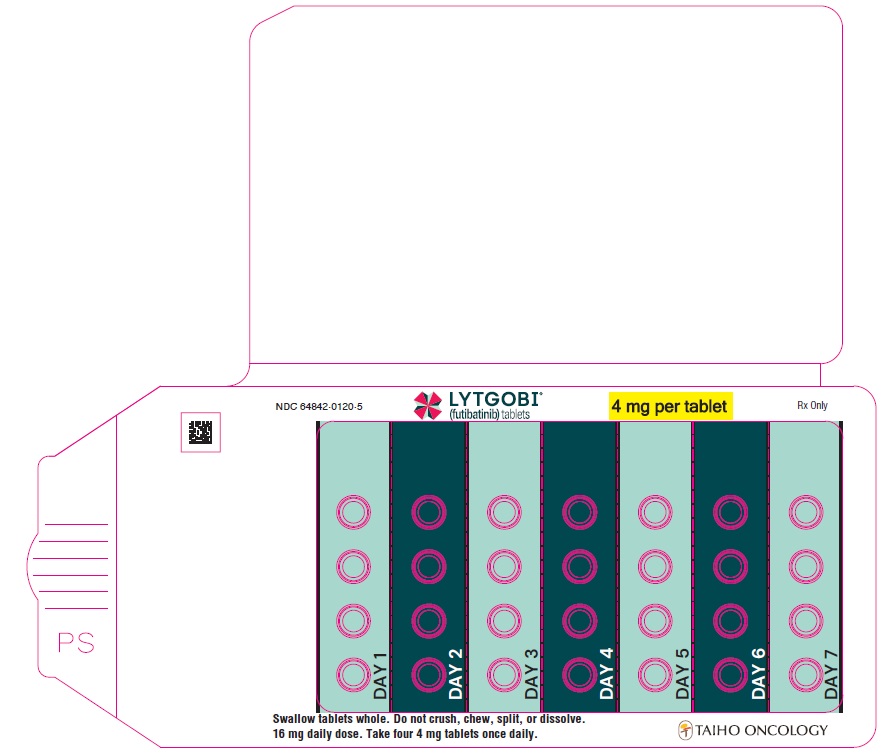
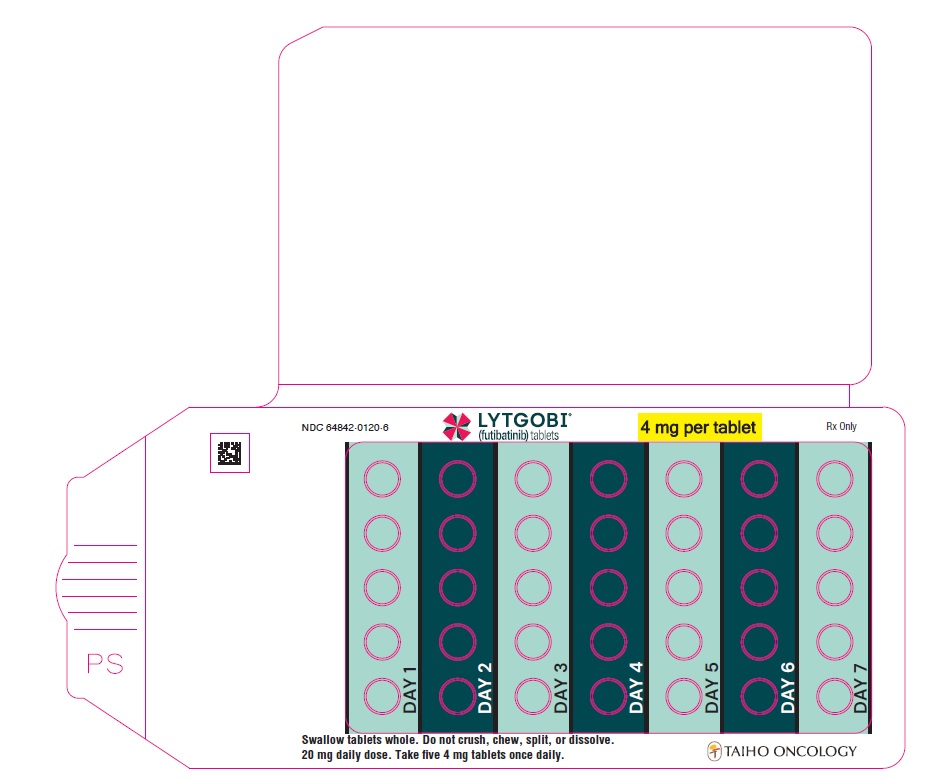
8PRINCIPAL DISPLAY PANEL - Blister 4mg 35ct Card
NDC 64842-0120-6
LYTGOBI
(futibatinib) tablets
4 mg per tablet
Rx Only
Swallow tablets whole. Do not crush, chew, split, or dissolve.
20 mg daily dose. Take five 4 mg tablets once daily.
TAIHO ONCOLOGY
PRINCIPAL DISPLAY PANEL - Blister Card 4mg 35ct
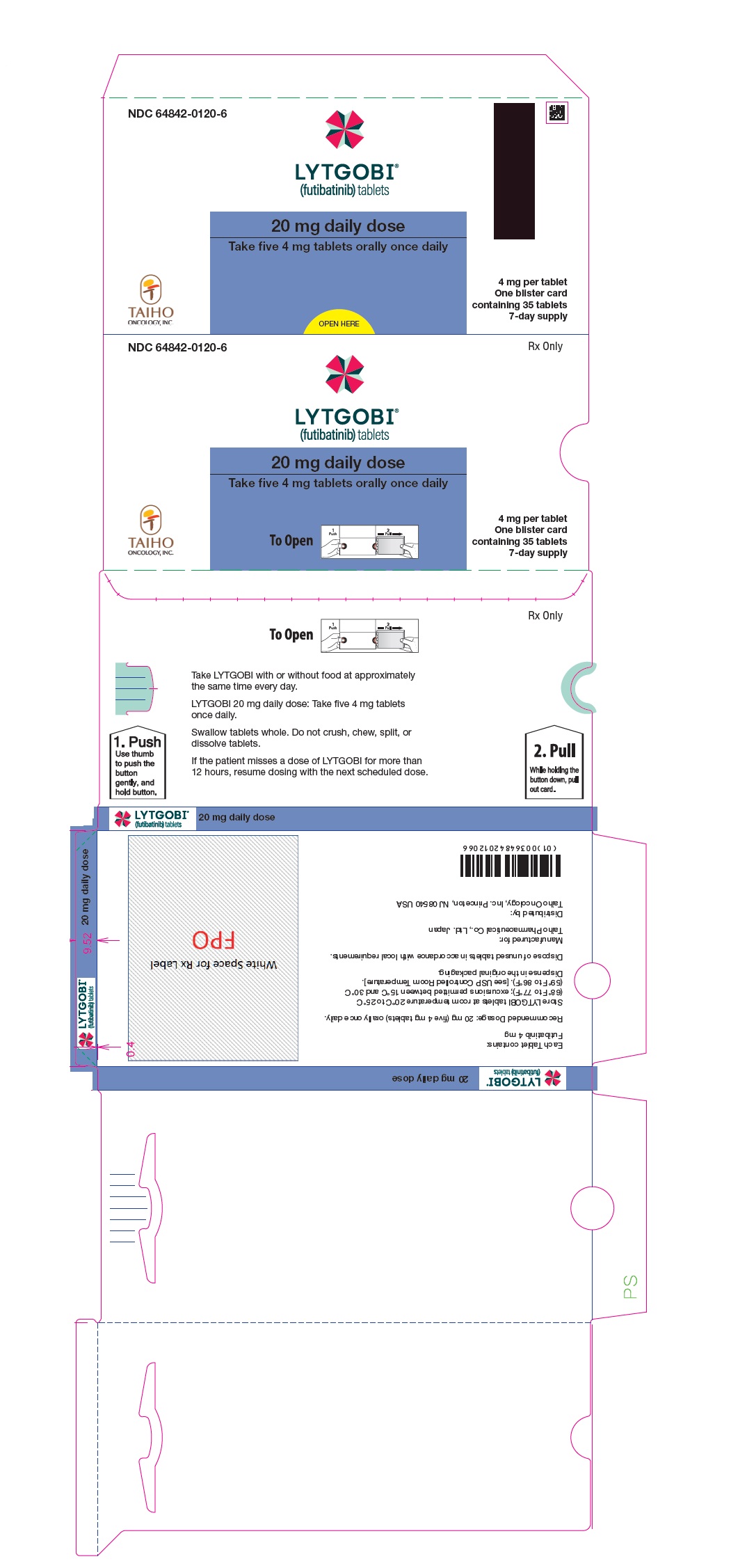
PRINCIPAL DISPLAY PANEL - Carton 4mg 35ct
NDC 64842-0120-6
Rx Only
LYTGOBI
(futibatinib) tablets
20 mg daily dose
Take five 4 mg tablets orally once daily
4 mg per tablet
TAIHO ONCOLOGY, INC.
PRINCIPAL DISPLAY PANEL - Carton 4mg 35ct
9PRINCIPAL DISPLAY PANEL - Blister 20mg 14ct Card
NDC 64842-0120-8
TAIHO
LYTGOBI
(futibatinib) tablets
20 mg daily dose. Take one 4 mg tablet
Rx Only
Swallow tablets whole. Do not crush, chew, split, or dissolve tablets.
PRINCIPAL DISPLAY PANEL - Blister Card 20mg 14ct
PRINCIPAL DISPLAY PANEL - Carton 20mg 14ct
NDC 64842-0120-8
Rx Only
LYTGOBI
(futibatinib) tablets
20 mg daily dose
Take one 4 mg tablet
4 mg per tablet (7 tablets)
16 mg per tablet (7 tablets)
Contains: One blister
TAIHO
PRINCIPAL DISPLAY PANEL - Carton 20mg 14ct
10PRINCIPAL DISPLAY PANEL - Blister 4mg 28ct Card
NDC 64842-0120-5
LYTGOBI
(futibatinib) tablets
4 mg per tablet
Rx Only
Swallow tablets whole. Do not crush, chew, split, or dissolve.
16 mg daily dose. Take four 4 mg tablets once daily.
TAIHO ONCOLOGY
PRINCIPAL DISPLAY PANEL - Blister Card 4mg 28ct
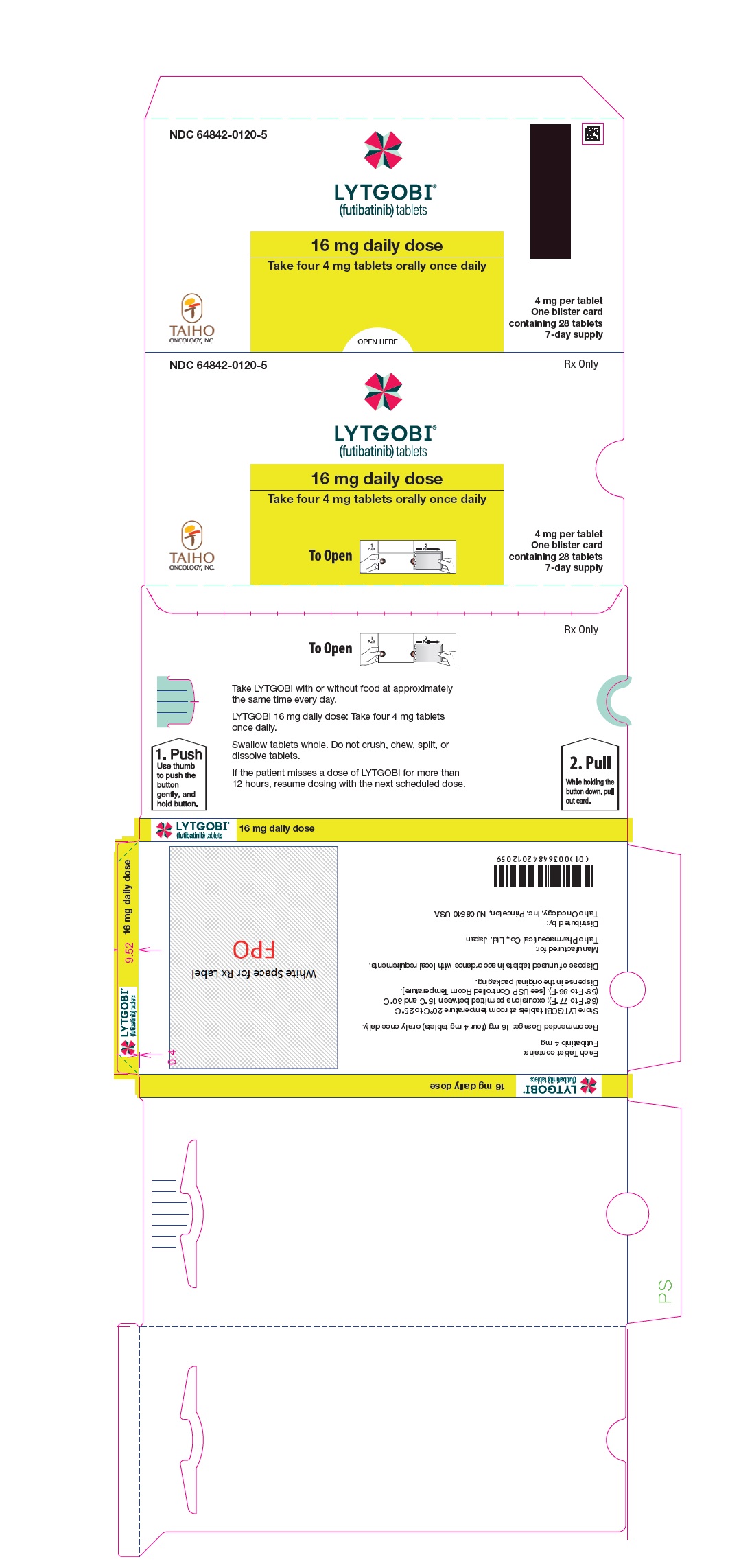
PRINCIPAL DISPLAY PANEL - Carton 4mg 28ct
NDC 64842-0120-5
Rx Only
LYTGOBI
(futibatinib) tablets
16 mg daily dose
Take four 4 mg tablets orally once daily
4 mg per tablet
TAIHO ONCOLOGY, INC.
PRINCIPAL DISPLAY PANEL - Carton 4mg 28ct
11PRINCIPAL DISPLAY PANEL - Blister 16mg 7ct Card
NDC 64842-0120-7
TAIHO
LYTGOBI
(futibatinib) tablets
16 mg daily dose. Take one
Rx Only
Swallow tablets whole. Do not crush, chew, split, or dissolve tablets.
PRINCIPAL DISPLAY PANEL - Blister Card 16mg 7ct
PRINCIPAL DISPLAY PANEL - Carton 16mg 7ct
NDC 64842-0120-7
Rx Only
LYTGOBI
(futibatinib) tablets
16 mg daily dose
Take one 16 mg tablet orally once daily
16 mg per tablet
Contains: One blister
TAIHO
PRINCIPAL DISPLAY PANEL - Carton 16mg 7ct
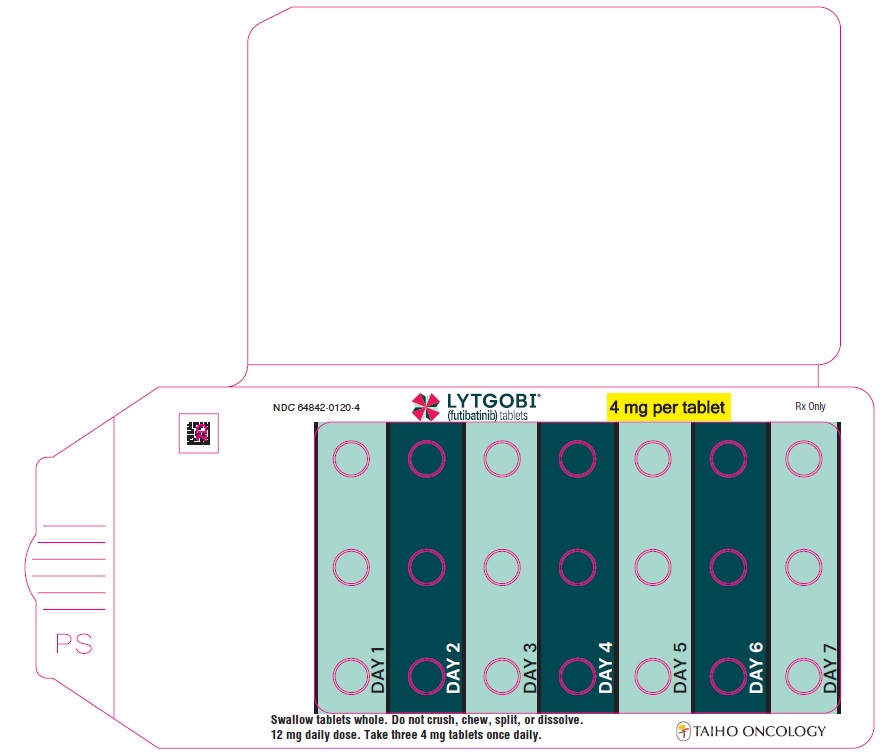
12PRINCIPAL DISPLAY PANEL - Blister 4mg 21ct Card
NDC 64842-0120-4
LYTGOBI
(futibatinib) tablets
4 mg per tablet
Rx Only
Swallow tablets whole. Do not crush, chew, split, or dissolve.
12 mg daily dose. Take three 4 mg tablets once daily.
TAIHO ONCOLOGY
PRINCIPAL DISPLAY PANEL - Blister Card 4mg 21ct
PRINCIPAL DISPLAY PANEL - Carton 4mg 21ct
NDC 64842-0120-4
Rx Only
LYTGOBI
(futibatinib) tablets
12 mg daily dose
Take three 4 mg tablets orally once daily
4 mg per tablet
TAIHO ONCOLOGY, INC.
PRINCIPAL DISPLAY PANEL - Carton 4mg 21ct