Chronic Obstructive Pulmonary Disease (COPD) Treatments

Find Chronic Obstructive Pulmonary Disease (COPD) Treatments

Generic Name

Glycopyrrolate

Brand Names
Glyrx-Pf, Cuvposa, Bevespi, Prevduo, Glycate
FDA approval date: September 30, 1990
Classification: Cholinergic Muscarinic Antagonist
Form: Injection, Aerosol, Tablet, Liquid, Solution

What is Glyrx-Pf (Glycopyrrolate)?

In Anesthesia Glycopyrrolate injection is indicated for use as a preoperative antimuscarinic to reduce salivary, tracheobronchial, and pharyngeal secretions; to reduce the volume and free acidity of gastric secretions; and to block cardiac vagal inhibitory reflexes during induction of anesthesia and intubation. When indicated, glycopyrrolate injection may be used intraoperatively to counteract surgically or drug- induced or vagal reflexes associated arrhythmias. Glycopyrrolate protects against the peripheral muscarinic effects of cholinergic agents such as neostigmine and pyridostigmine given to reverse the neuromuscular blockade due to non-depolarizing muscle relaxants. In Peptic Ulcer For use in adults as adjunctive therapy for the treatment of peptic ulcer when rapid anticholinergic effect is desired or when oral medication is not tolerated.
Save this treatment for later
Sign Up
Not sure about your diagnosis?
Check Your Symptoms
Tired of the same old research?
Check Latest Advances

Related Clinical Trials

A Phase IIb, Randomized, Double-blind, Placebo- Controlled, Parallel Group Study to Assess the Efficacy and Safety of Ensifentrine-glycopyrrolate Fixed-dose Combination at Two Dose Levels Compared to Glycopyrrolate or Ensifentrine Monotherapy in Subjects With COPD

Summary: This study will assess the safety and efficacy of fixed dose combinations of ensifentrine with two different glycopyrrolate dose levels compared to placebo and to the individual components of the fixed dose combinations, each administered twice a day via standard jet nebulizer, in adult subjects with chronic obstructive pulmonary disease (COPD).

A Phase II, Double-blind, Randomized, Multiple Dose, Cross Over, Three-treatment, Three-period, Six Sequence Placebo Controlled Trial to Evaluate Efficacy, Pharmacokinetics (PK), Pharmacodynamics (PD) and Safety and Tolerability of Glycopyrronium (Bromide) in Children From 6 to Less Than 12 Years of Age With Asthma.

Summary: The purpose of this study is to characterize the bronchodilator effect, systemic exposure and safety/tolerability of two different doses of inhaled glycopyrronium, when compared to placebo. Outcome of this study will be used to determine the dose of inhaled glycopyrronium for the development of fixed dose combination indacaterol/mometasone/glycopyrronium (QVM149) for children aged 6 to less than 1...

Pooled Analysis of Multi-country, Open-label Single-arm, Non-interventional, Multi-center, Cohort Studies of Real-world Outcomes in New Users of Budesonide/Glycopyrronium/Formoterol (BGF) in Routine Care Setting

Summary: The CHOROS pooled analysis is a retrospective secondary data use analysis of integrated individual participant data from a series of planned and on-going primary prospective, non-interventional, multi-center studies sponsored by AstraZeneca and conducted in the pulmonary/primary care practitioner setting in multiple countries and may include data from the following countries: United Kingdom, Germa...

Brand Information

    GLYRX-PF (glycopyrrolate)
    1INDICATIONS AND USAGE
    GLYRX
    in anesthesia (all ages)
    • for reduction of salivary, tracheobronchial, and pharyngeal secretions, reduction of volume and acidity of gastric secretions, and blockade of cardiac inhibitory reflexes during induction of anesthesia and intubation,
    • intraoperatively to counteract surgically or drug-induced or vagal reflex-associated arrhythmias, and
    • for protection against peripheral muscarinic effects of cholinergic agents such as neostigmine and pyridostigmine given to reverse the neuromuscular blockade due to non-depolarizing agents.
    in peptic ulcer (adults)
    • To reduce symptoms of a peptic ulcer as an adjunct to treatment of peptic ulcer when rapid anticholinergic effect is desired or when oral medication is not tolerated.
    • Limitations of UseGLYRX-PF is not indicated as monotherapy for the treatment of peptic ulcer because effectiveness in peptic ulcer healing has not been established.
    2DOSAGE FORMS AND STRENGTHS
    GLYRX
    3CONTRAINDICATIONS
    GLYRX
    • patients with known hypersensitivity to glycopyrrolate or any of its inactive ingredients.
    • peptic ulcer patients with the following concurrent conditions: glaucoma; obstructive uropathy (for example, bladder neck obstruction due to prostatic hypertrophy); obstructive disease of the gastrointestinal tract (as in achalasia, pyloroduodenal stenosis, etc.); paralytic ileus, intestinal atony of the elderly or debilitated patient; unstable cardiovascular status in acute hemorrhage; severe ulcerative colitis; toxic megacolon complicating ulcerative colitis; myasthenia gravis.
    4ADVERSE REACTIONS
    The following adverse reactions were identified in clinical studies or postmarketing reports. Because some of these reactions were reported voluntarily from a population of uncertain size, it is not always possible to reliably estimate their frequency or establish a causal relationship to drug exposure.
    Adverse reactions to anticholinergics include xerostomia (dry mouth); urinary hesitancy and retention; blurred vision and photophobia due to mydriasis (dilation of the pupil); cycloplegia; increased ocular tension; tachycardia; palpitation; decreased sweating; loss of taste; headache; nervousness; drowsiness; weakness; dizziness; insomnia; nausea; vomiting; impotence; suppression of lactation; constipation; bloated feeling; severe allergic reactions including anaphylactic/anaphylactoid reactions; hypersensitivity; urticaria, pruritus, dry skin, and other dermal manifestations; some degree of mental confusion and/or excitement, especially in elderly persons.
    The following adverse reactions have been reported from post-marketing experience with glycopyrrolate: malignant hyperthermia; cardiac arrhythmias (including bradycardia, ventricular tachycardia, ventricular fibrillation); cardiac arrest; hypertension; hypotension; seizures; and respiratory arrest. Post-marketing reports have included cases of heart block and QTc interval prolongation associated with the combined use of glycopyrrolate and an anticholinesterase. Injection site reactions including pruritus, edema, erythema, and pain have also been reported.
    5DRUG INTERACTIONS
    The concurrent use of GLYRX
    Concomitant administration of GLYRX
    6OVERDOSAGE
    To combat peripheral anticholinergic effects, a quaternary ammonium anticholinesterase such as neostigmine methylsulfate (which does not cross the blood-brain barrier) may be given intravenously in increments of 0.25 mg in adults. This dosage may be repeated every five to ten minutes until anticholinergic overactivity is reversed or up to a maximum of 2.5 mg. Proportionately smaller doses should be used in pediatric patients. Indication for repetitive doses of neostigmine should be based on close monitoring of the decrease in heart rate and the return of bowel sounds.
    If CNS symptoms (e.g., excitement, restlessness, convulsions, psychotic behavior) occur, physostigmine (which does cross the blood–brain barrier) may be used. Physostigmine 0.5 to 2 mg should be slowly administered intravenously and repeated as necessary up to a total of 5 mg in adults. Proportionately smaller doses should be used in pediatric patients.
    To combat hypotension, administer IV fluids and/or pressor agents along with supportive care. Fever should be treated symptomatically.
    Following overdosage, a curare-like action may occur, i.e., neuromuscular blockade leading to muscular weakness and possible paralysis. In the event of a curare-like effect on respiratory muscles, artificial respiration should be instituted and maintained until effective respiratory action returns.
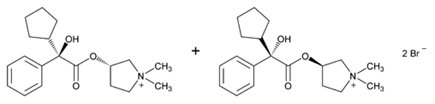
    7DESCRIPTION
    GLYRX
    Glycopyrrolate is a quaternary ammonium salt with the following chemical name: (
    Structure
    Glycopyrrolate occurs as a white, odorless, crystalline powder. It is soluble in water and alcohol, and practically insoluble in chloroform and ether. It is completely ionized at physiological pH values. GLYRX
    8HOW SUPPLIED, STORAGE AND HANDLING
    GLYRX
    0.2 mg/mL single-dose vials packaged in 25s (NDC 51754-6000-4)
    0.4 mg/2 mL (0.2 mg/mL) single-dose vials packaged in 25s (NDC 51754-6001-4)
    0.6 mg/3 mL (0.2 mg/mL) single-dose prefilled disposable syringes packaged in 10s (NDC 51754-6013-3)
    1 mg/5 mL (0.2 mg/mL) single-dose prefilled disposable syringes packaged in 10s (NDC 51754-6015-3)
    Store at 20°C to 25°C (68°F to 77°F); excursions permitted to 15°C to 30°C (59°F to 86°F). [See USP Controlled Room Temperature].
    9PATIENT COUNSELING INFORMATION
    Drowsiness or Blurred Vision: Inform patients that GLYRX®-PF may cause drowsiness or blurred vision. Warn patients not to operate a motor vehicle or other machinery or perform hazardous work until these issues resolve [see Warnings and Precautions (
    Heat Prostration: Inform patients that in the presence of fever, high environmental temperature and/or during physical exercise, heat prostration can occur with use of anticholinergic agents, including GLYRX®-PF (due to decreased sweating), particularly in children and the elderly. Advise patients to avoid exertion and high environmental temperature after receiving GLYRX®-PF [see Warnings and Precautions (.
    Light Sensitivity: Advise patients that glycopyrrolate injection may cause sensitivity of the eyes to light and to protect their eyes from light after receiving GLYRX®-PF [see Warnings and Precautions (.
    Drug Interactions: Inform patients that GLYRX®-PF may interact with other drugs. Advise patients to report to their healthcare provider the use of any other medication [see Drug Interactions (].
    9.1Manufactured and Distributed by:
    Logo
    Exela Pharma Sciences, LLC
    Lenoir, NC 28645
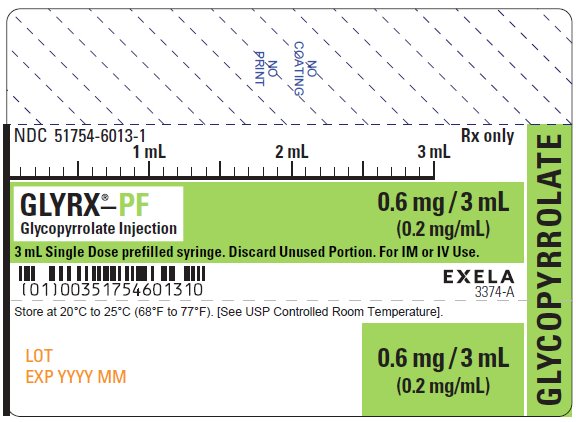
    10PACKAGE/LABEL PRINCIPAL DISPLAY PANEL- 3 mL Syringe Label
    3 mL Syring Label
    NDC 51754-6013-1 Rx only
    GLYRX
    Glycopyrrolate Injection 0.6 mg/3 mL
    (0.2 mg/mL)
    3 mL Single Dose prefilled syringe. Discard Unused Portion. For IM or IV Use.
    Store at 20°C to 25°C (68°F to 77°F). [See USP Controlled Room Temperature
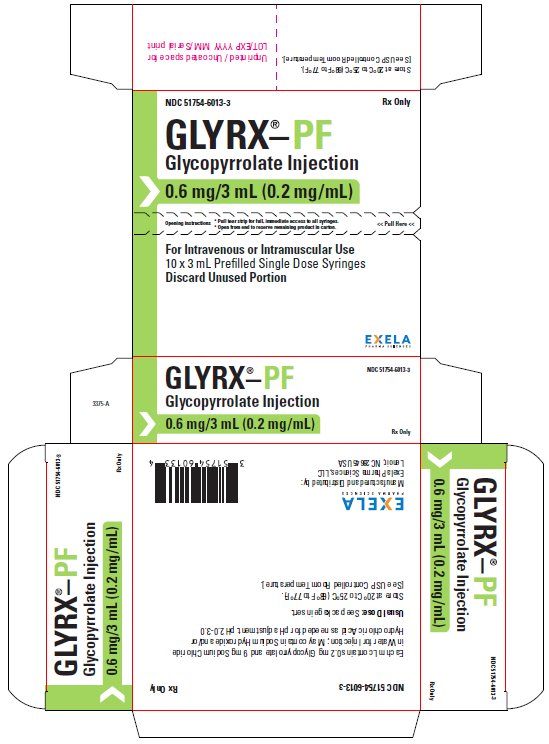
    11PACKAGE/LABEL PRINCIPAL DISPLAY PANEL- 3 mL Syringe Carton
    3 mL Syring Carton
    NDC 51754-6013-3 Rx only
    GLYRX
    Glycopyrrolate Injection
    0.6 mg/3 mL (0.2 mg/mL)
    For Intravenous or Intramuscular Use
    10 x 3 mL Single Dose Prefilled Syringes
    Discard Unused Portion
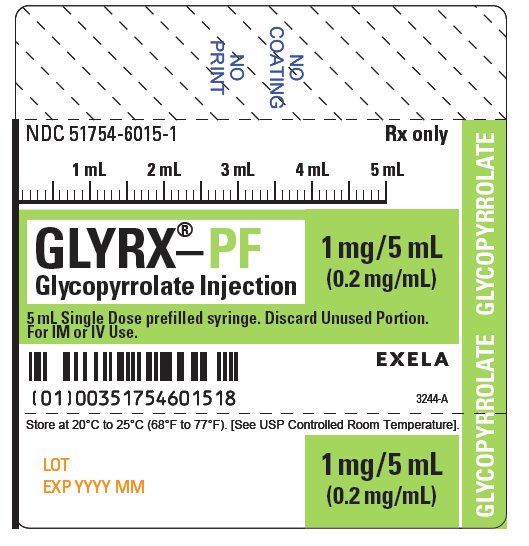
    12PACKAGE/LABEL PRINCIPAL DISPLAY PANEL-5 mL Syringe Label
    5 mL Syringe Label
    NDC 51754-6015-1 Rx Only                
    GLYRX
    Glycopyrrolate Injection 1 mg/5 mL
    (0.2 mg/mL)
    5 mL Single Dose prefilled syringe. Discard Unused Portion.
    For IM or IV Use.
    Store at 20°C to 25°C (68°F to 77°F). [See USP Controlled Room Temperature]
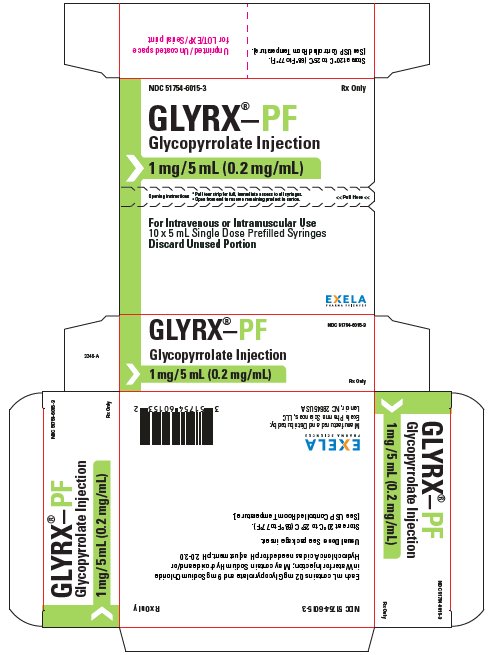
    13PACKAGE/LABEL PRINCIPAL DISPLAY PANEL- 5 mL Syringe Carton
    5 mL Syringe Carton
    NDC 51754-6015-3 Rx Only                
    GLYRX
    Glycopyrrolate Injection
    1 mg/5 mL (0.2 mg/mL)
    For Intravenous or Intramuscular Use
    10 x 5 mL Single Dose Prefilled Syringes
    Discard Unused Portion
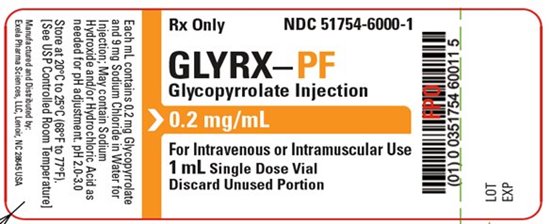
    14PACKAGE/LABEL PRINCIPAL DISPLAY PANEL- 1 mL Vial Label
    1 mL Vial Label
    Rx Only                NDC 51754-6000-1
    GLYRX-PF
    Glycopyrrolate Injection
    0.2 mg/mL
    For Intravenous or Intramuscular Use
    1 mL Single Dose Vial
    Discard Unused Portion
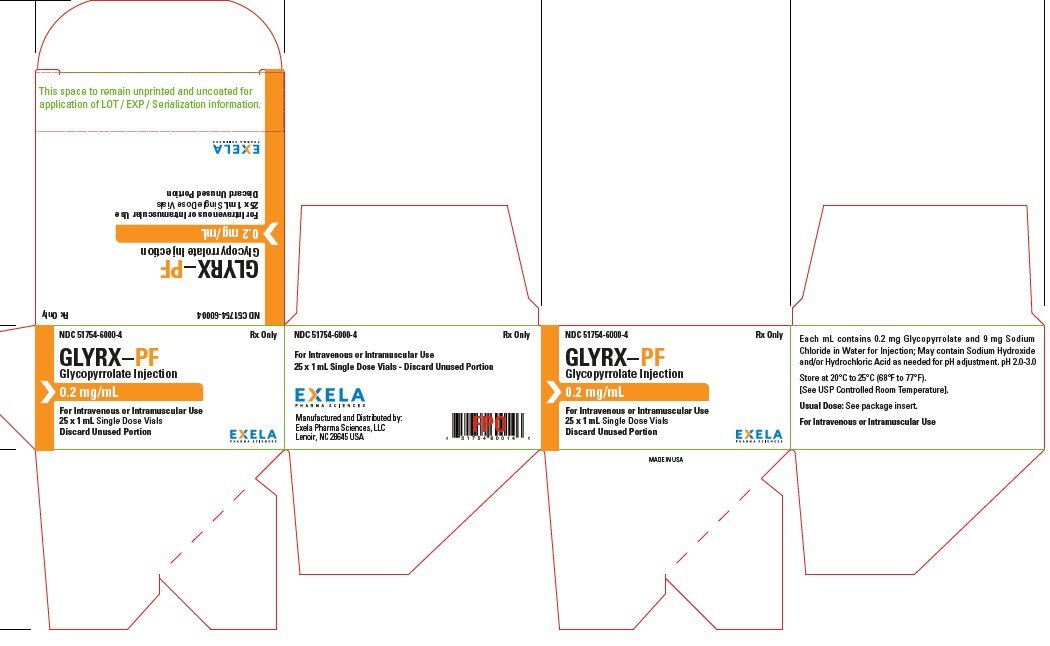
    15PACKAGE/LABEL PRINCIPAL DISPLAY PANEL- 1 mL Carton
    1 mL Carton
    Rx Only                NDC 51754-6000-4
    GLYRX-PF
    Glycopyrrolate Injection
    0.2 mg/mL
    For Intravenous or Intramuscular Use
    25 x 1 mL Single Dose Vials
    Discard Unused Portion
    Exela Pharma Sciences, LLC
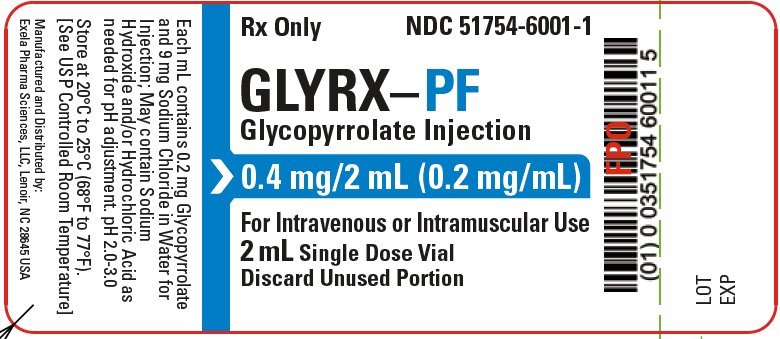
    16PACKAGE/LABEL PRINCIPAL DISPLAY PANEL-2 mL Vial Label
    2 mL Vial
    Rx Only                NDC 51754-6001-1
    GLYRX-PF
    Glycopyrrolate Injection
    0.4 mg/2 mL (0.2 mg/mL)
    For Intravenous or Intramuscular Use
    2 mL Single Dose Vial
    Discard Unused Portion
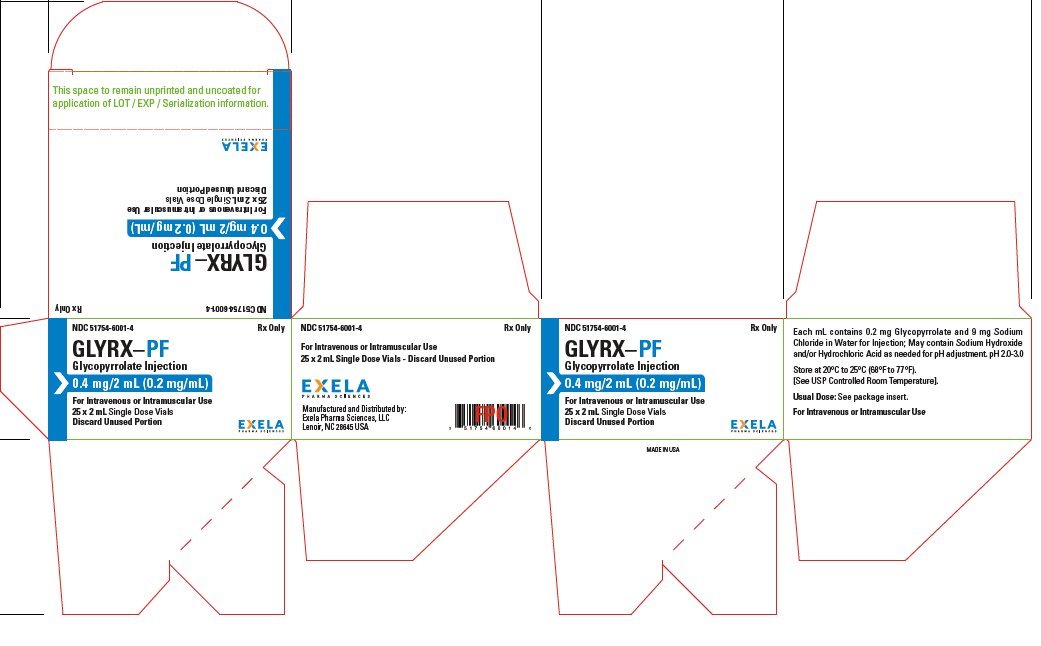
    17PACKAGE/LABEL PRINCIPAL DISPLAY PANEL- 2 mL Vial Carton
    2 mL Carton
    Rx Only                NDC 51754-6001-4
    GLYRX-PF
    Glycopyrrolate Injection
    0.4 mg/2 mL
    For Intravenous or Intramuscular Use
    25 x 2 mL Single Dose Vials
    Discard Unused Portion
    Exela Pharma Sciences, LLC