Conjunctivitis (Pink Eye) Treatments
Find Conjunctivitis (Pink Eye) Treatments
Azithromycin
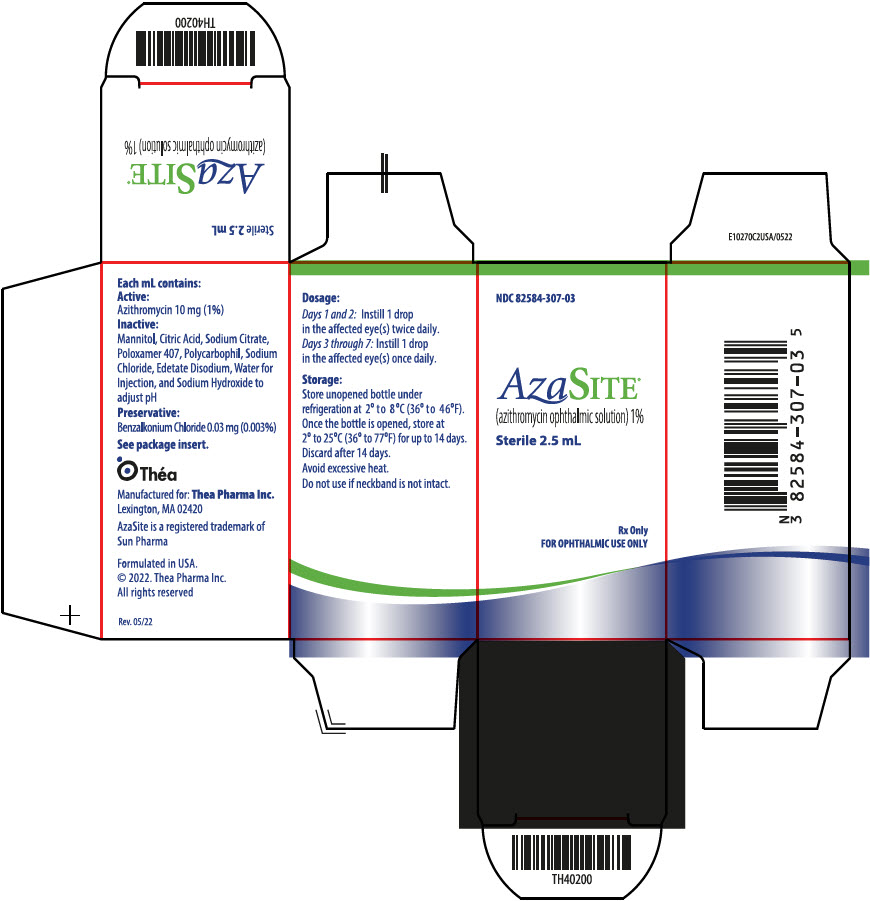
What is Azasite (Azithromycin)?


Related Clinical Trials
Summary: This double-blind, randomized, placebo-controlled, multinational, multicenter, parallel-group, Phase 3, 2-arm, study will investigate the efficacy and safety of belumosudil compared with placebo, both administered on top of azithromycin and standard-of-care regimen of immunosuppression in male or female participants at least 1 year after bilateral lung transplant, who are at least 18 years of age ...
Summary: The MAC-HS study is a testing whether hypertonic saline helps improve symptoms and clearance of mycobacteria in patients with M. avium complex lung infections.
Summary: Murine typhus is a disease caused by Rickettisa typhi, an obligate intracellular bacterium transmitted by rodent fleas. The disease has a worldwide distribution; however the true burden is unknown, related to its non-specific presentation and lack of access to diagnosis in many regions. A systematic review of untreated murine typhus based on observational studies of a total of 239 patients has est...
Related Latest Advances
Brand Information
(azithromycin ophthalmic solution) 1%
- wear contact lenses. Do not wear contact lenses if you have signs or symptoms of bacterial conjunctivitis.
- are pregnant or plan to become pregnant. Talk to your doctor if you are pregnant or plan to become pregnant.
- are breast-feeding or plan to breast-feed. AzaSite passes into your breast milk. Talk to your doctor about the best way to feed your baby if you are using AzaSite.
- Read the Instructions for Use at the end of this Patient Information leaflet for the right way to use AzaSite.
- Use AzaSite exactly as your doctor tells you to use it.
- For the first 2 days place 1 drop of AzaSite in your eye (or eyes) each morning and 1 drop in your eye (or eyes) each evening. Wait 8 to 12 hours after placing your morning drops before you place evening drops in your eye (or eyes).
- For the next 5 days place 1 drop of AzaSite in your eye (or eyes) 1 time each day.
- Make sure you continue to use AzaSite as directed by your doctor even if you feel better after you start using it. Skipping drops can increase the chances that:
- discharge coming from the eye
- eye redness
- eye irritation
- Serious rash or serious allergic reactions may occur. Azithromycin, the active ingredient in AzaSite, may cause a serious rash or a serious allergic reaction. Both of these reactions may need to be treated in a hospital and may be life-threatening.
- Stop taking AzaSite and call your doctor right away or get emergency help if you have any of these symptoms:
- Using AzaSite for a long time may cause other bacteria or fungi to grow. If this happens you may get a new infection. Tell your doctor right away if your symptoms do not get better.
- eye burning, stinging and irritation when the drop hits your eye
- irritation on your eyelid and the skin around your eye
- a feeling of discomfort and irritation or that something is in your eye
- dry eye
- eye pain
- eye itching
- discharge coming from your eye
- changes to the surface of your eye
- blurred vision
- changes in your taste
- hives and rash on your skin
- stuffy nose and sinus infection
- swelling around your eye or of your face
- Before you open your AzaSite, store it in the refrigerator between 36°F to 46°F (2°C to 8°C).
- After you open your AzaSite, store it at room temperature or the refrigerator between 36°F to 77°F (2°C to 25°C)
- AzaSite should not be stored for more than 14 days after opening. After 14 days, throw the AzaSite bottle away.
- Safely throw away medicine that is out of date or no longer needed.
(azithromycin ophthalmic solution) 1%
- AzaSite is for use as an eye drop only.
- Avoid letting the applicator tip touch your eye, your fingers, or other objects.
- If a drop misses your eye, try again.
- Follow the steps below to use AzaSite correctly.