Diabetic Nephropathy Treatments

Find Diabetic Nephropathy Treatments

Generic Name

Valsartan

Brand Names
Amlodipine, Diovan, Entresto, Exforge, Prexxartan, Sacubitril
FDA approval date: March 06, 1998
Classification: Dihydropyridine Calcium Channel Blocker
Form: Pellet, Tablet, Solution

What is Amlodipine (Valsartan)?

Amlodipine, valsartan and hydrochlorothiazide tablets are indicated for the treatment of hypertension, to lower blood pressure. Lowering blood pressure reduces the risk of fatal and nonfatal cardiovascular events, primarily strokes and myocardial infarctions. These benefits have been seen in controlled trials of antihypertensive drugs from a wide variety of pharmacologic classes, including amlodipine, hydrochlorothiazide, and the ARB class to which valsartan principally belongs. There are no controlled trials demonstrating risk reduction with amlodipine, valsartan and hydrochlorothiazide tablets. Control of high blood pressure should be part of comprehensive cardiovascular risk management, including, as appropriate, lipid control, diabetes management, antithrombotic therapy, smoking cessation, exercise, and limited sodium intake. Many patients will require more than 1 drug to achieve blood pressure goals. For specific advice on goals and management, see published guidelines, such as those of the National High Blood Pressure Education Program’s Joint National Committee on Prevention, Detection, Evaluation, and Treatment of High Blood Pressure . Numerous antihypertensive drugs, from a variety of pharmacologic classes and with different mechanisms of action, have been shown in randomized controlled trials to reduce cardiovascular morbidity and mortality, and it can be concluded that it is blood pressure reduction, and not some other pharmacologic property of the drugs, that is largely responsible for those benefits. The largest and most consistent cardiovascular outcome benefit has been a reduction in the risk of stroke, but reductions in myocardial infarction and cardiovascular mortality also have been seen regularly. Elevated systolic or diastolic pressure causes increased cardiovascular risk, and the absolute risk increase per mmHg is greater at higher blood pressures, so that even modest reductions of severe hypertension can provide substantial benefit. Relative risk reduction from blood pressure reduction is similar across populations with varying absolute risk, so the absolute benefit is greater in patients who are at higher risk independent of their hypertension , and such patients would be expected to benefit from more aggressive treatment to a lower blood pressure goal. Some antihypertensive drugs have smaller blood pressure effects in black patients, and many antihypertensive drugs have additional approved indications and effects . These considerations may guide selection of therapy. Limitation of Use Amlodipine, valsartan and hydrochlorothiazide tablet is not indicated for the initial therapy of hypertension. Amlodipine, valsartan and hydrochlorothiazide tablet is a combination tablet of amlodipine, a dihydropyridine calcium channel blocker , valsartan, an angiotensin II receptor blocker , and hydrochlorothiazide, a thiazide diuretic. Amlodipine, valsartan and hydrochlorothiazide tablets are indicated for the treatment of hypertension to lower blood pressure. Lowering blood pressure reduces the risk of fatal and nonfatal cardiovascular events, primarily strokes, and myocardial infarctions. Limitations of Use Amlodipine, valsartan and hydrochlorothiazide tablet is not indicated for initial treatment of hypertension.
Save this treatment for later
Sign Up
Not sure about your diagnosis?
Check Your Symptoms
Tired of the same old research?
Check Latest Advances

Related Clinical Trials

Phase II Trial of Alpelisib With iNOS Inhibitor and Nab-paclitaxel in Patients With HER2 Negative Metastatic or Locally Advanced Metaplastic Breast Cancer (MpBC)

Summary: This is a research study to test the safety and effectiveness of using the drug alpelisib together with chemotherapy (nab-paclitaxel) and a drug called L-NMMA in patients with HER2 negative metastatic or locally advanced metaplastic breast cancer, who have not responded to previous treatments. Participants in this study in addition to the standard care chemotherapy will also receive the drug alpel...

DELayed Initiation of ARNI and SGLT2i in Heart Failure With Corrected aetiologY (DELAY-HF), Pilot Study

Summary: In patients with heart failure due to a reversible underlying cause-such as valvular heart disease or coronary artery disease-surgical or procedural correction of the underlying lesion (valve repair/replacement, TAVI, PCI, or CABG) frequently leads to spontaneous recovery of cardiac function, even without neurohormonal modulators. In this clinical setting, a substantial proportion of patients may ...

Cardiac Effects of Mineralocorticoid Receptor Antagonism After Preeclampsia

Summary: The goal of this clinical trial is to determine if the medication eplerenone yields greater improvements in coronary microvascular function than chlorthalidone in women who experienced preeclampsia during pregnancy and subsequently developed chronic hypertension. The main Aims are: * To test the hypothesis that, in women with prior preeclampsia, current chronic hypertension, and concentric LV remo...

Brand Information

    amlodipine,valsartan and hydrochlorothiazide (amlodipine,valsartan and hydrochlorothiazide)
    BOXED WARNING
    WARNING: FETAL TOXICITY
    1INDICATIONS & USAGE
    Amlodipine, valsartan and hydrochlorothiazide tablets are indicated for the treatment of hypertension, to lower blood pressure. Lowering blood pressure reduces the risk of fatal and nonfatal cardiovascular events, primarily strokes and myocardial infarctions. These benefits have been seen in controlled trials of antihypertensive drugs from a wide variety of pharmacologic classes, including amlodipine, hydrochlorothiazide, and the ARB class to which valsartan principally belongs. There are no controlled trials demonstrating risk reduction with amlodipine, valsartan and hydrochlorothiazide tablets.
    2DOSAGE FORMS & STRENGTHS
    • 5 mg amlodipine /160 mg valsartan /12.5 mg hydrochlorothiazide Tablets, USP – White, oval shaped biconvex film coated, tablets debossed with “T23” on one side and plain on other side.
    3CONTRAINDICATIONS
    Do not use in patients with anuria, hypersensitivity to other sulfonamide-derived drugs, or hypersensitivity to any component of this product.
    4DRUG INTERACTIONS
    No drug interaction studies have been conducted with amlodipine, valsartan and hydrochlorothiazide tablets and other drugs, although studies have been conducted with the individual components. A pharmacokinetic drug-drug interaction study has been conducted to address the potential for pharmacokinetic interaction between the triple combination, amlodipine, valsartan and hydrochlorothiazide tablets, and the corresponding 3 double combinations. No clinically relevant interaction was observed.
    Immunosuppressants
    Amlodipine may increase the systemic exposure of cyclosporine or tacrolimus when coadministered. Frequent monitoring of trough blood levels of cyclosporine and tacrolimus is recommended and adjust the dose when appropriate [see Clinical Pharmacology (
    Valsartan
    Agents Increasing Serum Potassium: Concomitant use of valsartan with other agents that block the renin-angiotensin system, potassium-sparing diuretics (e.g., spironolactone, triamterene, amiloride), potassium supplements, salt substitutes
    containing potassium or other drugs that may increase potassium levels (e.g., heparin) may lead to increases in serum potassium and in heart failure patients to increases in serum creatinine. If co-medication is considered necessary, monitoring of serum potassium is advisable.
    Non-Steroidal Anti-Inflammatory Agents including Selective Cyclooxygenase-2 Inhibitors (COX-2 Inhibitors):
    In patients who are elderly, volume-depleted (including those on diuretic therapy), or with compromised renal function, coadministration of NSAIDs, including selective COX-2 inhibitors, with angiotensin II receptor antagonists, including valsartan, may result in deterioration of renal function, including possible acute renal failure. These effects are usually reversible. Monitor renal function periodically in patients receiving valsartan and NSAID therapy.
    The antihypertensive effect of angiotensin II receptor antagonists, including valsartan, may be attenuated by NSAIDs including selective COX-2 inhibitors.
    Dual Blockade of the Renin-Angiotensin System (RAS): Dual blockade of the RAS with angiotensin receptor blockers, ACE inhibitors, or aliskiren is associated with increased risks of hypotension, hyperkalemia, and changes in renal function (including acute renal failure) compared to monotherapy. Most patients receiving the combination of two RAS inhibitors do not obtain any additional benefit compared to monotherapy. In general, avoid combined use of RAS inhibitors. Closely monitor blood pressure, renal function, and electrolytes in patients on valsartan and other agents that affect the RAS.
    Dual Blockade of the Renin-Angiotensin System (RAS): Dual blockade of the RAS with angiotensin receptor blockers, ACE inhibitors, or aliskiren is associated with increased risks of hypotension, hyperkalemia, and changes in renal function (including acute renal failure) compared to monotherapy. Most patients receiving the combination of two RAS inhibitors do not obtain any additional benefit compared to monotherapy. In general, avoid combined use of RAS inhibitors. Closely monitor blood pressure, renal function, and electrolytes in patients on valsartan and other agents that affect the RAS.
    Do not coadminister aliskiren with valsartan in patients with diabetes. Avoid use of aliskiren with valsartan in patients with renal impairment (GFR <60 mL/min). 
    Valsartan – Hydrochlorothiazide
    Lithium: Increases in serum lithium concentrations and lithium toxicity have been reported during concomitant administration of lithium with angiotensin II receptor antagonists or thiazides. Monitor lithium levels in patients taking amlodipine, valsartan and hydrochlorothiazide tablets.
    Hydrochlorothiazide
    When administered concurrently, the following drugs may interact with thiazide diuretics:
    Antidiabetic drugs (oral agents and insulin): Dosage adjustment of the antidiabetic drug may be required.
    Non-Steroidal Anti-inflammatory Drugs (NSAIDs and COX-2 selective inhibitors): When amlodipine, valsartan and hydrochlorothiazide tablets and nonsteroidal anti-inflammatory agents are used concomitantly, the patient should be observed closely to determine if the desired effect of diuretic is obtained.
    Carbamazepine: May lead to symptomatic hyponatremia.
    Ion Exchange Resins: Staggering the dosage of hydrochlorothiazide and ion exchange resins (e.g., cholestyramine, colestipol) such that hydrochlorothiazide is administered at least 4 hours before or 4 to 6 hours after the administration of resins would potentially minimize the interaction [see Clinical Pharmacology (
    Cyclosporine: Concomitant treatment with cyclosporine may increase the risk of hyperuricemia and gout-type complications.
    5OVERDOSAGE
    Limited data are available related to overdosage in humans. The most likely manifestations of overdosage would be hypotension and tachycardia; bradycardia could occur from parasympathetic (vagal) stimulation. If symptomatic hypotension should occur, institute supportive treatment.
    6DESCRIPTION
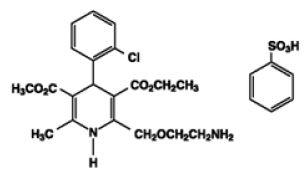
    Amlodipine, valsartan and hydrochlorothiazide tablets, USP are a fixed combination of amlodipine, valsartan, and hydrochlorothiazide.
    amlodipine-struc
    Its molecular formula is C
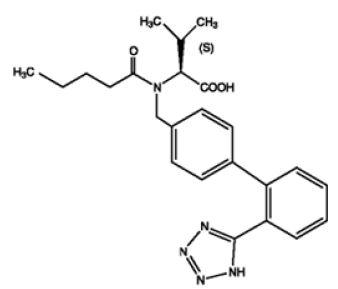
    valsartan-struc
    Its molecular formula is C
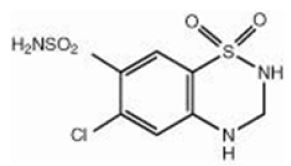
    HCTZ-struc
    Amlodipine, valsartan and hydrochlorothiazide film-coated tablets, USP are formulated in 5 strengths for oral administration with a combination of amlodipine besylate, valsartan, and hydrochlorothiazide, providing for the following available combinations:
    5/160/12.5 mg, 10/160/12.5 mg, 5/160/25 mg, 10/160/25 mg, and 10/320/25 mg amlodipine besylate/valsartan/hydrochlorothiazide. The inactive ingredients for all strengths of the tablets include colloidal silicon dioxide, crospovidone, hypromellose, magnesium stearate, microcrystalline cellulose, polyethylene glycol, talc. Additionally, the 5/160/12.5 mg strength contains titanium dioxide; the 10/160/12.5 mg strength contains titanium dioxide and yellow and red iron oxides; the 5/160/25 mg strength contains titanium dioxide and yellow iron oxide, and the 10/160/25 mg and 10/320/25 mg strengths both contain yellow iron oxide.
    7CLINICAL STUDIES
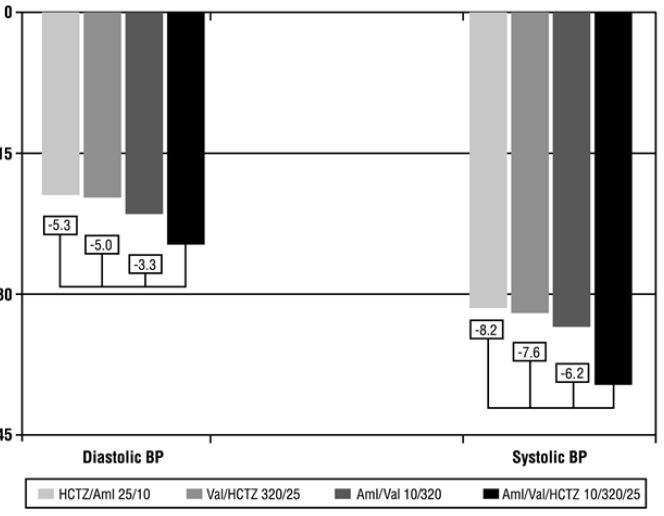
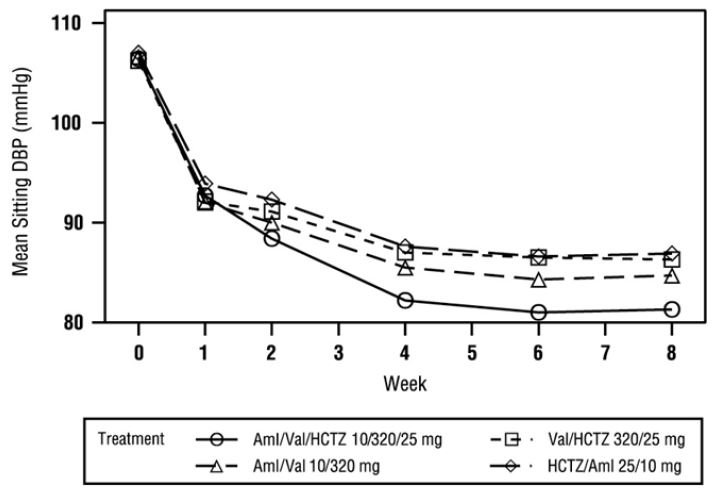
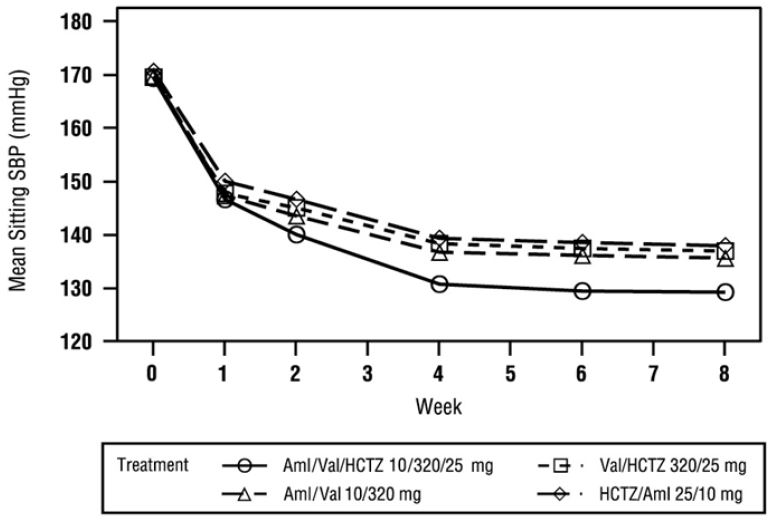
    Amlodipine, valsartan and hydrochlorothiazide was studied in a double-blind, active controlled study in hypertensive patients. A total of 2271 patients with moderate to severe hypertension (mean baseline systolic/diastolic blood pressure was 170/107 mmHg) received treatments of amlodipine/valsartan/HCTZ 10/320/25 mg, valsartan/HCTZ 320/25 mg, amlodipine/valsartan 10/320 mg, or HCTZ/amlodipine 25/10 mg. At study initiation patients assigned to the 2-component arms received lower doses of their treatment combination while patients assigned to the amlodipine, valsartan and hydrochlorothiazide arm received 160/12.5 mg valsartan/hydrochlorothiazide. After 1 week, amlodipine, valsartan and hydrochlorothiazide patients were titrated to 5/160/12.5 mg amlodipine/valsartan/hydrochlorothiazide, while all other patients continued receiving their initial doses. After 2 weeks, all patients were titrated to their full treatment dose. A total of 55% of patients were male, 14% were 65 years or older, 72% were Caucasian, and 17% were black.
    figure-1
    Figure 2: Mean Sitting Diastolic Blood Pressure by Treatment and Week
    figure-2
    Figure 3: Mean Sitting Systolic Blood Pressure by Treatment and Week
    figure-3
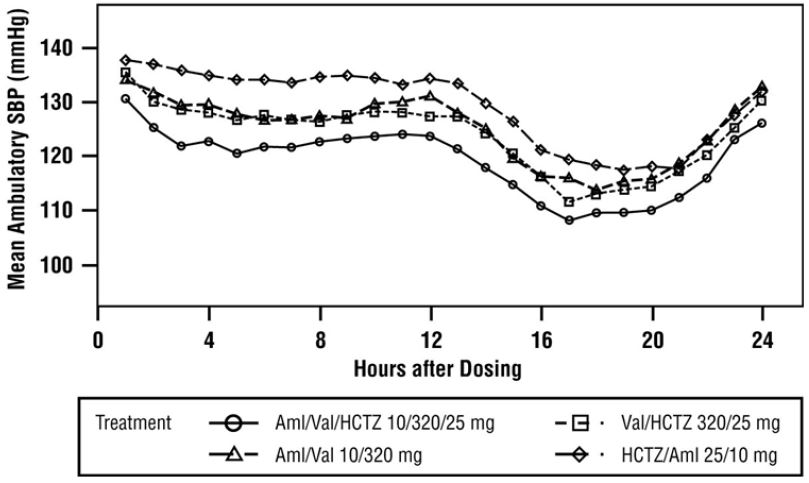
    A subgroup of 283 patients was studied with ambulatory blood pressure monitoring. The blood pressure lowering effect in the triple therapy group was maintained throughout the 24-hour period (see Figure 4 and Figure 5).
    figure-5
    There are no trials of the amlodipine, valsartan and hydrochlorothiazide combination tablet demonstrating reductions in cardiovascular risk in patients with hypertension, but both the amlodipine and hydrochlorothiazide components and several ARBs, which are the same pharmacological class as the valsartan component, have demonstrated such benefits.
    8HOW SUPPLIED/STORAGE AND HANDLING
    Amlodipine, valsartan and hydrochlorothiazide tablets, USP are available as film-coated tablets containing amlodipine besylate equivalent to 5 mg or 10 mg of amlodipine free-base with valsartan 160 mg or 320 mg, and hydrochlorothiazide 12.5 mg or 25 mg, providing for the following available combinations: 5/160/12.5 mg, 10/160/12.5 mg, 5/160/25 mg, 10/160/25 mg, and 10/320/25 mg. All strengths are packaged in bottles pack of 30 and 90 tablets and blister pack of 10 tablets.
    5 mg amlodipine /160 mg valsartan /12.5 mg hydrochlorothiazide Tablets, USP – White, oval shaped biconvex film coated, tablets debossed with “T23” on one side and plain on other side.
    5 mg amlodipine /160 mg valsartan /25 mg hydrochlorothiazide Tablets, USP – Yellow, oval shaped, biconvex film coated tablets debossed with “T25” on one side and plain on other side.
    Container pack of  30's                                              33342-285-07
    10 mg amlodipine /160 mg valsartan /25 mg hydrochlorothiazide Tablets, USP – Brown yellow, oval shaped, biconvex, film coated tablets debossed with “C97” on one side and plain on other side.
    10 mg amlodipine /320 mg valsartan /25 mg hydrochlorothiazide Tablets, USP – Brown yellow, oval shaped, biconvex, film coated tablets debossed with “T98” on one side and plain on other side.
    Store at 20° to 25°C (68° to 77°F); excursions permitted to 15° to 30°C (59° to 86°F). [See USP Controlled Room Temperature.]
    9PATIENT COUNSELING INFORMATION
    Advise the patient to read the FDA-approved patient labeling (Patient Information).
    Non-melanoma Skin Cancer: Instruct patients taking hydrochlorothiazide to protect skin from the sun and undergo regular skin cancer screening  [see Adverse Reactions (6.2)].
    Manufactured for:
    Manufactured by:
    Revised: January 2025
    9.1Information for patients
    Information for Patients
    Read the Patient Information that comes with amlodipine, valsartan and hydrochlorothiazide tablets before you start taking it and each time you get a refill. There may be new information. This leaflet does not take the place of talking with your doctor about your medical condition or treatment.
    What is the most important information I should know about amlodipine, valsartan and hydrochlorothiazide tablets?
    • Amlodipine, valsartan and hydrochlorothiazide tablets can cause harm or death to an unborn baby.
    • Talk to your doctor about other ways to lower your blood pressure if you plan to become pregnant.
    • If you get pregnant while taking amlodipine, valsartan and hydrochlorothiazide tablets, tell your doctor right away.
    What are amlodipine, valsartan and hydrochlorothiazide tablets?
    Amlodipine, valsartan and hydrochlorothiazide tablets contains 3 prescription medicines:
    1. amlodipine, a calcium channel blocker
    2. valsartan, an angiotensin receptor blocker, and
    3. hydrochlorothiazide, a diuretic (water pill)
    Amlodipine, valsartan and hydrochlorothiazide tablets may be used to lower blood pressure in adults when 2 medicines to lower your high blood pressure are not enough.
    What are the possible side effects of amlodipine, valsartan and hydrochlorothiazide tablets?
    Amlodipine, valsartan and hydrochlorothiazide tablets may cause serious side effects including:
    • harm to an unborn baby causing injury or death. See “What is the most important information I should know about amlodipine, valsartan and hydrochlorothiazide tablets?” (hypotension). Low blood pressure is most likely to happen if you:
    o take water pills
    o are on a low salt diet
    o have heart problems
    o get dialysis treatments
    o get sick with vomiting or diarrhea
    o drink alcohol.
    Lie down if you feel faint or dizzy. If you faint (lose consciousness), stop taking amlodipine, valsartan and hydrochlorothiazide tablets. Call your doctor right away.
    • Get emergency help if you get worse chest pain or chest pain that does not go away.
    kidney problems. Kidney problems may become worse in people that already have kidney disease. Some people will have changes in blood tests for kidney function and may need a lower dose of amlodipine, valsartan and hydrochlorothiazide tablets. Call your doctor if you have swelling in your feet, ankles, or hands, or unexplained weight gain. If you have heart failure, your doctor should check your kidney function before prescribing amlodipine, valsartan and hydrochlorothiazide tablets.
    • laboratory blood test changes in people with heart failure. Some people with heart failure who take valsartan, one of the medicines in amlodipine, valsartan and hydrochlorothiazide tablets, have changes in blood tests including increased potassium and decreased kidney function.
    • allergic reactions Call your doctor right away if you get an unusual skin rash.
    • eye problems. One of the medicines in amlodipine, valsartan and hydrochlorothiazide tablets can cause eye problems that may lead to vision loss. Symptoms of eye problems can happen within hours to weeks of starting amlodipine, valsartan and hydrochlorothiazide tablets. Tell your doctor right away if you have:
    • decrease in vision
    • eye pain
    The most common side effects of amlodipine, valsartan and hydrochlorothiazide tablets include:
    • dizziness
    • swelling (edema) of the hands, ankles, or feet
    • headache
    • indigestion
    • tiredness
    • muscle spasms
    • back pain
    • nausea
    Protect your skin from the sun and undergo regular skin cancer screening, as one of the medicines in amlodipine, valsartan and hydrochlorothiazide tablets may cause non-melanoma skin cancer.
    How should I store amlodipine, valsartan and hydrochlorothiazide tablets?
    • Store amlodipine, valsartan and hydrochlorothiazide tablets at 20° to 25°C (68° to 77°F); excursions permitted to 15° to 30°C (59° to 86°F).
    • Keep amlodipine, valsartan and hydrochlorothiazide tablets dry (protect it from moisture).
    Keep amlodipine, valsartan and hydrochlorothiazide tablets and all medicines out of the reach of children.
    Medicines are sometimes prescribed for conditions that are not mentioned in the patient information leaflet. Do not use amlodipine, valsartan and hydrochlorothiazide tablets for a condition for which it was not prescribed. Do not give amlodipine, valsartan and hydrochlorothiazide tablets to other people, even if they have the same symptoms that you have. It may harm them.
    This patient information leaflet summarizes the most important information about amlodipine, valsartan and hydrochlorothiazide tablets. If you would like more information about amlodipine, valsartan and hydrochlorothiazide tablets, talk with your doctor. You can ask your doctor or pharmacist for information about amlodipine, valsartan and hydrochlorothiazide tablets that is written for health professionals. For more information call Macleods Pharma USA, Inc. at call 1-888-943-3210.
    What are the ingredients in amlodipine, valsartan and hydrochlorothiazide tablets?
    Active ingredients: amlodipine besylate, valsartan, and hydrochlorothiazide
    The inactive ingredients of all strengths of the tablets are colloidal silicon dioxide, crospovidone, hypromellose, magnesium stearate, microcrystalline cellulose, polyethylene glycol, talc.Additionally, the 5/160/12.5 mg strength contains titanium dioxide; the 10/160/12.5 mg strength contains titanium dioxide and yellow and red iron oxides; the 5/160/25 mg strength contains titanium dioxide and yellow iron oxide, and the 10/160/25 mg and 10/320/25 mg strengths both contain yellow iron oxide.
    What is high blood pressure (hypertension)?
    Blood pressure is the force of blood in your blood vessels when your heart beats and when your heart rests. You have high blood pressure when the force is too much. Amlodipine, valsartan and hydrochlorothiazide tablets can help your blood vessels relax so your blood pressure is lower. Medicines that lower blood pressure lower your chance of having a stroke or heart attack.
    High blood pressure makes the heart work harder to pump blood throughout the body and causes damage to blood vessels. If high blood pressure is not treated, it can lead to stroke, heart attack, heart failure, kidney failure, and vision problems.
    Manufactured for:
    Manufactured by:
    Revised: January 2025
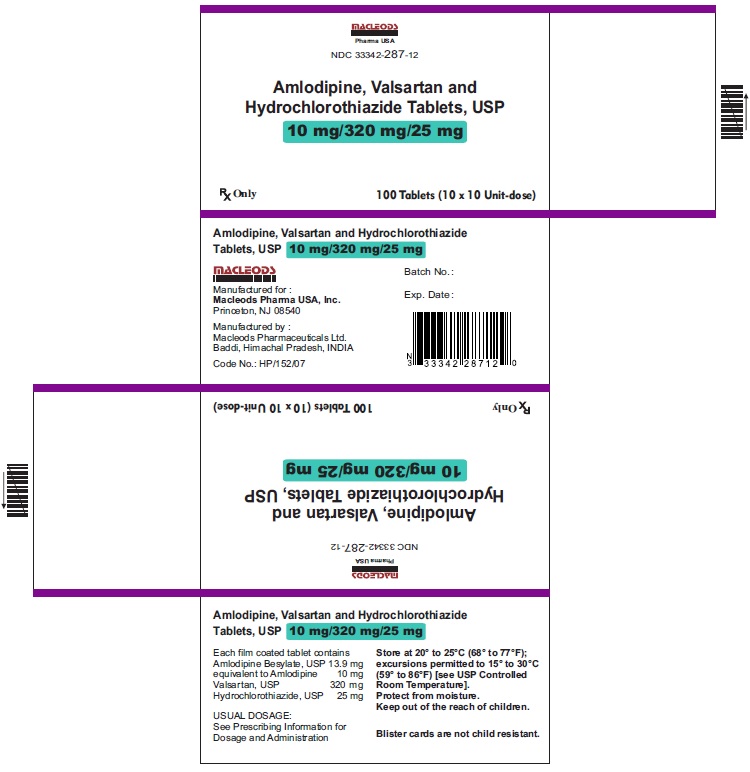
    10PACKAGE LABEL.PRINCIPAL DISPLAY PANEL
    Rx Only
    287-100s-carton
    Amlodipine has been selected.