Gaucher Disease Treatments

Find Gaucher Disease Treatments

Generic Name

Miglustat

Brand Names
Opfolda, Yargesa, Zavesca
FDA approval date: July 31, 2003
Classification: Glucosylceramide Synthase Inhibitor
Form: Capsule

What is Opfolda (Miglustat)?

OPFOLDA is indicated, in combination with Pombiliti, for the treatment of adult patients with late-onset Pompe disease (lysosomal acid alpha-glucosidase deficiency) weighing ≥40 kg and who are not improving on their current enzyme replacement therapy . OPFOLDA is an enzyme stabilizer indicated, in combination with Pombiliti, a hydrolytic lysosomal glycogen-specific enzyme, for the treatment of adult patients with late-onset Pompe disease (lysosomal acid alpha-glucosidase deficiency) weighing ≥40 kg and who are not improving on their current enzyme replacement therapy .
Save this treatment for later
Sign Up
Not sure about your diagnosis?
Check Your Symptoms
Tired of the same old research?
Check Latest Advances

Related Clinical Trials

Open-label Study to Evaluate the Long-term Safety, Tolerability, Pharmacokinetics and Efficacy of Nizubaglustat (AZ-3102) in Patients With GM2 Gangliosidosis or Niemann-Pick Type C Disease, With or Without Previous Administration of Miglustat

Summary: This open-label study aims to gather long-term safety, tolerability, PK, biomarker, and clinical efficacy data relating to daily administration of Nizubaglustat in participants previously enrolled in the Phase 2 RAINBOW study (Cohort 1). In addition, the study aims to assess safety, clinical, and biochemical impact of transitioning NPC disease patients to Nizubaglustat after prior treatment with s...

A Global Prospective Observational Registry of Patients With Pompe Disease

Summary: This is a global, multicenter, prospective, observational registry of patients with Pompe disease, including those with late-onset pompe disease (LOPD) and infantile-onset pompe disease (IOPD). Both untreated patients and those being treated with an approved therapy for Pompe disease are eligible to participate. The objectives of the registry are: * To evaluate the long-term safety of Pompe diseas...

An Open-label Study to Evaluate the Safety, Efficacy, Pharmacokinetics, Pharmacodynamics, and Immunogenicity of Cipaglucosidase Alfa/Miglustat in Both ERT-experienced and ERT-naïve Pediatric Subjects With Infantile-onset Pompe Disease Aged 0 to < 18 Years

Summary: This is a Phase 3, open-label, multicenter study to evaluate the safety, efficacy, PK, PD, and immunogenicity of cipaglucosidase alfa/miglustat treatment in ERT-experienced and ERT-naïve pediatric subjects with IOPD.

Brand Information

    OPFOLDA (miglustat)
    1INDICATIONS AND USAGE
    OPFOLDA is indicated, in combination with Pombiliti, for the treatment of adult patients with late-onset Pompe disease (lysosomal acid alpha-glucosidase [GAA] deficiency) weighing ≥40 kg and who are not improving on their current enzyme replacement therapy (ERT).
    2DOSAGE FORMS AND STRENGTHS
    Capsules: 65 mg of miglustat, white opaque hard gelatin capsule with grey opaque cap with “AT2221” printed in black on the body.
    3CONTRAINDICATIONS
    OPFOLDA in combination with Pombiliti is contraindicated in Pregnancy
    4DESCRIPTION
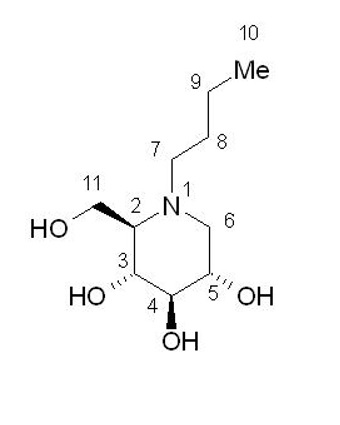
    Miglustat is an N-alkylated iminosugar, a synthetic analog of D‑glucose. The pharmacologic class is enzyme stabilizer.
    The chemical name is 1,5-(butylimino)-1,5-dideoxy-D-glucitol with the molecular weight of 219.28 g/mol, the molecular formula C
    Chemical Structure
    Miglustat is a white to off-white crystalline solid (powder). It is highly soluble in water (>1,000 mg/mL as a free base).
    OPFOLDA (miglustat) capsules each contain 65 mg of miglustat for oral administration. The inactive ingredients are: colloidal silicon dioxide, magnesium stearate, microcrystalline cellulose, pregelatinized maize starch, and sucralose. The capsule shells include black iron oxide, gelatin, and titanium dioxide. Edible printing ink includes black iron oxide, and shellac.
    5CLINICAL STUDIES
    Trial 1 was a randomized, double‑blind, active‑controlled, international, multi-center clinical trial (NCT#03729362) in patients ≥18 years old diagnosed with LOPD. Patients were randomized 2:1 to receive OPFOLDA (260 mg orally for those ≥50 kg or 195 mg orally for those ≥40 kg to <50 kg) in combination with Pombiliti (20 mg/kg by intravenous infusion) or a non-U.S.-approved alglucosidase alfa product with placebo every other week for 52 weeks. The efficacy population included a total of 123 patients of whom 95 (77%) had received prior treatment with U.S.-approved alglucosidase alfa or a non-U.S.-approved alglucosidase alfa product (ERT‑experienced) and 28 (23%) were ERT‑naïve. More than two thirds (n=64, 67%) of ERT‑experienced patients had been on ERT treatment for more than 5 years prior to entering Trial 1 (mean of 7.4 years).
    Demographics, baseline sitting forced vital capacity (FVC) (% predicted), and 6-minute walk distance (6MWD) were generally similar between the 2 treatment groups (see
    Key efficacy endpoints included assessment of sitting FVC (% predicted) and 6MWD (
    Sitting FVC (Percent‑predicted) at 52 Weeks
    Patients treated with OPFOLDA in combination with Pombiliti showed a mean change in sitting FVC from baseline at Week 52 of ‑1.1% as compared with patients treated with a non-U.S.-approved alglucosidase alfa product with placebo of ‑3.3%; the estimated treatment difference was 2.3% (95% CI: 0.02, 4.62).
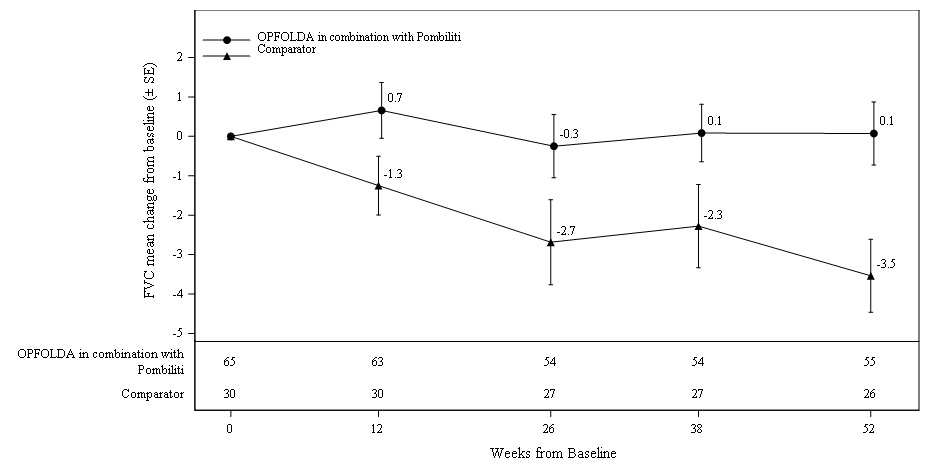
    The ERT‑experienced patients treated with OPFOLDA in combination with Pombiliti showed a numerically favorable change in sitting FVC from baseline at Week 52 (
    Table 3. Summary of Sitting FVC in Adults with LOPD by ERT Status at 52 Weeks in Trial 1
    Figure 2. Mean Change (± SE) in Sitting FVC (% predicted) from Baseline to Week 52 in ERT-experienced Adults with LOPD in Trial 1
    Figure 2
    SE: standard error; FVC: forced vital capacity; ERT: enzyme replacement therapy; LOPD: late-onset Pompe disease
    6-Minute Walk Distance (6MWD) at 52 Weeks
    Patients treated with OPFOLDA in combination with Pombiliti walked on average 21 meters farther from baseline as compared to those treated with a non-U.S.-approved alglucosidase alfa product with placebo who walked 8 meters farther from baseline; the estimated treatment difference was 14 meters (95% CI: -1, 28).
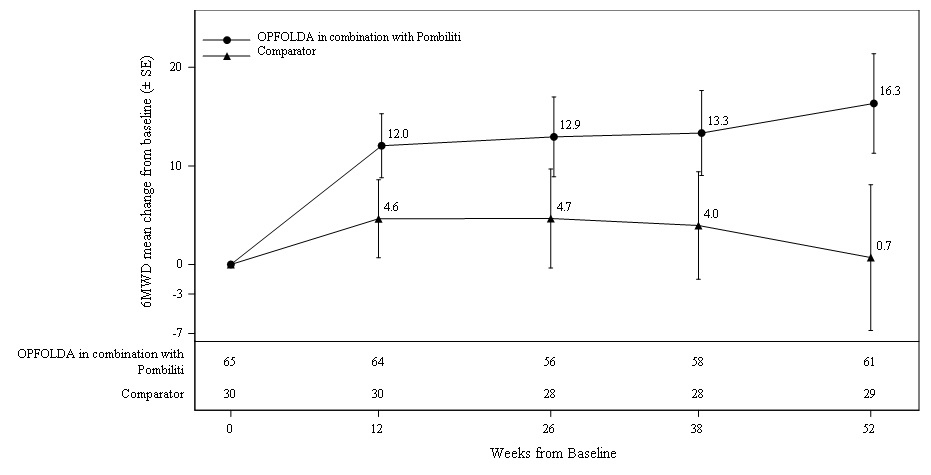
    The ERT-experienced patients treated with OPFOLDA in combination with Pombiliti showed a numerically favorable change in 6MWD from baseline at Week 52 (
    Table 4. Summary of 6MWD in Adults with LOPD by ERT Status at 52 Weeks in Trial 1
    Figure 3. Mean Change (± SE) of 6MWD from Baseline to Week 52 in ERT-experienced Adults with LOPD in Trial 1*
    Figure 3
    SE: standard error; 6MWD: 6-minute walk distance; ERT: enzyme replacement therapy; LOPD: late-onset Pompe disease
    6HOW SUPPLIED/STORAGE AND HANDLING
    How Supplied
    OPFOLDA (miglustat) capsules are supplied as 65 mg, white opaque hard gelatin capsules with a grey opaque cap with “AT2221” printed in black on the body, and are available in bottles with child resistant caps. See Table 5 for the available OPFOLDA packages.
    Table 5. OPFOLDA Packages
    Storage and Handling
    Store at 20°C to 25°C (68°F to 77°F). Excursions are permitted between 15°C to 30°C (59°F to 86°F), [see USP Controlled Room Temperature].
    Store in the original container to protect from light.
    7PATIENT COUNSELING INFORMATION
    Advise the patient to read the FDA‑approved patient labeling (Patient Information).
    OPFOLDA must be administered in combination with Pombiliti. Refer to the Pombiliti Prescribing Information for Pombiliti patient counseling information.
    Administration
    Advise the patient and caregiver to follow the timeline recommendations for taking OPFOLDA prior to the intravenous infusion with Pombiliti and to follow the fasting recommendation. Advise the patient and caregiver that OPFOLDA should be swallowed only with unsweetened beverages [see .
    Embryo-Fetal Toxicity
    OPFOLDA in combination with Pombiliti may cause embryo-fetal harm. Advise a female patient and caregiver to inform their healthcare provider of a known or suspected pregnancy [see .
    Advise a female of reproductive potential to use effective contraception during treatment with OPFOLDA in combination with Pombiliti and for at least 60 days after the last dose
    Lactation
    Advise a lactating female not to breastfeed during treatment with OPFOLDA in combination with Pombiliti [see .
    Infertility
    Advise the male or female of reproductive potential that OPFOLDA in combination with Pombiliti may impair fertility [see .
    Manufactured for:
    OPFOLDA and Pombiliti are registered trademarks of Amicus Therapeutics, Inc.
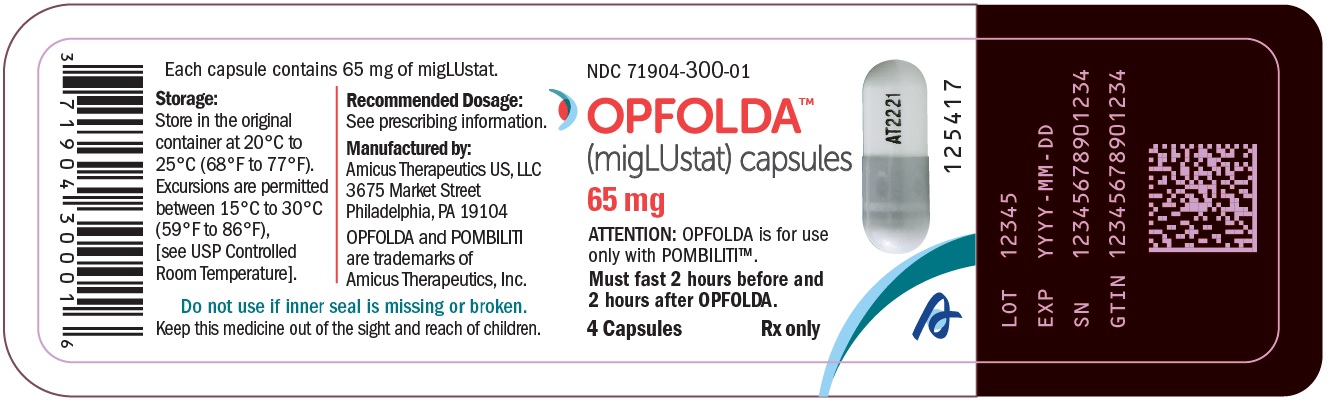
    8PRINCIPAL DISPLAY PANEL - NDC: 71904-300-01 - 4 Count Bottle Label
    4 Count Bottle Label
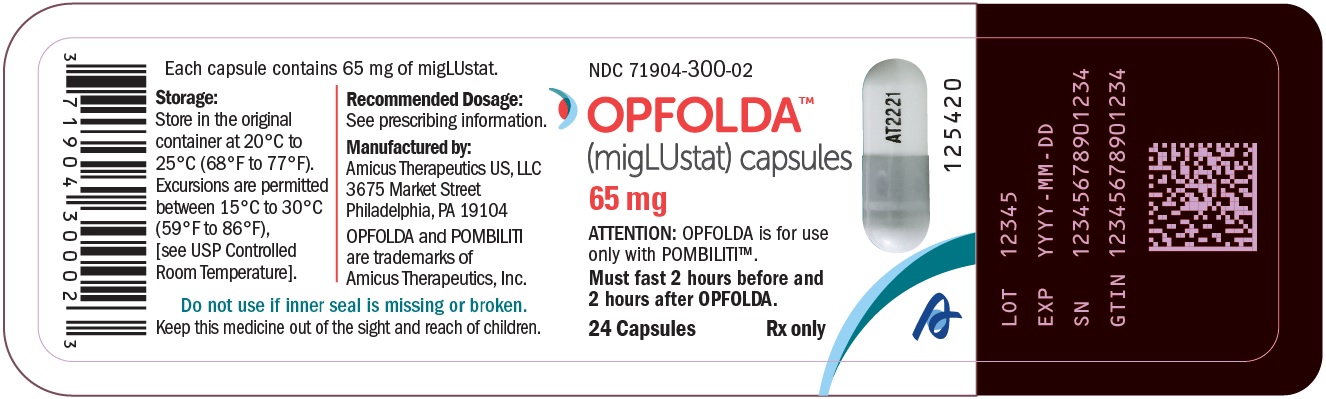
    9PRINCIPAL DISPLAY PANEL - NDC: 71904-300-02 - 24 Count Bottle Label
    24 Count Bottle Label
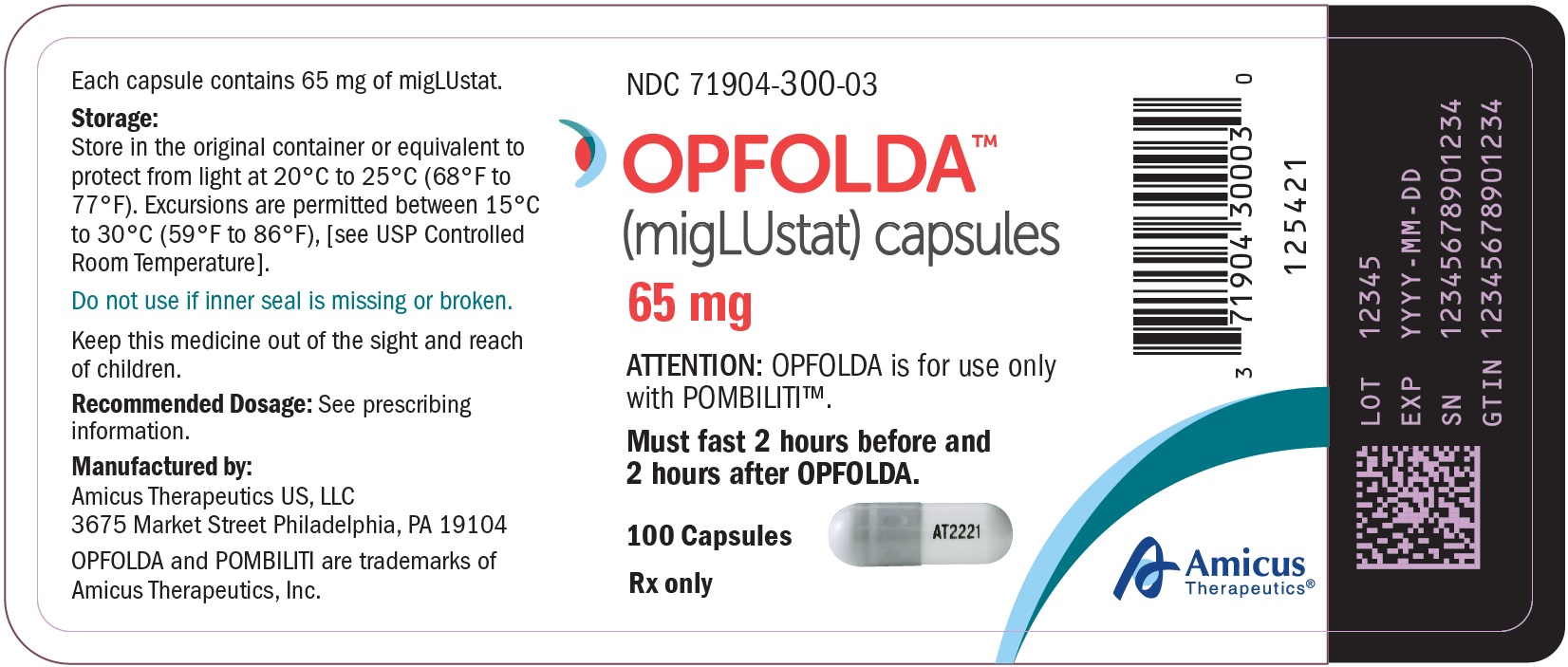
    10PRINCIPAL DISPLAY PANEL - NDC: 71904-300-03 - 100 Count Bottle Label
    100 Count Bottle Label