Brand Name

Orencia

Generic Name
Abatacept
View Brand Information
FDA approval date: January 01, 2009
Classification: Selective T Cell Costimulation Modulator
Form: Injection

What is Orencia (Abatacept)?

ORENCIA is a selective T cell costimulation modulator indicated for: the treatment of adult patients with moderately to severely active rheumatoid arthritis .
Save this treatment for later
Sign Up
Not sure about your diagnosis?
Check Your Symptoms
Tired of the same old research?
Check Latest Advances

Related Clinical Trials

Efficacy of a Sequential Treatment Strategy in Rheumatoid Arthritis. A Randomized Controlled Trial With an Independent Efficacy Assessor.

Summary: In rheumatoid arthritis (RA), the consensual 1st line conventional synthetic disease modifying antirheumatic drugs (csDMARD) of RA is methotrexate (MTX). In case of contra-indication or intolerance to MTX, leflunomide is an alternative. If the treatment target is not achieved with csDMARD strategy, addition of a biological DMARD (TNF inhibitors, anti-Interleukin 6 (anti-IL6)), abatacept, or rituxi...

Targeting the B Cell Response to Treat Antibody-Mediated Rejection With Carfilzomib and Belatacept (CarBel)

Summary: The purpose of this study is to see: 1. If using these two drugs (carfilzomib and belatacept) together is safe 2. If the use of these two study drugs in addition to the usual immunosuppression for kidney transplant patients can improve your transplanted kidney function by lowering the antibodies you have against your transplanted kidney 3. If the study drugs effect the immune cells that were respo...

Brand Information

ORENCIA (abatacept)
1CONTRAINDICATIONS
None.
2ADVERSE REACTIONS
The following clinically significant adverse reactions are described elsewhere in the labeling:
  • Increased Risk of Infection with Concomitant Use with TNF Antagonists, Other Biologic RA/PsA Therapy, or JAK Inhibitors
  • Hypersensitivity Reactions
  • Infections
  • Increased Risk of Adverse Reactions When Used in Patients with Chronic Obstructive Pulmonary Disease (COPD)
  • Immunosuppression
  • Cytomegalovirus (CMV) and Epstein-Barr Virus (EBV) Reactivation in aGVHD Prophylaxis after Hematopoietic Stem Cell Transplant (HSCT)
2.1Clinical Trials Experience
Because clinical trials are conducted under widely varying and controlled conditions, adverse reaction rates observed in clinical trials of a drug cannot be directly compared to rates in the clinical trials of another drug and may not predict the rates observed in a broader patient population in clinical practice.
2.1.1Adverse Reactions in Adult Patients with RA
Adverse Reactions in Adult Patients with RA Treated with Intravenous ORENCIA
The data from placebo-controlled studies described herein reflect exposure to ORENCIA administered intravenously in patients with active RA (1955 patients with ORENCIA, 989 with placebo) (Studies I through VI)
The most serious adverse reactions were serious infections and malignancies. The most commonly reported adverse events (occurring in ≥10% of patients treated with ORENCIA) were headache, upper respiratory tract infection, nasopharyngitis, and nausea.
The adverse reactions most frequently resulting in clinical intervention (interruption or discontinuation of ORENCIA) were due to infection. The most frequently reported infections resulting in dose interruption were upper respiratory tract infection (1%), bronchitis (0.7%), and herpes zoster (0.7%). The most frequent infections resulting in discontinuation were pneumonia (0.2%), localized infection (0.2%), and bronchitis (0.1%).
2.1.2Most Common Adverse Reactions in Adult Patients with RA Treated with Intravenous ORENCIA
Adverse reactions occurring in 3% or more of patients and at least 1% more frequently in ORENCIA-treated patients (intravenous) during placebo-controlled RA studies are summarized in Table 4.
2.1.3Infections in Adult Patients with RA Treated with Intravenous ORENCIA
In the placebo-controlled trials in patients with RA, infections were reported in 54% of intravenous ORENCIA-treated patients and 48% of placebo-treated patients. The most commonly reported infections (reported in 5%-13% of patients) were upper respiratory tract infection, nasopharyngitis, sinusitis, urinary tract infection, influenza, and bronchitis. Other infections reported in fewer than 5% of patients at a higher frequency (>0.5%) with ORENCIA compared to placebo, were rhinitis, herpes simplex, and pneumonia
Serious infections were reported in 3% of patients treated with ORENCIA and 1.9% of patients treated with placebo. The most common (0.2%-0.5%) serious infections reported with ORENCIA were pneumonia, cellulitis, urinary tract infection, bronchitis, diverticulitis, and acute pyelonephritis
2.1.4Malignancies in Adult Patients with RA Treated with Intravenous ORENCIA
In the placebo-controlled portions of the clinical trials (1955 patients treated for RA with ORENCIA for a median of 12 months), the overall frequencies of malignancies were similar in the ORENCIA- and placebo-treated patients (1.3% and 1.1%, respectively). However, more cases of lung cancer were observed in ORENCIA-treated patients (4 cases, 0.2%) than placebo-treated patients (0 cases, 0%). In the cumulative intravenous ORENCIA clinical trials in patients with RA (placebo-controlled and uncontrolled, open-label) a total of 8 cases of lung cancer (0.21 cases per 100 patient-years) and 4 lymphomas (0.10 cases per 100 patient-years) were observed in 2688 patients (3827 patient-years). The rate observed for lymphoma is approximately 3.5-fold higher than expected in an age- and gender-matched general population based on the National Cancer Institute's Surveillance, Epidemiology, and End Results Database. Patients with RA, particularly those with highly active disease, are at a higher risk for the development of lymphoma. Other malignancies included skin, breast, bile duct, bladder, cervical, endometrial, lymphoma, melanoma, myelodysplastic syndrome, ovarian, prostate, renal, thyroid, and uterine cancers
2.1.5Infusion-Related Reactions and Hypersensitivity Reactions in Adult Patients with RA Treated with Intravenous ORENCIA
Acute infusion-related events (adverse reactions occurring within 1 hour of the start of the infusion) in Studies III, IV, and V
Acute infusion-related events that were reported in >0.1% and ≤1% of patients treated with ORENCIA included cardiopulmonary symptoms, such as hypotension, increased blood pressure, and dyspnea; other symptoms included nausea, flushing, urticaria, cough, hypersensitivity, pruritus, rash, and wheezing. Most of these reactions were mild (68%) to moderate (28%). Fewer than 1% of ORENCIA-treated patients discontinued due to an acute infusion-related event. In controlled trials, 6 ORENCIA-treated patients compared to 2 placebo-treated patients discontinued study treatment due to acute infusion-related events.
In clinical trials of 2688 adult RA patients treated with intravenous ORENCIA, there were two cases (<0.1%) of anaphylaxis. Other reactions potentially associated with drug hypersensitivity, such as hypotension, urticaria, and dyspnea, each occurred in less than 0.9% of ORENCIA-treated patients and generally occurred within 24 hours of ORENCIA infusion. Appropriate medical support measures for the treatment of hypersensitivity reactions should be available for immediate use in the event of a reaction
2.1.6Adverse Reactions in Patients with COPD Treated for RA with Intravenous ORENCIA
In Study V
2.1.7Adverse Reactions in Methotrexate-Naive Patients with RA Treated with Intravenous ORENCIA
Study VI was an active-controlled clinical trial in methotrexate-naive patients
2.1.8Adverse Reactions in Adult Patients with RA Treated with Subcutaneous or Intravenous ORENCIA
The data described below are derived from Study SC-1. Study SC-1 was a randomized, double-blind, double-dummy, non-inferiority study that compared the safety of ORENCIA administered subcutaneously or intravenously in 1457 patients with RA, who received background methotrexate, and experienced an inadequate response to methotrexate (MTX-IR)
2.1.9Injection Site Reactions in Adult RA Patients Treated with Subcutaneous ORENCIA
The overall frequency of injection site reactions in Study SC-1 was 2.6% (19/736) and 2.5% (18/721) for the subcutaneous ORENCIA group and the subcutaneous placebo group (given intravenous ORENCIA), respectively
2.1.10Adverse Reactions in Adult Patients with PsA
Adverse Reactions in Adult Patients with PsA Treated with Intravenous or Subcutaneous ORENCIA
The safety of ORENCIA was evaluated in 594 patients with PsA (341 patients on ORENCIA and 253 patients on placebo), in two randomized, double-blind, placebo-controlled trials
2.1.11Adverse Reactions in Patients with pJIA Treated with Intravenous ORENCIA
In general, the adverse events in pediatric patients with polyarticular JIA (pJIA) treated with intravenous ORENCIA were similar in frequency and type to those seen in adult patients with RA treated with intravenous ORENCIA
Study JIA-1 was a three-part study including an open-label extension that assessed the safety of intravenous ORENCIA in 190 pediatric patients, 6 to 17 years of age, with pJIA. Overall frequency of adverse events in the 4‑month, lead-in, open-label period of the study was 70%; infections occurred at a frequency of 36%
A total of 6 serious adverse events [acute lymphocytic leukemia, ovarian cyst, varicella infection, disease flare (2), and joint wear] were reported during the initial 4 months of treatment with intravenous ORENCIA.
Of the 190 pediatric patients with pJIA treated with intravenous ORENCIA in clinical trials, there was one case of a hypersensitivity reaction (0.5%). During Periods A, B, and C, acute infusion-related reactions occurred at a frequency of 4%, 2%, and 3%, respectively, and were consistent with the types of events reported in adults.
Upon continued treatment in the open-label extension period, the types of adverse events were similar in frequency and type to those seen in adult patients, except for a single patient diagnosed with multiple sclerosis while on open-label treatment.
2.1.12Adverse Reactions in Patients with pJIA Treated with Subcutaneous ORENCIA
Study JIA-2 was an open-label study with a 4-month short-term period and a long-term extension period that assessed the safety of subcutaneous ORENCIA in 205 pediatric patients, 2 to 17 years of age with pJIA. The adverse reaction profile in patients with pJIA treated with ORENCIA administered subcutaneously in Study JIA-2 were consistent with the adverse reaction profile in patients with pJIA treated with intravenous Study JIA-1.
There were no reported cases of hypersensitivity reactions. Local injection‑site reactions occurred at a frequency of 4.4%.
2.1.13Adverse Reactions in Patients Undergoing Unrelated-Donor Hematopoietic Stem Cell Transplantation (HSCT) with Intravenous ORENCIA
The data described herein were from one clinical study of ORENCIA (GVHD-1) for aGVHD prophylaxis in patients 6 years and older with hematologic malignancies who were undergoing unrelated HSCT wherein all patients were receiving calcineurin inhibitor and methotrexate as the standard of care for aGVHD prophylaxis
1) A single-arm cohort of ORENCIA-treated patients (n=43) who underwent 7 of 8 Human leukocyte antigen (HLA)-matched HSCT from unrelated donors (7 of 8 cohort) and
2) A randomized cohort comprised of ORENCIA-treated patients (n=73) and placebo-treated patients (n=69) who underwent 8 of 8 HLA-matched HSCT from unrelated donors (8 of 8 cohort).
Of the 116 patients who received ORENCIA, 27 (23%) were 6 to less than 17 years of age
The safety information from the date of first dose of ORENCIA up to Day 225 post-transplantation from this study is presented below. The incidence of adverse reactions was determined based on pooled data of ORENCIA-treated patients from the 2 study cohorts (n=116).
Serious adverse reactions reported in > 5% of patients who received ORENCIA in combination with a calcineurin inhibitor and methotrexate included pyrexia (20%), pneumonia (8%), acute kidney injury (7%), diarrhea (6%), hypoxia (5%), and nausea (5%).
Permanent discontinuation of ORENCIA due to an adverse reaction occurred in two patients (1.7%) due to one case each of pneumonia and allergic reaction.
The most common (≥10%) adverse reactions in the ORENCIA treated patients were anemia, hypertension, CMV reactivation/CMV infection, pyrexia, pneumonia, epistaxis, CD4 lymphocytes decreased, hypermagnesemia, and acute kidney injury.
Table 5 summarizes the frequency of adverse reactions reported in the study of ORENCIA in GVHD-1.
Clinically relevant adverse reactions in <10% of patients who received ORENCIA in combination with calcineurin inhibitor and methotrexate in Study GVHD-1 included EBV reactivation.
2.2Immunogenicity
As with all therapeutic proteins, there is potential for immunogenicity. The detection of antibody formation is highly dependent on the sensitivity and specificity of the assay. Additionally, the observed incidence of antibody (including neutralizing antibody) positivity in an assay may be influenced by several factors, including assay methodology, sample handling, timing of sample collection, concomitant medications, and underlying disease. For these reasons, comparison of the incidence of antibodies in the studies described below with the incidence of antibodies in other studies or to other abatacept products may be misleading.
2.2.1Immunogenicity in Adult Patients with RA Treated with Intravenous ORENCIA
Antibodies directed against the entire abatacept molecule or to the CTLA-4 portion of abatacept were assessed by ELISA assays in RA patients for up to 2 years following repeated treatment with intravenous ORENCIA. Thirty-four of 1993 (2%) patients developed binding antibodies to the entire abatacept molecule or to the CTLA-4 portion of abatacept. Because trough levels of abatacept can interfere with assay results, a subset analysis was performed. In the subset analysis, 9 of 154 (6%) patients that had discontinued intravenous ORENCIA treatment for over 56 days developed antibodies. Samples with confirmed binding activity to CTLA-4 were assessed for the presence of neutralizing antibodies in a cell-based luciferase reporter assay. Six of 9 (67%) evaluable patients were shown to possess neutralizing antibodies. However, the development of neutralizing antibodies may be underreported due to lack of assay sensitivity.
No correlation of anti-abatacept antibody development to clinical response or adverse events was observed.
2.2.2Immunogenicity in Adult RA Patients Treated with Subcutaneous or Intravenous ORENCIA
Study SC-1 compared the immunogenicity to abatacept following subcutaneous or intravenous ORENCIA administration. The overall immunogenicity frequency to abatacept was 1% (8/725) and 2% (16/710) for the subcutaneous and intravenous groups, respectively. The rate is consistent with previous experience, and there was no correlation of immunogenicity with effects on pharmacokinetics, safety, or efficacy.
2.2.3Immunogenicity in Adult RA Patients Treated with Subcutaneous ORENCIA Monotherapy
Study SC-2 was conducted to determine the effect of subcutaneous monotherapy use of ORENCIA on immunogenicity (without an intravenous loading dose) in 100 RA patients, who had not previously received ORENCIA or other CTLA4Ig. Patients in this study received either subcutaneous ORENCIA plus methotrexate (n=51) or subcutaneous ORENCIA monotherapy (n=49). No patients in either group developed anti-abatacept antibodies after 4 months of treatment. The safety observed in this study was consistent with that observed in the other subcutaneous studies.
2.2.4Immunogenicity in Adult RA Patients After Treatment, Withdrawal, and then Restart of Subcutaneous ORENCIA
Study SC-3 was conducted to investigate the immunogenicity in adult RA patients after treatment, withdrawal (three months), and restart of ORENCIA subcutaneous treatment (patients were treated concomitantly with methotrexate). One hundred sixty-seven patients were enrolled in the first 3‑month treatment period and responders (n=120) were randomized to either subcutaneous ORENCIA or placebo for the second 3-month period (withdrawal period). Patients from this period then received open-label ORENCIA treatment in the final 3-month period of the study (period 3). At the end of the withdrawal period, 0/38 (0%) patients who continued to receive subcutaneous ORENCIA developed anti-abatacept antibodies compared to 7/73 (10%) of patients who had subcutaneous ORENCIA withdrawn during this period. Half of the patients who received subcutaneous placebo during the withdrawal period received a single intravenous infusion of ORENCIA at the start of period 3 and half received intravenous placebo. At the end of period 3, when all patients again received subcutaneous ORENCIA, the immunogenicity rates were 1/38 (3%) in the group who received subcutaneous ORENCIA throughout, and 2/73 (3%) in the group that had received placebo during the withdrawal period. Upon reinitiating therapy, there were no injection reactions and no differences in response to therapy in patients who were withdrawn from subcutaneous therapy for up to 3 months compared to those who remained on subcutaneous therapy (these results occurred in those who received or did not receive an intravenous loading dose). The safety observed in this study was consistent with that observed in the other studies.
2.2.5Immunogenicity in Patients with pJIA Treated with Intravenous ORENCIA
Antibodies directed against the entire abatacept molecule or to the CTLA-4 portion of abatacept were assessed by ELISA assays in patients with pJIA following repeated treatment with intravenous ORENCIA throughout the open-label period. For patients who were withdrawn from therapy for up to 6 months during the double-blind period, the rate of antibody formation to the CTLA-4 portion of the molecule was 41% (22/54), while for those who remained on therapy the rate was 13% (7/54). Twenty of these patients had samples that could be tested for antibodies with neutralizing activity; of these, 8 (40%) patients were shown to possess neutralizing antibodies.
The presence of antibodies was generally transient, and titers were low. The presence of antibodies was not associated with adverse events, changes in efficacy, or an effect on serum concentrations of abatacept. For patients who were withdrawn from ORENCIA during the double-blind period for up to 6 months, no serious acute infusion-related events were observed upon re-initiation of ORENCIA therapy.
2.2.6Immunogenicity in Patients Treated for Prophylaxis of aGVHD with Intravenous ORENCIA
Immunogenicity was assessed in patients undergoing HSCT. Overall, immunogenicity incidence and associated antibody titers were low from the 4-dose intravenous ORENCIA regimen used in this study. Of the 114 immunogenicity evaluable subjects in the ORENCIA groups, none were positive during the ORENCIA treatment period (Day -1 to Day 28 following transplant). During the off-treatment period (Day 29 and up to Day 180 following transplant); 6 of 91 immunogenicity evaluable subjects (6.6%) were positive for CTLA4 and possibly Ig; 4 of the 6 positive subjects were found to have at least one positive sample with neutralization activity. In this study, immunogenicity positive subjects only had ADA positive samples on Day 180 (off-treatment period) and thus due to the timing of the response, the impact on PK, safety, or efficacy could not be determined.
2.3Postmarketing Experience
Adverse reactions have been reported during the postapproval use of ORENCIA. Because these reactions are reported voluntarily from a population of uncertain size, it is not always possible to reliably estimate their frequency or establish a causal relationship to ORENCIA. Based on the postmarketing experience with ORENCIA, the following adverse reactions have been identified:
  • Vasculitis (including cutaneous vasculitis and leukocytoclastic vasculitis)
  • New or worsening psoriasis
  • Non-melanoma skin cancers (basal cell carcinoma and squamous cell carcinoma)
  • Angioedema reactions
During postmarketing experience with intravenous ORENCIA, systemic infusion reactions were similar to that seen in the clinical trial experience with intravenous ORENCIA with the exception of one case of fatal anaphylaxis
3OVERDOSAGE
ORENCIA doses up to 50 mg/kg (5 times the maximum recommended dose in patients aged 6 years and older and 3.3 times the maximum recommended dose in patients aged 2 to less than 6 years) have been administered intravenously without apparent toxic effect. In case of overdosage, it is recommended that the patient be monitored for any signs or symptoms of adverse reactions and appropriate symptomatic treatment instituted.
4DESCRIPTION
Abatacept is a selective T-cell costimulation modulator. Abatacept is a soluble fusion protein that consists of the extracellular domain of human cytotoxic T-lymphocyte-associated antigen 4 (CTLA-4) linked to the modified Fc (hinge, CH2, and CH3 domains) portion of human immunoglobulin G1 (IgG1). Abatacept is produced by recombinant DNA technology in a mammalian cell expression system. The apparent molecular weight of abatacept is 92 kilodaltons.
ORENCIA (abatacept) for injection is a sterile, white, preservative-free lyophilized powder for reconstitution and dilution prior to intravenous infusion. Following reconstitution of the lyophilized powder with 10 mL of Sterile Water for Injection, USP, the reconstituted solution of ORENCIA is clear, colorless to pale yellow, with a concentration of 25 mg/mL and with a pH range of 7.2 to 7.8. Each single-dose vial of ORENCIA provides 250 mg abatacept, maltose (500 mg), monobasic sodium phosphate (17.2 mg), and sodium chloride (14.6 mg).
ORENCIA (abatacept) injection is a sterile, preservative-free, clear to slightly opalescent, colorless to pale-yellow solution with a pH range of 6.8 to 7.4 for subcutaneous administration. ORENCIA injection is supplied as a single-dose prefilled syringe or as a single-dose ClickJect autoinjector (see Table 6).
Unlike the lyophilized formulation for intravenous use, the ORENCIA solutions for subcutaneous administration contain no maltose.
5PATIENT COUNSELING INFORMATION
Advise the patient to read the FDA-approved patient labeling (Patient Information and Instructions for Use).
6Instructions for Use
ORENCIA®(oh-REN-see-ah)
(abatacept)
Prefilled syringe with BD UltraSafe Passive needle guard
Step 1:  Preparing for an ORENCIA injection
Step 2: Examine the prefilled syringe
Step 3:  Check the dose on the prefilled syringe
Step 4: Choose and prepare an injection site
Step 5: Inject Your Dose of ORENCIA
Step 6: After the injection


Bristol-Myers Squibb Company
Princeton, NJ 08543 USA, U.S. License Number 1713
This Instructions for Use has been approved by the U.S. Food and Drug Administration.
ORENCIA is a registered trademark of Bristol-Myers Squibb Company.
Revised 10/2023
7Instructions for Use
ORENCIA® ClickJect™(oh-REN-see-ah)
(abatacept)
Prefilled autoinjector
Step 1:  Prepare your autoinjector
Step 2:  Prepare for injection
Step 3:  Inject your dose
Step 4:  After the injection
Bristol-Myers Squibb Company
This Instructions for Use has been approved by the U.S. Food and Drug Administration.
ORENCIA is a registered trademark and ClickJect is a trademark of Bristol-Myers Squibb Company.
Revised 1/2024
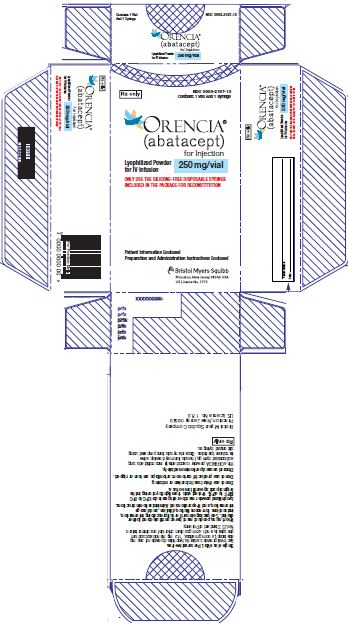
8ORENCIA 250 mg/vial for Injection Representative Packaging
See
Rx only
orencia-250mgvial
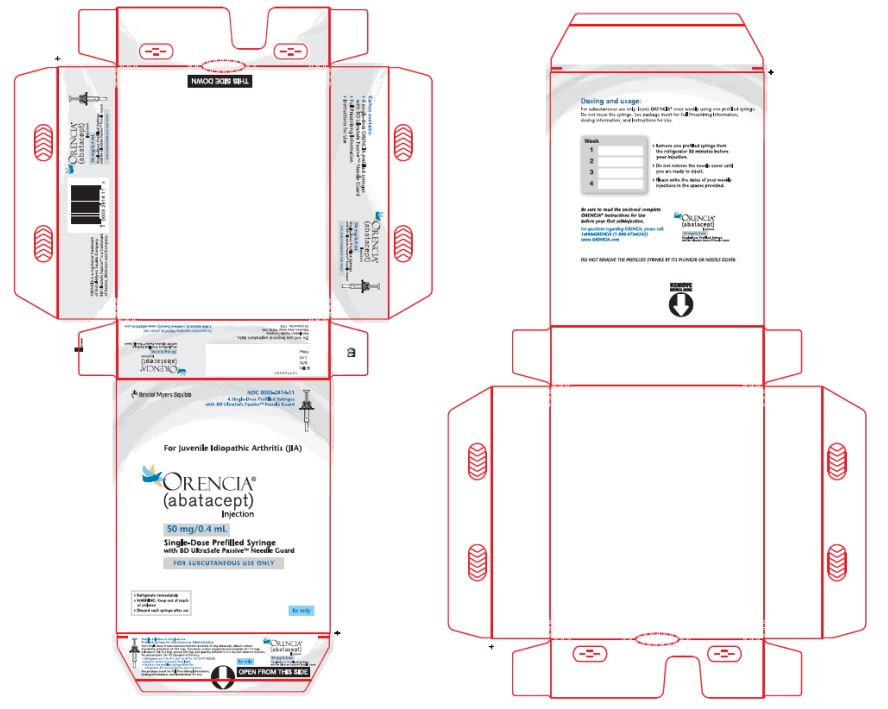
9ORENCIA 50 mg/0.4 mL Injection Representative Packaging
Bristol-Myers Squibb
orencia-50mg-carton
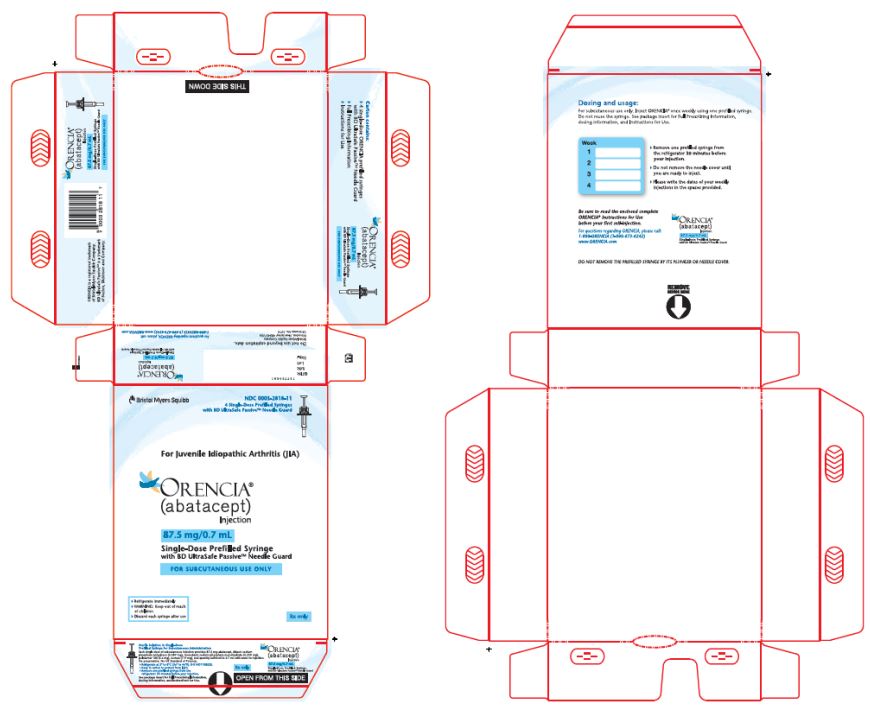
10ORENCIA 87.5 mg/0.7 mL Injection Representative Packaging
Bristol-Myers Squibb
orencia-87pt5mg-carton
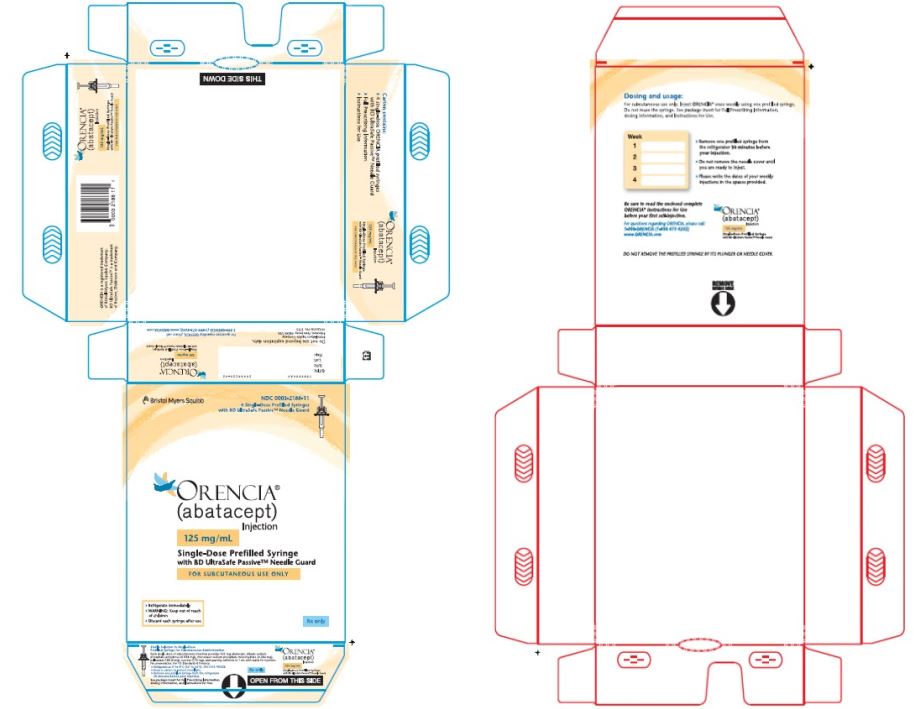
11ORENCIA 125 mg/mL Injection Representative Packaging
Bristol-Myers Squibb
orencia-125mg-carton
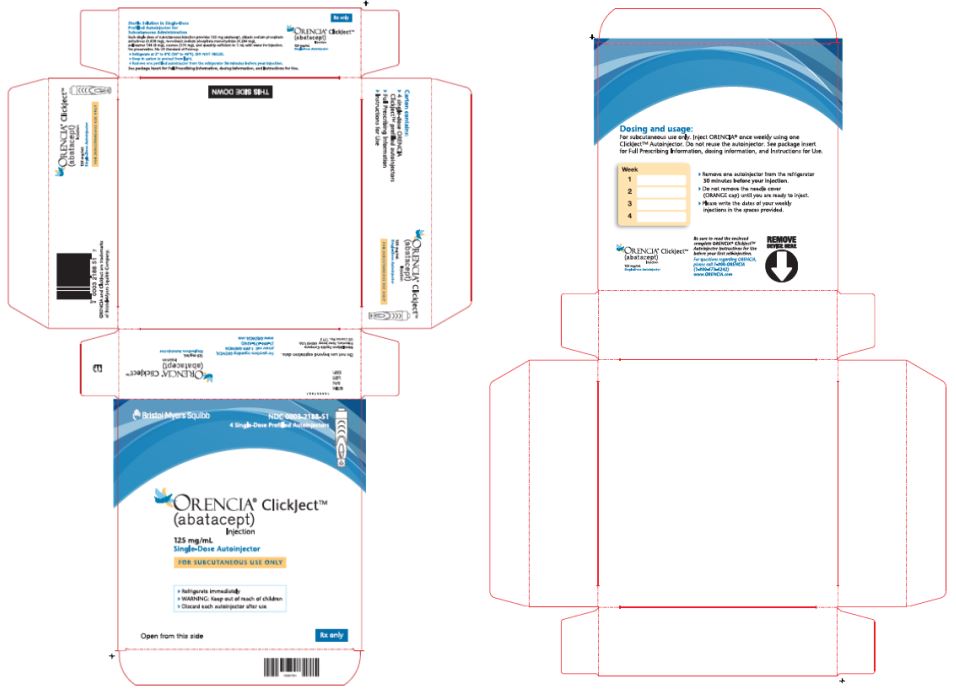
12ORENCIA 125 mg/mL ClickJect Representative Packaging
Bristol-Myers Squibb
orencia-4ct-clickjet-carton