Heart Attack Treatments
Find Heart Attack Treatments
MetFORMIN
What is Actoplus (MetFORMIN)?
Approved To Treat
Top Global Experts


Related Clinical Trials
Background: In people with multiple sclerosis (MS), brain and cerebrospinal fluid (CSF) biomarkers indicate inflammation or disease. Researchers want to see if 4 drugs given alone or combined affect MS biomarkers. They want to see if a change in biomarker levels can predict which drugs a person with MS might respond to.
Summary: Sitagliptin, when combined with standard-of-care drug bevacizumab, is being tested to 1) find out if it is effective at treating gliomas that have returned or progressed after treatment, and 2) find out what the highest dose of sitagliptin is appropriate to give when combined with bevacizumab.
Summary: This prospective, single-center observational study evaluates the effect of dapagliflozin 10 mg/day on right ventricular-pulmonary artery coupling measured by the TAPSE/PASP ratio in 72 patients with left ventricular ejection fraction \<50% after off-pump coronary artery bypass grafting (OPCAB). The primary outcome is the change in TAPSE/PASP ratio from 1 month after surgery (before dapagliflozin)...
Related Latest Advances
Brand Information
- Thiazolidinediones, including pioglitazone, which is a component of ACTOPLUS MET
- After initiation of ACTOPLUS MET, and after dose increases, monitor patients carefully for signs and symptoms of heart failure (e.g., excessive, rapid weight gain, dyspnea, and/or edema). If congestive heart failure develops while taking ACTOPLUS MET, consider discontinuation of ACTOPLUS MET or dosage reduction of pioglitazone in ACTOPLUS MET
- ACTOPLUS MET is not recommended in patients with symptomatic heart failure
- Initiation of ACTOPLUS MET in patients with established New York Heart Association (NYHA) Class III or IV heart failure is contraindicated
- Postmarketing cases of metformin-associated lactic acidosis have resulted in death, hypothermia, hypotension, and resistant bradyarrhythmias. The onset of metformin-associated lactic acidosis is often subtle, accompanied only by nonspecific symptoms such as malaise, myalgias, respiratory distress, somnolence, and abdominal pain. Metformin-associated lactic acidosis was characterized by elevated blood lactate levels (greater than 5 mmol/L), anion gap acidosis (without evidence of ketonuria or ketonemia), an increased lactate:pyruvate ratio; and metformin plasma levels generally greater than 5 mcg/mL
- Risk factors for metformin-associated lactic acidosis include renal impairment, concomitant use of certain drugs (e.g., carbonic anhydrase inhibitors such as topiramate), age 65 years old or greater, having a radiological study with contrast, surgery and other procedures, hypoxic states (e.g., acute congestive heart failure), excessive alcohol intake, and hepatic impairment.
- Steps to reduce the risk of and manage metformin-associated lactic acidosis in these high-risk groups are provided in the Full Prescribing Information
- If metformin-associated lactic acidosis is suspected, immediately discontinue ACTOPLUS MET and institute general supportive measures in a hospital setting. Prompt hemodialysis is recommended
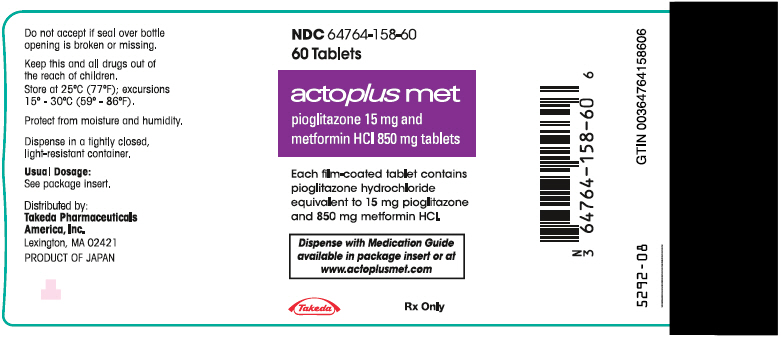
- 15 mg of pioglitazone and 850 mg of metformin HCl tablets: White to off-white, oblong, film-coated tablets debossed with “4833M” on one side and “15/850” on the other
- Established NYHA Class III or IV heart failure at the time of ACTOPLUS MET initiation
- Severe renal impairment (eGFR below 30 mL/min)
- A history of serious hypersensitivity to pioglitazone, metformin HCl, or any of the excipients in ACTOPLUS MET.
- Acute or chronic metabolic acidosis, including diabetic ketoacidosis
- Congestive heart failure
- Lactic acidosis
- Edema
- Hypoglycemia with Concomitant Use with Insulin or Insulin Secretagogues
- Hepatic Effects
- Urinary Bladder Tumors
- Fractures
- Macular Edema
- Vitamin B
Store at 25°C (77°F); excursions permitted to 15°-30°C (59°-86°F) [see USP Controlled Room Temperature]. Keep container tightly closed, and protect from moisture and humidity.
- Congestive Heart Failure: Inform patients of the signs and symptoms of heart failure. Instruct patients who experience an unusually rapid increase in weight or edema, shortness of breath, or other symptoms of heart failure while on ACTOPLUS MET to immediately report these symptoms to their healthcare provider. [see .
- Lactic Acidosis: Explain to patients the risks of lactic acidosis, its symptoms and conditions that predispose to its development, as noted in the Warnings and Precautions (5.2) section. Advise patients to discontinue ACTOPLUS MET immediately and to promptly notify their healthcare professional if unexplained hyperventilation, myalgia, gastrointestinal symptoms, malaise, unusual somnolence, or other nonspecific symptoms occur.
Counsel patients against excessive alcohol intake and inform patients about the importance of regular testing of renal function while receiving ACTOPLUS MET.
Inform patients about the importance of regular testing of renal function and hematologic parameters when receiving treatment with ACTOPLUS MET
Instruct patients to inform their doctor that they are taking ACTOPLUS MET prior to any surgical or radiological procedure, as temporary discontinuation of ACTOPLUS MET may be required until renal function has been confirmed to be normal. - Edema: Inform patients that ACTOPLUS MET use can lead to new-onset or worsening of edema. Instruct patients to immediately report symptoms of rapid weight increase or worsening edema to their healthcare provider [see .
- Hypoglycemia with Concomitant Use with Insulin or Insulin Secretagogues: Inform patients that the risk of hypoglycemia is increased when ACTOPLUS MET is used with insulin or insulin secretagogues (such as a sulfonylurea). Educate patients on the signs and symptoms of hypoglycemia [see .
- Hepatic Effects: Instruct patients to promptly stop taking ACTOPLUS MET and seek immediate medical advice if they experience signs or symptoms of liver injury (e.g., unexplained nausea, vomiting, abdominal pain, fatigue, anorexia, or dark urine) [see .
- Urinary Bladder Tumors: Advise patients to promptly report any hematuria, dysuria or urinary urgency that develops or increases during treatment as these may be due to bladder cancer [see .
- Fractures: Inform female patients about the risk of fractures while taking ACTOPLUS MET. Provide them with information on factors that may contribute to fracture risk [see .
- Macular Edema: Educate patients on the signs and symptoms of macular edema and advise them to seek medical attention from an ophthalmologist if they experience symptoms of macular edema [see .
- Vitamin B: Inform patients about the importance of obtaining regular hematological laboratory monitoring while receiving ACTOPLUS MET [see .
- Females of Reproductive Age: Inform female patients that treatment with ACTOPLUS MET may result in an unintended pregnancy in some premenopausal anovulatory females due to its effect on ovulation [see
- Missed Dosage: Instruct patients if a dose is missed, not to double their next dose.
60 Tablets