Coreg
What is Coreg (Carvedilol)?
Approved To Treat


Related Clinical Trials
Summary: This trial has two cohorts of patients with human epidermal growth factor receptor (HER)-2-positive breast cancer that has spread to other places in the body. All patients must be receiving trastuzumab-based treatment. Both cohorts are being observed for cardiac toxicity. The largest cohort (currently open to accrual) is observational, and contains patients who are taking a beta blocker, ACE inhib...
Summary: The investigators aim to determine, using a point-of-care randomized controlled trial design, if hemodialysis patients, who are randomized to metoprolol succinate (a dialyzable, beta-1 selective beta blocker), have an improved cardiovascular outcome compared to those randomized to carvedilol (a non-dialyzable, non-selective beta blocker with alpha-1 antagonist properties). The investigators will a...
Summary: The purpose of this study is to assess the efficacy after one month of treatment with Carvedilol (12.5 mg daily) in primary prophylaxis of digestive haemorrhage due to portal hypertension in cirrhosis, by endoscopic ultrasound-guided portal pressure gradient measurement.
Related Latest Advances
Brand Information
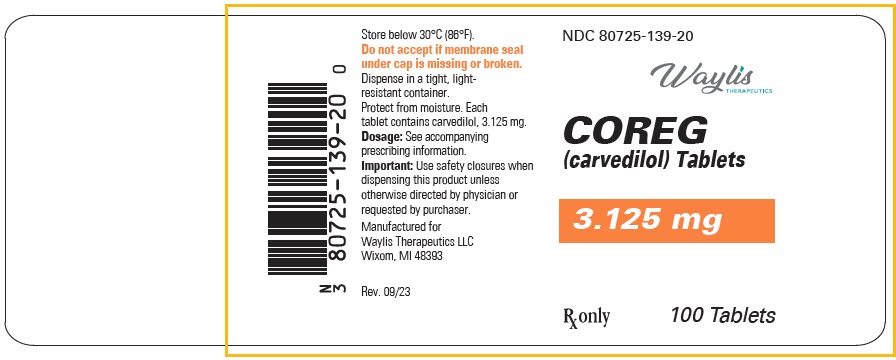
- 3.125 mg – engraved with "39" and "WP"
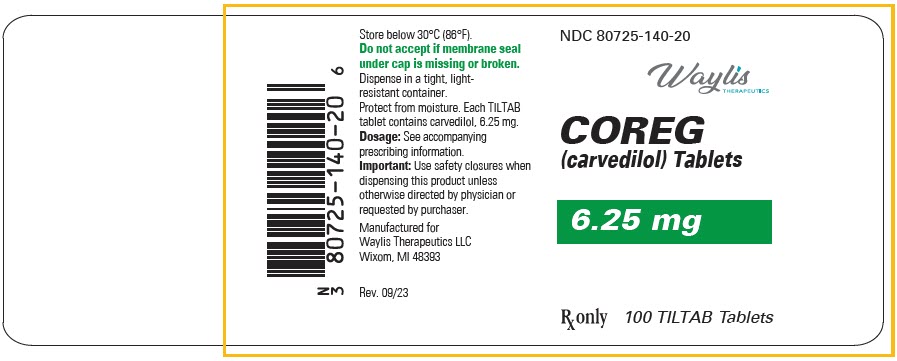
- 6.25 mg – engraved with "4140" and "WP"
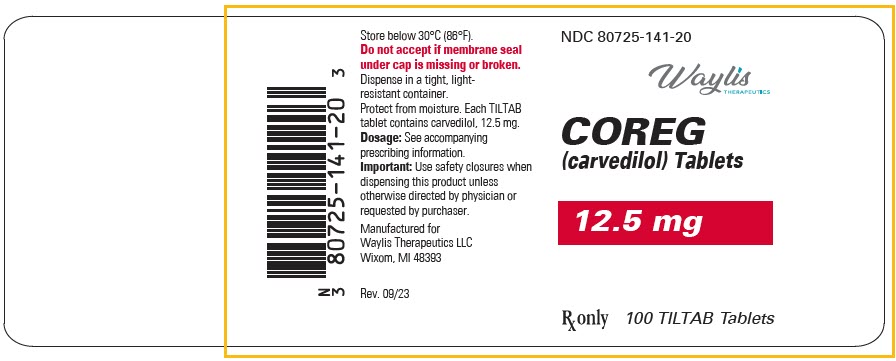
- 12.5 mg – engraved with "4141" and "WP"
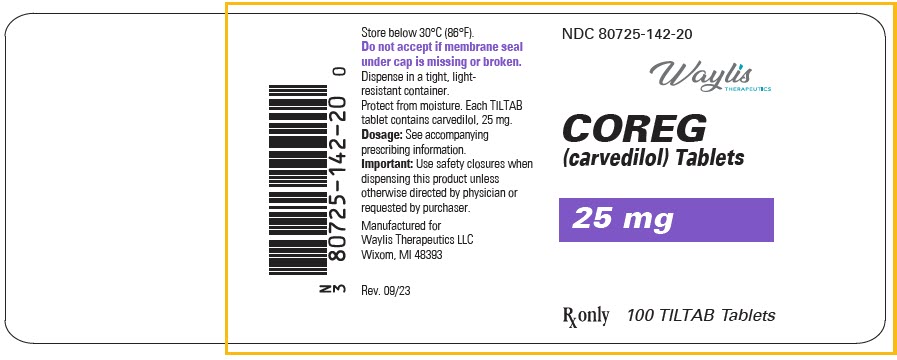
- 25 mg – engraved with "4142" and "WP"
- Bronchial asthma or related bronchospastic conditions. Deaths from status asthmaticus have been reported following single doses of COREG.
- Second- or third-degree AV block.
- Sick sinus syndrome.
- Severe bradycardia (unless a permanent pacemaker is in place).
- Patients with cardiogenic shock or who have decompensated heart failure requiring the use of intravenous inotropic therapy. Such patients should first be weaned from intravenous therapy before initiating COREG.
- Patients with severe hepatic impairment.
- Patients with a history of a serious hypersensitivity reaction (e.g., Stevens-Johnson syndrome, anaphylactic reaction, angioedema) to any component of this medication or other medications containing carvedilol.
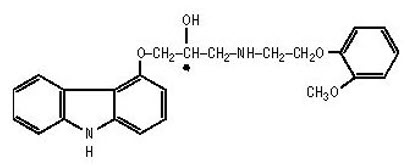
- 3.125 mg – engraved with "39" and "WP"
- 6.25 mg – engraved with "4140" and "WP"
- 12.5 mg – engraved with "4141" and "WP"
- 25 mg – engraved with "4142" and "WP"
- 3.125 mg bottles of 100: NDC 80725-139-20
- 6.25 mg bottles of 100: NDC 80725-140-20
- 12.5 mg bottles of 100: NDC 80725-141-20
- 25 mg bottles of 100: NDC 80725 142-20
- Patients should take COREG with food.
- Patients should not interrupt or discontinue using COREG without a physician's advice.
- Patients with heart failure should consult their physician if they experience signs or symptoms of worsening heart failure such as weight gain or increasing shortness of breath.
- Patients may experience a drop in blood pressure when standing, resulting in dizziness and, rarely, fainting. Patients should sit or lie down when these symptoms of lowered blood pressure occur.
- If experiencing dizziness or fatigue, patients should avoid driving or hazardous tasks.
- Patients should consult a physician if they experience dizziness or faintness, in case the dosage should be adjusted.
- Inform patients or caregivers that there is a risk of hypoglycemia when COREG is given to patients who are fasting or who are vomiting. Instruct patients or caregivers how to monitor for signs of hypoglycemia
- Contact lens wearers may experience decreased lacrimation.
- to treat patients with certain types of heart failure
- to treat patients who had a heart attack that worsened how well the heart pumps
- to treat patients with high blood pressure (hypertension)
- have severe heart failure and are hospitalized in the intensive care unit or require certain intravenous medications that help support circulation (inotropic medications).
- are prone to asthma or other breathing problems.
- have a slow heartbeat or a heart that skips a beat (irregular heartbeat).
- have liver problems.
- are allergic to any of the ingredients in COREG. The active ingredient is carvedilol. See the end of this leaflet for a list of all the ingredients in COREG.
- have asthma or other lung problems (such as bronchitis or emphysema).
- have problems with blood flow in your feet and legs (peripheral vascular disease). COREG can make some of your symptoms worse.
- have diabetes.
- have thyroid problems.
- have a condition called pheochromocytoma.
- have had severe allergic reactions.
- are pregnant or trying to become pregnant. It is not known if COREG is safe for your unborn baby. You and your doctor should talk about the best way to control your high blood pressure during pregnancy.
- are breastfeeding. It is not known if COREG passes into your breast milk. Talk with your doctor about the best way to feed your baby if you are taking COREG.
- are scheduled for surgery and will be given anesthetic agents.
- are scheduled for cataract surgery and have taken or are currently taking COREG.
- are taking prescription or over-the-counter medicines, vitamins, and herbal supplements. COREG and certain other medicines can affect each other and cause serious side effects. COREG may affect the way other medicines work. Also, other medicines may affect how well COREG works.
- Take COREG exactly as prescribed. Your doctor will tell you how many tablets to take and how often. In order to minimize possible side effects, your doctor might begin with a low dose and then slowly increase the dose.
- Tell your doctor if you gain weight or have trouble breathing while taking COREG.
- Take COREG with food.
- If you miss a dose of COREG, take your dose as soon as you remember, unless it is time to take your next dose. Take your next dose at the usual time. Do not take 2 doses at the same time.
- If you take too much COREG, call your doctor or poison control center right away.
- COREG can cause you to feel dizzy, tired, or faint. Do not drive a car, use machinery, or do anything that needs you to be alert if you have these symptoms.
- Low blood pressure (which may cause dizziness or fainting when you stand up).
If these happen, sit or lie down right away and tell your doctor. - Tiredness. If you feel tired or dizzy you should not drive, use machinery, or do anything that needs you to be alert.
- Slow heartbeat.
- Changes in your blood sugar. If you have diabetes, tell your doctor if you have any changes in your blood sugar levels.
- COREG may hide some of the symptoms of low blood sugar, especially a fast heartbeat.
- COREG may mask the symptoms of hyperthyroidism (overactive thyroid).
- Worsening of severe allergic reactions.
- Rare but serious allergic reactions (including hives or swelling of the face, lips, tongue, and/or throat that may cause difficulty in breathing or swallowing) have happened in patients who were on COREG. These reactions can be life-threatening.
- Store COREG at less than 86°F (30°C). Keep the tablets dry.
- Safely, throw away COREG that is out of date or no longer needed.
- Keep COREG and all medicines out of the reach of children.