Heterozygous Familial Hypercholesterolemia (HeFH) Treatments
Find Heterozygous Familial Hypercholesterolemia (HeFH) Treatments
Repatha
What is Repatha (Evolocumab)?
Approved To Treat


Related Clinical Trials
Summary: The CAPRA-EVO trial is a single-center, randomized, open-label study with blinded endpoint assessment comparing early evolocumab plus standard lipid-lowering therapy versus standard-of-care lipid-lowering therapy in patients with acute coronary syndrome after successful percutaneous coronary intervention. The study will use serial photon-counting coronary computed tomography angiography at baselin...
Summary: Intracranial atherosclerotic disease is the most common cause of ischemic stroke that is directly attributed to the progression or rupture of intracranial high-risk plaque in Asia. Many studies mainly from Euro-American population with a focus on extracranial carotid plaque have fully demonstrated the advantages of intensive statin therapy on stabilizing or reversing plaque burden, reversing plaqu...
Summary: This prospective multicenter cohort study aims to evaluate the effectiveness and safety of early PCSK9 inhibitor therapy in patients with large-artery atherosclerotic ischemic stroke. The study will compare early neurological improvement, lipid-lowering effect, 90-day functional outcome, recurrent cardio-cerebrovascular events, and safety outcomes between patients treated with evolocumab plus stat...
Related Latest Advances
Brand Information
- To reduce the risk of major adverse cardiovascular (CV) events (CV death, myocardial infarction, stroke, unstable angina requiring hospitalization, or coronary revascularization) in adults at increased risk for these events.
- As an adjunct to diet and exercise to reduce low-density lipoprotein cholesterol (LDL-C) in:
- adults with hypercholesterolemia.
- adults and pediatric patients aged 10 years and older with heterozygous familial hypercholesterolemia (HeFH).
- adults and pediatric patients aged 10 years and older with homozygous familial hypercholesterolemia (HoFH).
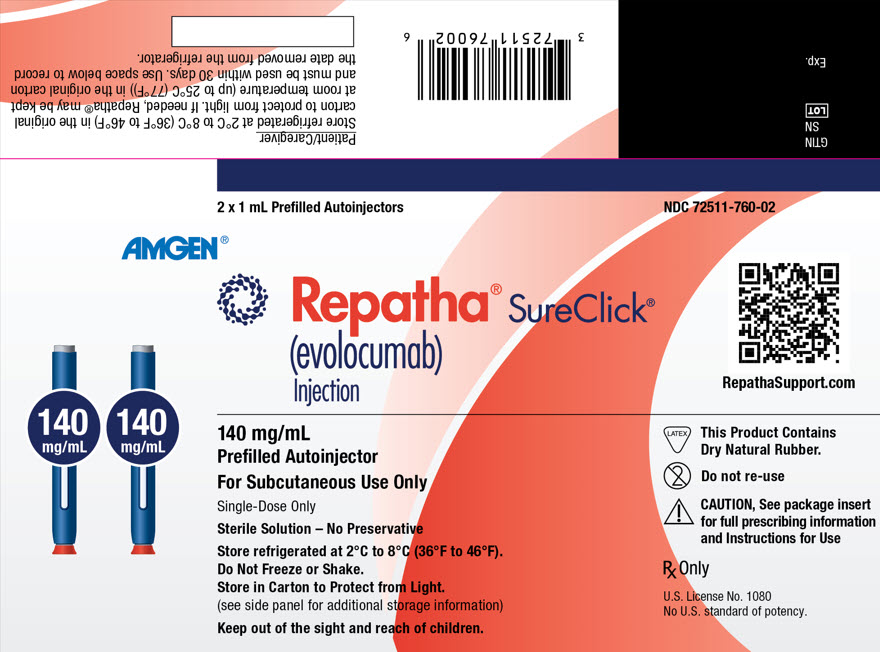
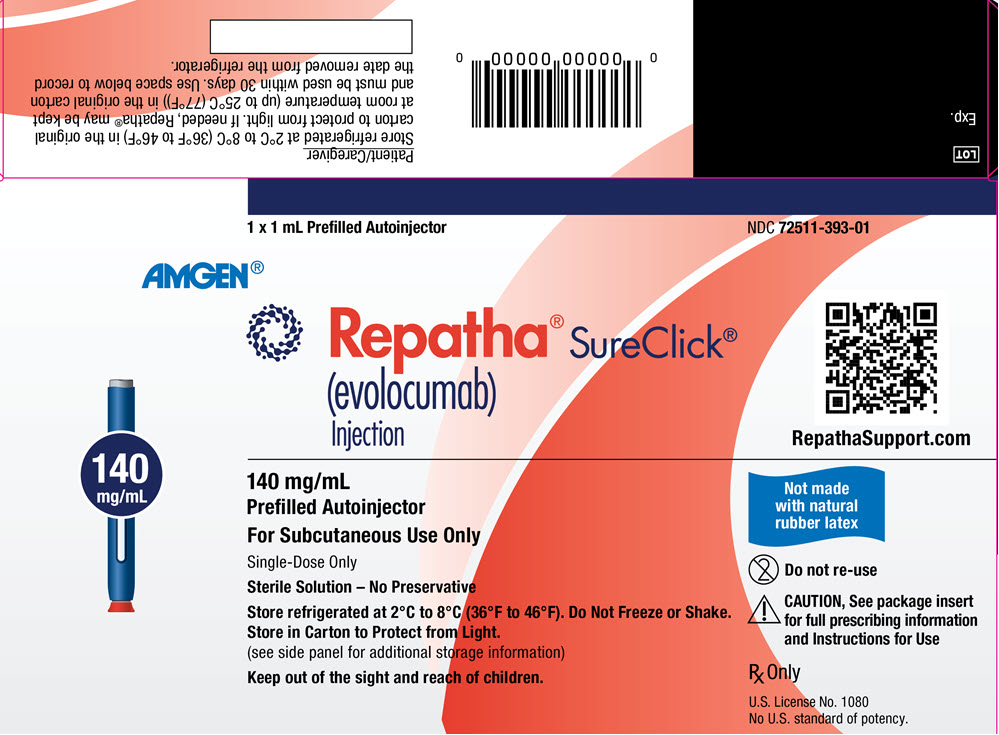
- 140 mg/mL solution in a prefilled single-dose pen
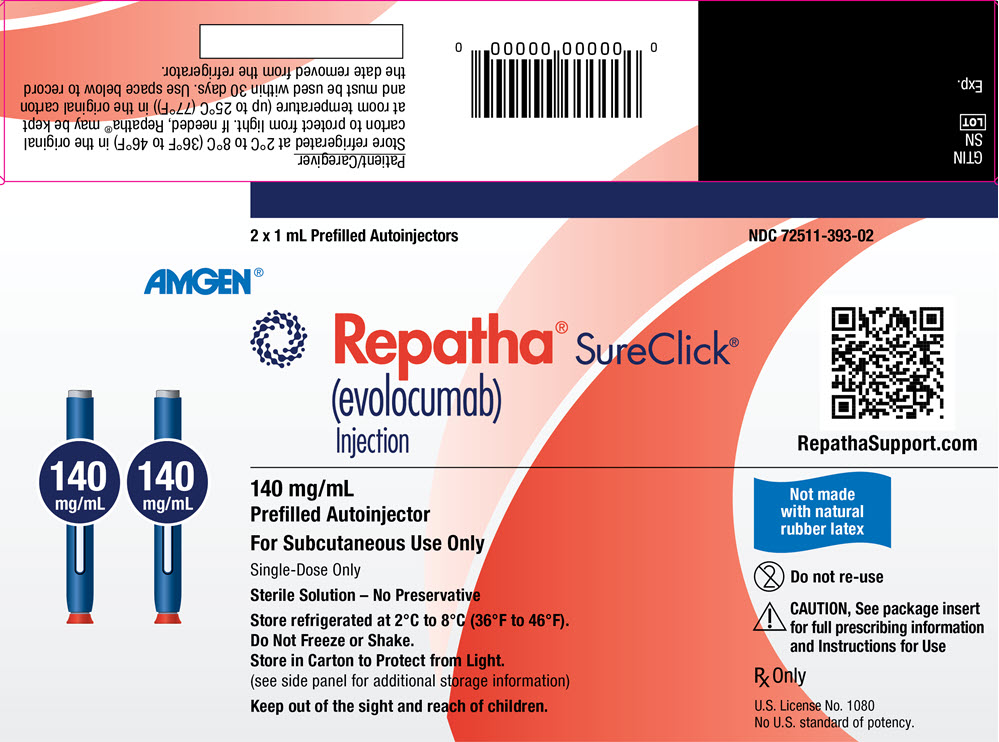
- 140 mg/mL solution in a prefilled single-dose SureClick
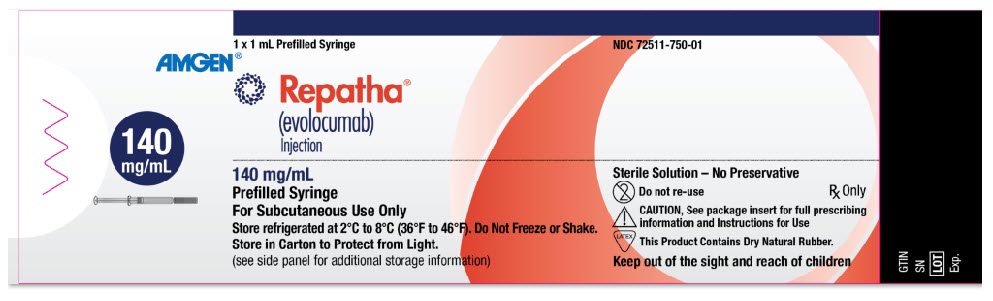
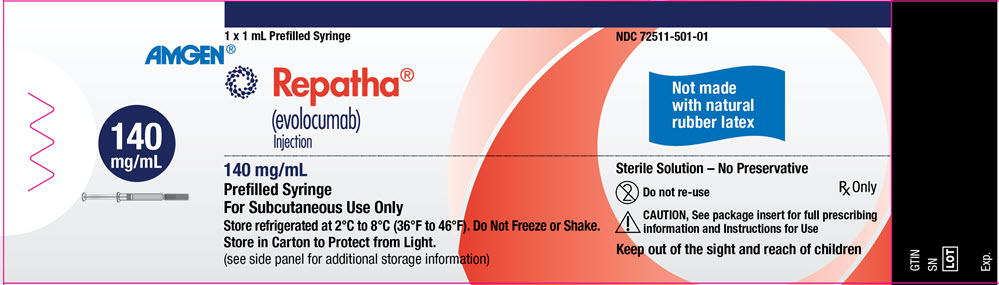
- 140 mg/mL solution in a prefilled single-dose syringe
- Hypersensitivity Reactions
- Nasopharyngitis (12% versus 11%)
- Headache (11% versus 2%)
- Oropharyngeal pain (7% versus 0%)
- Influenza (6% versus 4%)
- Upper respiratory tract infection (6% versus 2%)
- Upper respiratory tract infection (9.1% versus 6.3%)
- Influenza (9.1% versus 0%)
- Gastroenteritis (6.1% versus 0%)
- Nasopharyngitis (6.1% versus 0%)
- Hypersensitivity reactions: Angioedema
- Influenza-like illness
- made of a heavy-duty plastic,
- can be closed with a tight-fitting, puncture-resistant lid, without sharps being able to come out,
- upright and stable during use,
- leak-resistant, and
- properly labeled to warn of hazardous waste inside the container.
When your sharps disposal container is almost full, you will need to follow your community guidelines for the right way to dispose of your sharps disposal container.
- made of a heavy-duty plastic,
- can be closed with a tight-fitting, puncture-resistant lid, without sharps being able to come out,
- upright and stable during use,
- leak-resistant, and
- properly labeled to warn of hazardous waste inside the container.
When your sharps disposal container is almost full, you will need to follow your community guidelines for the right way to dispose of your sharps disposal container.
- If your healthcare provider decides that Repatha injections may be given at home, you or your caregiver should receive training on the right way to prepare and inject Repatha. You should not inject until you or your caregiver have been shown the right way to give the injections by your healthcare provider or nurse.
- The medicine in the prefilled pen is for injection under the skin (subcutaneous injection). See the Repatha Patient Information for information about Repatha.
- You should not give the injection until you have fully read and understood this Instructions for Use.
- Do not shake the prefilled pen.
- The prefilled pen is not made with natural rubber latex.
- The prefilled pen contains a 140 mg dose of Repatha.
- If your prescribed dose is
- If your prescribed dose is
- Check the prefilled pen label and prescription to make sure you have the correct medicine, dose and number of prefilled pens.
- Keep the prefilled pen in the original carton to protect it from light and physical damage.
- Do not freeze the prefilled pen or store in extreme heat.
- You may keep the prefilled pen at room temperature between 68°F to 77°F (20°C to 25°C) for up to 30 days, if needed.


- Contact your healthcare provider
- Visit
- Call 1-844-REPATHA (1-844-737-2842).
- Remove the pens from the refrigerator. Wait at least 30 minutes for it to warm naturally to room temperature.
- Only remove the number of prefilled pens needed for a full dose of medicine.
- Do not heat the prefilled pen with hot water, a microwave, or direct sunlight.
- Put any unused prefilled pens back into the refrigerator.
- Inspect the medicine. It should be clear and colorless to slightly yellow. It is okay to see air bubbles.
- Check the expiration date (Exp.) and inspect the prefilled pen for damage.
- Select the thigh or stomach for the injection site.
- Only a caregiver or healthcare provider should inject in the back of the upper arm.
- Choose a different site for each injection.
- Wash your hands with soap and water. Clean the skin at the injection site with an alcohol wipe.
- Let the skin dry naturally.
- Do not blow on or touch the injection site again.
- Pull hard or twist the cap to remove it. Never put the cap back on as it may damage the needle.
- It is okay to see a few drops of medicine come out of the needle.
- Grasp the prefilled pen so you can see the window. Create a firm surface at the injection site.
- If needed, stretch or pinch the skin to create a firm surface at the injection site until the injection is finished.
- To start the injection, place the pen on your skin. Push down and hold firmly without releasing.
- The yellow safety guard will disappear, and you may hear a click.
- Continue to hold the prefilled pen down. The injection is complete when the window turns fully yellow. You may hear a second click.
- Confirm all medicine was injected.
- A small drop of liquid on the injection site is okay.
- Call your healthcare provider if you have not received a full injection of medicine.
- Check the injection site.
- Do not rub the injection site.
- If there is blood, use a cotton ball and apply an adhesive bandage.
- Place the used prefilled pen and cap in a sharps disposal container.
- Do not throw away the prefilled pen in your household trash.
- Do not reuse the prefilled pen.
For more information or help call 1-844-REPATHA (1-844-737-2842).
- made of a heavy-duty plastic,
- can be closed with a tight-fitting, puncture-resistant lid, without sharps being able to come out,
- upright and stable during use,
- leak-resistant, and
- properly labeled to warn of hazardous waste inside the container.