Brand Name

Signifor

Generic Name
Pasireotide
View Brand Information
FDA approval date: December 14, 2012
Classification: Somatostatin Analog
Form: Injection, Kit

What is Signifor (Pasireotide)?

SIGNIFOR LAR is a somatostatin analog indicated for the treatment of: Patients with acromegaly who have had an inadequate response to surgery and/or for whom surgery is not an option.
Save this treatment for later
Sign Up
Not sure about your diagnosis?
Check Your Symptoms
Tired of the same old research?
Check Latest Advances

Related Clinical Trials

Effects of Pasireotide Lar Therapy on Bone Metabolism

Summary: Acromegaly, a chronic condition characterized by growth hormone (GH) and, in turn, insulin-like growth factor-1 (IGF-I) excess, is burdened by a series of systemic and metabolic comorbidities that strongly impair quality of life (QoL) and life expectancy. Amongst them, a specific acromegalic osteopathy has been discovered, characterized by fragility fractures associated with high bone turnover, wh...

Pasireotide as Maintenance Treatment With Monthly Deep Intramuscular Injection in SSTR2/3/5-Expressing Synovial Sarcoma and Desmoplastic Small Round Cell Tumor

Summary: PAMSARC is a non-commercial interventional Phase 2 clinical trial of academic research institutions, with its primary goal being to improve medical treatment of fusion driven Desmoplastic small round cell tumor (DSRCT) and Synovial sarcoma (SySa) in young adults and adolsecents with male predominance. Current management of DSRCT and SySa includes chemotherapy, radiation and aggressive cytoreductiv...

Pasireotide Treatment for Patients With Prolactinomas Who Need Treatment Beyond Dopamine Agonist Therapy

Summary: The researchers are doing this study to find out whether pasireotide is an effective treatment for people with prolactinoma who cannot receive dopamine agonist therapy. Another purpose of this study is to find out whether pasireotide is a safe treatment for people with prolactinoma.

Brand Information

Signifor (pasireotide)
1DOSAGE FORMS AND STRENGTHS
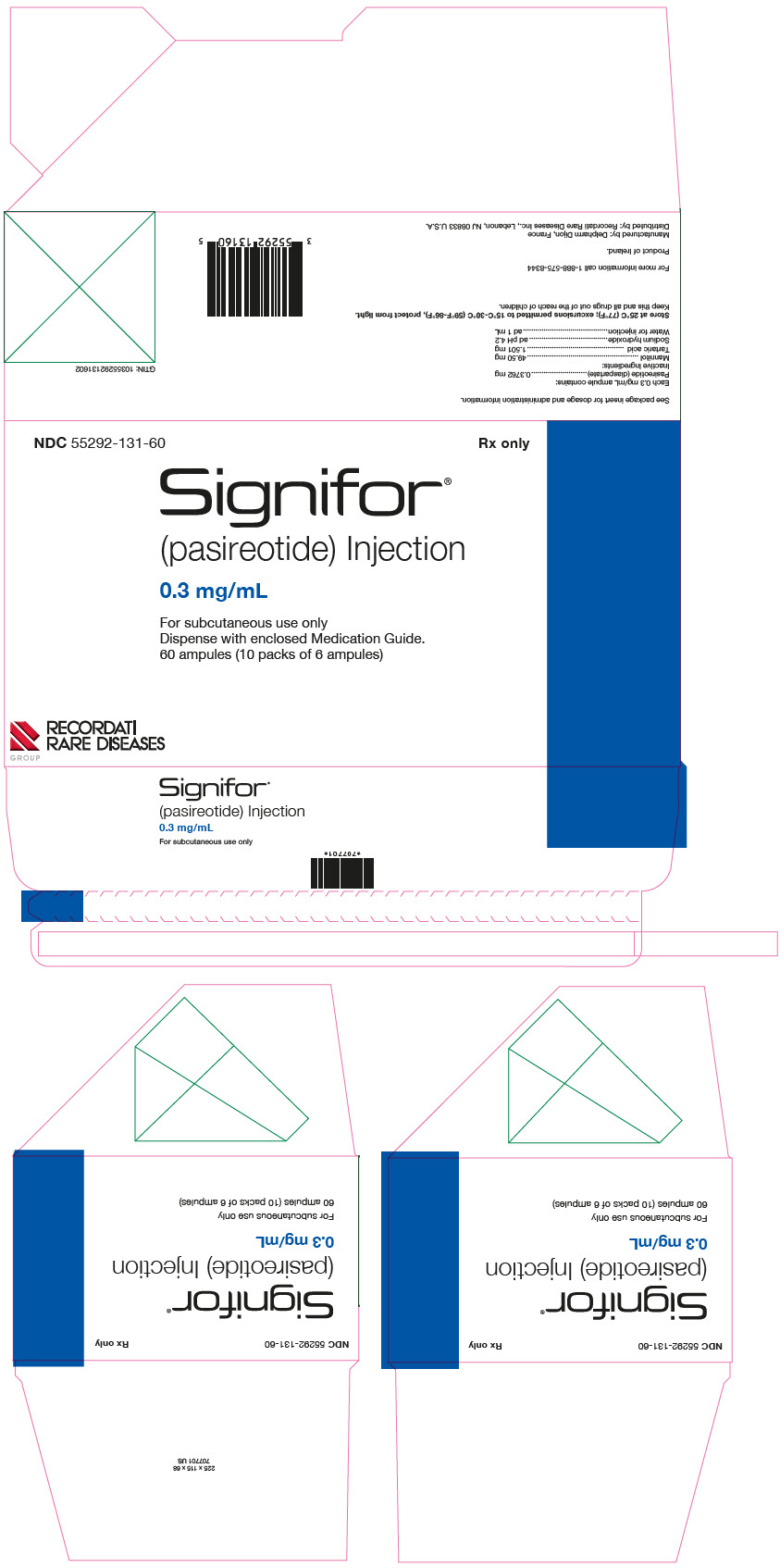
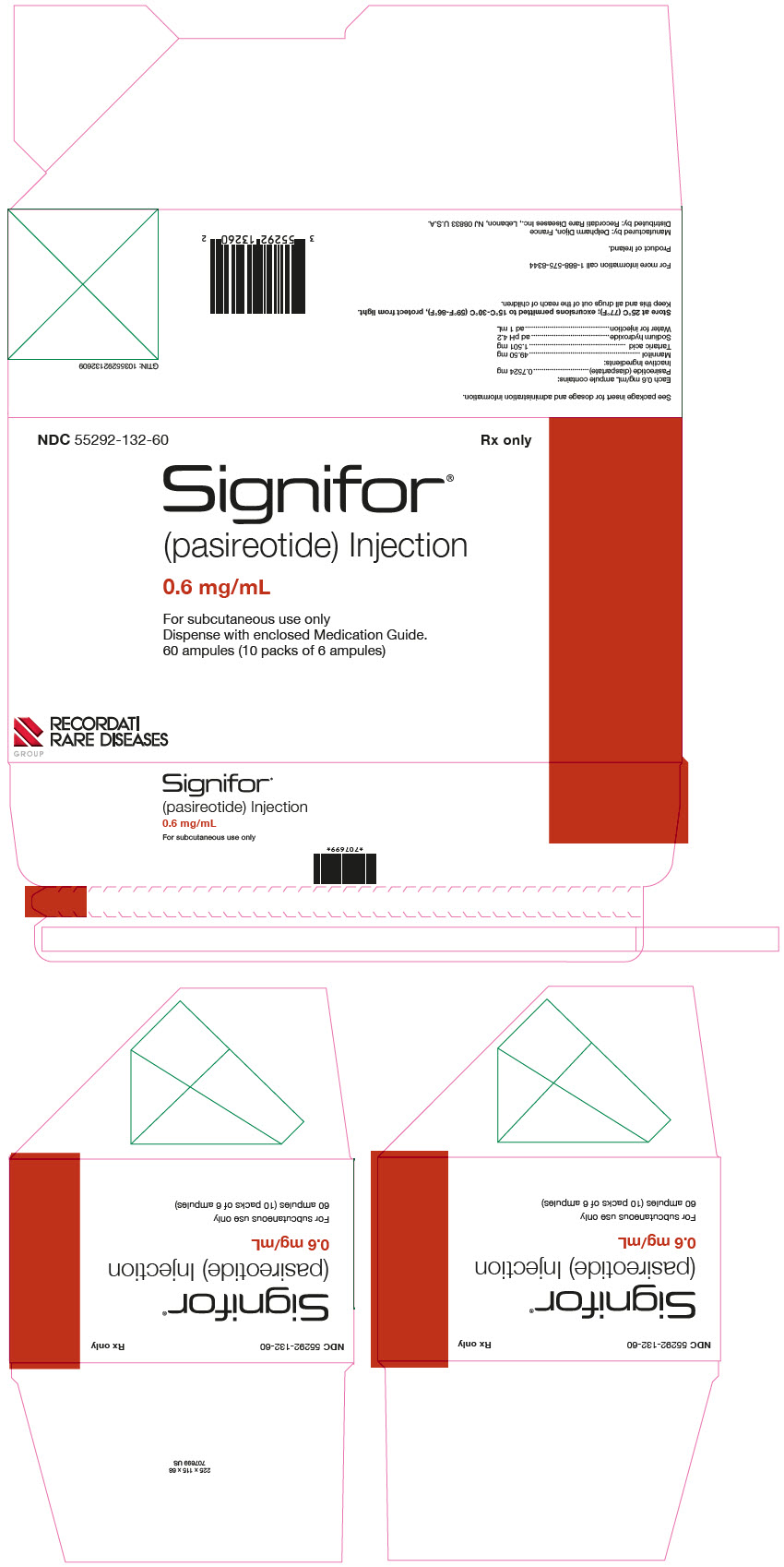
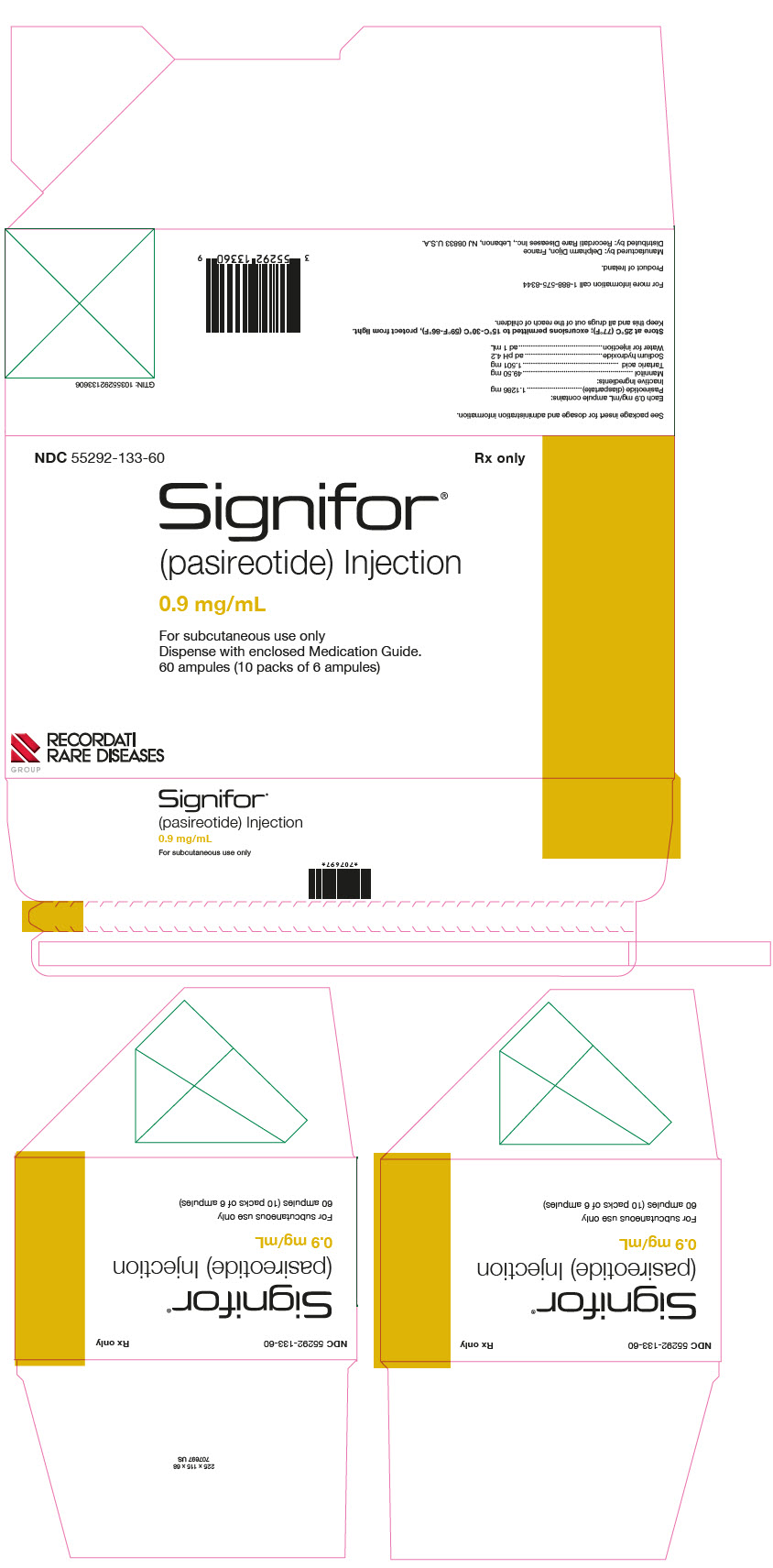
Injection: 0.3 mg/mL, 0.6 mg/mL, and 0.9 mg/mL in a single-dose, 1 mL colorless glass ampule.
2CONTRAINDICATIONS
None.
3ADVERSE REACTIONS
Clinically significant adverse reactions that appear in other sections of the labeling include:
  • Hypocortisolism
  • Hyperglycemia and Diabetes
  • Bradycardia and QT prolongation
  • Liver Test Elevations
  • Cholelithiasis and Complications of Cholelithiasis
  • Pituitary Hormone Deficiency
3.1Clinical Trials Experience
Because clinical trials are conducted under widely varying conditions, adverse reaction rates observed in clinical trials of a drug cannot be directly compared to rates in clinical trials of another drug and may not reflect the rates observed in practice.
A total of 162 Cushing's disease patients were exposed to SIGNIFOR in the Phase III study 
In the Phase III trial, adverse reactions were reported in 98% of patients. The most common adverse reactions (frequency ≥ 20% in either group) were diarrhea, nausea, hyperglycemia, cholelithiasis, headache, abdominal pain, fatigue, and diabetes mellitus. There were no deaths during the study. Serious adverse events were reported in 25% of patients. Adverse events leading to study discontinuation were reported in 17% of patients.
Adverse reactions with an overall frequency higher than 5% are presented in Table 1 by randomized dose group and overall. Adverse reactions are ranked by frequency, with the most frequent reactions listed first.
Other notable adverse reactions which occurred with a frequency less than 5% were: anemia (4%), blood amylase increased (2%), and prothrombin time prolonged (2%).
Gastrointestinal Disorders
Gastrointestinal disorders, predominantly diarrhea, nausea, abdominal pain, and vomiting were reported frequently in the Phase III trial (see Table 1). These events began to develop primarily during the first month of treatment with SIGNIFOR and required no intervention.
Hyperglycemia and Diabetes
Hyperglycemia-related terms were reported frequently in the Phase III trial. For all patients, these terms included: hyperglycemia (40%), diabetes mellitus (18%), increased HbA1c (11%), type 2 diabetes mellitus (9%). In general, increases in FPG and HbA1c were seen soon after initiation of SIGNIFOR and were sustained during the treatment period. In the SIGNIFOR 0.6 mg group, mean FPG levels increased from 98.6 mg/dL at baseline to 125.1 mg/dL at Month 6. In the SIGNIFOR 0.9 mg group, mean fasting FPG levels increased from 97.0 mg/dL at baseline to 128.0 mg/dL at Month 6. In the SIGNIFOR 0.6 mg group, HbA1c increased from 5.8% at baseline to 7.2% at Month 6. In the SIGNIFOR 0.9 mg group, HbA1c increased from 5.8% at baseline to 7.3% at Month 6
At one-month follow-up visits, following discontinuation of SIGNIFOR, mean FPG and HbA1c levels decreased but remained above baseline values. Long-term follow-up data are not available.
Elevated Liver Tests
In the Phase III trial, there were transient mean elevations in aminotransferase values in patients treated with SIGNIFOR. Mean values returned to baseline levels by Month 4 of treatment. The elevations were not associated with clinical symptoms of hepatic disease.
In the clinical development program of SIGNIFOR, there were 4 patients with concurrent elevations in ALT greater than 3 x ULN and bilirubin greater than 2 x ULN: one patient with Cushing's disease and 3 healthy volunteers
Hypocortisolism
Cases of hypocortisolism were reported in the Phase III study in Cushing's disease patients
Injection-Site Reactions
Injection-site reactions were reported in 17% of patients enrolled in the Phase III trial in Cushing's disease. The events were most frequently reported as local pain, erythema, hematoma, hemorrhage, and pruritus. These events resolved spontaneously and required no intervention.
Thyroid Function
Hypothyroidism, with the use of SIGNIFOR, was reported for seven patients participating in the Phase III study in Cushing's disease. All seven patients presented with a TSH close to or below the lower limit at study entry, which precludes establishing a conclusive relationship between the adverse event and the use of SIGNIFOR.
Other Abnormal Laboratory Findings
Asymptomatic and reversible elevations in lipase and amylase were observed in patients receiving SIGNIFOR in clinical studies. Pancreatitis is a potential adverse reaction associated with the use of somatostatin analogs due to the association between cholelithiasis and acute pancreatitis.
For hemoglobin levels, mean decreases that remained within normal range were observed. Also, post-baseline elevations in prothrombin time (PT) and partial thromboplastin time (PTT) were noted in 33% and 47% of patients, respectively. The PT and PTT elevations were minimal.
These laboratory findings are of unclear clinical significance.
3.2Postmarketing Experience
Additional adverse reactions have been identified during postapproval use of SIGNIFOR. Because these reactions are reported voluntarily from a population of uncertain size, it is generally not possible to reliably estimate their frequency or establish a causal relationship to drug exposure.
  • Cholelithiasis resulting in complications, including cholecystitis and cholangitis, which have sometimes required cholecystectomy
4OVERDOSAGE
No cases of overdosage have been reported in patients with Cushing's disease receiving SIGNIFOR subcutaneously. Doses up to 2.1 mg twice a day have been used in healthy volunteers with adverse reactions of diarrhea being observed at a high frequency.
In the event of overdosage, it is recommended that appropriate supportive treatment be initiated, as dictated by the patient's clinical status, until resolution of the symptoms.
Up-to-date information about the treatment of overdose can be obtained from a certified Regional Poison Center. Contact Poison Control (1-800-222-1222) for latest recommendations.
5DESCRIPTION
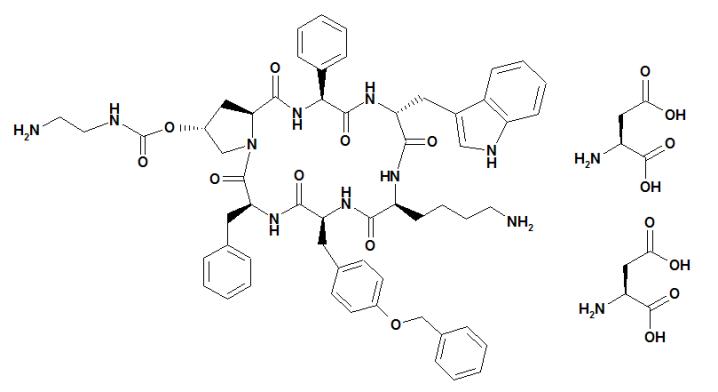
SIGNIFOR (pasireotide) injection is prepared as a sterile solution of pasireotide diaspartate in a tartaric acid buffer for administration by subcutaneous injection. SIGNIFOR is a somatostatin analog. Pasireotide diaspartate, chemically known as (2-Aminoethyl) carbamic acid (2R,5S,8S,11S,14R,17S,19aS)-11-(4-aminobutyl)-5-benzyl-8-(4-benzyloxybenzyl)-14-(1H-indol-3-ylmethyl)-4,7,10,13,16,19-hexaoxo-17-phenyloctadecahydro-3a,6,9,12,15,18-hexaazacyclopentacyclooctadecen-2-yl ester, di[(S)-2-aminosuccinic acid] salt, is a cyclohexapeptide with pharmacologic properties mimicking those of the natural hormone somatostatin.
The molecular formula of pasireotide diaspartate is C
The structural formula of pasireotide diaspartate.
SIGNIFOR is supplied as a sterile solution in a single-dose, 1 mL colorless glass ampule containing pasireotide in 0.3 mg/mL, 0.6 mg/mL, or 0.9 mg/mL strengths for subcutaneous injection.
Each glass ampule contains:
6CLINICAL STUDIES
A Phase III, multicenter, randomized study was conducted to evaluate the safety and efficacy of two dose levels of SIGNIFOR over a 6-month treatment period in Cushing's disease patients with persistent or recurrent disease despite pituitary surgery or
Patients with a baseline 24-hour urine free cortisol (UFC) >1.5 x ULN were randomized to receive a SIGNIFOR dosage of either 0.6 mg subcutaneous twice a day or 0.9 mg subcutaneous twice a day. After 3 months of treatment, patients with a mean 24-hour UFC ≤ 2.0 x ULN and below or equal to their baseline values continued blinded treatment at the randomized dose until Month 6. Patients who did not meet these criteria were unblinded and the dose was increased by 0.3 mg twice a day. After the initial 6 months in the study, patients entered an additional 6-month open-label treatment period. The dosage could be reduced by 0.3 mg twice a day at any time during the study for intolerability.
A total of 162 patients were enrolled in this study. The majority of patients were female (78%) and had persistent or recurrent Cushing's disease despite pituitary surgery (83%) with a mean age of 40 years. A few patients (4%) in either treatment group received previous pituitary irradiation. The median value of the baseline 24-hour UFC for all patients was 565 nmol/24 hours (normal range 30 to 145 nmol/24 hours). About two-thirds of all randomized patients completed 6 months of treatment.
The primary efficacy endpoint was the proportion of patients who achieved normalization of mean 24-hour UFC levels after 6 months of treatment and did not dose increase during this period.
24-Hour Urinary Free Cortisol Results
At Month 6, the percentages of responders for the primary endpoint were 15% and 26% in the 0.6 mg twice a day and 0.9 mg twice a day groups, respectively (Table 3). The percentages of patients with mUFC ≤ ULN or ≥ 50% reduction from baseline, a less stringent endpoint than the primary endpoint, were 34% in the 0.6 mg twice a day and 41% in the 0.9 mg twice a day groups. Dose increases appeared to have minimal effect on 24-hour UFC response. Mean and median percentage changes in UFC from baseline are presented in Table 3.
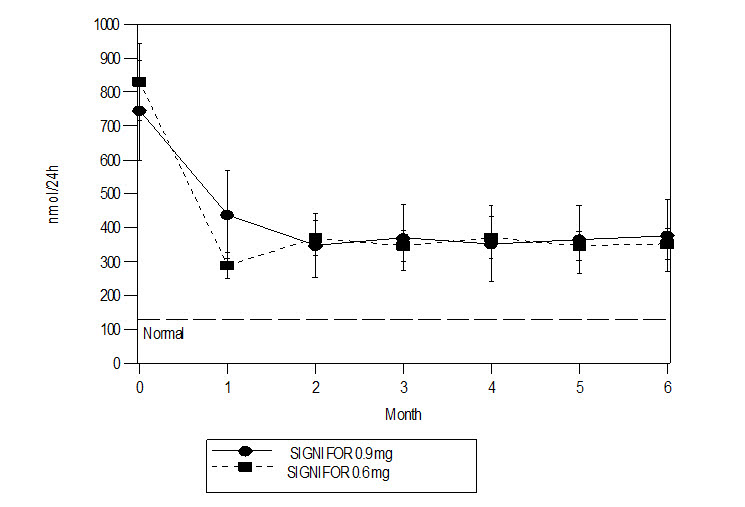
SIGNIFOR resulted in a decrease in the mean 24-hour UFC after 1 month of treatment (Figure 1). For patients (n = 78) who stayed in the trial, similar UFC lowering was observed at Month 12.
Figure 1 – Mean (± SE) Urinary Free Cortisol (nmol/24h) at Time Points up to Month 6 by Randomized Dose Group
Note: Only patients who completed 6 months of treatment are included in this analysis (n = 110). The reference line is the ULN for UFC, which is 145 nmol/24hour; +/-Standard errors are displayed.
Other Endpoints
Decreases from baseline for blood pressure were observed at Month 6, including patients who did not receive any anti-hypertensive medication. However, due to the fact that the study allowed initiation of anti-hypertensive medication and dose increases in patients already receiving such medications, the individual contribution of SIGNIFOR or of anti-hypertensive medication adjustments cannot be clearly established.
The mean decreases from baseline at Month 6 for weight, body mass index, and waist circumference were 4.4 kg, 1.6 kg/m