Myelodysplastic Syndrome (MDS) Treatments

Find Myelodysplastic Syndrome (MDS) Treatments

Brand Name

Inqovi

Generic Name
Decitabine
View Brand Information
FDA approval date: July 11, 2013
Classification: Nucleoside Metabolic Inhibitor
Form: Injection, Tablet, Kit

What is Inqovi (Decitabine)?

INQOVI is indicated for treatment of adult patients with myelodysplastic syndromes , including previously treated and untreated, de novo and secondary MDS with the following French-American-British subtypes (refractory anemia, refractory anemia with ringed sideroblasts, refractory anemia with excess blasts, and chronic myelomonocytic leukemia ) and intermediate-1, intermediate-2, and high-risk International Prognostic Scoring System groups. INQOVI is a combination of decitabine, a nucleoside metabolic inhibitor, and cedazuridine, a cytidine deaminase inhibitor, indicated for treatment of adult patients with myelodysplastic syndromes , including previously treated and untreated, de novo and secondary MDS with the following French-American-British subtypes (refractory anemia, refractory anemia with ringed sideroblasts, refractory anemia with excess blasts, and chronic myelomonocytic leukemia ) and intermediate-1, intermediate-2, and high-risk International Prognostic Scoring System groups.
Save this treatment for later
Sign Up
Not sure about your diagnosis?
Check Your Symptoms
Tired of the same old research?
Check Latest Advances

Related Clinical Trials

Phase2 Trial of High Dose Intravenous Ascorbic Acid as an Adjunct to Salvage Chemotherapy in Relapsed/ Refractory Lymphoma, Patients With Clonal Cytopenia of Undetermined Significance, and Chronic Myelomonocytic Leukemia

Summary: This phase II trial studies the effect of ascorbic acid and combination chemotherapy in treating patients with lymphoma that has come back (recurrent) or does not respond to therapy (refractory), clonal cytopenia of undetermined significance and chronic myelomonocytic leukemia (CMML). Ascorbic acid may make cancer cells more sensitive to chemotherapy. Drugs used in chemotherapy, work in different ...

Phase I Trial of ASTX727 in Recurrent/Progressive Non-enhancing IDH Mutant Gliomas

Summary: this research study is evaluating the highest dose of ASTX727 that can be administered safely to recurrent/progressive non-enhancing IDH mutant gliomas patients.

A Single-arm, Prospective Study of a Cladribine-Bridged Lisaftolax and Busulfan Conditioning Regimen in Allogeneic Hematopoietic Stem Cell Transplantation for Relapsed/Refractory Myelodysplastic Syndromes and Acute Myeloid Leukemia in Elderly Patients

Summary: Acute myeloid leukemia (AML) is one of the most common hematologic malignancies. With increasing life expectancy and the aging of society, the incidence of AML in the elderly population is rising. The prognosis of elderly AML patients is significantly worse than that of younger patients: the 5-year overall survival rate in patients over 60 years is less than 20%, while the median survival in patie...

Brand Information

INQOVI (CEDAZURIDINE and DECITABINE)
1DOSAGE FORMS AND STRENGTHS
INQOVI tablets contain 35 mg decitabine and 100 mg cedazuridine. The tablets are biconvex, oval-shaped, film-coated, red and debossed with “H35” on one side.
2CONTRAINDICATIONS
None.
3ADVERSE REACTIONS
The following clinically significant adverse reactions are described elsewhere in the labeling:
  • Myelosuppression
3.1Clinical Trials Experience
Because clinical trials are conducted under widely variable conditions, adverse event rates observed in clinical trials of a drug cannot be directly compared with rates of clinical trials of another drug and may not reflect the rates observed in practice.
INQOVI Monotherapy for MDS or CMML
The safety of INQOVI was evaluated in a pooled safety population that includes patients enrolled in Study ASTX727-01-B and Study ASTX727-02
Patients were randomized to receive INQOVI (35 mg decitabine and 100 mg cedazuridine) orally once daily on Days 1 through 5 in Cycle 1 and decitabine 20 mg/m
Serious adverse reactions occurred in 68% of patients who received INQOVI. Serious adverse reactions in > 5% of patients included febrile neutropenia (30%), pneumonia (14%), and sepsis (13%). Fatal adverse reactions occurred in 6% of patients. These included sepsis (1%), septic shock (1%), pneumonia (1%), respiratory failure (1%), and one case each of cerebral hemorrhage and sudden death.
Permanent discontinuation due to an adverse reaction occurred in 5% of patients who received INQOVI. The most frequent adverse reactions resulting in permanent discontinuation were febrile neutropenia (1%) and pneumonia (1%).
Dose interruptions due to an adverse reaction occurred in 41% of patients who received INQOVI. Adverse reactions requiring dosage interruptions in > 5% of patients who received INQOVI included neutropenia (18%), febrile neutropenia (8%), thrombocytopenia (6%), and anemia (5%).
Dose reductions due to an adverse reaction occurred in 19% of patients who received INQOVI. Adverse reactions requiring dosage reductions in >2% of patients who received INQOVI included neutropenia (12%), anemia (3%), and thrombocytopenia (3%).
The most common adverse reactions (≥20%) were fatigue, constipation, hemorrhage, myalgia, mucositis, arthralgia, nausea, dyspnea, diarrhea, rash, dizziness, febrile neutropenia, edema, headache, cough, decreased appetite, upper respiratory tract infection, pneumonia, and transaminase increased. The most common Grade 3 or 4 laboratory abnormalities (≥ 50%) were leukocytes decreased, platelet count decreased, neutrophil count decreased, and hemoglobin decreased.
Table 3 summarizes the adverse reactions in the pooled safety population.
Clinically relevant adverse reactions in < 10% of patients who received INQOVI included:
  • Acute febrile neutrophilic dermatosis (Sweet’s syndrome) (1%)
  • Tumor lysis syndrome (0.5%)
INQOVI in Combination with Venetoclax for AML
The safety of INQOVI in combination with venetoclax (INQOVI+VEN) in adult patients 75 years of age and older or those who have comorbidities precluding the use of intensive induction chemotherapy was evaluated in Study ASTX727-07 (N=159)
Patients received INQOVI (35 mg decitabine and 100 mg cedazuridine) orally once daily on Days 1 through 5 of the first 28-day cycle in combination with venetoclax given as a ramp up on Day 1 (100 mg) and Day 2 (200 mg), followed by venetoclax 400 mg daily from Day 3 onward.
Among the patients who received INQOVI+VEN, the median duration of exposure was 5.5 months (range 0.2-28 months): 47% of patients were exposed to INQOVI for 6 months or longer and 20% of patients were exposed to INQOVI for greater than 1 year.
Serious adverse reactions occurred in 82% of patients who received INQOVI+VEN. Serious adverse reactions in > 5% of patients included febrile neutropenia (31%), sepsis (22%), pneumonia (15%), infection (bacterial/viral) (10%), hemorrhage (9%), and dyspnea (6%). Fatal adverse reactions occurred in 8% of patients who received INQOVI+VEN. These included sepsis (5%), dyspnea (2%), myocardial infarction (1%), hemolytic anemia (1%), and tumor lysis syndrome (1%).
Permanent discontinuation of INQOVI due to an adverse reaction occurred in 9% of patients who received INQOVI+VEN. The most frequent adverse reaction resulting in permanent discontinuation in more than 1 patient was hemorrhage (1%).
Dosage interruptions of INQOVI due to an adverse reaction occurred in 55% of patients who received INQOVI+VEN. Adverse reactions requiring dosage interruptions in ≥ 5% of patients who received INQOVI+VEN included neutropenia (40%), febrile neutropenia (11%), infection (bacterial/viral) (8%), and thrombocytopenia (8%).
Dose reductions of INQOVI due to an adverse reaction occurred in 6% of patients who received INQOVI+VEN. The most common adverse reactions requiring dosage reductions of INQOVI were neutropenia (4%), thrombocytopenia (1%), and infection (1%).
The most common adverse reactions (≥ 20%) were neutropenia, febrile neutropenia, thrombocytopenia, hemorrhage, anemia, infection (bacterial/viral), diarrhea, fatigue, mucositis, constipation, arthralgia, dyspnea, decreased appetite, edema, nausea, white blood cell count decreased, sepsis, pneumonia, rash, transaminitis, myalgia, arrhythmia, and abdominal pain. The most common Grade 3 or 4 laboratory abnormalities (≥ 50%) were decreased leukocytes, decreased lymphocytes, decreased platelets, and decreased hemoglobin.
Table 5 summarizes the adverse reactions in ASTX727-07.
Clinically relevant adverse reactions in < 10% of patients who received INQOVI+VEN included:
  • Acute febrile neutrophilic dermatosis (Sweet’s syndrome) (1%)
  • Tumor lysis syndrome (2%)
Table 6 summarizes the laboratory abnormalities identified in the combined AML safety population.
3.2Postmarketing Experience
The following adverse reactions have been identified during postapproval use of intravenous decitabine. Because these reactions are reported voluntarily from a population of uncertain size, it is not always possible to reliably estimate their frequency or establish a causal relationship to drug exposure.
Blood and Lymphatic System Disorders: Differentiation syndrome
Respiratory, Thoracic and Mediastinal Disorders: Interstitial lung disease
Cardiac Disorders: Cardiomyopathy
4DESCRIPTION
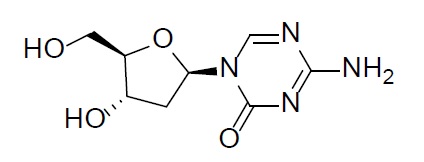
Decitabine
Decitabine is a nucleoside metabolic inhibitor. Decitabine is a white to off-white solid with the molecular formula of C
Chemical Structure
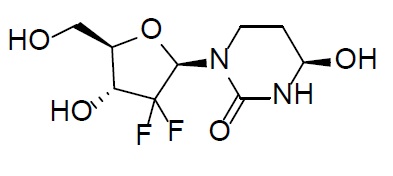
Cedazuridine
Cedazuridine is a cytidine deaminase inhibitor. Cedazuridine is a white to off-white solid with the molecular formula of C
Chemical Structure
INQOVI
INQOVI (decitabine and cedazuridine) tablets, for oral use contain 35 mg decitabine and 100 mg cedazuridine. The tablets are biconvex, oval-shaped, film-coated, red and debossed with “H35” on one side. Each film-coated tablet contains the following inactive ingredients: lactose monohydrate, hypromellose, croscarmellose sodium, colloidal silicon dioxide, and magnesium stearate. The film coating material contains polyvinyl alcohol, titanium dioxide, polyethylene glycol, talc, and iron oxide red.
5REFERENCES
1. OSHA Hazardous Drugs.
6HOW SUPPLIED/STORAGE AND HANDLING
How Supplied
INQOVI tablets are biconvex, oval-shaped, film-coated, red, and debossed with “H35” on one side.
The tablets are packaged in blisters and supplied as follows:
  • NDC: 64842-0727-9; 5 tablets in one blister card in a child-resistant carton
7PATIENT COUNSELING INFORMATION
Advise the patient to read the FDA-approved patient labeling (
Myelosuppression
Advise patients of the risk of myelosuppression and to report any symptoms of fever, infection, anemia, or bleeding to their healthcare provider as soon as possible. Advise patients for the need for laboratory monitoring
Embryo-Fetal Toxicity
Advise patients of the potential risk to a fetus. Advise females of reproductive potential to inform their healthcare provider of a known or suspected pregnancy
Advise females of reproductive potential to use effective contraception during treatment with INQOVI and for 6 months after the last dose
Advise males with female partners of reproductive potential to use effective contraception during treatment with INQOVI and for 3 months after the last dose
Lactation
Advise women not to breastfeed during treatment with INQOVI and for 2 weeks after the last dose
Infertility
Advise males of reproductive potential that INQOVI may impair fertility [see
Administration
Advise patients to take INQOVI at approximately the same time each day on an empty stomach at least 2 hours before or 2 hours after eating. Advise patients on what to do when a dose is missed or vomited
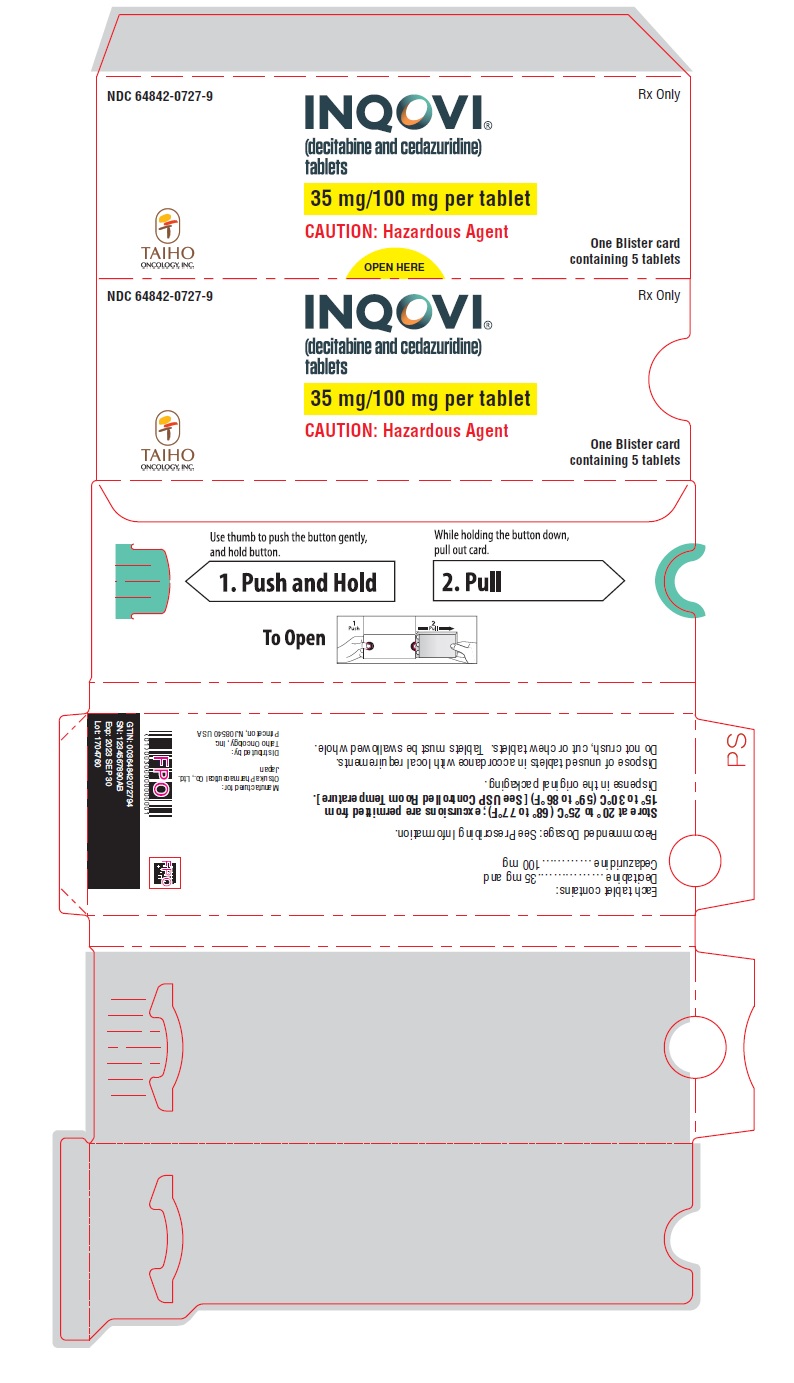
8PRINCIPAL DISPLAY PANEL - 35 mg/100 mg Tablet Carton
NDC 64842-0727-9
Rx Only
INQOVI
35 mg/100 mg per tablet
CAUTION: Hazardous Agent
One Blister card
TAIHO
PRINCIPAL DISPLAY PANEL - 35 mg/100 mg Tablet Carton