Generic Name

Tirzepatide

Brand Names
Zepbound, Mounjaro
FDA approval date: May 13, 2022
Classification: GLP-1 Receptor Agonist
Form: Injection

What is Zepbound (Tirzepatide)?

ZEPBOUND ® is indicated in combination with a reduced-calorie diet and increased physical activity: to reduce excess body weight and maintain weight reduction long term in adults with obesity or adults with overweight in the presence of at least one weight-related comorbid condition. to treat moderate to severe obstructive sleep apnea in adults with obesity. ZEPBOUND ® is a glucose-dependent insulinotropic polypeptide receptor and glucagon-like peptide-1 receptor agonist indicated in combination with a reduced-calorie diet and increased physical activity: to reduce excess body weight and maintain weight reduction long term in adults with obesity or adults with overweight in the presence of at least one weight-related comorbid condition. to treat moderate to severe obstructive sleep apnea in adults with obesity. Limitations of Use: Coadministration with other tirzepatide-containing products or with any GLP-1 receptor agonist is not recommended. Limitations of Use ZEPBOUND contains tirzepatide. Coadministration with other tirzepatide-containing products or with any glucagon-like peptide-1 receptor agonist is not recommended.
Save this treatment for later
Sign Up
Not sure about your diagnosis?
Check Your Symptoms
Tired of the same old research?
Check Latest Advances

Related Clinical Trials

A Master Protocol for a Randomized, Controlled, Clinical Trial of Multiple Interventions for Chronic Weight Management in Adult Participants With Obesity or Overweight

Summary: The purpose of this Phase-2 chronic weight management master protocol (CWMM) is to create a framework to evaluate the safety and efficacy of various investigational interventions for chronic weight management with intervention-specific appendices (ISAs). The CWMM establishes entry criteria for newly enrolled participants across the master and the ISAs. The ISAs may start independently of other ISA...

A Phase II Randomized Study of Interventions for Metabolic Protection Against Cardiometabolic Toxicity During Androgen Deprivation Therapy (IMPACT-ADT)

Summary: This phase II trial compares the effect of time-restricted eating (TRE) and glucagon-like peptide-1 (GLP1) receptor agonists (RA), semaglutide and tirzepatide, to an American Heart Association (AHA) heart healthy diet (HHD) intervention on heart and blood vessel health (cardiovascular system) and how the body processes food for energy (metabolic system) in prostate cancer patients undergoing andro...

Phase II Evaluation of Tirzepatide in Adults With Alcohol Use Disorder and Overweight or Obesity

Summary: The objective of this Phase 2 randomized controlled trial is to evaluate the effects of weekly tirzepatide (vs. placebo) on alcohol consumption and cardiometabolic outcomes in adults with alcohol use disorder and overweight or obesity.

Brand Information

    ZEPBOUND (tirzepatide)
    WARNING: RISK OF THYROID C-CELL TUMORS
    • In rats, tirzepatide causes dose-dependent and treatment-duration-dependent thyroid C-cell tumors at clinically relevant exposures. It is unknown whether ZEPBOUND causes thyroid C-cell tumors, including medullary thyroid carcinoma (MTC), in humans as human relevance of tirzepatide-induced rodent thyroid C-cell tumors has not been determined[see Warnings and Precautions (
    • ZEPBOUND is contraindicated in patients with a personal or family history of MTC or in patients with Multiple Endocrine Neoplasia syndrome type 2 (MEN 2)[see Contraindications (. Counsel patients regarding the potential risk for MTC with the use of ZEPBOUND and inform them of symptoms of thyroid tumors (e.g., a mass in the neck, dysphagia, dyspnea, persistent hoarseness). Routine monitoring of serum calcitonin or using thyroid ultrasound is of uncertain value for early detection of MTC in patients treated with ZEPBOUND[see Contraindications (
    1INDICATIONS AND USAGE
    ZEPBOUND
    • to reduce excess body weight and maintain weight reduction long term in adults with obesity or adults with overweight in the presence of at least one weight-related comorbid condition.
    • to treat moderate to severe obstructive sleep apnea (OSA) in adults with obesity.
    2DOSAGE FORMS AND STRENGTHS
    Injection: Clear, colorless to slightly yellow solution in pre-filled single-dose pens or single-dose vials, each available in the following strengths:
    • 2.5 mg/0.5 mL
    • 5 mg/0.5 mL
    • 7.5 mg/0.5 mL
    • 10 mg/0.5 mL
    • 12.5 mg/0.5 mL
    • 15 mg/0.5 mL
    3CONTRAINDICATIONS
    ZEPBOUND is contraindicated in patients with:
    • A personal or family history of MTC or in patients with MEN 2
    • Known serious hypersensitivity to tirzepatide or any of the excipients in ZEPBOUND. Serious hypersensitivity reactions, including anaphylaxis and angioedema, have been reported with tirzepatide
    4ADVERSE REACTIONS
    The following serious adverse reactions are described below or elsewhere in the prescribing information:
    • Risk of Thyroid C-cell Tumors
    • Severe Gastrointestinal Adverse Reactions
    • Acute Kidney Injury Due to Volume Depletion
    • Acute Gallbladder Disease
    • Acute Pancreatitis
    • Hypersensitivity Reactions
    • Hypoglycemia
    • Diabetic Retinopathy Complications in Patients with Type 2 Diabetes Mellitus
    • Suicidal Behavior and Ideation
    • Pulmonary Aspiration During General Anesthesia or Deep Sedation

    4.1Clinical Trials Experience
    Because clinical trials are conducted under widely varying conditions, adverse reaction rates observed in the clinical trials of a drug cannot be directly compared to rates in the clinical trials of another drug and may not reflect the rates observed in practice.
    4.2Postmarketing Experience
    The following adverse reactions have been reported during post-approval use of tirzepatide, the active ingredient in ZEPBOUND. Because these reactions are reported voluntarily from a population of uncertain size, it is not always possible to reliably estimate their frequency or to establish a causal relationship to drug exposure.
    Gastrointestinal: acute pancreatitis, hemorrhagic and necrotizing pancreatitis sometimes resulting in death, ileus
    Hypersensitivity: anaphylaxis, angioedema
    Pulmonary: Pulmonary aspiration has occurred in patients receiving GLP-1 receptor agonists undergoing elective surgeries or procedures requiring general anesthesia or deep sedation.
    Renal: acute renal failure or worsening of chronic renal failure, sometimes requiring hemodialysis
    5OVERDOSAGE
    In the event of an overdosage, contact the Poison Help Line (1-800-222-1222) or a medical toxicologist for additional overdosage management recommendations. Appropriate supportive treatment should be initiated according to the patient's clinical signs and symptoms. A period of observation and treatment for these symptoms may be necessary, taking into account the half-life of tirzepatide of approximately 5 days.
    6DESCRIPTION
    ZEPBOUND (tirzepatide) injection, for subcutaneous use, contains tirzepatide, a GIP receptor and GLP-1 receptor agonist. Tirzepatide is based on the GIP sequence and contains aminoisobutyric acid (Aib) in positions 2 and 13, a C-terminal amide, and Lys residue at position 20 that is attached to 1,20-eicosanedioic acid via a linker. The molecular weight is 4813.53 Da and the empirical formula is C
    Structural formula:
    Structural Formula
    ZEPBOUND is a clear, colorless to slightly yellow, sterile solution for subcutaneous use. Each single-dose pen or single-dose vial contains preservative-free 0.5 mL solution of 2.5 mg, 5 mg, 7.5 mg, 10 mg, 12.5 mg, or 15 mg of tirzepatide and the following excipients: sodium chloride (4.1 mg), sodium phosphate dibasic heptahydrate (0.7 mg), and water for injection. Hydrochloric acid solution and/or sodium hydroxide solution may have been added to adjust the pH. ZEPBOUND has a pH of 6.5 – 7.5.
    7PATIENT COUNSELING INFORMATION
    Advise the patient to read the FDA-approved patient labeling
    8SINGLE-DOSE PEN INSTRUCTIONS FOR USE
    Important information you need to know before injecting ZEPBOUND
    Read this Instructions for Use and the Medication Guide before using your ZEPBOUND pen and each time you get a refill. There may be new information. This information does not take the place of talking to your healthcare provider about your medical condition or treatment.
    Talk to your healthcare provider about how to inject ZEPBOUND the right way.
    • ZEPBOUND is a single-dose prefilled pen.
    • ZEPBOUND is used 1 time each week.
    • Inject under the skin (subcutaneously) only.
    • You or another person can inject into your stomach (abdomen) or thigh.
    • Another person can inject into the back of your upper arm.
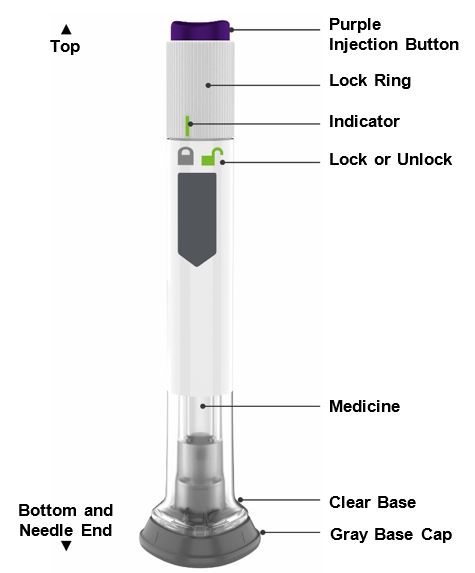
    Guide to parts
    Figure
    Preparing to inject ZEPBOUND
    Disposing of your used pen
    • Put your used pen in an FDA-cleared sharps disposal container right away after use.
    • If you do not have an FDA-cleared sharps disposal container, you may use a household container that is:
    • When your sharps disposal container is almost full, you will need to follow your community guidelines for the right way to dispose of your sharps disposal container. There may be state or local laws about how you should throw away used needles and syringes. For more information about safe sharps disposal, and for specific information about sharps disposal in the state that you live in, go to the FDA's website at: http://www.fda.gov/safesharpsdisposal.
    • Do not recycle your used sharps disposal container.
    Storage and handling
    • Store your pen in the refrigerator between 36°F to 46°F (2°C to 8°C).
    • You may store your pen at room temperature up to 86°F (30°C) for up to 21 days. If you store the pen at room temperature, do not return the pen to the refrigerator.
    • Discard the pen if not used within 21 days after removing from the refrigerator.
    • Do not freeze your pen. If the pen has been frozen, throw the pen away and use a new pen.
    • Store your pen in the original carton to protect your pen from light.
    • The pen has glass parts. Handle it carefully. If you drop the pen on a hard surface,
    • Keep your ZEPBOUND pen and all medicines out of the reach of children.
    Commonly asked questions
    What if I see air bubbles in my pen?
    Air bubbles are normal.
    What if my pen is not at room temperature?
    It is not necessary to warm the pen to room temperature.
    What if I unlock the pen and press the purple injection button before pulling off the gray base cap?
    Do not remove the gray base cap. Throw away the pen and get a new pen.
    What if there is a drop of liquid on the tip of the needle when I remove the gray base cap?
    A drop of liquid on the tip of the needle is normal.
    Do I need to hold the injection button down until the injection is complete?
    This is not necessary, but it may help you keep the pen steady against your skin.
    I heard more than 2 clicks during my injection—2 loud clicks and 1 soft one. Did I get my complete injection?
    Some people may hear a soft click right before the second loud click. That is the normal operation of the pen.
    I am not sure if my pen worked the right way.
    What if there is a drop of liquid or blood on my skin after my injection?
    This is normal. Press a cotton ball or gauze over the injection site.
    Other information
    • If you have vision problems,
    Where to learn more
    • If you have questions or problems with your ZEPBOUND pen, contact Lilly at 1-800-Lilly-Rx (1-800-545-5979) or call your healthcare provider.
    • For more information about the ZEPBOUND pen, visit our website at www.zepbound.com.

    Marketed by:
    ZEPBOUND is a trademark of Eli Lilly and Company.
    Copyright © 2023, Eli Lilly and Company. All rights reserved.
    This Instructions for Use has been approved by the U.S. Food and Drug Administration. Revised: November 2023
    ZEP-0002-PEN-IFU-20231109
    Figure
    9SINGLE-DOSE VIAL INSTRUCTIONS FOR USE
    Important information you need to know before injecting ZEPBOUND
    Read this Instructions for Use before you start taking ZEPBOUND and each time you get a new vial. There may be new information. This information does not take the place of talking to your healthcare provider about your medical condition or your treatment.
    Do not share your needles or syringes with other people. You may give other people a serious infection or get a serious infection from them.
    Talk to your healthcare provider about how to inject ZEPBOUND the right way.
    • ZEPBOUND is a single-dose vial.
    • ZEPBOUND is used 1 time each week.
    • Inject under the skin (subcutaneously) only.
    • You or another person may inject into your stomach (abdomen) or thigh.
    • Another person can inject into the back of your upper arm.
    Gather supplies needed to give your injection
    • 1 single-dose ZEPBOUND vial
    • 1 syringe and 1 needle, supplied separately (for example, use a 1 mL syringe and needle as recommended by your healthcare provider)
    • 1 alcohol swab
    • gauze
    • 1 sharps container for throwing away used needles and syringes.
    Note: The needle and syringe are not included. The needle and syringe recommended by your healthcare provider may look different than the needle and syringe in this Instructions for Use.
    Preparing to inject ZEPBOUND
    Remove the vial from the refrigerator.
    Check the vial label to make sure you have the right medicine and dose, and that it has not expired.
    Make sure the medicine:
    Always use a new syringe and needle for each injection to prevent infections and blocked needles. Do not reuse or share your syringes or needles with other people. You may give other people a serious infection or get a serious infection from them.
    Wash your hands with soap and water.
    Injecting ZEPBOUND
    • Inject exactly as your healthcare provider has shown you. Your healthcare provider should tell you if you should pinch the skin before injecting.
    • Change (rotate) your injection site within the area you choose for each dose to reduce your risk of getting lipodystrophy (pits in skin or thickened skin) and localized cutaneous amyloidosis (skin with lumps) at the injection sites.
    • Do not inject where the skin has pits, is thickened, or has lumps.
    • Do not inject where the skin is tender, bruised, scaly or hard, or into scars or damaged skin.
    • Do not mix ZEPBOUND with any other medicine.
    • Do not inject ZEPBOUND in the same injection site used for other medicines.
    Disposing of used needles and syringes
    • Put your used needle and syringe in an FDA-cleared sharps disposal container right away after use.
    • If you do not have an FDA-cleared sharps disposal container, you may use a household container that is:
    • When your sharps disposal container is almost full, you will need to follow your community guidelines for the right way to dispose of your sharps disposal container. There may be state or local laws about how you should throw away used needles and syringes. For more information about safe sharps disposal, and for specific information about sharps disposal in the state that you live in, go to the FDA’s website at:
    • Do not dispose of your used sharps disposal container in your household trash unless your community guidelines permit this. Do not recycle your used sharps disposal container.
    Storing ZEPBOUND
    • Store all unopened vials in the refrigerator at 36°F to 46°F (2°C to 8°C).
    • You may store the unopened vial at room temperature up to 86°F (30°C) for up to 21 days.
    • Do not freeze. Do not use if ZEPBOUND has been frozen.
    • Store the vial in the original carton to protect from light.
    • Throw away all opened vials after use, even if there is medicine left in the vial.
    Keep ZEPBOUND vials, syringes, needles, and all medicines out of the reach of children.
    If you have any questions or problems with your ZEPBOUND, contact Lilly at 1-800-Lilly-Rx (1-800-545-5979) or call your healthcare provider for help.
    Marketed by:
    ZEPBOUND is a registered trademark of Eli Lilly and Company.
    Copyright © 2024, Eli Lilly and Company. All rights reserved.
    ZEP-0001-VL-IFU-20240328
    This Instructions for Use has been approved by the U.S. Food and Drug Administration.
    Issued: March 2024