Brand Name

Sunosi

Generic Name
Solriamfetol
View Brand Information
FDA approval date: June 18, 2019
Form: Tablet

What is Sunosi (Solriamfetol)?

SUNOSI is indicated to improve wakefulness in adult patients with excessive daytime sleepiness associated with narcolepsy or obstructive sleep apnea . Limitations of Use SUNOSI is not indicated to treat the underlying airway obstruction in OSA. Ensure that the underlying airway obstruction is treated (e.g., with continuous positive airway pressure ) for at least one month prior to initiating SUNOSI for excessive daytime sleepiness. Modalities to treat the underlying airway obstruction should be continued during treatment with SUNOSI. SUNOSI is not a substitute for these modalities. SUNOSI is a dopamine and norepinephrine reuptake inhibitor indicated to improve wakefulness in adult patients with excessive daytime sleepiness associated with narcolepsy or obstructive sleep apnea . Limitations of Use SUNOSI is not indicated to treat the underlying airway obstruction in OSA. Ensure that the underlying airway obstruction is treated (e.g., with continuous positive airway pressure ) for at least one month prior to initiating SUNOSI for excessive daytime sleepiness. Modalities to treat the underlying airway obstruction should be continued during treatment with SUNOSI. SUNOSI is not a substitute for these modalities.
Save this treatment for later
Sign Up
Not sure about your diagnosis?
Check Your Symptoms
Tired of the same old research?
Check Latest Advances

Related Clinical Trials

RECOVER-SLEEP: A Platform Protocol for Evaluation of Interventions for Sleep Disturbances in Post-Acute Sequelae of SARS-CoV-2 Infection (PASC)

Summary: The platform protocol is designed to be flexible so that it is suitable for a range of study settings and intervention types. Therefore, the platform protocol provides a general protocol structure that can be shared by multiple interventions and allows comparative analysis across the interventions. For example, objectives, measures, and endpoints are generalized in the platform protocol, but inter...

Solriamfetol for the Treatment of Fatigue in Patients With Multiple Sclerosis and Excessive Daytime Sleepiness

Summary: Fatigue is a prevalent and disabling symptom in Multiple Sclerosis (MS), affecting up to 90% of patients. Current treatments, including off-label prescriptions of wake-promoting agents, have shown limited effectiveness. Previous research indicates that these agents may be beneficial specifically for MS patients with concomitant excessive daytime sleepiness. This study uses a randomized, double-bli...

RECOVER-SLEEP: A Platform Protocol for Evaluation of Interventions for Sleep Disturbances in Post-Acute Sequelae of SARS-CoV-2 Infection (PASC)

Summary: The platform protocol is designed to be flexible so that it is suitable for a range of study settings and intervention types. Therefore, the platform protocol provides a general protocol structure that can be shared by multiple interventions and allows comparative analysis across the interventions. For example, objectives, measures, and endpoints are generalized in the platform protocol, but inter...

Brand Information

SUNOSI (solriamfetol)
1INDICATIONS AND USAGE
SUNOSI is indicated to improve wakefulness in adult patients with excessive daytime sleepiness associated with narcolepsy or obstructive sleep apnea (OSA)
Limitations of Use
SUNOSI is not indicated to treat the underlying airway obstruction in OSA. Ensure that the underlying airway obstruction is treated (e.g., with continuous positive airway pressure (CPAP)) for at least one month prior to initiating SUNOSI for excessive daytime sleepiness. Modalities to treat the underlying airway obstruction should be continued during treatment with SUNOSI. SUNOSI is not a substitute for these modalities.
2DOSAGE FORMS AND STRENGTHS
SUNOSI 75 mg – (75 mg solriamfetol equivalent to 89.3 mg of the hydrochloride salt) dark yellow oblong tablet with "75" debossed on one side and a functional score line on the opposite side.
SUNOSI 150 mg – (150 mg solriamfetol equivalent to 178.5 mg of the hydrochloride salt) yellow oblong tablet with "150" debossed on one side.
3CONTRAINDICATIONS
SUNOSI is contraindicated in patients receiving concomitant treatment with monoamine oxidase (MAO) inhibitors, or within 14 days following discontinuation of monoamine oxidase inhibitor, because of the risk of hypertensive reaction
4ADVERSE REACTIONS
The following adverse reactions are discussed in greater detail in other sections of the label:
  • Blood Pressure and Heart Rate Increases
  • Psychiatric Symptoms
4.1Clinical Trials Experience
Because clinical trials are conducted under widely varying conditions, adverse reaction rates observed in clinical trials of a drug cannot be directly compared to rates in the clinical trials of another drug and may not reflect the rates observed in practice.
The safety of SUNOSI has been evaluated in 930 patients (ages 18 to 75 years) with narcolepsy or OSA. Among these patients, 396 were treated with SUNOSI in the 12-week placebo-controlled trials at doses of 37.5 mg (OSA only), 75 mg, and 150 mg once daily. Information provided below is based on the pooled 12-week placebo-controlled studies in patients with narcolepsy or OSA.
Most Common Adverse Reactions
The most common adverse reactions (incidence ≥ 5% and greater than placebo) reported more frequently with the use of SUNOSI than placebo in either the narcolepsy or OSA populations were headache, nausea, decreased appetite, anxiety, and insomnia.
Table 1 presents the adverse reactions that occurred at a rate of ≥ 2% and more frequently in SUNOSI-treated patients than in placebo-treated patients in the narcolepsy population.
Table 2 presents the adverse reactions that occurred at a rate of ≥ 2% and more frequently in SUNOSI-treated patients than in placebo-treated patients in the OSA population.
Other Adverse Reactions Observed During the Premarketing Evaluation of SUNOSI
Other adverse reactions of < 2% incidence but greater than placebo are shown below. The following list does not include adverse reactions: 1) already listed in previous tables or elsewhere in the labeling, 2) for which a drug cause was remote, 3) which were so general as to be uninformative, or 4) which were not considered to have clinically significant implications.
Narcolepsy population:
Psychiatric disorders: agitation, bruxism, irritability
Respiratory, thoracic and mediastinal disorders: cough
Skin and subcutaneous tissue disorders: hyperhidrosis
General disorders and administration site conditions: feeling jittery, thirst, chest discomfort, chest pain
Investigations: weight decreased
OSA population:
Psychiatric disorders: bruxism, restlessness
Nervous system disorders: disturbance in attention, tremor
Respiratory, thoracic and mediastinal disorders: cough, dyspnea
Gastrointestinal disorders: constipation, vomiting
Investigations: weight decreased
Dose-Dependent Adverse Reactions
In the 12-week placebo-controlled clinical trials that compared doses of 37.5 mg, 75 mg, and 150 mg daily of SUNOSI to placebo, the following adverse reactions were dose-related: headache, nausea, decreased appetite, anxiety, diarrhea, and dry mouth (
Adverse Reactions Resulting in Discontinuation of Treatment
In the 12-week placebo-controlled clinical trials, 11 of the 396 patients (3%) who received SUNOSI discontinued because of an adverse reaction compared to 1 of the 226 patients (< 1%) who received placebo. The adverse reactions resulting in discontinuation that occurred in more than one SUNOSI-treated patient and at a higher rate than placebo were: anxiety (2/396; < 1%), palpitations (2/396; < 1%), and restlessness (2/396; < 1%).
Increases in Blood Pressure and Heart Rate
SUNOSI’s effects on blood pressure and heart rate are summarized below.
4.2Postmarketing Experience
The following adverse reactions have been reported during post-approval use of SUNOSI. Because these reactions are reported voluntarily from a population of uncertain size, it is not always possible to reliably estimate their frequency or establish a causal relationship to drug exposure:
Immune system disorders: Hypersensitivity (rash erythematous, rash [unspecified], and urticaria).
5OVERDOSAGE
A specific reversal agent for SUNOSI is not available. Hemodialysis removed approximately 21% of a 75 mg dose in end stage renal disease patients. Overdoses should be managed with primarily supportive care, including cardiovascular monitoring.
Consult with a Certified Poison Control Center at 1-800-222-1222 for latest recommendations.
6DESCRIPTION
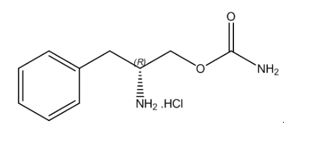
SUNOSI contains solriamfetol, a dopamine and norepinephrine reuptake inhibitor (DNRI). Solriamfetol is a phenylalanine derivative with the systematic name (
The molecular formula is C
The chemical structure is:
Chemical Structure
Solriamfetol hydrochloride is a white to off-white solid that is freely soluble in water.
SUNOSI tablets are intended for oral administration. Each 75 mg SUNOSI film-coated tablet contains 75 mg solriamfetol (equivalent to 89.3 mg solriamfetol hydrochloride). Each 150 mg SUNOSI film-coated tablet contains 150 mg solriamfetol (equivalent to 178.5 mg solriamfetol hydrochloride). The inactive ingredients are hydroxypropyl cellulose and magnesium stearate. In addition, the film coating contains: iron oxide yellow, polyethylene glycol, polyvinyl alcohol, talc, and titanium dioxide.
7PATIENT COUNSELING INFORMATION
Advise the patient to read the FDA-approved patient labeling (Medication Guide).
Potential for Abuse and Dependence
Advise patients that SUNOSI is a federally controlled substance because it has the potential to be abused
Primary OSA Therapy Use
Inform patients that SUNOSI is not indicated to treat the airway obstruction in OSA and they should use a primary OSA therapy, such as CPAP, as prescribed to treat the underlying obstruction
Blood Pressure and Heart Rate Increases
Instruct patients that SUNOSI can cause elevations of their blood pressure and pulse rate and that they should be monitored for such effects
Psychiatric Symptoms
Instruct patients to contact their healthcare provider if they experience, anxiety, insomnia, irritability, agitation, or signs of psychosis or bipolar disorders
Lactation
Advise breastfeeding patients using SUNOSI to monitor infants for signs of agitation, insomnia, and reduced weight
For more information, visit
Distributed by:
For patent information: www.axsome.com/IP
© 2023 Axsome Therapeutics, Inc.
SUN-USPI-004.000-20230630
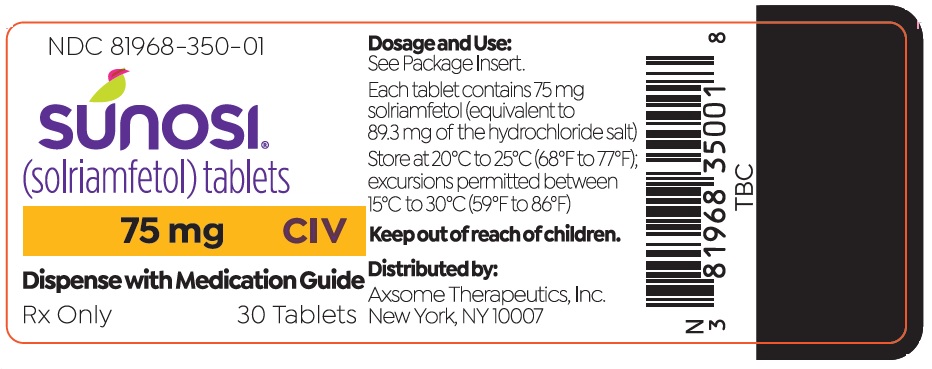
8PRINCIPAL DISPLAY PANEL - NDC: 81968-350-01 - 75 mg 30 Count Bottle Label
81968-350-01 - 75 mg 30 Count Bottle Label
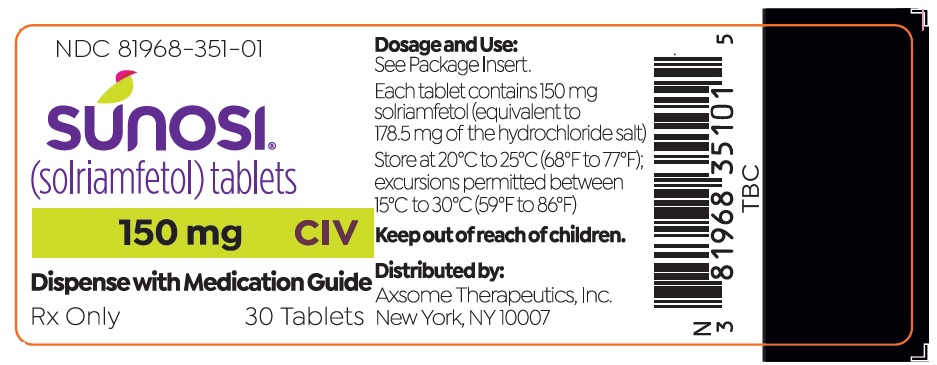
9PRINCIPAL DISPLAY PANEL - NDC: 81968-351-01 - 150 mg 30 Count Bottle Label
81968-350-01 - 150 mg 30 Count Bottle Label
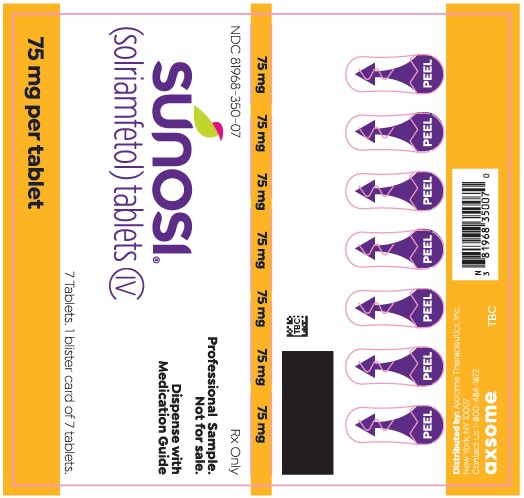
10PRINCIPAL DISPLAY PANEL - NDC: 81968-350-07 - 75 mg Physician Sample Label (Back Card)
81968-350-07 - 75mg Physician Sample Label (Back Card)
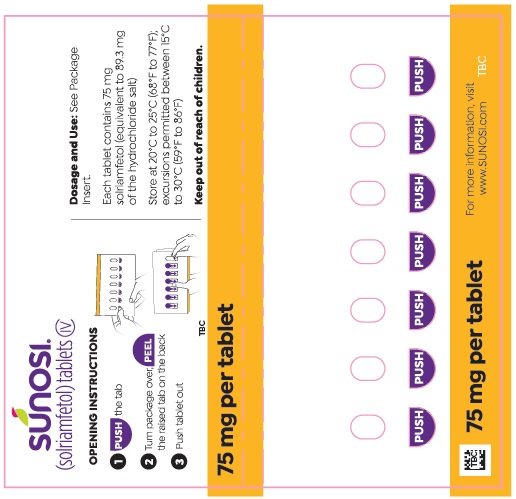
11PRINCIPAL DISPLAY PANEL - NDC: 81968-350-07 - 75 mg Physician Sample Label (Front Card)
81968-350-07 - 75mg Physician Sample Label (Front Card)
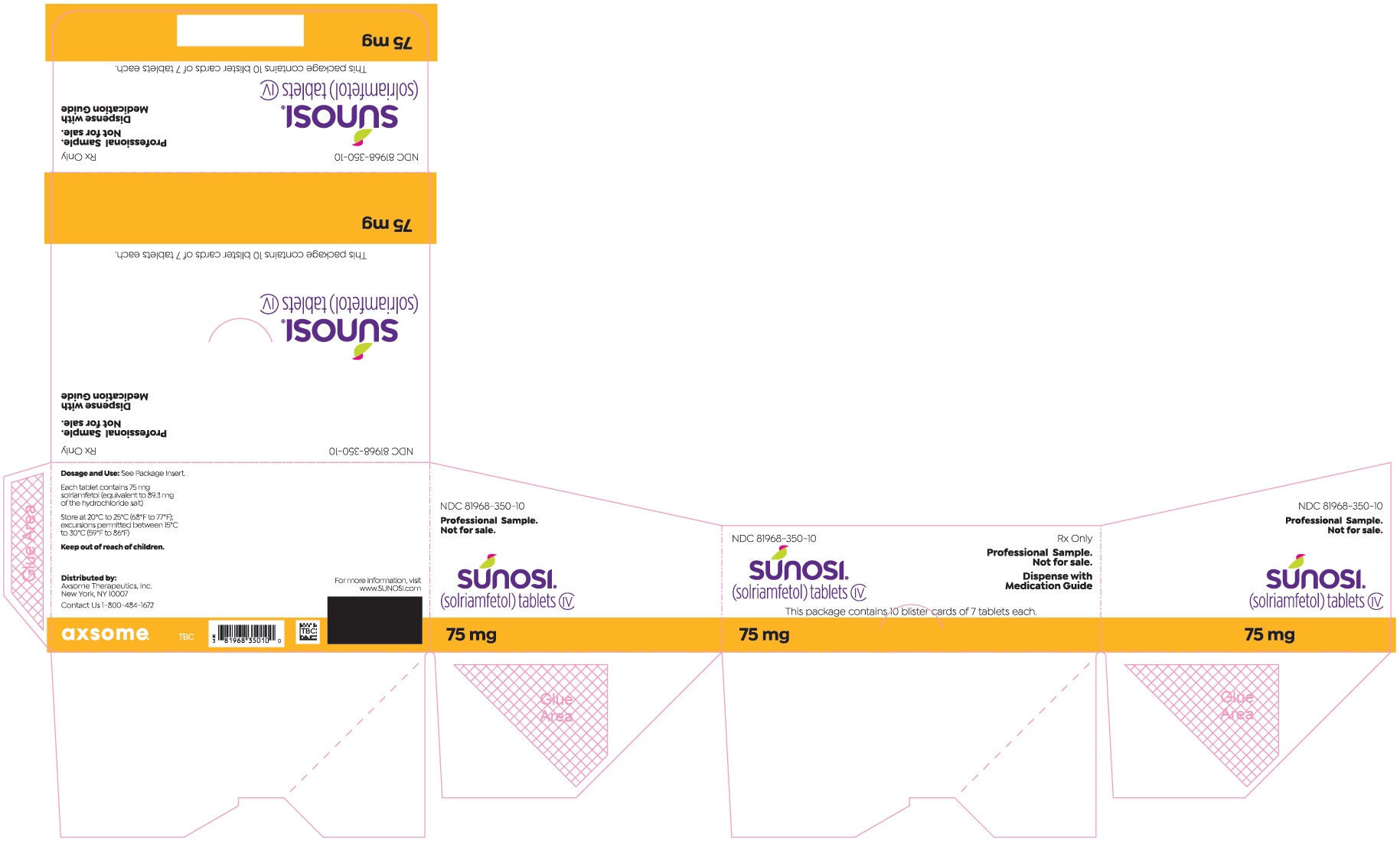
12PRINCIPAL DISPLAY PANEL - NDC: 81968-350-10 - 75 mg Physician Sample Label (Carton)
81968-350-10 - 75mg Physician Sample Label (Carton)
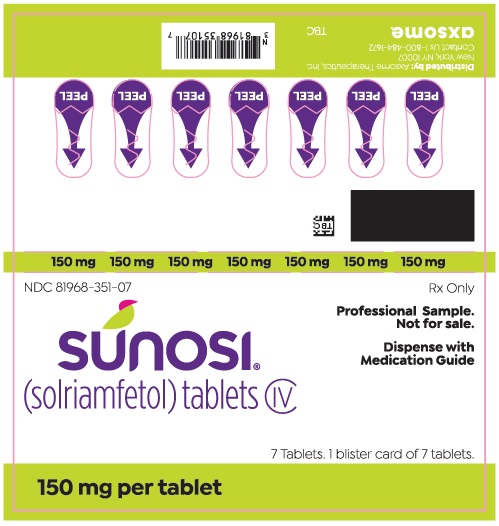
13PRINCIPAL DISPLAY PANEL - NDC: 81968-351-07 - 150 mg Physician Sample Label (Back Card)
81968-351-07 - 150 mg Physician Sample Label (Back Card)
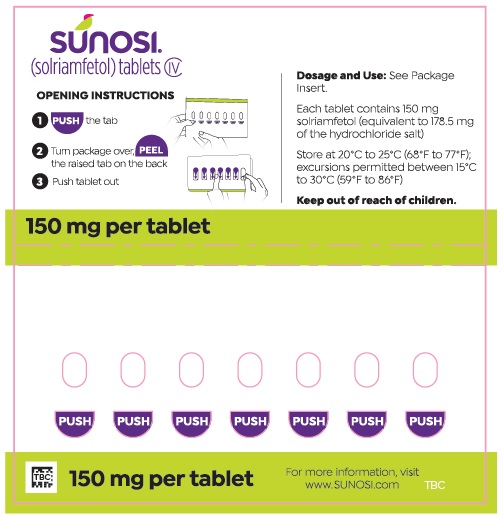
14PRINCIPAL DISPLAY PANEL - NDC: 81968-351-07 - 150 mg Physician Sample Label (Front Card)
81968-351-07 - 150 mg Physician Sample Label (Front Card)
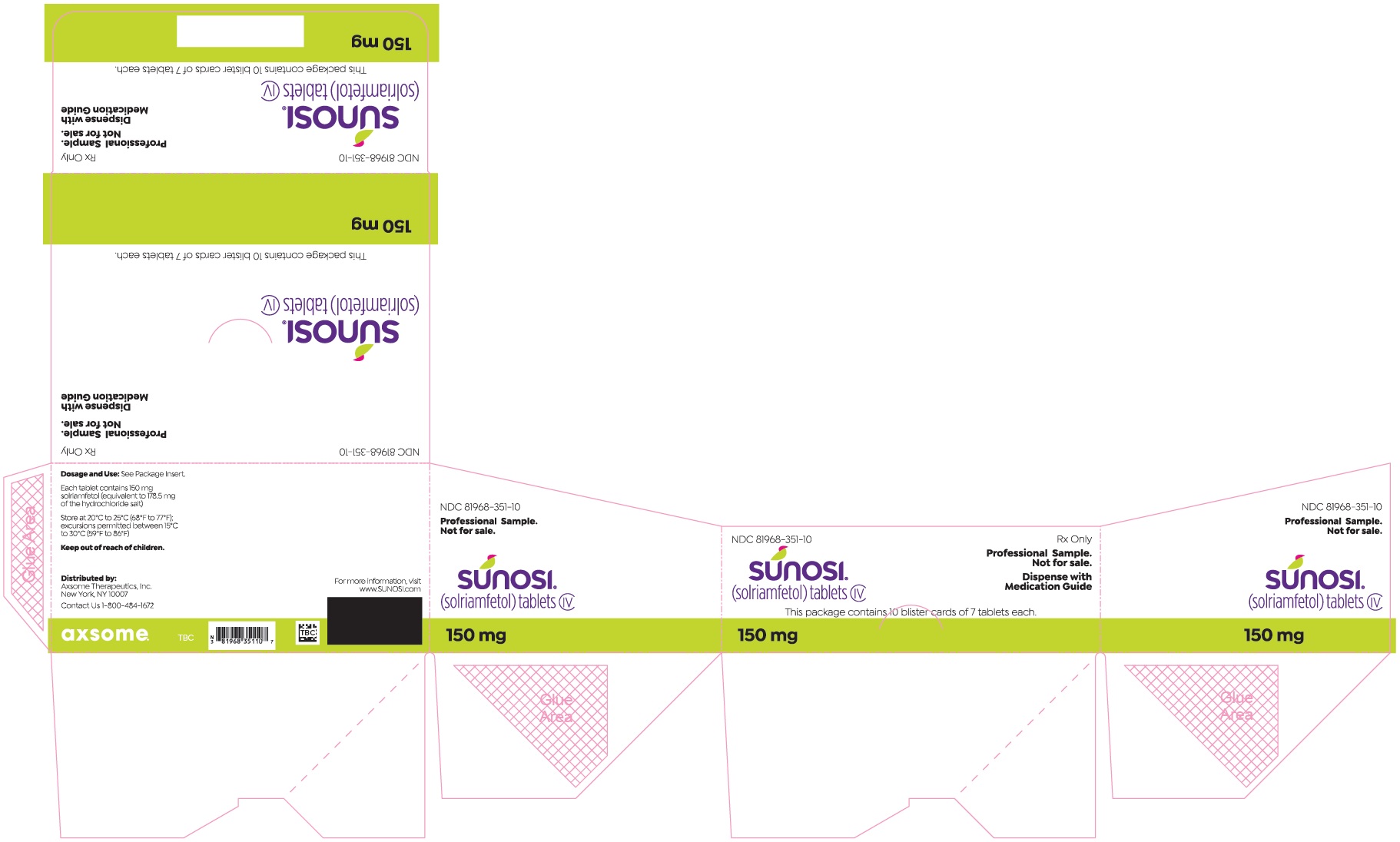
15PRINCIPAL DISPLAY PANEL - NDC: 81968-351-10 - 150 mg Physician Sample Label (Carton)
81968-351-10 - 150 mg Physician Sample Label (Carton)