Parkinson's Disease Treatments
Find Parkinson's Disease Treatments
Brand Name
Ropinirole
View Brand InformationFDA approval date: February 25, 2010
Classification: Nonergot Dopamine Agonist
Form: Tablet
What is Ropinirole?
Ropinirole extended-release tablets are non-ergoline dopamine agonist indicated for the treatment of Parkinson’s disease.
Approved To Treat
Top Global Experts


Save this treatment for later
Not sure about your diagnosis?
Tired of the same old research?
Related Clinical Trials
Gene Expression Changes on Extended Use of Dopamine Agonists in Restless Legs Syndrome (RLS)
Summary: The study aims to observe changes in dopaminergic genes expression in peripheral tissue upon prolonged dopamine agonist treatment on patients with Restless Legs Syndrome (RLS). Similar studies in Parkinson's disease have shown changes in alpha-synuclein expression, which might offer insights into the dopaminergic gene regulation seen in RLS. The dopamine agonist drugs to be included in this study ...
Gait Pattern Analysis in Neurological Disease
Summary: The purpose of this study is to investigate whether speed-dependent measures of gait can be identified in patients with neurological conditions that affect gait, particularly in subjects with parkinsonian disorders.
Related Latest Advances
Brand Information
Ropinirole (ropinirole)
1DOSAGE FORMS AND STRENGTHS
- 0.25 mg are supplied as, white pentagonal tablets engraved "ROP" over ".25" on one side, "MLX" on the other side
- 0.5 mg are supplied as, yellow pentagonal tablets engraved "ROP" over ".5" on one side, "MLX" on the other side.
- 1 mg are supplied as, green pentagonal tablets engraved "ROP" over "1" on one side, "MLX" on the other side.
- 2 mg are supplied as, pink pentagonal tablets engraved "ROP" over "2" on one side, "MLX" on the other side.
- 3 mg are supplied as, purple pentagonal tablets engraved "ROP" over "3" on one side, "MLX" on the other side.
- 5 mg are supplied as, blue pentagonal tablets engraved "ROP" over "5" on one side, "MLX" on the other side.
2CONTRAINDICATIONS
Ropinirole hydrochloride is contraindicated in patients known to have a hypersensitivity/allergic reaction (including urticaria, angioedema, rash, pruritus) to ropinirole or to any of the excipients.
3ADVERSE REACTIONS
The following adverse reactions are described in more detail in other sections of the label:
- Hypersensitivity
- Falling Asleep during Activities of Daily Living and Somnolence
- Syncope
- Hypotension/Orthostatic Hypotension
- Hallucinations/Psychotic-like Behavior
- Dyskinesia
- Impulse Control/Compulsive Behaviors
- Withdrawal-Emergent Hyperpyrexia and Confusion
- Withdrawal Symptoms
- Augmentation and Early-Morning Rebound in RLS
- Fibrotic Complications
- Retinal Pathology
3.1Clinical Trials Experience
Because clinical trials are conducted under widely varying conditions, adverse reaction rates observed in the clinical trials of a drug cannot be directly compared with rates in the clinical trials of another drug (or of another development program of a different formulation of the same drug) and may not reflect the rates observed in practice.
Parkinson's Disease
During the premarketing development of ropinirole hydrochloride, patients received ropinirole hydrochloride either without L-dopa (early Parkinson’s disease trials) or as concomitant therapy with L-dopa (advanced Parkinson’s disease trials). Because these two populations may have differential risks for various adverse reactions, this section will in general present adverse reaction data for these two populations separately.
Early Parkinson’s Disease (without L-dopa)
In the double-blind, placebo-controlled trials in patients with early-stage Parkinson’s disease, the most commonly observed adverse reactions in patients treated with ropinirole hydrochloride (incidence at least 5% greater than placebo) were nausea, somnolence, dizziness, syncope, asthenic condition (i.e., asthenia, fatigue, and/or malaise), viral infection, leg edema, vomiting, and dyspepsia.
Approximately 24% of patients treated with ropinirole hydrochloride who participated in the double- blind, placebo-controlled early Parkinson’s disease (without L-dopa) trials discontinued treatment due to adverse reactions compared with 13% of patients who received placebo. The most common adverse reactions in patients treated with ropinirole hydrochloride (incidence at least 2% greater than placebo) of sufficient severity to cause discontinuation were nausea and dizziness.
Table 3 lists treatment-emergent adverse reactions that occurred in at least 2% of patients with early Parkinson’s disease (without L-dopa) treated with ropinirole hydrochloride participating in the double- blind, placebo-controlled trials and were numerically more common than the incidence for placebo- treated patients. In these trials, either ropinirole hydrochloride or placebo was used as early therapy (i.e., without L-dopa).
aPatients may have reported multiple adverse reactions during the trial or at discontinuation; thus, patients may be included in more than one category.
bAsthenic condition (i.e., asthenia, fatigue, and/or malaise).
Advanced Parkinson’s Disease (with L-dopa)
In the double-blind, placebo-controlled trials in patients with advanced-stage Parkinson’s disease, the most commonly observed adverse reactions in patients treated with ropinirole hydrochloride (incidence at least 5% greater than placebo) were dyskinesia, somnolence, nausea, dizziness, confusion, hallucinations, increased sweating, and headache.
Approximately 24% of patients who received ropinirole hydrochloride in the double-blind, placebo- controlled advanced Parkinson’s disease (with L-dopa) trials discontinued treatment due to adverse reactions compared with 18% of patients who received placebo. The most common adverse reaction in patients treated with ropinirole hydrochloride (incidence at least 2% greater than placebo) of sufficient severity to cause discontinuation was dizziness.
Table 4 lists treatment-emergent adverse reactions that occurred in at least 2% of patients with advanced Parkinson’s disease (with L-dopa) treated with ropinirole hydrochloride who participated in the double- blind, placebo-controlled trials and were numerically more common than the incidence for placebo- treated patients. In these trials, either ropinirole hydrochloride or placebo was used as an adjunct to L- dopa.
aPatients may have reported multiple adverse reactions during the trial or at discontinuation; thus, patients may be included in more than one category.
Restless Legs Syndrome
In the double-blind, placebo-controlled trials in patients with RLS, the most commonly observed adverse reactions in patients treated with ropinirole hydrochloride (incidence at least 5% greater than placebo) were nausea, vomiting, somnolence, dizziness, and asthenic condition (i.e., asthenia, fatigue, and/or malaise).
Approximately 5% of patients treated with ropinirole hydrochloride who participated in the double- blind, placebo-controlled trials in the treatment of RLS discontinued treatment due to adverse reactions compared with 4% of patients who received placebo. The most common adverse reaction in patients treated with ropinirole hydrochloride (incidence at least 2% greater than placebo) of sufficient severity to cause discontinuation was nausea.
Table 5 lists treatment-emergent adverse reactions that occurred in at least 2% of patients with RLS treated with ropinirole hydrochloride participating in the 12-week, double-blind, placebo-controlled trials and were numerically more common than the incidence for placebo-treated patients.
aPatients may have reported multiple adverse reactions during the trial or at discontinuation; thus, patients may be included in more than one category.
bAsthenic condition (i.e., asthenia, fatigue, and/or malaise).
3.2Postmarketing Experience
The following adverse reactions have been identified during postapproval use of ropinirole hydrochloride. Because these reactions are not reported voluntarily from a population of uncertain size, it is not always possible to reliably estimate their frequency or establish a causal relationship to drug exposure.
General Disorders and Administration Site Conditions
Withdrawal symptoms [see Warnings and Precautions (
4OVERDOSAGE
The symptoms of overdose with ropinirole hydrochloride are related to its dopaminergic activity. General supportive measures are recommended. Vital signs should be maintained, if necessary.
In clinical trials, there have been patients who accidentally or intentionally took more than their prescribed dose of ropinirole. The largest overdose reported with ropinirole in clinical trials was 435 mg taken over a 7-day period (62.1 mg/day). Of patients who received a dose greater than 24 mg/day, reported symptoms included adverse events commonly reported during dopaminergic therapy (nausea, dizziness), as well as visual hallucinations, hyperhidrosis, claustrophobia, chorea, palpitations, asthenia, and nightmares. Additional symptoms reported in cases of overdose included vomiting, increased coughing, fatigue, syncope, vasovagal syncope, dyskinesia, agitation, chest pain, orthostatic hypotension, somnolence, and confusional state.
5DESCRIPTION
Ropinirole tablets, USP are an orally administered non-ergoline dopamine agonist. It is the hydrochloride salt of 4-[2-(dipropylamino) ethyl]-1, 3-dihydro-2H-indol-2-one monohydrochloride and has an empirical formula of C
The structural formula is:
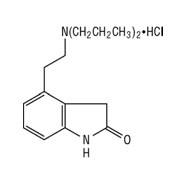
Ropinirole hydrochloride is an off white to light yellow, crystalline powder with a melting range of 243° to 250°C and a solubility of 133 mg/mL in water.
Each pentagonal film-coated tablet contains ropinirole hydrochloride equivalent to ropinirole, 0.25 mg, 0.5 mg, 1 mg, 2 mg, 3 mg, 4 mg, or 5 mg.
Inactive ingredients consist of: croscarmellose sodium, hydroxypropyl cellulose, hypromellose, lactose monohydrate, magnesium stearate, microcrystalline cellulose, polyethylene glycol, titanium dioxide, and one or more of the following: carmine, ferric ferrous oxide, ferric oxide red, ferric oxide yellow and indigotine aluminum lake.
Meets USP Dissolution Test #2
6HOW SUPPLIED/STORAGE AND HANDLING
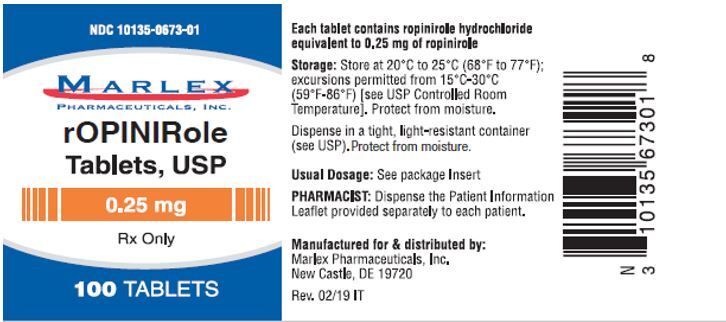
Ropinirole Tablet, USP 0.25 mg are white pentagonal tablets engraved “ROP” over “.25” on one side, “MLX” on the other side. They are supplied as follows:
Bottles of 100s: NDC 10135-0673-01
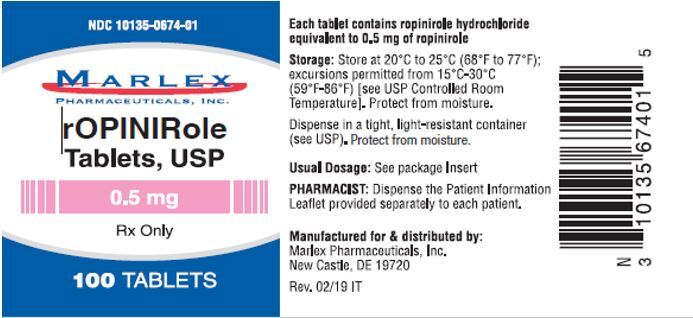
Ropinirole Tablet, USP 0.5 mg are yellow pentagonal tablets engraved “ROP” over “.5” on one side, “MLX” on the other side. They are supplied as follows:
Bottles of 100s: NDC 10135-0674-01
Ropinirole Tablet, USP 1 mg are green pentagonal tablets engraved “ROP” over “1” on one side, “MLX” on the other side. They are supplied as follows:
Bottles of 100s: NDC 10135-0675-01
Ropinirole Tablet, USP 2 mg are pink pentagonal tablets engraved “ROP” over “2” on one side, “MLX” on the other side. They are supplied as follows:
Bottles of 100s: NDC 10135-0676-01
Ropinirole Tablet, USP 3 mg are purple pentagonal tablets engraved “ROP” over “3” on one side, “MLX” on the other side. They are supplied as follows:
Bottles of 100s: NDC 10135-0677-01
Ropinirole Tablet, USP 4 mg are pale brown pentagonal tablets engraved “ROP” over “4” on one side, “MLX” on the other side. They are supplied as follows:
Bottles of 100s: NDC 10135-0678-01
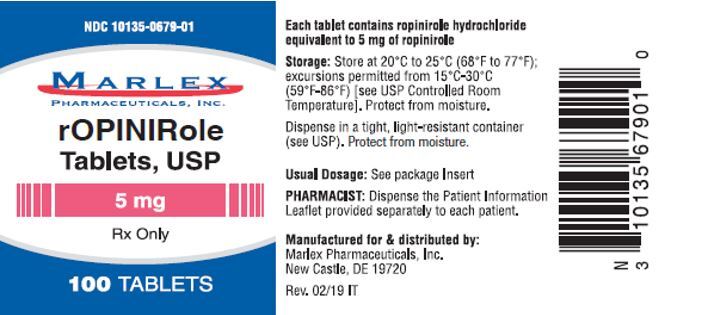
Ropinirole Tablet, USP 5 mg are blue pentagonal tablets engraved “ROP” over “5” on one side, “MLX” on the other side. They are supplied as follows:
Bottles of 100s: NDC 10135-0679-01
STORAGE
Store at room temperature between 20°C to 25°C (68°F to 77°F); excursions permitted from 15°C to 30°C (59°F to 86°F) [see USP Controlled Room Temperature]. Protect from light and moisture. Close container tightly after each use.
7PATIENT COUNSELING INFORMATION
Advise the patient to read the FDA-approved patient labeling (
Dosing Instructions
Instruct patients to take ropinirole hydrochloride only as prescribed. If a dose is missed, advise patients not to double their next dose. Ropinirole hydrochloride can be taken with or without food
Ropinirole is the active ingredient in both Ropinirole Hydrochloride XL and Ropinirole Hydrochloride tablets (the immediate-release formulation). Ask your patients if they are taking another medication containing ropinirole.
Hypersensitivity/Allergic Reactions
Advise patients about the potential for developing a hypersensitivity/allergic reaction including manifestations such as urticaria, angioedema, rash, and pruritus when taking any ropinirole product. Inform patients who experience these or similar reactions to immediately contact their healthcare professional
Falling Asleep during Activities of Daily Living and Somnolence
Alert patients to the potential sedating effects caused by ropinirole hydrochloride, including somnolence and the possibility of falling asleep while engaged in activities of daily living. Because somnolence is a frequent adverse reaction with potentially serious consequences, patients should not drive a car, operate machinery, or engage in other potentially dangerous activities until they have gained sufficient experience with ropinirole hydrochloride to gauge whether or not it adversely affects their mental and/or motor performance. Advise patients that if increased somnolence or episodes of falling asleep during activities of daily living (e.g., conversations, eating, driving a motor vehicle, etc.) are experienced at any time during treatment, they should not drive or participate in potentially dangerous activities until they have contacted their physician.
Advise patients of possible additive effects when patients are taking other sedating medications, alcohol, or other central nervous system depressants (e.g., benzodiazepines, antipsychotics, antidepressants, etc.) in combination with ropinirole hydrochloride or when taking a concomitant medication (e.g., ciprofloxacin) that increases plasma levels of ropinirole
Syncope and Hypotension/Orthostatic Hypotension
Advise patients that they may experience syncope and may develop hypotension with or without symptoms such as dizziness, nausea, syncope, and sometimes sweating while taking ropinirole hydrochloride, especially if they are elderly. Hypotension and/or orthostatic symptoms may occur more frequently during initial therapy or with an increase in dose at any time (cases have been seen after weeks of treatment). Postural/orthostatic symptoms may be related to sitting up or standing.
Accordingly, caution patients against standing rapidly after sitting or lying down, especially if they have been doing so for prolonged periods and especially at the initiation of treatment with ropinirole hydrochloride
Hallucinations/Psychotic-like Behavior
Inform patients that they may experience hallucinations (unreal visions, sounds, or sensations), and that other psychotic-like behavior can occur while taking ropinirole hydrochloride. The elderly are at greater risk than younger patients with Parkinson’s disease. This risk is greater in patients who are taking ropinirole hydrochloride with L-dopa or taking higher doses of ropinirole hydrochloride and may also be further increased in patients taking any other drugs that increase dopaminergic tone. Tell patients to report hallucinations or psychotic-like behavior to their healthcare provider promptly should they develop
Dyskinesia
Inform patients that ropinirole hydrochloride may cause and/or exacerbate pre-existing dyskinesias
Impulse Control/Compulsive Behaviors
Advise patients that they may experience impulse control and/or compulsive behaviors while taking 1 or more of the medications (including ropinirole hydrochloride) that increase central dopaminergic tone, that are generally used for the treatment of Parkinson’s disease. Advise patients to inform their physician or healthcare provider if they develop new or increased gambling urges, sexual urges, uncontrolled spending, binge or compulsive eating, or other urges while being treated with ropinirole hydrochloride. Physicians should consider dose reduction or stopping the medication if a patient develops such urges while taking ropinirole hydrochloride
Withdrawal-Emergent Hyperpyrexia and Confusion
Advise patients that withdrawal symptoms may occur during or after discontinuation or dose reduction of ropinirole hydrochloride. Advise patients who have been prescribed a lower dose or who have been withdrawn from the drug to notify their healthcare provider if they have withdrawal symptoms such as apathy, anxiety, depression, fatigue, insomnia, sweating, or pain. Notify patients that in case of severe withdrawal symptoms, a trial re-administration of a dopamine agonist at the lowest effective dose may be considered
Withdrawal Symptoms
Advise patients that withdrawal symptoms may occur during or after discontinuation or dose reduction of ropinirole hydrochloride. Advise patients who have been prescribed a lower dose or who have been withdrawn from the drug to notify their healthcare provider if they have withdrawal symptoms such as apathy, anxiety, depression, fatigue, insomnia, sweating, or pain. Notify patients that in case of severe withdrawal symptoms, a trial re-administration of a dopamine agonist at the lowest effective dose may be considered
Augmentation and Rebound
Inform patients with RLS that augmentation and/or rebound may occur after starting treatment with ropinirole hydrochloride
Nursing Mothers
Because of the possibility that ropinirole may be excreted in breast milk, discuss the developmental and health benefits of breastfeeding along with the mother’s clinical need for ropinirole hydrochloride tablets and any potential adverse effects on the breastfed child from ropinirole or from the underlying maternal condition
Pregnancy
Because experience with ropinirole in pregnant women is limited and ropinirole has been shown to have adverse effects on embryofetal development in animals, including teratogenic effects, advise patients of this potential risk. Advise patients to notify their physician if they become pregnant or intend to become pregnant during therapy
Marlex Pharmaceuticals, Inc.
ROPINIROLE TABLETS, USP
0.25 mg, 0.5 mg, 1 mg, 2 mg, 3 mg, 4 mg and 5 mg
Manufactured for and Distributed by:
Marlex Pharmaceuticals, Inc.
New Castle, DE 19720
Made in the USA
Marlex Pharmaceuticals, Inc.
New Castle, DE 19720
Made in the USA
Rev.1 09/21 IT
8PRINCIPAL DISPLAY PANEL
NDC 10135-0673-01
9PRINCIPAL DISPLAY PANEL
NDC 10135-0674-01
10PRINCIPAL DISPLAY PANEL
NDC 10135-0675-01
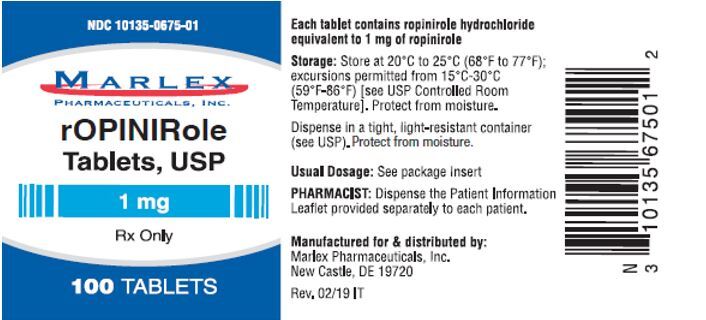
11PRINCIPAL DISPLAY PANEL
NDC 10135-0676-01
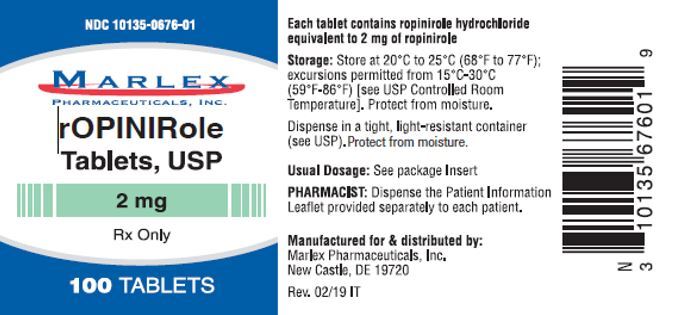
12PRINCIPAL DISPLAY PANEL
NDC 10135-0677-01
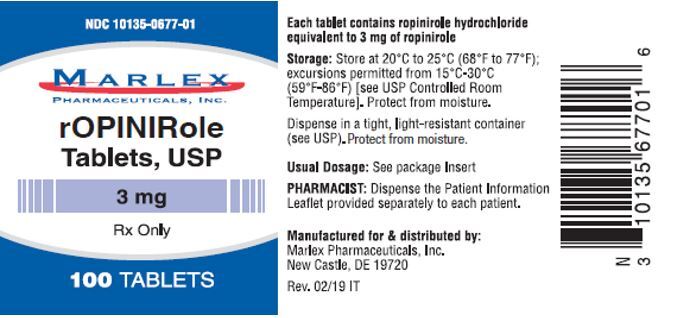
13PRINCIPAL DISPLAY PANEL
NDC 10135-0678-01
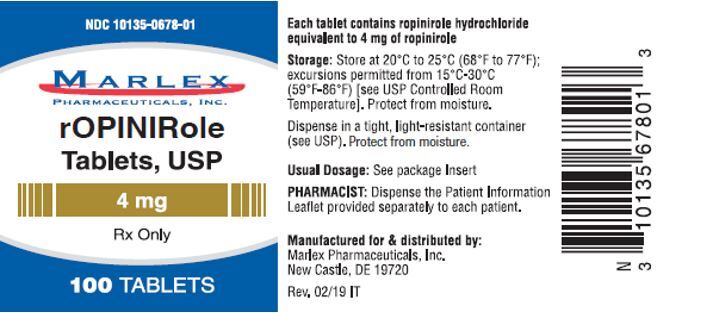
14PRINCIPAL DISPLAY PANEL
NDC 10135-0679-01