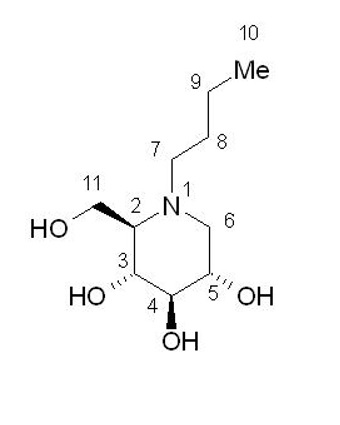
Miglustat
What is Yargesa (Miglustat)?
Approved To Treat
Top Global Experts
Related Clinical Trials
Summary: This is a Phase 3, open-label, multicenter study to evaluate the safety, efficacy, PK, PD, and immunogenicity of cipaglucosidase alfa/miglustat treatment in ERT-experienced and ERT-naïve pediatric subjects with IOPD.
Summary: This is a Phase 3, open-label, multicenter study to evaluate the safety, PK, efficacy, PD, and immunogenicity of Cipaglucosidase Alfa/Miglustat treatment in enzyme replacement therapy (ERT)-experienced and ERT-naïve pediatric subjects with Pompe disease, aged 0 to \< 18 years
Summary: This is a global, multicenter, prospective, observational registry of patients with Pompe disease, including those with late-onset pompe disease (LOPD) and infantile-onset pompe disease (IOPD). Both untreated patients and those being treated with an approved therapy for Pompe disease are eligible to participate. The objectives of the registry are: * To evaluate the long-term safety of Pompe diseas...
Related Latest Advances
Brand Information
In Study 2, miglustat capsules was administered at a dose of 50 mg three times daily for 6 months to 18 adult patients with type 1 Gaucher disease who were unable to receive enzyme replacement therapy and who had not taken enzyme replacement therapy in the preceding 6 months. Seventeen patients completed the trial. After 6 months of treatment, the results showed significant mean percent reductions from baseline in liver volume of 6% and spleen volume of 5%. There was a non-significant mean absolute decrease from baseline in hemoglobin concentration of 0.13 g/dL and a non-significant mean absolute increase from baseline in platelet counts of 5 × 10 9/L (See Tables 3-6).
Sixteen patients were enrolled in a 6-month extension to Study 2. After a total of 12 months of treatment, there was a mean decrease from baseline in spleen organ volume of 10%, whereas the mean percent decrease in liver organ volume remained at 6%. There were no significant changes in hemoglobin concentrations or platelet counts (See Tables 3-6).
Liver volume results from Studies 1 and 2 and their extensions are summarized in Table 3:
• miglustat capsules 100 mg three times daily alone
• imiglucerase (patient‘s usual dose) alone
• miglustat capsules 100 mg three times daily and imiglucerase (usual dose)
Patients were treated for 6 months, and 33 patients completed the study. Because miglustat capsules is only indicated as monotherapy, the results for the monotherapy arms are described below. At Month 6, the results showed a decrease in mean percent change in liver volume in the miglustat capsules treatment group compared to the imiglucerase alone group. There were no significant differences between the groups for mean absolute changes in liver and spleen volume and hemoglobin concentration. However, there was a significant difference between the miglustat capsules alone and imiglucerase alone groups in platelet counts at Month 6, with the miglustat capsules alone group having a mean absolute decrease in platelet count of 21.6 × 10 9/L and the imiglucerase alone group having a mean absolute increase in platelet count of 10.1 × 10 9/L (See Tables 7-10).
Keep out of reach of children
Edenbridge Pharmaceuticals, LLC
It is not known if YARGESA is safe and effective in children under 18 years of age.
• are pregnant or plan to become pregnant. Yargesa may harm your unborn baby. Tell your healthcare provider right away if you become pregnant or think you may be pregnant during treatment with YARGESA
• are breastfeeding or plan to breastfeed. It is not known if YARGESA passes into your breast milk and may harm your baby. Do not breastfeed during treatment with YARGESA. Talk to your healthcare provider about the best way to feed your baby during treatment with YARGESA.
• Take YARGESA at the same time each day.
• If you miss a dose of YARGESA, skip that dose. Take the next miglustat capsule at the usual time.
• Your healthcare provider may test your nerves (neurological exam) before you start YARGESA and during treatment with YARGESA.
• New or worsening hand tremors (shaky movements).Tremors are common with YARGESA and may begin within the first month of starting treatment. Sometimes the tremors may go away between 1 to 3 months with continued treatment. Your healthcare provider may lower your dose or stop YARGESA if you develop new or worsening hand tremors. Call your healthcare provider right away if you get new hand tremors during treatment with YARGESA or if the hand tremors you already have get worse.
• Diarrheais common with YARGESA and sometimes can be serious. Your healthcare provider may prescribe another medicine (anti-diarrheal) to treat diarrhea if it is a problem for you and may recommend changes to your diet, such as avoiding foods high in carbohydrates. Talk with your healthcare provider about your diet if you have diarrhea.
• Weight lossis common with YARGESA and sometimes can be serious. You may lose weight when you start treatment with YARGESA.
• Low platelet countis common with YARGESA and can be serious. Your healthcare provider may do blood tests to monitor your blood platelet count.
The most common side effects of YARGESA include: • weight loss
• stomach pain
• gas
• nausea and vomiting
• headache, including migraine
• back pain
• constipation
• dry mouth
• heaviness in arms and legs
• memory loss
• unsteady walking
• leg cramps
• dizziness
• weakness
• vision problems
• muscle cramps
• loss of appetite
• indigestion
• numbness, tingling, pain, or burning of your skin
• stomach bloating
• stomach pain not related to food
• menstrual changes
Keep YARGESA and all medicines out of the reach of children
Do not use YARGESA for a condition for which it was not prescribed. Do not give YARGESA to other people, even if they have the same symptoms you have. It may harm them.
You can ask your healthcare provider or pharmacist for information about YARGESA that is written for health professionals.
Inactive ingredients:sodium starch glycolate (type A, potato), povidone (K-29/32), and magnesium stearate.
The capsule shell contains: gelatin and titanium dioxide; the edible printing ink contains black iron oxide, shellac,
and propylene glycol.
Edenbridge Pharmaceuticals, LLC