Generic Name

Cholestyramine

Brand Names
Choleystyramine, Questran, Prevalite
FDA approval date: February 01, 1996
Classification: Bile Acid Sequestrant
Form: Powder

What is Choleystyramine (Cholestyramine)?

For many people, high cholesterol feels like a silent problem, there are no symptoms, yet the risk of heart disease grows quietly over time. For others, liver or intestinal problems can cause persistent itching or diarrhea due to excess bile acids. In both cases, finding safe, effective relief can significantly improve quality of life.

Cholestyramine is a long-established medication that helps lower cholesterol and manage bile acid related conditions. Belonging to a class of drugs called bile acid sequestrants, it works inside the intestines rather than in the bloodstream. It has been used safely for decades to improve heart health, relieve bile acid induced itching, and even control certain types of chronic diarrhea.

By reducing cholesterol and supporting liver function, Cholestyramine helps patients take an active step toward preventing complications like atherosclerosis, gallstones, or bile acid diarrhea, offering both protection and relief.

What does Cholestyramine do?

Cholestyramine is primarily prescribed to lower LDL (“bad”) cholesterol levels in the blood, helping to prevent heart attack and stroke. Doctors often recommend it for patients who cannot tolerate statins or who need additional cholesterol control alongside diet and exercise.

Beyond cholesterol management, Cholestyramine also treats bile acid–related disorders, including:

  • Itching caused by partial bile duct blockage (cholestatic pruritus)
  • Bile acid diarrhea, which can occur after gallbladder removal or intestinal surgery

By binding bile acids in the intestine, the medication helps remove excess bile from the body. This process reduces itching and stabilizes bowel movements.

Clinical studies and real-world experience have shown that Cholestyramine can lower LDL cholesterol by 15–30% when taken regularly with dietary changes (Mayo Clinic, 2024; MedlinePlus, 2024). Patients often report not just better cholesterol readings but improved digestive comfort in bile acid–related conditions.

How does Cholestyramine work?

Cholestyramine works within the digestive tract, not the bloodstream. It acts like a sponge, binding bile acids, natural substances made by the liver from cholesterol and preventing them from being reabsorbed in the intestines.

When bile acids are trapped and excreted in stool, the liver must use more cholesterol to produce new bile acids. This process lowers the cholesterol level in the blood over time.

In bile acid disorders, the same mechanism helps by reducing excess bile that can irritate the intestines or skin. By removing these irritating substances, Cholestyramine provides relief from chronic itching and diarrhea.

Clinically, this mechanism is important because it offers a non-systemic treatment, meaning the drug doesn’t enter the bloodstream, making it safe even for patients with liver or kidney concerns. However, it can affect the absorption of other medications and vitamins, so timing doses carefully is essential.

Cholestyramine side effects

Because Cholestyramine acts locally in the intestines, it doesn’t cause many systemic side effects. However, it can lead to gastrointestinal symptoms, especially when first starting treatment.

Common side effects include:

  • Constipation or bloating
  • Gas and abdominal discomfort
  • Nausea or loss of appetite

Less common but notable effects:

  • Indigestion or heartburn
  • Diarrhea (in some individuals)
  • Unpleasant taste or gritty texture

Long-term or serious effects:

  • Deficiency of fat-soluble vitamins (A, D, E, and K) if taken for extended periods
  • Interference with absorption of other medications (e.g., warfarin, thyroid medicines, diuretics)

Who should avoid or use caution with Cholestyramine:

  • People with complete bile duct blockage or severe constipation
  • Those with phenylketonuria (certain formulations may contain phenylalanine)

To reduce constipation, doctors often recommend drinking plenty of fluids, adding fiber, and adjusting diet as needed. If itching, severe abdominal pain, or yellowing of the skin occurs, medical review is advised.

Cholestyramine dosage

Cholestyramine is usually available as an oral powder that must be mixed with water, juice, or soft food before swallowing. It is not absorbed into the bloodstream and must always be taken by mouth as directed.

Because it can affect the absorption of other medicines, doctors typically recommend taking other medications 1 hour before or 4–6 hours after Cholestyramine to prevent interactions.

Monitoring during therapy may include:

  • Lipid panel tests (to track cholesterol levels)
  • Liver function tests (if used long-term)
  • Vitamin levels, especially for fat-soluble vitamins, in extended use

Patients who experience constipation may benefit from stool softeners or dietary adjustments. For children and older adults, dosages are adjusted carefully based on tolerance and response.

Does Cholestyramine have a generic version?

Yes. Cholestyramine is available in generic form, approved by the U.S. Food and Drug Administration (FDA). Brand names include Questran, Questran Light, and Prevalite, but the generic version contains the same active ingredient and provides identical therapeutic effects.

Generic Cholestyramine is typically more affordable, and since it acts locally in the intestine, there’s no difference in absorption or efficacy compared to brand-name versions. Patients can safely switch between formulations under a healthcare provider’s guidance.

Conclusion

Cholestyramine has been a trusted medication for decades, offering dual benefits for people with high cholesterol and bile acid–related conditions. By binding bile acids and lowering cholesterol levels, it not only supports cardiovascular health but also brings meaningful relief from itching and digestive discomfort linked to liver or gallbladder issues.

Although it can cause mild digestive side effects or affect vitamin absorption, these risks are manageable with good hydration, balanced nutrition, and regular medical follow-up.

When prescribed and monitored by a qualified healthcare provider, Cholestyramine remains a safe, effective, and non-systemic therapy that helps patients take proactive steps toward better heart and digestive health.

References

  1. Mayo Clinic. (2024). Cholestyramine (oral route) – Description and precautions. Retrieved from https://www.mayoclinic.org
  2. MedlinePlus. (2024). Cholestyramine – Drug information. U.S. National Library of Medicine. Retrieved from https://medlineplus.gov/druginfo/meds/a682672.html
  3. U.S. Food and Drug Administration (FDA). (2023). Cholestyramine resin labeling and safety information. Retrieved from https://www.accessdata.fda.gov
  4. National Institutes of Health. (2023). Cholestyramine – Drug summary. LiverTox: Clinical and Research Information on Drug-Induced Liver Injury. https://www.nih.gov/
  5. American Heart Association. (2024). Lowering cholesterol through bile acid sequestrants. Retrieved from https://www.heart.org
Save this treatment for later
Sign Up
Not sure about your diagnosis?
Check Your Symptoms
Tired of the same old research?
Check Latest Advances

Related Clinical Trials

Master Protocol of Two Independent, Randomized, Double-blind, Phase 3 Studies Comparing Efficacy and Safety of Frexalimab (SAR441344) to Teriflunomide in Adult Participants With Relapsing Forms of Multiple Sclerosis

Summary: The purpose of each study is to independently measure the annualized relapse rate (ARR) with administration of frexalimab compared to a daily oral dose of teriflunomide in male and female participants with relapsing forms of multiple sclerosis (aged 18 to 55 years at the time of enrollment). People diagnosed with relapsing forms of multiple sclerosis are eligible for enrollment as long as they mee...

Pilot Trial of Leflunomide in Combination With Steroids for the Treatment of Acute Graft-versus-Host Disease After Allogeneic Hematopoietic Cell Transplantation for Hematologic Malignancies

Summary: This phase I trial tests the safety and side effects of leflunomide in combination with steroids in treating patients with acute graft versus host disease who have undergone done stem cell transplant for blood cancers (hematologic malignancies). Sometimes the transplanted cells from a donor can attack the body's normal cells (called graft-versus-host disease). Leflunomide and steroids are immunosu...

A Phase 1b Study of Gemcitabine and Leflunomide in Patients With Unresectable Pancreatic Cancer

Summary: This phase Ib trial tests the safety, side effects, and best dose of leflunomide in combination with gemcitabine in treating patients with pancreatic cancer that may have spread from where it first started to nearby tissue, lymph nodes, or distant parts of the body (advanced) and cannot be removed by surgery (unresectable). Improving the effectiveness of gemcitabine without increasing side effects...

Brand Information

    Choleystyramine Light (Choleystyramine Light)
    1DESCRIPTION
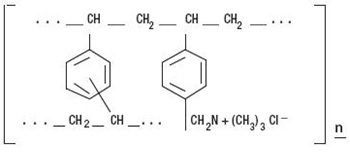
    Cholestyramine for Oral Suspension USP Light powder, the chloride salt of a basic anion exchange resin, a cholesterol-lowering agent, is intended for oral administration. Cholestyramine resin is quite hydrophilic, but insoluble in water. Cholestyramine resin is not absorbed from the digestive tract. Each 5.718 grams of Cholestyramine for Oral Suspension USP Light powder contain 4 grams of cholestyramine resin. It is represented by the following structural formula:
    Chole1
                                     Representation of structure of main polymeric groups

    Inactive Ingredients: mannitol, fructose, sorbitol, aspartame, citric acid, lake pigment 6010 D&C yellow #10 aluminum lake and FD&C yellow #6/sunset yellow FCF AI 15% - 18%, orange flavour, propylene glycol alginate, xanthan gum, pectin, silicon dioxide. 
    2CLINICAL PHARMACOLOGY
    Cholesterol is probably the sole precursor of bile acids. During normal digestion, bile acids are secreted into the intestines. A major portion of the bile acids is absorbed from the intestinal tract and returned to the liver via the enterohepatic circulation. Only very small amounts of bile acids are found in normal serum.
    Cholestyramine resin adsorbs and combines with the bile acids in the intestine to form an insoluble complex which is excreted in the feces. This results in a partial removal of bile acids from the enterohepatic circulation by preventing their absorption.
    The increased fecal loss of bile acids due to cholestyramine resin administration leads to an increased oxidation of cholesterol to bile acids, a decrease in beta lipoprotein or low density lipoprotein plasma levels and a decrease in serum cholesterol levels. Although in man, cholestyramine resin produces an increase in hepatic synthesis of cholesterol, plasma cholesterol levels fall.
    In patients with partial biliary obstruction, the reduction of serum bile acid levels by cholestyramine resin reduces excess bile acids deposited in the dermal tissue with resultant decrease in pruritus.
    Clinical Studies
    In a large, placebo-controlled, multi-clinic study, LRC-CPPT1 , hypercholesterolemic subjects treated with cholestyramine resin had mean reductions in total and low-density lipoprotein cholesterol (LDL-C) which exceeded those for diet and placebo treatment by 7.2% and 10.4%, respectively. Over the seven year study period the cholestyramine resin group experienced a 19% reduction (relative to the incidence in the placebo group) in the combined rate of coronary heart disease death plus non-fatal myocardial infarction (cumulative incidences of 7% cholestyramine resin and 8.6% placebo). The subjects included in the study were men aged 35 to 59 with serum cholesterol levels above 265 mg/dL and no previous history of heart disease. It is not clear to what extent these findings can be extrapolated to females and other segments of the hypercholesterolemic population. (See also PRECAUTIONS, Carcinogenesis, Mutagenesis, Impairment of Fertility.)
    Two controlled clinical trials have examined the effects of cholestyramine monotherapy upon coronary atherosclerotic lesions using coronary arteriography. In the NHLBI Type II Coronary Intervention Trial
    In the St. Thomas Atherosclerosis Regression Study (STARS)3, 90 hypercholesterolemic men with CAD were randomized to three blinded treatments: usual care, lipid-lowering diet and lipid-lowering diet plus cholestyramine resin. After 36 months, follow-up coronary arteriography revealed progression of disease in 46% of usual care patients, 15% of patients on lipid-lowering diet and 12% of those receiving diet plus cholestyramine resin (p<0.02). The mean absolute width of coronary segments decreased in the usual care group, increased slightly (0.003 mm) in the diet group and increased by 0.103 mm in the diet plus cholestyramine group (p<0.05). Thus in these randomized controlled clinical trials using coronary arteriography, cholestyramine resin monotherapy has been demonstrated to slow progression2,3 and promote regression3 of atherosclerotic lesions in the coronary arteries of patients with coronary artery disease.
    The effect of intensive lipid-lowering therapy on coronary atherosclerosis has been assessed by arteriography in hyperlipidemic patients. In these randomized, controlled clinical trials, patients were treated for two to four years by either conventional methods (diet, placebo or in some cases low dose resin) or intensive combination therapy using diet plus colestipol (an anion exchange resin with a mechanism of action and an effect similar on serum lipids to that of Cholestyramine for Oral Suspension Light) plus either nicotinic acid or lovastatin. When compared to conventional measures, intensive lipid-lowering combination therapy significantly reduced the frequency of progression and increased the frequency of regression of coronary atherosclerotic lesions in patients with or at risk for coronary artery disease.
    3INDICATIONS AND USAGE
    1) Cholestyramine for Oral Suspension USP Light powder is indicated as adjunctive therapy to diet for the reduction of elevated serum cholesterol in patients with primary hypercholesterolemia (elevated low density lipoprotein [LDL] cholesterol) who do not respond adequately to diet. Cholestyramine for Oral Suspension USP Light powder may be useful to lower LDL cholesterol in patients who also have hypertriglyceridemia, but it is not indicated where hypertriglyceridemia is the abnormality of most concern.
    Therapy with lipid-altering agents should be a component of multiple risk factor intervention in those individuals at significantly increased risk for atherosclerotic vascular disease due to
    Prior to initiating therapy with cholestyramine resin, secondary causes of hypercholesterolemia (e.g., poorly controlled diabetes mellitus, hypothyroidism, nephrotic syndrome, dysproteinemias, obstructive liver disease, other drug therapy, alcoholism), should be excluded and a lipid profile performed to assess Total cholesterol, HDL-C and triglycerides (TG). For individuals with TG less than 400 mg/dL (<4.5 mmol/L), LDL-C can be estimated using the following equation:
    LDL-C = Total cholesterol - [(TG/5) + HDL-C]
    For TG levels > 400 mg/dL, this equation is less accurate and LDL-C concentrations should be determined by ultracentrifugation. In hypertriglyceridemic patients, LDL-C may be low or normal despite elevated Total-C. In such cases cholestyramine resin may not be indicated.
    Serum cholesterol and triglyceride levels should be determined periodically based on NCEP guidelines to confirm initial and adequate long-term response. A favorable trend in cholesterol
    Since the goal of treatment is to lower LDL-C, the NCEP4 recommends that LDL-C levels be used to initiate and assess treatment response. If LDL-C levels are not available then Total-C alone may be used to monitor long-term therapy. A lipoprotein analysis (including LDL-C determination) should be carried out once a year. The NCEP treatment guidelines are summarized below.
    Cholestyramine resin monotherapy has been demonstrated to retard the rate of progression
    2) Cholestyramine for Oral Suspension USP Light powder, is indicated for the relief of pruritus associated with partial biliary obstruction. Cholestyramine resin has been shown to have a variable effect on serum cholesterol in these patients. Patients with primary biliary cirrhosis may exhibit an elevated cholesterol as part of their disease.
    4CONTRAINDICATIONS
    Cholestyramine for Oral Suspension USP Light powder is contraindicated in patients with complete biliary obstruction where bile is not secreted into the intestine and in those individuals who have shown hypersensitivity to any of its components.
    5WARNINGS
    PHENYLKETONURICS:
    6ADVERSE REACTIONS
    The most common adverse reaction is constipation. When used as a cholesterol-lowering agent predisposing factors for most complaints of constipation are high dose and increased age (more than 60 years old). Most instances of constipation are mild, transient and controlled with conventional therapy.
    Some patients require a temporary decrease in dosage or discontinuation of therapy.
    Occasional calcified material has been observed in the biliary tree, including calcification of the gallbladder, in patients to whom cholestyramine resin has been given. However, this may be a manifestation of the liver disease and not drug related.
    One patient experienced biliary colic on each of three occasions on which he took a cholestyramine for oral suspension product. One patient diagnosed as acute abdominal symptom complex was found to have a “pasty mass” in the transverse colon on x-ray.
    Other events (not necessarily drug related) reported in patients taking cholestyramine resin include:
    Gastrointestinal: GI-rectal bleeding, black stools, hemorrhoidal bleeding, bleeding from known duodenal ulcer, dysphagia, hiccups, ulcer attack, sour taste, pancreatitis, rectal pain, diverticulitis.
    Laboratory Test Changes: Liver function abnormalities.
    Hematologic: Prolonged prothrombin time, ecchymosis, anemia.
    Hypersensitivity: Urticaria, asthma, wheezing, shortness of breath.
    Musculoskeletal: Backache, muscle and joint pains, arthritis.
    Neurologic: Headache, anxiety, vertigo, dizziness, fatigue, tinnitus, syncope, drowsiness, femoral nerve pain, paresthesia.
    Eye: Uveitis.
    Renal: Hematuria, dysuria, burnt odor to urine, diuresis.
    Miscellaneous: Weight loss, weight gain, increased libido, swollen glands, edema, dental bleeding, dental caries, erosion of tooth enamel, tooth discoloration.
    7OVERDOSAGE
    Overdosage of cholestyramine resin has been reported in a patient taking 150% of the maximum recommended daily dosage for a period of several weeks. No ill effects were reported. Should an overdosage occur, the chief potential harm would be obstruction of the gastrointestinal tract. The location of such potential obstruction, the degree of obstruction and the presence or absence of normal gut motility would determine treatment.
    8DOSAGE AND ADMINISTRATION
    The recommended starting adult dose for Cholestyramine for Oral Suspension USP Light powder is one pouch or one level scoopful (5.718 grams of Cholestyramine for Oral Suspension USP Light powder contains 4 grams of cholestyramine resin) once or twice a day. The recommended maintenance dose for Cholestyramine for Oral Suspension USP Light powder is 2 to 4 pouches or scoopfuls daily (8 to 16 grams anhydrous cholestyramine resin) divided into two doses. It is recommended that increases in dose be gradual with periodic assessment of lipid/lipoprotein levels at intervals of not less than 4 weeks. The maximum recommended daily dose is 6 pouches or scoopfuls of Cholestyramine for Oral Suspension USP Light powder (24 grams of anhydrous cholestyramine resin).
    The suggested time of administration is at mealtime but may be modified to avoid interference with absorption of other medications. Although the recommended dosing schedule is twice daily, Cholestyramine for Oral Suspension USP Light powder may be administered in 1 to 6 doses per day.
    Concomitant Therapy
    Preliminary evidence suggests that the lipid-lowering effects of cholestyramine on total and LDL-cholesterol are enhanced when combined with a HMG-CoA reductase inhibitor, e.g., pravastatin, lovastatin, simvastatin and fluvastatin. Additive effects on LDL-cholesterol are also seen with combined nicotinic acid/cholestyramine therapy. See the PRECAUTIONS, Drug Interactions for recommendations on administering concomitant therapy.
    Preparation
    The color of Cholestyramine for Oral Suspension USP Light powder may vary somewhat from batch to batch but this variation does not affect the performance of the product. Place the contents of one single-dose pouch or one level scoopful of Cholestyramine for Oral Suspension USP Light powder in a glass or cup. Add at least 2 to 6 ounces of water or other noncarbonated beverage of your choice. Stir to a uniform consistency and drink.
    Cholestyramine for Oral Suspension USP Light powder may also be mixed with highly fluid soups or pulpy fruits with a high moisture content such as applesauce or crushed pineapple.
    9HOW SUPPLIED
    Cholestyramine for Oral Suspension USP Light powder orange flavor is available in cartons of sixty 5.718 gram pouches and in jars containing 240.156 grams. Each 5.718 gram dose of Cholestyramine for Oral Suspension USP Light powder contains 4 grams of anhydrous cholestyramine resin.
    Pouch: Pale yellow to yellow powder filled in sealed paper foil pouch.
    67877-422-60
    67877-422-57
    Jar: Pale yellow to yellow powder filled in sealed white HDPE jar.
    67877-422-24
    Storage
    Store at 20°C to 25°C (68°F to 77°F) [see USP Controlled Room Temperature].
    REFERENCES
    1. The Lipid Research Clinics Coronary Primary Prevention Trial Results: (I) Reduction in Incidence of Coronary Heart Disease; (II) The Relationship of Reduction in Incidence of Coronary Heart Disease to Cholesterol Lowering. JAMA. 1984; 251:351-374.
    2. Brensike JF, Levy RI, Kelsey SF, et al. Effects of therapy with cholestyramine on progression of coronary arteriosclerosis: results of the NHLBI type II coronary intervention study. Circulation 1984; 69:313-24.
    3. Watte, GF, Lewis B, Brunt JNH, Lewis ES, et al. Effects on coronary artery disease of lipid-lowering diet or diet plus cholestyramine, in the St. Thomas Atherosclerosis Regression Study (STARS). Lancet 1992; 339:563-69.
    4. National Cholesterol Education Program. Second Report of the Expert panel on Detection,Evaluation and Treatment of High Blood Cholesterol in Adults (Adult Treatment Panel II). Circulation 1994 Mar;89 (3):1333-445.
    5. The Lipid Research Clinics Investigators. The Lipid Research Clinics Coronary Primary Prevention Trial: Results of 6 Years of Post-Trial Follow-up. Arch Intern Med 1992; 152:1399-1410.
    6. Behrman RE et al (eds): Nelson, Textbook of Pediatrics, ed 15. Philadelphia, PA, WB Saunders Company, 1996.
    7. Takemoto CK et al (eds): Pediatric Dosage Handbook, ed 3. Cleveland/Akron, OH, Lexi-Comp, Inc., 1996/1997.
    To report SUSPECTED ADVERSE REACTIONS, contact Ascend Laboratories, LLC at 1-877-ASC-RX01 (877-272-7901) or FDA at 1-800-FDA-1088 or www.fda.gov/medwatch.
    Manufactured by:
    Alkem Laboratories Ltd.,
    INDIA.
    Distributed by:Ascend Laboratories, LLC
    339 Jefferson Road,
    Parsippany, NJ 07054
    Revised: November 2021
    PT9076-02
    10PACKAGE LABEL.PRINCIPAL DISPLAY PANEL
    NDC 67877-422-24
    Cholestyramine for Oral Suspension USP Light Powder
    4 grams cholestyramine resin USP, per scoopful.
    Orange Flavor
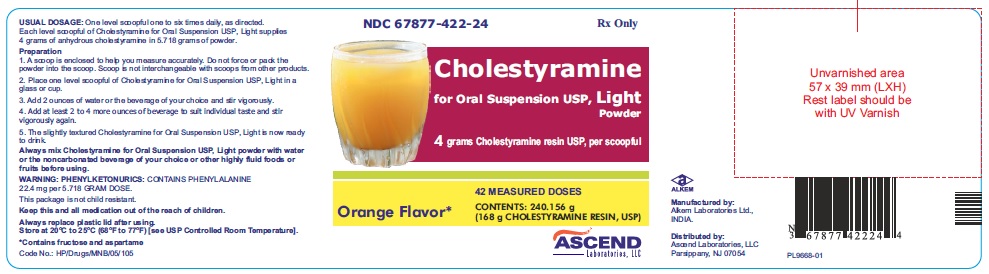
    chole-container
    NDC 67877-422-60
    Cholestyramine for Oral Suspension USP Light Powder
    4 grams cholestyramine resin USP, per pouch.
    Orange Flavor
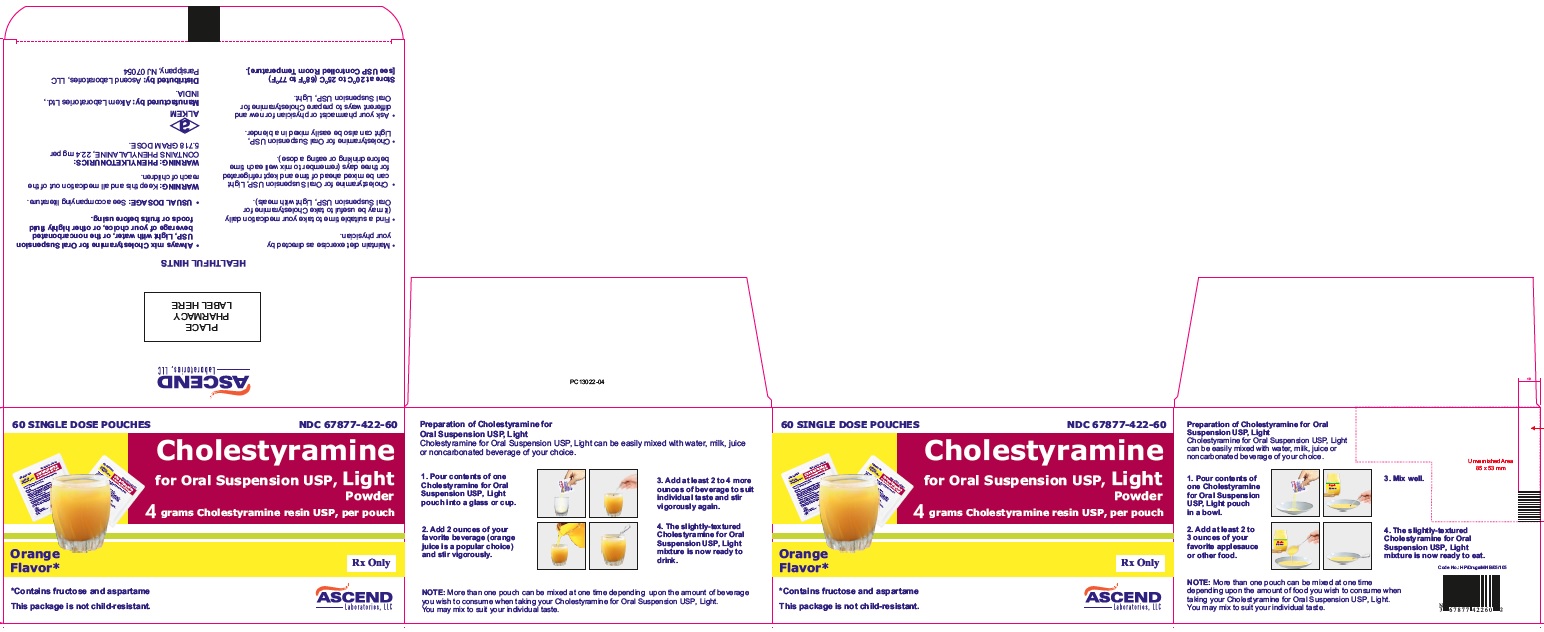
    chole-carton


    NDC 67877-422-57
    Cholestyramine for Oral Suspension USP Light Powder
    4 grams cholestyramine resin USP, per pouch.
    Orange Flavor
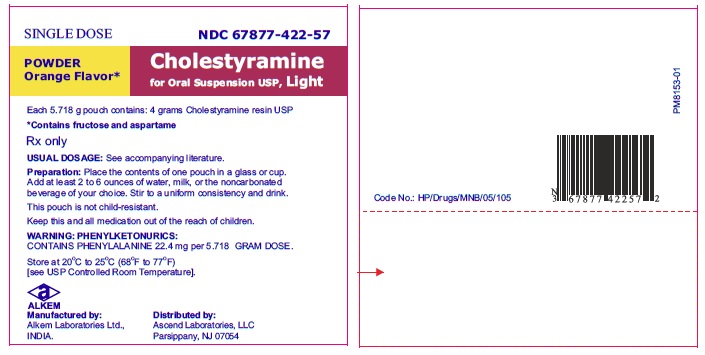
    chole-pouch
    Choleystyramine has been selected.