Pulmonary Hypertension Treatments
Find Pulmonary Hypertension Treatments
Aspart
What is FiAsp (Aspart)?
Approved To Treat
Top Global Experts


Related Clinical Trials
Summary: The primary objective of this study is to evaluate the effect of 24-weeks of once daily treatment with TPIP compared with placebo on exercise capacity in adults with PAH.
Summary: The purpose of this study is to find out if L606 is safe and if it helps people with high blood pressure in the lungs (pulmonary hypertension) caused by interstitial lung disease (PH-ILD, WHO Group 3). One of the main ways the study will check this is by seeing if people can walk further in six minutes (called the six-minute walk test). Another important (secondary) goal is to see how long it take...
Summary: This is a Phase 2, open-label, multi-center clinical study to evaluate the safety and tolerability of inhaled mosliciguat in participants with pulmonary hypertension associated with interstitial lung disease (PH-ILD) on a background inhaled treprostinil.
Related Latest Advances
Brand Information
- 10 mL multiple-dose vial
- 3 mL single-patient-use FIASP FlexTouch pen
- 3 mL single-patient-use PenFill cartridges for use in a PenFill cartridge delivery device
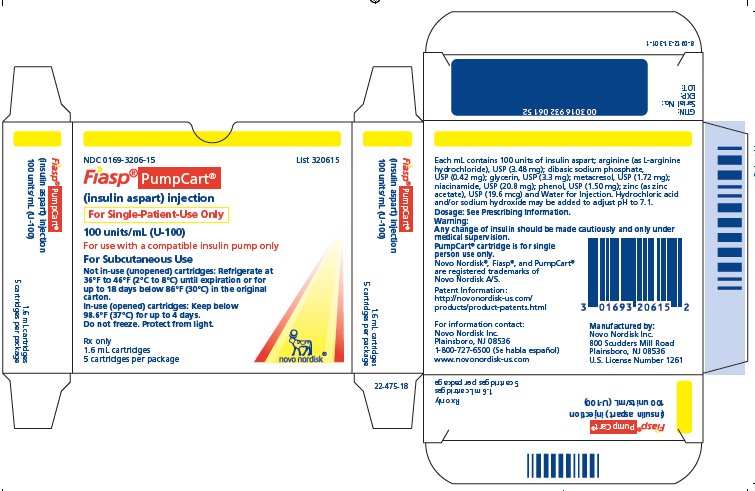
- 1.6 mL single-patient-use PumpCart cartridges for use in a compatible insulin pump.
- During episodes of hypoglycemia
- In patients with known hypersensitivity to insulin aspart or any of the excipients in FIASP
- Hyperglycemia or Hypoglycemia with Changes in Insulin Regimen
- Hypoglycemia
- Hypokalemia
- Hypersensitivity and allergic reactions
- *Severe hypoglycemia: an episode requiring assistance of another person to actively administer carbohydrate, glucagon, or other resuscitative actions
- Train patients in intensive insulin therapy with multiple injections and in the function of their pump and pump accessories.
- Instruct patients to follow healthcare provider recommendations when setting basal and meal time infusion rate.
- Refer to the continuous subcutaneous infusion pump user manual to see if FIASP can be used with the pump. See recommended reservoir and infusion sets in the insulin pump user manual.
- Instruct patients to change FIASP in the pump reservoir at least every 6 days, or replace the PumpCart cartridge at least every 4 days or according to the pump user manual, whichever is shorter; infusion sets and infusion set insertion sites should be changed in accordance with the manufacturers’ user manual. By following this schedule, patients avoid insulin degradation, infusion set occlusion, and loss of the insulin preservative.
- Instruct patients to discard insulin exposed to temperatures higher than 37°C (98.6°F).
- Instruct patients to inform physician and select a new site for infusion if infusion site becomes erythematous, pruritic, or thickened.
- Instruct patients on the risk of rapid hyperglycemia and ketosis due to pump malfunction, infusion set occlusion, leakage, disconnection or kinking, and degraded insulin. Instruct patients on the risk of hypoglycemia from pump malfunction. If these problems cannot be promptly corrected, instruct patients to resume therapy with subcutaneous insulin injection and contact their physician
For information about FIASP contact:
Novo Nordisk Inc.
800 Scudders Mill Road
Plainsboro, New Jersey 08536
1-800-727-6500
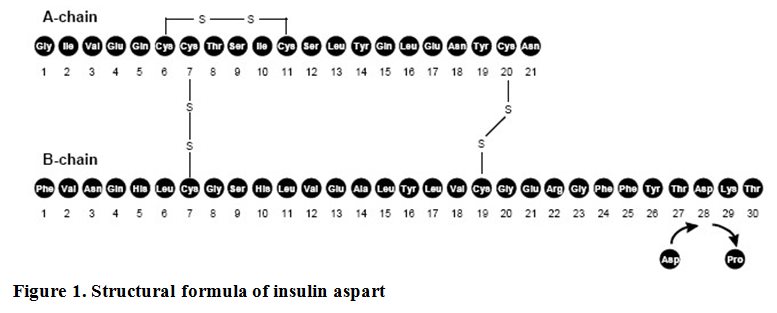
(insulin aspart)
- FIASP is a man-made insulin that is used to control high blood sugar in adults and children with diabetes mellitus.
Do not take FIASP if you:
- are having an episode of low blood sugar (hypoglycemia).
- have an allergy to insulin aspart or any of the ingredients in FIASP.
- have kidney problems.
- have liver problems.
- are pregnant or plan to become pregnant. Talk with your healthcare provider about the best way to control your blood sugar if you plan to become pregnant or while you are pregnant.
- are breastfeeding or plan to breastfeed. It is not known if FIASP passes into your breast milk. Talk with your healthcare provider about the best way to feed your baby while using FIASP.
- are taking new prescription or over-the-counter medicines, vitamins, or herbal supplements.
- Read the Instructions for Use that come with your FIASP.
- Take FIASP exactly as your healthcare provider tells you to.
- FIASP starts acting fast. You should take your dose of FIASP at the beginning of the meal or within 20 minutes after starting a meal.
- Know the type and strength of insulin you take.
- If you miss a dose of FIASP, monitor your blood sugar levels to decide if an insulin dose is needed. Continue with your regular dosing schedule at the next meal.
- Check your blood sugar levels. Ask your healthcare provider what your blood sugars should be and when you should check your blood sugar levels.
- Do not reuse or share needles with other people. You may give other people a serious infection or get a serious infection from them.
- FIASP can be injected under the skin (subcutaneously) of your stomach area, upper legs, or upper arms, or by continuous infusion under the skin (subcutaneously) through an insulin pump into an area of your body recommended in the instructions that come with your insulin pump.
- Change (rotate) your injection sites within the area you choose with each dose to reduce your risk of getting pits in skin or thickened skin (lipodystrophy) and skin with lumps (localized cutaneous amyloidosis) at the injection sites.
- Do not use the exact same spot for each injection.
- Do not inject where the skin has pits, is thickened, or has lumps.
- Do not inject where the skin is tender, bruised, scaly or hard, or into scars or damaged skin.
While taking FIASP do not:
- Drive or operate heavy machinery until you know how FIASP affects you.
- Drink alcohol or use prescription or over-the-counter medicines that contain alcohol.
FIASP may cause serious side effects that can lead to death, including:
- low blood sugar (hypoglycemia). Signs and symptoms that may indicate low blood sugar include:
- low potassium in your blood (hypokalemia).
- serious allergic reactions (whole body reactions). Get emergency medical help right away, if you have any of these signs or symptoms of a severe allergic reaction:
- a rash over your whole body, trouble breathing, a fast heartbeat, swelling of your face, tongue or throat, sweating, extreme drowsiness, dizziness, confusion.
- heart failure. Taking certain diabetes pills called TZDs (thiazolidinediones) with FIASP may cause heart failure in some people. This can happen even if you have never had heart failure or heart problems before. If you already have heart failure it may get worse while you take TZDs with FIASP. Your healthcare provider should monitor you closely while you are taking TZDs with FIASP. Tell your healthcare provider if you have any new or worse symptoms of heart failure including shortness of breath, swelling of your ankles or feet, sudden weight gain. Treatment with TZDs and FIASP may need to be adjusted or stopped by your healthcare provider if you have new or worse heart failure.
- skin problems such as eczema, rash, itching, redness and swelling of your skin (dermatitis)
- reactions at the injection site such as itching, rash
- skin thickening or pits at the injection site (lipodystrophy)
- weight gain
Novo Nordisk Inc.
- a 10 mL FIASP vial
- a U-100 insulin syringe and needle
- 2 alcohol swabs
- 1 sharps container for throwing away used needles and syringes. See “Disposing of your used needles and syringes” at the end of these instructions.
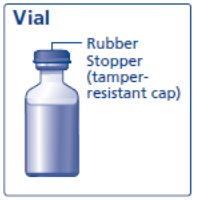
- Do not roll or shake the FIASP vial. Shaking the FIASP vial right before the dose is drawn into the syringe may cause bubbles or foam. This can cause you to draw up the wrong dose of insulin.
- The tamper-resistant cap should not be loose or damaged before the first use.
- Wash your hands with soap and water.
- Before you start to prepare your injection, check the FIASP label to make sure that you are taking the right type of insulin. This is especially important if you use more than 1 type of insulin.
- Check that the FIASP vial is not cracked or damaged.
- FIASP should look clear and colorless.
- Do not use FIASP past the expiration date printed on the label.
- Inject your FIASP exactly as your healthcare provider has shown you. Your healthcare provider should tell you if you need to pinch the skin before injecting.
- You should take your dose of FIASP at the start of a meal or within 20 minutes after starting a meal.
- FIASP can be injected under the skin (subcutaneously) of your stomach area, upper legs, or upper arms, infused in an insulin pump into an area of your body recommended in the instructions that come with your insulin pump, or given through a needle in your arm (intravenously) by your healthcare provider.
- If you use FIASP in an insulin pump, you should change the infusion sets and the infusion set insertion site according to the pump manufacturers’ user manual. The insulin in the reservoir should be changed at least every 6 days even if you have not used all of the insulin.
- If you use FIASP in an insulin pump, see your insulin pump manual for instructions or talk to your healthcare provider. Your healthcare provider should provide recommendations for appropriate basal and meal time infusion rates.
- Change (rotate) your injection sites within the area you choose for each dose to reduce your risk of getting lipodystrophy (pits in skin or thickened skin) and localized cutaneous amyloidosis (skin with lumps) at the injection sites.
- Do not dilute or mix FIASP with any other type of insulin products or solutions.
- Do not recap the needle. Recapping the needle can lead to needle stick injury.
- made of a heavy-duty plastic;
- can be closed with a tight-fitting, puncture-resistant lid, without sharps being able to come out;
- upright and stable during use;
- leak-resistant, and
- properly labeled to warn of hazardous waste inside the container.
- When your sharps disposal container is almost full, you will need to follow your community guidelines for the right way to dispose of your sharps disposal container. There may be state or local laws about how you should throw away used needles and syringes. Do not reuse or share needles or syringes with another person. For more information about safe sharps disposal, and for specific information about sharps disposal in the state that you live in, go to the FDA’s website at:
- Do not dispose of your used sharps disposal container in your household trash unless your community guidelines permit this. Do not recycle your used sharps disposal container.
- Do not freeze FIASP. Do not use FIASP if it has been frozen.
- Keep FIASP away from excessive heat or light.
- Store unopened FIASP vials in the refrigerator at 36
- If unopened vials have been stored in the refrigerator, vials may be used until the expiration date printed on the label.
- If unopened vials have been stored at room temperature, vials should be thrown away after 28 days.
- Opened FIASP vials can be stored in the refrigerator at 36
- Throw away all opened FIASP vials after 28 days (including 6 days pump in-use time), even if they still have insulin left in them.
- Always use a new syringe and needle for each injection to help ensure sterility and prevent blocked needles.
- Do not reuse or share syringes or needles with other people. You may give other people a serious infection or get a serious infection from them.
- Keep FIASP vials, syringes, and needles out of the reach of children.
- Do not share your FIASP FlexTouch Pen with other people, even if the needle is changed. You may give other people a serious infection, or get a serious infection from them.
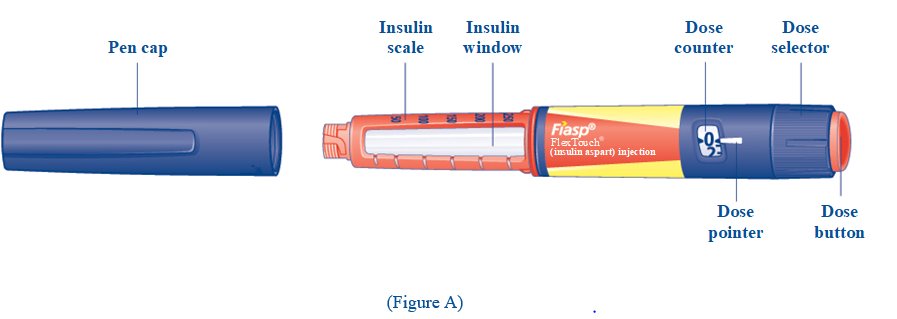
- FIASP FlexTouch Pen (“Pen”) is a prefilled disposable, single-patient-use pen containing 300 units of U-100 FIASP (insulin aspart) injection. You can inject from 1 to 80 units in a single injection. The units can be increased by 1 unit at a time.
- People who are blind or have vision problems should not use the Pen without help from a person trained to use the Pen.
- Do not use a syringe to remove FIASP from the FlexTouch Pen.
- FIASP FlexTouch Pen
- a new NovoFine, NovoFine Plus or NovoTwist needle
- alcohol swab
- a sharps container for throwing away used Pens and needles.
- Wash your hands with soap and water.
- Before you start to prepare your injection, check the FIASP FlexTouch Pen label to make sure you are taking the right type of insulin. This is especially important if you take more than 1 type of insulin.
- FIASP should look clear and colorless.
- Do not use FIASP past the expiration date printed on the label or 28 days after you start using the Pen.
- Always use a new needle for each injection to help ensure sterility and prevent blocked needles. Do not reuse or share needles with another person. You may give other people a serious infection, or get a serious infection from them.
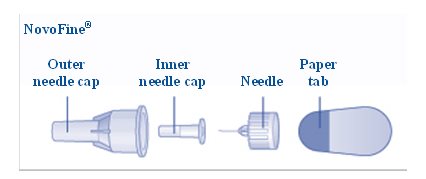
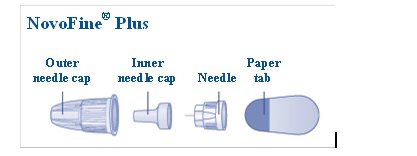
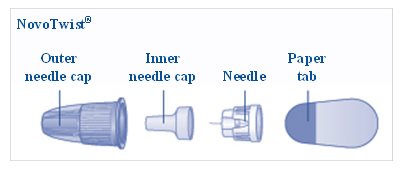
- Inject your FIASP exactly as your healthcare provider has shown you. Your healthcare provider should tell you if you need to pinch the skin before injecting.
- You should take your dose of FIASP at the start of a meal or within 20 minutes after starting a meal.
- FIASP can be injected under the skin (subcutaneously) of your stomach area (abdomen), upper legs (thighs) or upper arms.
- Change (rotate) your injection sites within the area you choose for each dose to reduce your risk of getting lipodystrophy (pits in skin or thickened skin) and localized cutaneous amyloidosis (skin with lumps) at the injection sites.
- Put your used needles in a FDA-cleared sharps disposal container right away after use. Do not throw away (dispose of) loose needles in your household trash.
- If you do not have a FDA-cleared sharps disposal container, you may use a household container that is:
- made of a heavy-duty plastic
- can be closed with a tight-fitting, puncture-resistant lid, without sharps being able to come out
- upright and stable during use
- leak-resistant
- properly labeled to warn of hazardous waste inside the container
- When your sharps disposal container is almost full, you will need to follow your community guidelines for the right way to dispose of your sharps disposal container. There may be state or local laws about how you should throw away used needles and syringes. Do not reuse or share needles or syringes with another person. For more information about safe sharps disposal, and for specific information about sharps disposal in the state that you live in, go to the FDA’s website at:
- Do not dispose of your used sharps disposal container in your household trash unless your community guidelines permit this. Do not recycle your used sharps disposal container.
- Store unused FIASP FlexTouch Pens in the refrigerator at 36°F to 46°F (2°C to 8°C) or at room temperature below 86
- Do not freeze FIASP. Do not use FIASP if it has been frozen.
- Unused Pens may be used until the expiration date printed on the label, if kept in the refrigerator.
- If FIASP FlexTouch Pens are stored at room temperature prior to first use, it should be used or thrown away within 28 days.
- Store the Pen you are currently using without the needle attached at room temperature below 86°F (30°C) or in the refrigerator at 36°F to 46°F (2°C to 8°C) for up to 28 days.
- Keep FIASP away from excessive heat or light.
- The FIASP FlexTouch Pen you are using is to be thrown away after 28 days, even if it still has insulin left in it and the expiration date has not passed.
- Keep FIASP FlexTouch Pens and needles out of the reach of children.
- Always use a new needle for each injection.
- Do not share FIASP FlexTouch Pens or needles with other people. You may give other people a serious infection, or get a serious infection from them.

- Do not share your PenFill cartridge or PenFill cartridge compatible insulin delivery device with other people, even if the needle has been changed. You may give other people a serious infection, or get a serious infection from them.
- Your healthcare provider should show you or your caregiver how to inject FIASP the right way before you inject it for the first time.
- FIASP PenFillcartridge 100 units/mL is a prefilled single-patient-use cartridge containing 300 units of U-100 FIASP (insulin aspart) injection.
- After you insert the PenFill cartridge in your device, you can use it for multiple injections. Read the
- This PenFill cartridge is not recommended for use by the blind or visually impaired without the assistance of a person trained in the proper use of the product and your insulin delivery device.
- If using a
- If the FIASP PenFill cartridge has already been
- FIASP PenFill cartridge
- Novo Nordisk 3 mL PenFill cartridge compatible insulin delivery device
- 1 new NovoFine
- Alcohol swab
- Adhesive bandage
- Cotton gauze
- A sharps container for throwing away used PenFill cartridges and needles.

- Wash your hands with soap and water.
- Before you start to prepare your injection,
- The tamper-resistant foil should be in place before the first use. If the foil has been broken or removed before your first use of the cartridge,
- Carefully look at the cartridge and the insulin inside it. Check that the FIASP cartridge:
- FIASP should look clear and colorless.
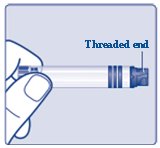
- Insert a 3 mL cartridge with the threaded end first into your Novo Nordisk 3 mL PenFill cartridge compatible insulin delivery device (See Figure C).
- If you drop your device, check the insulin cartridge for damage such as cracks or leaking. If your cartridge is damaged, throw it away and use a new one.
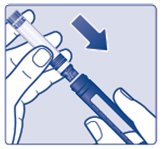
- Take a new needle, and tear off the paper tab. Always use a new needle for each injection to make sure the needle is free of germs (sterile) and to prevent blocked needles. Do not attach a new needle to your device until you are ready to give your injection. Do not reuse or share your needles with other people. You may give others a serious infection, or get a serious infection from them.
- Be careful not to bend or damage the needle before you use it.
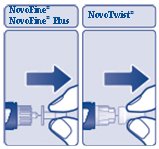
- Push the needle straight onto the device. Turn the needle clockwise until it is on tight (See Figure D).
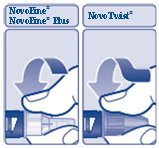
- Pull off the outer needle cap (See Figure E). Do not throw it away. You will need it after the injection to safely remove the needle.
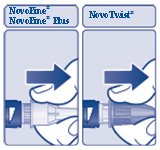
- Pull off the inner needle cap and throw it away (See Figure F). Do not try to put the inner needle cap back on the needle.
- Small amounts of air may collect in the cartridge during normal use. You must do an airshot before each injection to avoid injecting air and to make sure you receive the prescribed dose of your medicine.
- Do the airshot as described in the instruction manual that comes with your device.
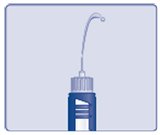
- Keep testing your Novo Nordisk 3 mL PenFill cartridge compatible insulin delivery device until you see insulin at the needle tip. If you still do not see a drop of insulin after 6 times, change the needle and repeat this step. This makes sure that any air bubbles are removed and that insulin is getting through the needle (See Figure G).
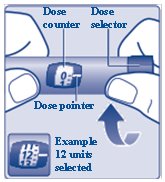
- Check to make sure that the dose counter is set to 0.
- Turn the dose selector clockwise to select the dose you need to inject (See Figure H). The pointer should line up with your dose. When turning the dose selector, be careful not to press the dose button as insulin will come out. You will hear a click for every single unit dialed. Do not set the dose by counting the number of clicks you hear because you may get an incorrect dose.
- Refer to your insulin delivery device manual if necessary.
- Do the injection exactly as shown to you by your healthcare provider. Your healthcare provider should tell you if you need to pinch the skin before injecting.
- You should take your dose of FIASP at the start of a meal or within 20 minutes after starting a meal.
- FIASP can be injected under the skin (subcutaneously) of your stomach area (abdomen), upper legs (thighs), or upper arms (See Figure I).
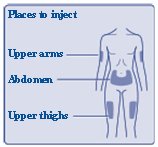
- Change (rotate) your injection sites within the area you choose for each dose to reduce your risk of getting lipodystrophy (pits in skin or thickened skin) and localized cutaneous amyloidosis (skin with lumps) at the injection sites. Do not use the same injection site for each injection. Do not inject where the skin has pits, is thickened, or has lumps. Do not inject where the skin is tender, bruised, scaly or hard, or into scars or damaged skin.
- Clean your injection site with an alcohol swab. Let your skin dry. Do not touch this area again before injecting.
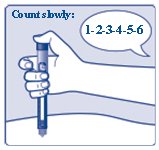
- Insert the needle into your skin. Press and hold down the dose button until the dose counter shows “0”. Continue to keep the dose button pressed and keep the needle in your skin and slowly count to 6 (see Figure J).
- Remove the needle from your skin.
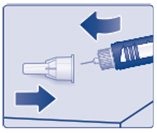
- Lay your outer needle cap on a flat surface. Carefully, lead the needle tip into the outer needle cap without touching the needle (See Figure K) and push the outer needle cap completely on.
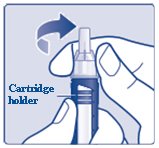
- Hold the black cartridge holder on the insulin delivery device and unscrew the needle counterclockwise (See Figure L).
- Throw away (dispose of) the needle in an FDA-cleared sharps container as your healthcare professional has instructed you.
- Put your empty FIASP PenFill cartridge and used needles in a FDA-cleared sharps disposal container right away after use. Do not throw away (dispose of) loose needles and PenFill cartridges in your household trash.
- If you do not have a FDA-cleared sharps disposal container, you may use a household container that is:
- made of a heavy-duty plastic
- can be closed with a tight-fitting, puncture-resistant lid, without sharps being able to come out
- upright and stable during use
- leak-resistant
- properly labeled to warn of hazardous waste inside the container
- When your sharps disposal container is almost full, you will need to follow your community guidelines for the right way to dispose of your sharps disposal container. There may be state or local laws about how you should throw away used needles and syringes. Do not reuse or share your needles or syringes with other people. For more information about the safe sharps disposal, and for specific information about sharps disposal in the state that you live in, go to the FDA’s website at: http://www.fda.gov/safesharpsdisposal.
- Do not dispose of your used sharps disposal container in your household trash unless your community guidelines permit this. Do not recycle your used sharps disposal container.
- Keep the 3 mL PenFill cartridge in the device.
- Put the pen cap on your device after each use to protect the insulin from light (See Figure M).
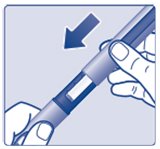
- Store unused FIASP PenFill cartridges in the refrigerator at 36°F to 46°F (2°C to 8°C).
- Do not freeze FIASP. Do not use FIASP if it has been frozen.
- Unused PenFill cartridges may be used until the expiration date printed on the label, if kept in the refrigerator.
- If FIASP is stored mistakenly outside of refrigeration between 47°F (9°C) to 86°F (30°C) prior to first use, it should be used within 28 days or thrown away.
- Store the PenFill cartridge you are currently using in the insulin delivery device at room temperature below 86°F (30°C) for up to 28 days. Do not refrigerate.
- Keep FIASP away from heat or light.
- The FIASP PenFill cartridge you are using should be thrown away after 28 days, even if it still has insulin left in it.
- Keep FIASP PenFill cartridges and needles out of the reach of children.
- Do not share FIASP PenFill cartridges or needles with other people. You may give other people a serious infection, or get a serious infection from them.
- Always carry extra insulin of the same type(s) you use in case of loss or damage.
- Please read the pump manual (user guide) that comes with your insulin pump.
- Only use FIASP PumpCart with a compatible insulin pump. Check the insulin pump manual for instructions to see if FIASP PumpCart can be used with the pump. Do not use with other devices that are not designed for use with FIASP PumpCart.
- FIASP PumpCart is ready for use directly in the pump. Using the wrong device may result in the wrong insulin dosing and lead to high blood sugar (hyperglycemia) or low blood sugar (hypoglycemia).
- Do not share your PumpCart cartridge with other people. You may give other people a serious infection or get a serious infection from them.
- Do not use the PumpCart cartridge if you are blind or visually impaired without the assistance of a person trained in the proper use of the PumpCart.
- Do not mix with any other insulins.
- Do not refill FIASP PumpCart. When it is empty, throw away (dispose) the cartridge.
- Do not use FIASP PumpCart in an insulin pen.
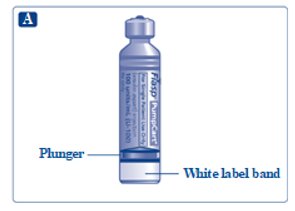
- Take FIASP PumpCart out of its package.
- Check the label to make sure that it is FIASP PumpCart and confirm that you are using a compatible insulin pump.
- Check the expiry date (EXP) – which is on the label and the carton.
- See picture A.
- Check that the insulin in FIASP PumpCart is clear and colorless. If the insulin looks cloudy, do not use FIASP PumpCart. The cartridge may contain small bubbles.
- Wash your hands with soap and water prior to installing the cartridge in your insulin pump.
- Follow the instructions in the pump user manual to insert a new FIASP PumpCart cartridge in your pump and to remove the FIASP PumpCart cartridge from your pump.
- Replace the FIASP PumpCart cartridge at least every 4 days, or according to the pump user manual, whichever is shorter, even if you have not used all of the insulin.
- Change the infusion sets and the infusion set insertion site according to the insulin pump manufacturers’ user manual.
- Throw away FIASP PumpCart in the pump reservoir if it has been exposed to temperatures higher than 98.6°F (37°C).
- How should I dispose my FIASP PumpCart cartridge?
- Put your empty FIASP PumpCart in a FDA-cleared sharps disposal container right away after use. Do not throw away (dispose of) Fiasp PumpCart in your household trash.
- If you do not have a FDA-cleared sharps disposal container, you may use a household container that is:
- When your sharps disposal container is almost full, you will need to follow your community guidelines for the right way to dispose of your sharps disposal container. There may be state or local laws about how you should throw away used needles and syringes. For more information about safe sharps disposal, and for specific information about sharps disposal in the state that you live in, go to the FDA’s website at:
- Not in-use (unopened) cartridges: Refrigerate at 36°F to 46°F (2°C to 8°C) in the original carton until expiration or for up to 18 days below 86°F (30°C).
- In-use (opened) cartridge: Do not refrigerate. Keep below 98.6°F (37°C) for up to 4 days. The maximum time at room temperature is 18 days including 4 days in the pump.
- Do not freeze.
- Keep FIASP PumpCart cartridge away from heat or light.
- Keep FIASP PumpCart out of the reach of children.
- Always carry extra insulin of the same type you use in case of loss or damage
- Rx only
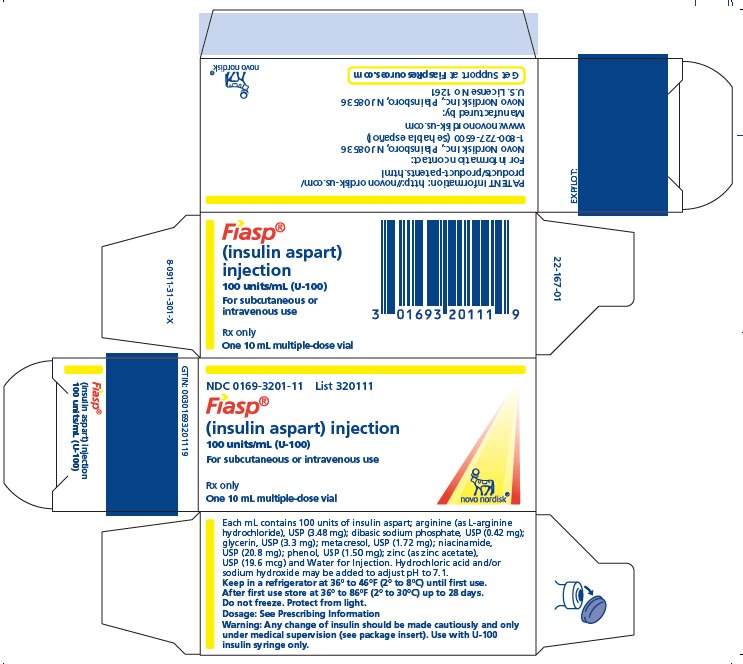
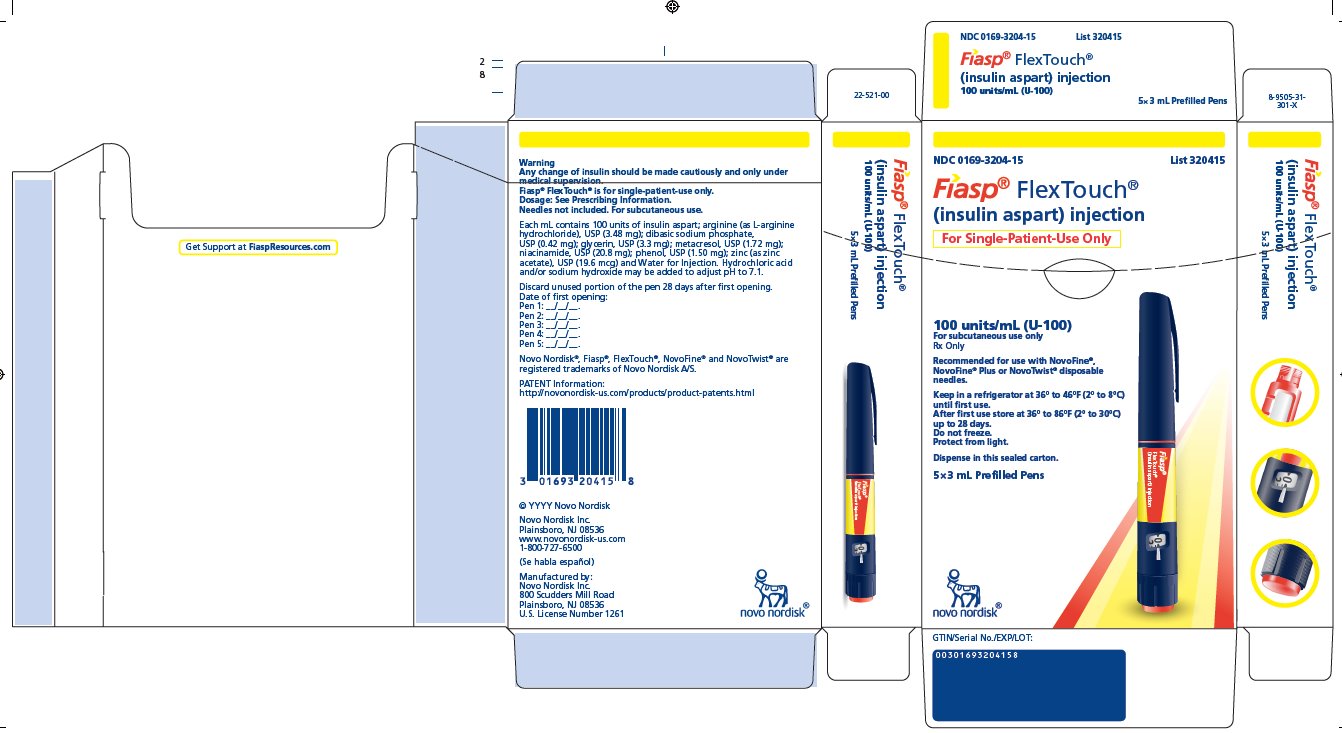
- NDC 0169-3205-15 List 320515
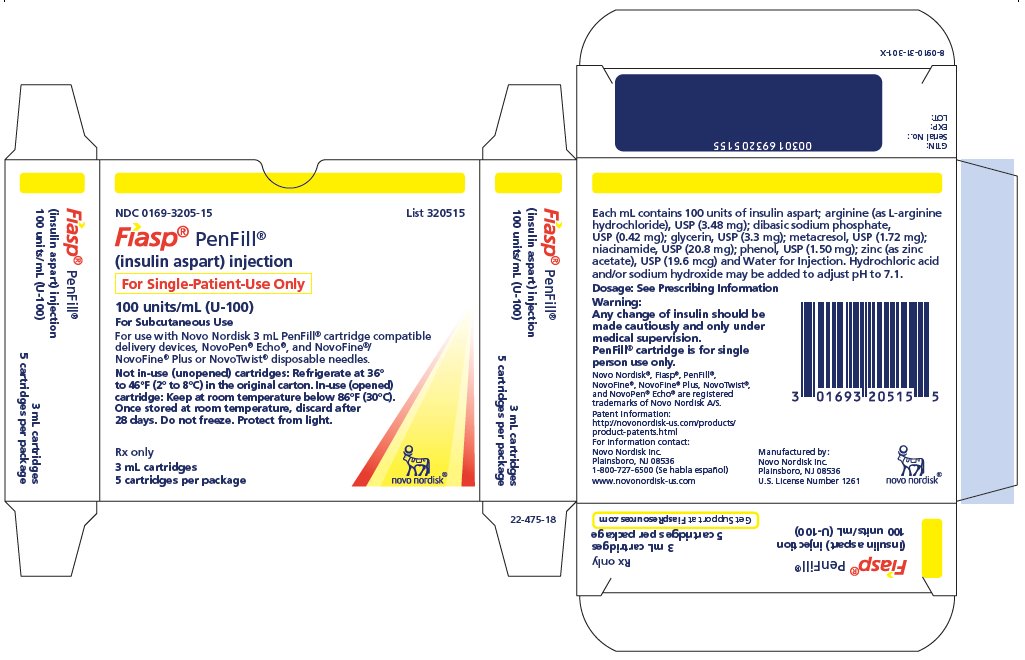
- Fiasp® PumpCart®