Testicular Failure Treatments
Find Testicular Failure Treatments
Cypionate
What is Azmiro (Cypionate)?
Approved To Treat

Related Clinical Trials
Summary: This research is being done to determine if receiving the combination of testosterone and ZEN-3694 followed by the combination of enzalutamide plus ZEN-3694 will decrease the size of tumors in patients with prostate cancer that has become resistant to castration and other therapies. The investigators also want to determine if dosing first with the combination of testosterone and ZEN-3694 may cause...
Summary: This phase I trial tests the change in androgen receptor sensitivity, side effects and effectiveness of bipolar androgen therapy, using testosterone, in patients with castration resistant prostate cancer that has spread to other places is the body (metastatic). Bipolar androgen therapy is the regulation of testosterone between castration levels (lower than what would be normally present) and supra...
Summary: The purpose of this study is to evaluate whether high-dose testosterone followed by targeted radioligand therapy (TRT) is effective in treating metastatic castration resistant prostate cancer. Participants will be asked to spend about 6 months in this study. Participants will take study drug for 3.5 months.
Related Latest Advances
Brand Information
TRAVERSE was a randomized, double-blind, cardiovascular outcomes study to assess the cardiovascular (CV) safety of topical testosterone gel compared to placebo in 5198 hypogonadal men aged 45 to 80 years with a history of CV disease or with multiple CV risk factors. The primary outcome was the incidence of the composite endpoint of major adverse cardiovascular events (MACE), consisting of CV death, non-fatal myocardial infarction (MI), and non-fatal stroke The mean duration of therapy was approximately 22 months. The mean duration of follow-up was 33 months. Approximately 61% of all patients discontinued topical testosterone gel or placebo therapy.
The mean patient age (±SD) was 63.3 (7.9) years, with 2452 patients aged 65 years or more (47%); 2847 (about 55%) patients had pre-existing cardiovascular disease, whereas 2357 patients (about 45%) had an elevated cardiovascular risk at baseline, and mean BMI was 35 kg/m2. Approximately 80% of patients were White, 17% were Black, and 3% were of other races or ethnic groups. Approximately 69%, 84%, and 93% had diabetes mellitus, hyperlipidemia, and hypertension, respectively.
The mean serum testosterone concentration at baseline in patients receiving topical testosterone gel was 220.4 ng/dL (n=2596). The mean serum testosterone concentrations at 12 months, 24 months, 36 months, and 48 months in patients receiving topical testosterone gel were 440.5 ng/dL (n=1683), 420.9 ng/dl (n=1125), 428.7 ng/dL (n=731), and 365.2 ng/dL (n=220), respectively.
For patients treated with topical testosterone gel, the incidence of MACE was 7.0% (n=182 events) and for those receiving placebo, the incidence of MACE was 7.3% (n=190 events). The study demonstrated non-inferiority of topical testosterone gel versus placebo because the upper bound of 95% CI was less than the pre-specified risk margin, of 1.5 for MACE (Hazard Ratio 0.96 [95% CI: 0.78, 1.17]).
Additional Adverse Reactions Reported in TRAVERSE
Additional adverse reactions reported in TRAVERSE at an incidence rate >2% in either treatment group and greater in topical testosterone gel versus placebo included: nonfatal arrythmias warranting intervention (5.2% vs 3.3%), atrial fibrillation (3.5% vs 2.4%), acute kidney injury (2.3% vs 1.5%) and bone fracture (3.5% vs 2.5%). For the adverse reaction of bone fracture, each event was adjudicated by clinical review.
Skin and appendages: Male pattern baldness, seborrhea, and acne.
Special senses: Rare cases of central serous chorioretinopathy (CSCR).
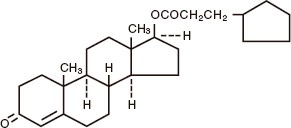
Each mL of solution contains:
Testosterone cypionate………………………………………..200 mg
Benzyl alcohol………………………………………………….20 mg
Benzyl benzoate……………………………………………….0.2 mL
Cottonseed oil…………………………………………………542 mg
Advise patients that AZMIRO can cause an increase in hematocrit levels that may increase the risk of thromboembolic events. Advise patients about the importance of completing laboratory testing as instructed by their health care provider while on AZMIRO [ see Warnings and Precautions ( ].
Advise patients that AZMIRO can cause venous thromboembolism. Advise patients of the signs and symptoms of venous thromboembolism, which may include the following: lower limb pain, edema, or erythema; and dyspnea or chest pain. Advise patients to promptly report the signs and symptoms of venous thromboembolism, discontinue use of AZMIRO, and seek urgent medical care.
Advise patients that AZMIRO can increase BP which can increase cardiovascular risk over time. Instruct patients about the importance of monitoring BP periodically while on AZMIRO. If BP increases while on AZMIRO, antihypertensive medications may need to be started, added, or adjusted to control BP, or AZMIRO may need to be discontinued.
Advise patients that AZMIRO can cause increased symptoms of BPH and can increase the risk for prostate cancer. Advise patients to contact their health care provider if they have any prostate-related symptoms [ see Warnings and Precautions ( ].
Edema
Advise patients with preexisting cardiac, renal, or hepatic disease that AZMIRO can cause edema. Advise patients to notify their health care provider if edema develops or worsens [ see Warnings and Precautions ( ].
Sleep Apnea
Advise patients that AZMIRO can worsen sleep apnea especially in patients with risk factors such as obesity or chronic lung diseases [ see Warnings and Precautions ( ].
Gynecomastia
Advise patients that AZMIRO can cause gynecomastia [ see Warnings and Precautions ( ].
Manufactured for:
Azurity Pharmaceuticals, Inc.
Woburn, MA 01801
Manufactured by:
LSNE-LEON SLU
Calle nicostrato vela
(pq. Tecchnologico leon),
S/N – M1.1-M1.2, Leon, 24009,
Spain (ESP)
Patent: https://azurity.com/patents_and_trademarks/
This product's labeling may have been updated. For current Full Prescribing Information, please visit www.azmiro.com
AZM-PI-01 Rev. JULY2025
NDC 24338-056-01
CIII
For intramuscular use only
Rx only
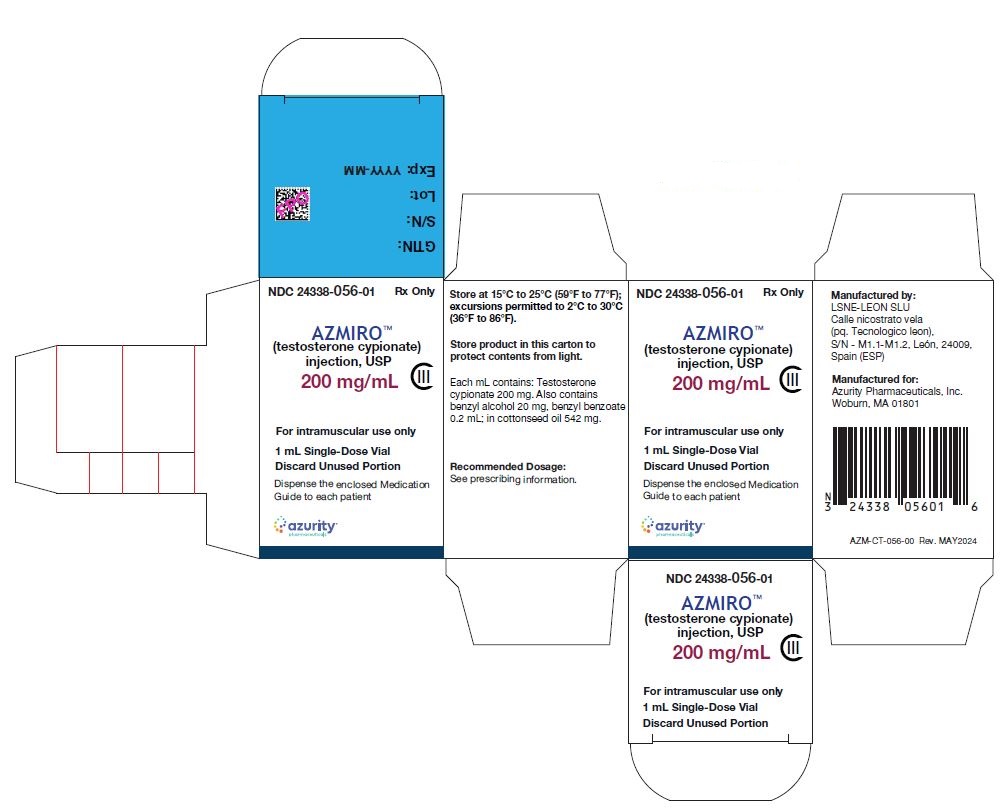
CIII
For intramuscular use only
Rx only

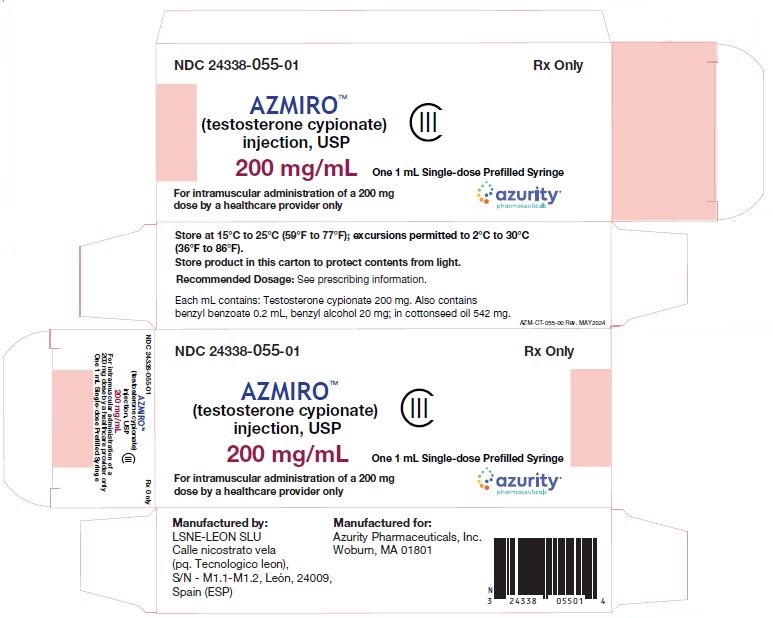
NDC 24338-055-01
CIII
For intramuscular use only
Rx only