Generic Name

Sitagliptin

Brand Names
Januvia, Steglujan, Zituvio, Brynovin
FDA approval date: October 16, 2006
Classification: Dipeptidyl Peptidase 4 Inhibitor
Form: Tablet, Solution

What is Januvia (Sitagliptin)?

ZITUVIO ® is indicated as an adjunct to diet and exercise to improve glycemic control in adults with type 2 diabetes mellitus. Limitations of Use ZITUVIO is not recommended in patients with type 1 diabetes mellitus. ZITUVIO has not been studied in patients with a history of pancreatitis. It is unknown whether patients with a history of pancreatitis are at increased risk for the development of pancreatitis while using ZITUVIO. [see Warnings and Precautions.
Save this treatment for later
Sign Up
Not sure about your diagnosis?
Check Your Symptoms
Tired of the same old research?
Check Latest Advances

Related Clinical Trials

Ertugliflozin in Chronic Heart Failure: Cardio-renal and Diuretic Effects

Summary: The purpose of this study is to determine the effects on heart failure signs and symptoms of the use of either ertugliflozin, metolazone or placebo, in conjunction with intravenous loop diuretic use in acute settings and chronic oral loop diuretic therapy. There are two general purposes for this study. The proposed study is both larger and more rigorous than essentially all PK/PD studies that form...

Targeting Macrophage Migration Inhibitory Factor: A Phase 2 and Pharmacodynamic Study of Sitagliptin in Patients With Progressive Grade 4 Gliomas

Summary: The purpose of this study is to evaluate whether treating glioblastoma patients with sitagliptin can improve immune response against the tumor by targeting specific immune cells called myeloid-derived suppressor cells (MDSCs) that suppress your body's natural immune response against cancer. Sitagliptin is an investigational drug for this condition that works by inhibiting an enzyme called dipeptid...

Brand Information

    JANUVIA (sitagliptin)
    1INDICATIONS AND USAGE
    JANUVIA
    2DOSAGE FORMS AND STRENGTHS
    • 100 mg tablets are beige, round, film-coated tablets with "277" on one side.
    • 50 mg tablets are light beige, round, film-coated tablets with "112" on one side.
    • 25 mg tablets are pink, round, film-coated tablets with "221" on one side.
    3CONTRAINDICATIONS
    History of a serious hypersensitivity reaction to sitagliptin, such as anaphylaxis or angioedema.
    4ADVERSE REACTIONS
    The following adverse reactions are also discussed elsewhere in the labeling:
    • Pancreatitis
    • Heart Failure
    • Acute Renal Failure
    • Hypoglycemia with Concomitant Use with Insulin or Insulin Secretagogues
    • Hypersensitivity Reactions
    • Severe and Disabling Arthralgia
    • Bullous Pemphigoid
    4.1Clinical Trials Experience
    Because clinical trials are conducted under widely varying conditions, adverse reaction rates observed in the clinical trials of a drug cannot be directly compared to rates in the clinical trials of another drug and may not reflect the rates observed in practice.
    In controlled clinical studies as both monotherapy and combination therapy with metformin, pioglitazone, or rosiglitazone and metformin, the overall incidence of adverse reactions, hypoglycemia, and discontinuation of therapy due to clinical adverse reactions with JANUVIA were similar to placebo. In combination with glimepiride, with or without metformin, the overall incidence of clinical adverse reactions with JANUVIA was higher than with placebo, in part related to a higher incidence of hypoglycemia (see Table 3); the incidence of discontinuation due to clinical adverse reactions was similar to placebo.
    Two placebo-controlled monotherapy studies, one of 18- and one of 24-week duration, included patients treated with JANUVIA 100 mg daily, JANUVIA 200 mg daily, and placebo. Five placebo-controlled add-on combination therapy studies were also conducted: one with metformin; one with pioglitazone; one with metformin and rosiglitazone; one with glimepiride (with or without metformin); and one with insulin (with or without metformin). In these trials, patients with inadequate glycemic control on a stable dose of the background therapy were randomized to add-on therapy with JANUVIA 100 mg daily or placebo. The adverse reactions, excluding hypoglycemia, reported regardless of investigator assessment of causality in ≥5% of patients treated with JANUVIA 100 mg daily and more commonly than in patients treated with placebo, are shown in Table 1 for the clinical trials of at least 18 weeks duration. Incidences of hypoglycemia are shown in Table 3.
    In the 24-week study of patients receiving JANUVIA as add-on combination therapy with metformin, there were no adverse reactions reported regardless of investigator assessment of causality in ≥5% of patients and more commonly than in patients given placebo.
    In the 24-week study of patients receiving JANUVIA as add-on therapy to insulin (with or without metformin), there were no adverse reactions reported regardless of investigator assessment of causality in ≥5% of patients and more commonly than in patients given placebo, except for hypoglycemia (see Table 3).
    In the study of JANUVIA as add-on combination therapy with metformin and rosiglitazone (Table 1), through Week 54 the adverse reactions reported regardless of investigator assessment of causality in ≥5% of patients treated with JANUVIA and more commonly than in patients treated with placebo were: upper respiratory tract infection (JANUVIA, 15.5%; placebo, 6.2%), nasopharyngitis (11.0%, 9.3%), peripheral edema (8.3%, 5.2%), and headache (5.5%, 4.1%).
    In a pooled analysis of the two monotherapy studies, the add-on to metformin study, and the add-on to pioglitazone study, the incidence of selected gastrointestinal adverse reactions in patients treated with JANUVIA was as follows: abdominal pain (JANUVIA 100 mg, 2.3%; placebo, 2.1%), nausea (1.4%, 0.6%), and diarrhea (3.0%, 2.3%).
    In an additional, 24-week, placebo-controlled factorial study of initial therapy with sitagliptin in combination with metformin, the adverse reactions reported (regardless of investigator assessment of causality) in ≥5% of patients are shown in Table 2.
    In a 24-week study of initial therapy with JANUVIA in combination with pioglitazone, there were no adverse reactions reported (regardless of investigator assessment of causality) in ≥5% of patients and more commonly than in patients given pioglitazone alone.
    No clinically meaningful changes in vital signs or in ECG (including in QTc interval) were observed in patients treated with JANUVIA.
    In a pooled analysis of 19 double-blind clinical trials that included data from 10,246 patients randomized to receive sitagliptin 100 mg/day (N=5429) or corresponding (active or placebo) control (N=4817), the incidence of acute pancreatitis was 0.1 per 100 patient-years in each group (4 patients with an event in 4708 patient-years for sitagliptin and 4 patients with an event in 3942 patient-years for control).
    Hypoglycemia
    In the above studies (N=9), adverse reactions of hypoglycemia were based on all reports of symptomatic hypoglycemia. A concurrent blood glucose measurement was not required although most (74%) reports of hypoglycemia were accompanied by a blood glucose measurement ≤70 mg/dL. When JANUVIA was coadministered with a sulfonylurea or with insulin, the percentage of patients with at least one adverse reaction of hypoglycemia was higher than in the corresponding placebo group (Table 3).
    In a pooled analysis of the two monotherapy studies, the add-on to metformin study, and the add-on to pioglitazone study, the overall incidence of adverse reactions of hypoglycemia was 1.2% in patients treated with JANUVIA 100 mg and 0.9% in patients treated with placebo.
    In the study of JANUVIA as add-on combination therapy with metformin and rosiglitazone, the overall incidence of hypoglycemia was 2.2% in patients given add-on JANUVIA and 0.0% in patients given add-on placebo through Week 18. Through Week 54, the overall incidence of hypoglycemia was 3.9% in patients given add-on JANUVIA and 1.0% in patients given add-on placebo.
    In the 24-week, placebo-controlled factorial study of initial therapy with JANUVIA in combination with metformin, the incidence of hypoglycemia was 0.6% in patients given placebo, 0.6% in patients given JANUVIA alone, 0.8% in patients given metformin alone, and 1.6% in patients given JANUVIA in combination with metformin.
    In the study of JANUVIA as initial therapy with pioglitazone, one patient taking JANUVIA experienced a severe episode of hypoglycemia. There were no severe hypoglycemia episodes reported in other studies except in the study involving coadministration with insulin.
    In an additional, 30-week placebo-controlled, study of patients with type 2 diabetes inadequately controlled with metformin comparing the maintenance of sitagliptin 100 mg versus withdrawal of sitagliptin when initiating basal insulin therapy, the event rate and incidence of documented symptomatic hypoglycemia (blood glucose measurement ≤70 mg/dL) did not differ between the sitagliptin and placebo groups.
    Laboratory Tests
    Across clinical studies, the incidence of laboratory adverse reactions was similar in patients treated with JANUVIA 100 mg compared to patients treated with placebo. A small increase in white blood cell count (WBC) was observed due to an increase in neutrophils. This increase in WBC (of approximately 200 cells/microL vs placebo, in four pooled placebo-controlled clinical studies, with a mean baseline WBC count of approximately 6600 cells/microL) is not considered to be clinically relevant. In a 12-week study of 91 patients with chronic renal insufficiency, 37 patients with moderate renal insufficiency were randomized to JANUVIA 50 mg daily, while 14 patients with the same magnitude of renal impairment were randomized to placebo. Mean (SE) increases in serum creatinine were observed in patients treated with JANUVIA [0.12 mg/dL (0.04)] and in patients treated with placebo [0.07 mg/dL (0.07)]. The clinical significance of this added increase in serum creatinine relative to placebo is not known.
    4.2Postmarketing Experience
    Additional adverse reactions have been identified during postapproval use of JANUVIA as monotherapy and/or in combination with other antihyperglycemic agents. Because these reactions are reported voluntarily from a population of uncertain size, it is generally not possible to reliably estimate their frequency or establish a causal relationship to drug exposure.
    Hypersensitivity reactions including anaphylaxis, angioedema, rash, urticaria, cutaneous vasculitis, and exfoliative skin conditions including Stevens-Johnson syndrome; hepatic enzyme elevations; acute pancreatitis, including fatal and non-fatal hemorrhagic and necrotizing pancreatitis
    5OVERDOSAGE
    In the event of an overdose with JANUVIA, contact the Poison Control Center.
    In the event of an overdose, it is reasonable to employ supportive measures, e.g., remove unabsorbed material from the gastrointestinal tract, employ clinical monitoring (including obtaining an electrocardiogram), and institute supportive therapy as dictated by the patient's clinical status.
    Sitagliptin is modestly dialyzable. In clinical studies, approximately 13.5% of the dose was removed over a 3- to 4-hour hemodialysis session. Prolonged hemodialysis may be considered if clinically appropriate. It is not known if sitagliptin is dialyzable by peritoneal dialysis.
    6DESCRIPTION
    JANUVIA Tablets contain sitagliptin phosphate, an orally-active inhibitor of the dipeptidyl peptidase-4 (DPP-4) enzyme.
    Sitagliptin phosphate monohydrate is described chemically as 7-[(3
    The empirical formula is C
    Sitagliptin phosphate monohydrate is a white to off-white, crystalline, non-hygroscopic powder. It is soluble in water and N,N-dimethyl formamide; slightly soluble in methanol; very slightly soluble in ethanol, acetone, and acetonitrile; and insoluble in isopropanol and isopropyl acetate.
    Each film-coated tablet of JANUVIA contains 32.13, 64.25, or 128.5 mg of sitagliptin phosphate monohydrate, which is equivalent to 25, 50, or 100 mg, respectively, of free base and the following inactive ingredients: microcrystalline cellulose, anhydrous dibasic calcium phosphate, croscarmellose sodium, magnesium stearate, sodium stearyl fumarate, and propyl gallate. In addition, the film coating contains the following inactive ingredients: polyvinyl alcohol, polyethylene glycol, talc, titanium dioxide, red iron oxide, and yellow iron oxide.
    7CLINICAL STUDIES
    There were approximately 5200 patients with type 2 diabetes randomized in nine double-blind, placebo-controlled clinical safety and efficacy studies conducted to evaluate the effects of sitagliptin on glycemic control. In a pooled analysis of seven of these studies, the ethnic/racial distribution was approximately 59% white, 20% Hispanic, 10% Asian, 6% black, and 6% other groups. Patients had an overall mean age of approximately 55 years (range 18 to 87 years). In addition, an active (glipizide)-controlled study of 52-weeks duration was conducted in 1172 patients with type 2 diabetes who had inadequate glycemic control on metformin.
    In patients with type 2 diabetes, treatment with JANUVIA produced clinically significant improvements in hemoglobin A1C, fasting plasma glucose (FPG) and 2-hour post-prandial glucose (PPG) compared to placebo.
    7.1Monotherapy
    A total of 1262 patients with type 2 diabetes participated in two double-blind, placebo-controlled studies, one of 18-week and another of 24-week duration, to evaluate the efficacy and safety of JANUVIA monotherapy. In both monotherapy studies, patients currently on an antihyperglycemic agent discontinued the agent, and underwent a diet, exercise, and drug washout period of about 7 weeks. Patients with inadequate glycemic control (A1C 7% to 10%) after the washout period were randomized after completing a 2-week single-blind placebo run-in period; patients not currently on antihyperglycemic agents (off therapy for at least 8 weeks) with inadequate glycemic control (A1C 7% to 10%) were randomized after completing the 2-week single-blind placebo run-in period. In the 18-week study, 521 patients were randomized to placebo, JANUVIA 100 mg, or JANUVIA 200 mg, and in the 24-week study 741 patients were randomized to placebo, JANUVIA 100 mg, or JANUVIA 200 mg. Patients who failed to meet specific glycemic goals during the studies were treated with metformin rescue, added on to placebo or JANUVIA.
    Treatment with JANUVIA at 100 mg daily provided significant improvements in A1C, FPG, and 2-hour PPG compared to placebo (Table 6). In the 18-week study, 9% of patients receiving JANUVIA 100 mg and 17% who received placebo required rescue therapy. In the 24-week study, 9% of patients receiving JANUVIA 100 mg and 21% of patients receiving placebo required rescue therapy. The improvement in A1C compared to placebo was not affected by gender, age, race, prior antihyperglycemic therapy, or baseline BMI. As is typical for trials of agents to treat type 2 diabetes, the mean reduction in A1C with JANUVIA appears to be related to the degree of A1C elevation at baseline. In these 18- and 24-week studies, among patients who were not on an antihyperglycemic agent at study entry, the reductions from baseline in A1C were -0.7% and -0.8%, respectively, for those given JANUVIA, and -0.1% and -0.2%, respectively, for those given placebo. Overall, the 200 mg daily dose did not provide greater glycemic efficacy than the 100 mg daily dose. The effect of JANUVIA on lipid endpoints was similar to placebo. Body weight did not increase from baseline with JANUVIA therapy in either study, compared to a small reduction in patients given placebo.
    Additional Monotherapy Study
    A multinational, randomized, double-blind, placebo-controlled study was also conducted to assess the safety and tolerability of JANUVIA in 91 patients with type 2 diabetes and chronic renal insufficiency (creatinine clearance <50 mL/min). Patients with moderate renal insufficiency received 50 mg daily of JANUVIA and those with severe renal insufficiency or with ESRD on hemodialysis or peritoneal dialysis received 25 mg daily. In this study, the safety and tolerability of JANUVIA were generally similar to placebo. A small increase in serum creatinine was reported in patients with moderate renal insufficiency treated with JANUVIA relative to those on placebo. In addition, the reductions in A1C and FPG with JANUVIA compared to placebo were generally similar to those observed in other monotherapy studies.
    7.2Combination Therapy
    Add-on Combination Therapy with Metformin
    A total of 701 patients with type 2 diabetes participated in a 24-week, randomized, double-blind, placebo-controlled study designed to assess the efficacy of JANUVIA in combination with metformin. Patients already on metformin HCl (N=431) at a dose of at least 1500 mg per day were randomized after completing a 2-week single-blind placebo run-in period. Patients on metformin and another antihyperglycemic agent (N=229) and patients not on any antihyperglycemic agents (off therapy for at least 8 weeks, N=41) were randomized after a run-in period of approximately 10 weeks on metformin HCl (at a dose of at least 1500 mg per day) in monotherapy. Patients with inadequate glycemic control (A1C 7% to 10%) were randomized to the addition of either 100 mg of JANUVIA or placebo, administered once daily. Patients who failed to meet specific glycemic goals during the studies were treated with pioglitazone rescue.
    In combination with metformin, JANUVIA provided significant improvements in A1C, FPG, and 2-hour PPG compared to placebo with metformin (Table 7). Rescue glycemic therapy was used in 5% of patients treated with JANUVIA 100 mg and 14% of patients treated with placebo. A similar decrease in body weight was observed for both treatment groups.
    Initial Combination Therapy with Metformin
    A total of 1091 patients with type 2 diabetes and inadequate glycemic control on diet and exercise participated in a 24-week, randomized, double-blind, placebo-controlled factorial study designed to assess the efficacy of sitagliptin as initial therapy in combination with metformin. Patients on an antihyperglycemic agent (N=541) discontinued the agent, and underwent a diet, exercise, and drug washout period of up to 12 weeks duration. After the washout period, patients with inadequate glycemic control (A1C 7.5% to 11%) were randomized after completing a 2-week single-blind placebo run-in period. Patients not on antihyperglycemic agents at study entry (N=550) with inadequate glycemic control (A1C 7.5% to 11%) immediately entered the 2-week single-blind placebo run-in period and then were randomized. Approximately equal numbers of patients were randomized to receive initial therapy with placebo, 100 mg of JANUVIA once daily, 500 mg or 1000 mg of metformin HCl twice daily, or 50 mg of sitagliptin twice daily in combination with 500 mg or 1000 mg of metformin HCl twice daily. Patients who failed to meet specific glycemic goals during the study were treated with glyburide (glibenclamide) rescue.
    Initial therapy with the combination of JANUVIA and metformin provided significant improvements in A1C, FPG, and 2-hour PPG compared to placebo, to metformin alone, and to JANUVIA alone (Table 8, Figure 1). Mean reductions from baseline in A1C were generally greater for patients with higher baseline A1C values. For patients not on an antihyperglycemic agent at study entry, mean reductions from baseline in A1C were: JANUVIA 100 mg once daily, -1.1%; metformin HCl 500 mg bid, -1.1%; metformin HCl 1000 mg bid, -1.2%; sitagliptin 50 mg bid with metformin HCl 500 mg bid, -1.6%; sitagliptin 50 mg bid with metformin HCl 1000 mg bid, -1.9%; and for patients receiving placebo, -0.2%. Lipid effects were generally neutral. The decrease in body weight in the groups given sitagliptin in combination with metformin was similar to that in the groups given metformin alone or placebo.
    Initial combination therapy or maintenance of combination therapy may not be appropriate for all patients. These management options are left to the discretion of the health care provider.
    Active-Controlled Study vs Glipizide in Combination with Metformin
    The efficacy of JANUVIA was evaluated in a 52-week, double-blind, glipizide-controlled noninferiority trial in patients with type 2 diabetes. Patients not on treatment or on other antihyperglycemic agents entered a run-in treatment period of up to 12 weeks duration with metformin HCl monotherapy (dose of ≥1500 mg per day) which included washout of medications other than metformin, if applicable. After the run-in period, those with inadequate glycemic control (A1C 6.5% to 10%) were randomized 1:1 to the addition of JANUVIA 100 mg once daily or glipizide for 52 weeks. Patients receiving glipizide were given an initial dosage of 5 mg/day and then electively titrated over the next 18 weeks to a maximum dosage of 20 mg/day as needed to optimize glycemic control. Thereafter, the glipizide dose was to be kept constant, except for down-titration to prevent hypoglycemia. The mean dose of glipizide after the titration period was 10 mg.
    After 52 weeks, JANUVIA and glipizide had similar mean reductions from baseline in A1C in the intent-to-treat analysis (Table 9). These results were consistent with the per protocol analysis (Figure 2). A conclusion in favor of the non-inferiority of JANUVIA to glipizide may be limited to patients with baseline A1C comparable to those included in the study (over 70% of patients had baseline A1C <8% and over 90% had A1C <9%).
    The incidence of hypoglycemia in the JANUVIA group (4.9%) was significantly (p<0.001) lower than that in the glipizide group (32.0%). Patients treated with JANUVIA exhibited a significant mean decrease from baseline in body weight compared to a significant weight gain in patients administered glipizide (-1.5 kg vs +1.1 kg).
    Add-on Combination Therapy with Pioglitazone
    A total of 353 patients with type 2 diabetes participated in a 24-week, randomized, double-blind, placebo-controlled study designed to assess the efficacy of JANUVIA in combination with pioglitazone. Patients on any oral antihyperglycemic agent in monotherapy (N=212) or on a PPARγ agent in combination therapy (N=106) or not on an antihyperglycemic agent (off therapy for at least 8 weeks, N=34) were switched to monotherapy with pioglitazone (at a dose of 30-45 mg per day), and completed a run-in period of approximately 12 weeks in duration. After the run-in period on pioglitazone monotherapy, patients with inadequate glycemic control (A1C 7% to 10%) were randomized to the addition of either 100 mg of JANUVIA or placebo, administered once daily. Patients who failed to meet specific glycemic goals during the studies were treated with metformin rescue. Glycemic endpoints measured were A1C and fasting glucose.
    In combination with pioglitazone, JANUVIA provided significant improvements in A1C and FPG compared to placebo with pioglitazone (Table 10). Rescue therapy was used in 7% of patients treated with JANUVIA 100 mg and 14% of patients treated with placebo. There was no significant difference between JANUVIA and placebo in body weight change.
    Initial Combination Therapy with Pioglitazone
    A total of 520 patients with type 2 diabetes and inadequate glycemic control on diet and exercise participated in a 24-week, randomized, double-blind study designed to assess the efficacy of JANUVIA as initial therapy in combination with pioglitazone. Patients not on antihyperglycemic agents at study entry (<4 weeks cumulative therapy over the past 2 years, and with no treatment over the prior 4 months) with inadequate glycemic control (A1C 8% to 12%) immediately entered the 2-week single-blind placebo run-in period and then were randomized. Approximately equal numbers of patients were randomized to receive initial therapy with 100 mg of JANUVIA in combination with 30 mg of pioglitazone once daily or 30 mg of pioglitazone once daily as monotherapy. There was no glycemic rescue therapy in this study.
    Initial therapy with the combination of JANUVIA and pioglitazone provided significant improvements in A1C, FPG, and 2-hour PPG compared to pioglitazone monotherapy (Table 11). The improvement in A1C was generally consistent across subgroups defined by gender, age, race, baseline BMI, baseline A1C, or duration of disease. In this study, patients treated with JANUVIA in combination with pioglitazone had a mean increase in body weight of 1.1 kg compared to pioglitazone alone (3.0 kg vs. 1.9 kg). Lipid effects were generally neutral.
    Add-on Combination Therapy with Metformin and Rosiglitazone
    A total of 278 patients with type 2 diabetes participated in a 54-week, randomized, double-blind, placebo-controlled study designed to assess the efficacy of JANUVIA in combination with metformin and rosiglitazone. Patients on dual therapy with metformin HCl ≥1500 mg/day and rosiglitazone ≥4 mg/day or with metformin HCl ≥1500 mg/day and pioglitazone ≥30 mg/day (switched to rosiglitazone ≥4 mg/day) entered a dose-stable run-in period of 6 weeks. Patients on other dual therapy were switched to metformin HCl ≥1500 mg/day and rosiglitazone ≥4 mg/day in a dose titration/stabilization run-in period of up to 20 weeks in duration. After the run-in period, patients with inadequate glycemic control (A1C 7.5% to 11%) were randomized 2:1 to the addition of either 100 mg of JANUVIA or placebo, administered once daily. Patients who failed to meet specific glycemic goals during the study were treated with glipizide (or other sulfonylurea) rescue. The primary time point for evaluation of glycemic parameters was Week 18.
    In combination with metformin and rosiglitazone, JANUVIA provided significant improvements in A1C, FPG, and 2-hour PPG compared to placebo with metformin and rosiglitazone (Table 12) at Week 18. At Week 54, mean reduction in A1C was -1.0% for patients treated with JANUVIA and -0.3% for patients treated with placebo in an analysis based on the intent-to-treat population. Rescue therapy was used in 18% of patients treated with JANUVIA 100 mg and 40% of patients treated with placebo. There was no significant difference between JANUVIA and placebo in body weight change. 
    Add-on Combination Therapy with Glimepiride, with or without Metformin
    A total of 441 patients with type 2 diabetes participated in a 24-week, randomized, double-blind, placebo-controlled study designed to assess the efficacy of JANUVIA in combination with glimepiride, with or without metformin. Patients entered a run-in treatment period on glimepiride (≥4 mg per day) alone or glimepiride in combination with metformin HCl (≥1500 mg per day). After a dose-titration and dose-stable run-in period of up to 16 weeks and a 2-week placebo run-in period, patients with inadequate glycemic control (A1C 7.5% to 10.5%) were randomized to the addition of either 100 mg of JANUVIA or placebo, administered once daily. Patients who failed to meet specific glycemic goals during the studies were treated with pioglitazone rescue.
    In combination with glimepiride, with or without metformin, JANUVIA provided significant improvements in A1C and FPG compared to placebo (Table 13). In the entire study population (patients on JANUVIA in combination with glimepiride and patients on JANUVIA in combination with glimepiride and metformin), a mean reduction from baseline relative to placebo in A1C of -0.7% and in FPG of -20 mg/dL was seen. Rescue therapy was used in 12% of patients treated with JANUVIA 100 mg and 27% of patients treated with placebo. In this study, patients treated with JANUVIA had a mean increase in body weight of 1.1 kg vs. placebo (+0.8 kg vs. -0.4 kg). In addition, there was an increased rate of hypoglycemia.
    Add-on Combination Therapy with Insulin (with or without Metformin)
    A total of 641 patients with type 2 diabetes participated in a 24-week, randomized, double-blind, placebo-controlled study designed to assess the efficacy of JANUVIA as add-on to insulin therapy (with or without metformin). The racial distribution in this study was approximately 70% white, 18% Asian, 7% black, and 5% other groups. Approximately 14% of the patients in this study were Hispanic. Patients entered a 2-week, single-blind run-in treatment period on pre-mixed, long-acting, or intermediate-acting insulin, with or without metformin HCl (≥1500 mg per day). Patients using short-acting insulins were excluded unless the short-acting insulin was administered as part of a pre-mixed insulin. After the run-in period, patients with inadequate glycemic control (A1C 7.5% to 11%) were randomized to the addition of either 100 mg of JANUVIA or placebo, administered once daily. Patients were on a stable dose of insulin prior to enrollment with no changes in insulin dose permitted during the run-in period. Patients who failed to meet specific glycemic goals during the double-blind treatment period were to have uptitration of the background insulin dose as rescue therapy.
    The median daily insulin dose at baseline was 42 units in the patients treated with JANUVIA and 45 units in the placebo-treated patients. The median change from baseline in daily dose of insulin was zero for both groups at the end of the study. In combination with insulin (with or without metformin), JANUVIA provided significant improvements in A1C, FPG, and 2-hour PPG compared to placebo (Table 14). Both treatment groups had an adjusted mean increase in body weight of 0.1 kg from baseline to Week 24. There was an increased rate of hypoglycemia in patients treated with JANUVIA.
    8HOW SUPPLIED/STORAGE AND HANDLING
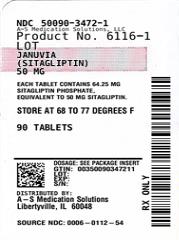
    Product: 50090-3472
    NDC: 50090-3472-1 90 TABLET, FILM COATED in a BOTTLE
    NDC: 50090-3472-0 30 TABLET, FILM COATED in a BOTTLE
    9PATIENT COUNSELING INFORMATION
    Advise the patient to read the FDA-approved patient labeling (
    10sitagliptin
    Label Image
    Januvia has been selected.