Flu Treatments
Find Flu Treatments
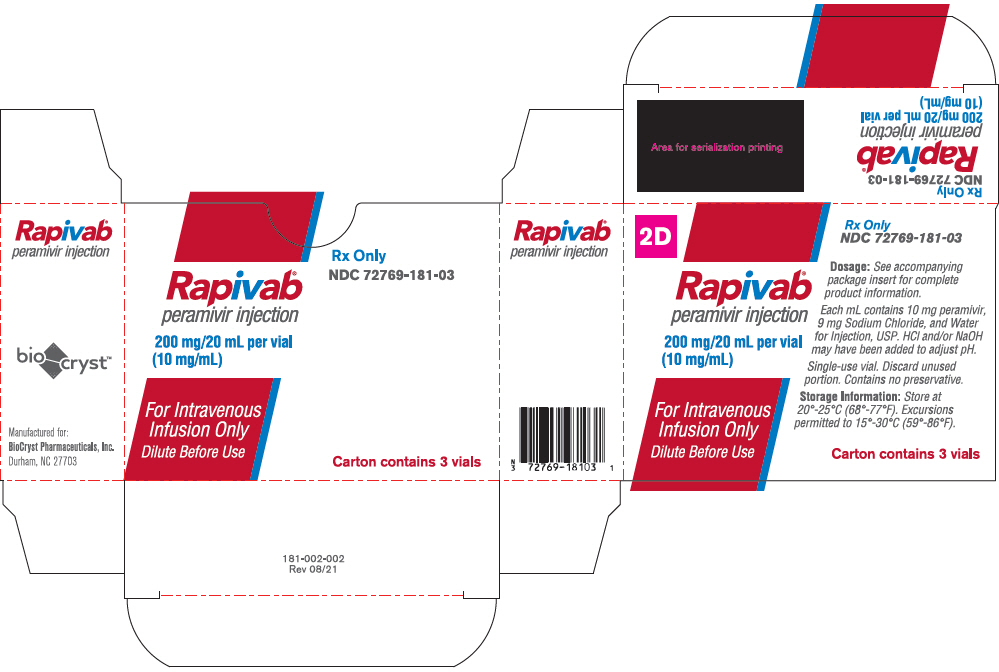
Rapivab
What is Rapivab (Peramivir)?
When influenza strikes, it can leave people bedridden with fever, chills, muscle aches, and exhaustion often disrupting work, school, and family life. For some, especially those with weakened immune systems or underlying health conditions, the flu can become far more serious, even life-threatening. Rapivab (peramivir) is a prescription antiviral medication designed to help patients recover faster from the flu and reduce its severity.
Rapivab belongs to a class of medications called neuraminidase inhibitors, which also includes oseltamivir (Tamiflu) and zanamivir (Relenza). What sets Rapivab apart is its intravenous (IV) formulation, allowing healthcare providers to administer it directly into the bloodstream for fast, effective treatment often in a single dose. It’s an important option for patients who cannot take oral medications or need rapid antiviral action, such as those hospitalized with acute influenza symptoms.
What does Rapivab do?
Rapivab is used to treat acute uncomplicated influenza (flu) in adults and children aged 6 months and older who have had symptoms for no more than two days. The medication helps shorten the duration of flu symptoms and may reduce the risk of complications when given early in the illness.
In clinical studies, Rapivab has been shown to reduce the length and intensity of flu symptoms by about one day compared to placebo (FDA, 2023). This might seem modest, but for patients at high risk such as older adults, pregnant women, or people with chronic diseases timely antiviral treatment can make a significant difference in recovery and comfort.
Rapivab is not a substitute for the annual flu vaccine, but it plays a vital role when infection occurs despite vaccination or when immediate antiviral therapy is needed. Doctors may also use it in certain severe or hospitalized cases when oral antivirals are not suitable.
How does Rapivab work?
Rapivab contains peramivir, which targets the neuraminidase enzyme, a key protein found on the surface of influenza viruses. When a virus infects a person, it multiplies inside cells and then uses this enzyme to release new virus particles, allowing the infection to spread throughout the body.
By blocking the neuraminidase enzyme, Rapivab prevents the virus from escaping infected cells, effectively stopping it from spreading further. This containment allows the immune system to catch up, helping the body clear the infection faster.
Clinically, this mechanism is important because it reduces viral load, the amount of virus in the body which can lead to milder symptoms and a quicker recovery. The intravenous route allows Rapivab to reach therapeutic levels in the bloodstream quickly, making it especially useful for patients who are vomiting, unconscious, or unable to swallow pills.
Rapivab side effects
Like all medications, Rapivab can cause side effects, though most are mild and temporary. Understanding these effects helps patients and caregivers feel confident and prepared during treatment.
Common side effects may include:
- Diarrhea
- Constipation
- Insomnia or trouble sleeping
- Cough or mild throat irritation
These symptoms are typically short-lived and resolve as the body adjusts.
Serious but uncommon side effects include:
- Allergic reactions such as rash, itching, or swelling
- Shortness of breath or difficulty breathing
- Confusion, hallucinations, or unusual behavior (rare but reported with antiviral drugs for influenza)
- Liver problems, indicated by yellowing of the skin or eyes (jaundice)
If any severe reaction occurs, patients should seek immediate medical attention.
Use Rapivab cautiously or avoid if you have severe kidney disease or allergies to peramivir or other neuraminidase inhibitors. It’s generally safe under medical supervision, with uncommon side effects, and aids flu recovery.
Rapivab dosage
Rapivab is a rapid, single-dose IV infusion (15-30 min) for flu, given in clinical settings. It’s typically for those who can’t take oral medication, have severe flu needing hospital care, or require a quick antiviral dose. Dosage may be adjusted for kidney impairment.
Before Rapivab administration, kidney function and overall health are assessed for safe dosing. Patients should not self-administer. Post-infusion, doctors monitor for rare allergic reactions. The treatment is generally well-tolerated, usually requiring a single infusion.
Does Rapivab have a generic version?
As of 2025, Rapivab (peramivir) does not have a generic version approved in the United States. It is marketed by BioCryst Pharmaceuticals and remains available only under its brand name. However, international versions may exist in other markets.
While peramivir is an internationally recognized active ingredient and may be available generically elsewhere, a U.S. FDA-approved generic would meet the same strict standards as the brand name. As Rapivab is typically a single-dose hospital treatment, the lack of a generic doesn’t significantly affect access, as insurance or hospital programs usually cover it for severe influenza.
Conclusion
Rapivab (peramivir) offers a fast, effective, and convenient way to treat influenza in patients who need hospital-based care or cannot take oral medications. By targeting the virus directly and preventing its spread within the body, it helps shorten illness duration, reduce symptom severity, and support quicker recovery.
Rapivab’s single-dose IV format offers a practical advantage for patients needing immediate treatment or those with difficulty taking oral antivirals. While side effects can occur, they are generally mild and manageable under professional supervision. As a reliable antiviral option, Rapivab provides healthcare providers with another tool to protect patients, especially those at high risk of complications. When prescribed and monitored appropriately, Rapivab is a safe and effective therapy that aids faster recovery and promotes confident return to health.
References
- U.S. Food and Drug Administration (FDA). (2023). Rapivab (peramivir) prescribing information. Retrieved from https://www.accessdata.fda.gov
- Mayo Clinic. (2024). Peramivir (intravenous route): Description and precautions. Retrieved from https://www.mayoclinic.org
- MedlinePlus. (2024). Peramivir injection: Uses and side effects. National Library of Medicine. Retrieved from https://medlineplus.gov
- Centers for Disease Control and Prevention (CDC). (2024). Antiviral drugs for influenza: Summary for clinicians. Retrieved from https://www.cdc.gov
Approved To Treat


Related Clinical Trials
Summary: This trial will use a previously validated platform, to quantitatively assess antiviral effects in low-risk patients with high viral burdens and uncomplicated influenza, to determine in-vivo antiviral activity. In this randomised, open-label, controlled, group sequential, adaptive, platform trial, we will compare the performance of available influenza antivirals, and those with potential activity,...
Summary: This study is designed to help us better understand how the immune system responds to the flu and how flu is transmitted in the environment. The ultimate goal is to develop better vaccines and drugs to protect against or fight the flu. This study will describe how the body's immune system responds to the flu virus during and after infection and how the flu virus is transmitted in the environment. ...
Related Latest Advances
Brand Information
- Serious skin and hypersensitivity reactions
- Neuropsychiatric events

- There is a risk of severe allergic reactions (including anaphylaxis) or serious skin reactions with RAPIVAB use. Advise patients to seek immediate medical attention if an allergic-like reaction occurs or is suspected
- There is a risk of neuropsychiatric events in patients with influenza. Patients should contact their physician if they experience signs of abnormal behavior after receiving RAPIVAB