Urinary Incontinence Treatments
Find Urinary Incontinence Treatments
VESIcare
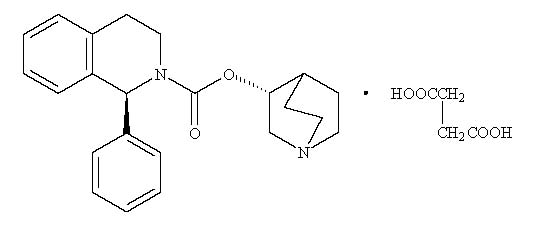
What is VESIcare (Solifenacin)?
Approved To Treat


Related Clinical Trials
Summary: The primary objective is to evaluate if (1) combination therapy of solifenacin and mirabegron in low doses is superior to monotherapy of solifenacin in high dose and if (2) combination therapy of mirabegron and solifenacin in low doses is superior to monotherapy of mirabegron in high dose in treatment of daytime urinary incontinence among children aged 5 to 14 years who are none complete responder...
Summary: Double-J ureteral stents are commonly inserted after ureteroscopy, but they may cause bothersome urinary symptoms, pain, sleep disturbance, and reduced quality of life. This prospective randomized assessor-blinded three-arm clinical trial will compare oral solifenacin, oral melatonin, and their combination for improving ureteral stent-related symptoms in adult patients after unilateral ureteroscop...
Summary: The purpose of this clinical trial is to investigate whether adding high-dose vitamin D (2,400 IU daily) to standard medical treatment (solifenacin combined with behavioral therapy) is more effective than standard treatment alone for children with overactive bladder-wet (OAB-wet). OAB-wet causes sudden urinary urges and frequent daytime or incontinence, which significantly impacts a child's qualit...
Related Latest Advances
Brand Information
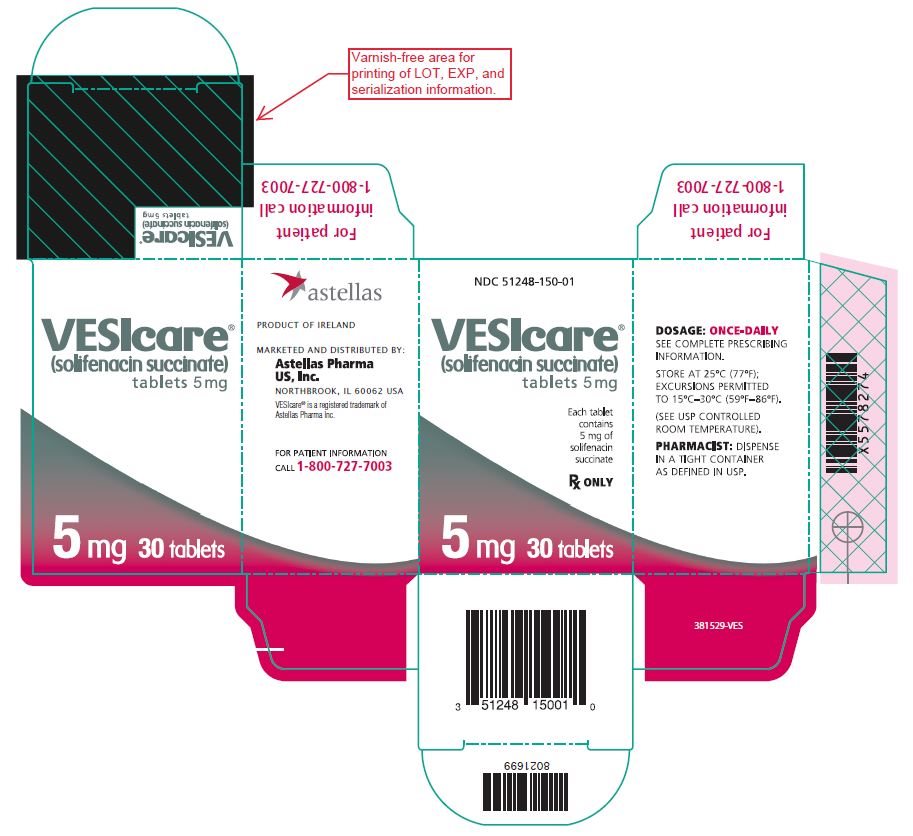
- 5 mg: round, light yellow, debossed with 150
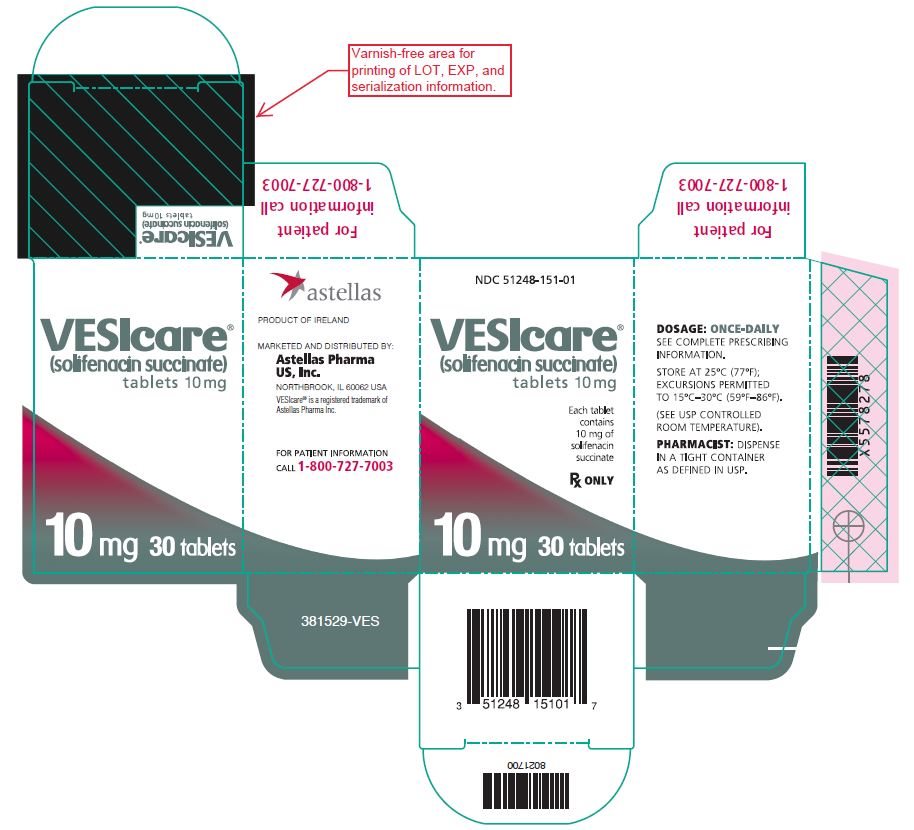
- 10 mg: round, light pink, debossed with 151
- With urinary retention
- With gastric retention
- With uncontrolled narrow-angle glaucoma
- Who have demonstrated hypersensitivity to solifenacin succinate or the inactive ingredients in VESIcare. Reported adverse reactions have included anaphylaxis and angioedema
- Bottle of 30 NDC 51248-150-01
- Bottle of 30 NDC 51248-151-01
- Bottle of 90 NDC 51248-151-03