Uterine Fibroids Treatments
Find Uterine Fibroids Treatments
MedroxyPROGESTERone Acetate
What is Depo-Provera (MedroxyPROGESTERone Acetate)?
Top Global Experts


Related Clinical Trials
Summary: The study hopes to learn the best way to prevent internal scar tissue after septum removal. The use of an intrauterine foley catheter balloon may prevent the formation of adhesions following surgery.
Summary: To see if Gonadotropin-releasing hormone analogue (GnRHa) combined with aromatase inhibitors (AIs) will achieve better complete response rate than megestrol acetate or medroxyprogesterone acetate (MA/MPA) alone as fertility-sparing treatment for patients with early endometrial carcinoma.
Summary: This research is being conducted to see if using an injectable contraception, Depot Medroxyprogesterone Acetate (Depo-Provera), can reduce the pain experienced by women with sickle cell disease. Participants in this study will be adult women with sickle cell disease who regularly experience sickle cell pain. They will complete a 3-month baseline with no use of hormonal contraception, and then a 3-...
Related Latest Advances
Brand Information
- Women who use Depo-Provera Contraceptive Injection (Depo-Provera CI) may lose significant bone mineral density. Bone loss is greater with increasing duration of use and may not be completely reversible
- It is unknown if use of Depo-Provera CI during adolescence or early adulthood, a critical period of bone accretion, will reduce peak bone mass and increase the risk for osteoporotic fracture in later life
- Depo-Provera CI is not recommended as a long-term (i.e., longer than 2 years) birth control method unless other options are considered inadequate
- Active thrombophlebitis, or current or history of thromboembolic disorders, or cerebral vascular disease
- Known or suspected malignancy of breast
- Known hypersensitivity to Depo-Provera CI (medroxyprogesterone acetate) or any of its other ingredients
- Significant liver disease
- Undiagnosed vaginal bleeding
- Loss of Bone Mineral Density
- Thromboembolic disease
- Breast Cancer
- Anaphylaxis and Anaphylactoid Reactions
- Bleeding Irregularities
- Weight Gain
- Table 3. Adverse Reactions Reported during Post-Marketing Experience
- * Body System represented from COSTART medical dictionary.
- † Injection site abscess and injection site infections have been reported; therefore, strict aseptic injection technique should be followed when administering Depo‑Provera CI in order to avoid injection site infections [see

- Li CI, Beaber EF, Tang, MCT et al. Effect of Depo-Medroxyprogesterone Acetate on Breast Cancer Risk among Women 20 to 44 years of Age. Cancer Research 2012;72:2028–2035.
- Paul C, Skegg DCG, Spears GFS. Depot medroxyprogesterone (Depo-Provera) and risk of breast cancer. Br Med J 1989; 299:759–62.
- Advise patients at the beginning of treatment that their menstrual cycle may be disrupted and that irregular and unpredictable bleeding or spotting results, and that this usually decreases to the point of amenorrhea as treatment with Depo-Provera CI continues, without other therapy being required.
- Counsel patients about the possible increased risk of breast cancer in women who use Depo-Provera CI
- Counsel patients with a history of meningioma about the possible risk of worsening meningioma
- Counsel patients that this product does not protect against HIV infection (AIDS) and other sexually transmitted infections.
- Counsel patients on Warnings and Precautions associated with use of Depo-Provera CI.
- Counsel patients to use a back-up method or alternative method of contraception when enzyme inducers are used with Depo-Provera CI.
(medroxyprogesterone acetate injectable suspension)
Contraceptive Injection
- Use of Depo-Provera CI may cause you to lose calcium stored in your bone and decrease your bone mass. The longer you use Depo-Provera CI, the greater your loss of calcium from your bones. Your bones may not recover completely when you stop using Depo-Provera CI.
- If you use Depo-Provera CI continuously for a long time (for more than 2 years), it may increase the risk of weak, porous bones (osteoporosis) that could increase the risk of broken bones, especially after menopause.
- You should not use Depo-Provera CI for more than two years unless you cannot use other birth control methods.
- It is not known if your risk of developing osteoporosis is greater if you are a teenager or young adult when you start to use Depo-Provera CI (see "
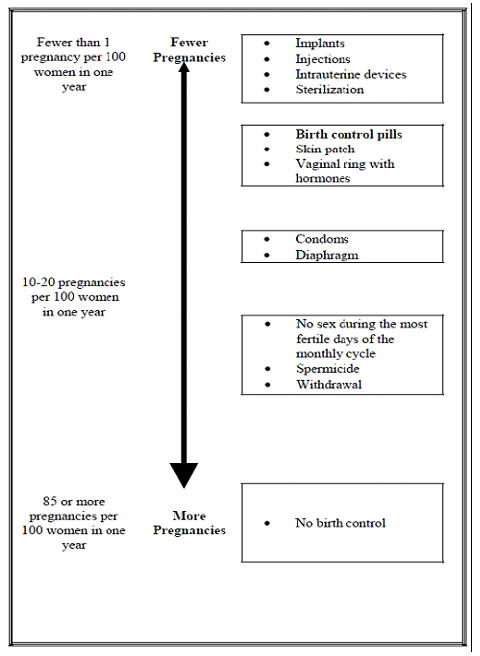
- Depo-Provera CI is given by your healthcare professional as a shot into your muscle (intramuscular injection). The shot is given in your buttock or upper arm 1 time every 3 months. At the end of the 3 months, you will need to return to your healthcare professional for your next injection in order to continue your protection against pregnancy
- To make sure that you are not pregnant before you take Depo-Provera CI, the first injection should be given only:
- during the first 5 days of a normal menstrual period, or
- within the first 5 days after giving birth,
- at the 6th week after giving birth,
- Depo-Provera CI may be given at other times than those listed above, but you will likely need to have a pregnancy test first to show that you are not pregnant.
- During treatment with Depo-Provera CI, you should see your healthcare professional every year for a blood pressure check and other healthcare needs.
- have bleeding from your vagina that has not been explained
- have breast cancer now or in the past, or think you have breast cancer
- have had a stroke
- ever had blood clots in your arms, legs or lungs
- have problems with your liver or liver disease
- are allergic to medroxyprogesterone acetate or any of the other ingredients in Depo-Provera CI. See the end of this leaflet for a complete list of ingredients in Depo-Provera CI.
- risk factors for weak bones (osteoporosis) such as bone disease, use alcohol or smoke regularly, anorexia nervosa, or a strong family history of osteoporosis
- irregular or lighter than usual menstrual periods
- breast cancer now or in the past, or think you have breast cancer
- a family history of breast cancer
- an abnormal mammogram (breast X-ray), lumps in your breasts, or bleeding from your nipples
- have or have ever had a type of usually benign brain tumor called a meningioma
- kidney problems
- high blood pressure
- had a stroke
- had blood clots in your arms, legs or lungs
- migraine headaches
- asthma
- epilepsy (convulsions or seizures)
- diabetes
- depression or a history of depression
- any other medical conditions
- medicine to help you sleep
- bosentan
- medicine for seizures
- griseofulvin
- an antibiotic
- medicine for HIV (AIDS)
- St. John's wort
- Effect on the bones: See "
- If you need a birth control method for more than 2 years, your healthcare professional may switch you to another birth control method instead of using Depo-Provera CI. If you continue using Depo-Provera CI, your healthcare professional may ask you to have a bone test, especially if you have other risks for weak bones.
- When Depo-Provera CI is stopped, your bones may start to regain calcium. However, in a study of teenage girls who used Depo-Provera CI for more than 2 years, their hip bones did not completely recover by 5 years after they stopped using Depo-Provera CI. Taking calcium and Vitamin D and exercising daily may lessen the loss of calcium from your bones.
- possible increased risk of breast cancer. Women who use Depo-Provera CI may have a slightly increased risk of breast cancer compared to non-users.
- blood clots in your arms, legs, lungs, and eyes
- stroke
- a pregnancy outside of your uterus (ectopic pregnancy). Ectopic pregnancy is a medical emergency that often requires surgery. Ectopic pregnancy can cause internal bleeding, infertility, and even death.
- allergic reactions. Severe allergic reactions have been reported in some women using Depo-Provera CI.
- loss of vision or other eye problems
- migraine headaches
- possible increased risk for growth of a meningioma (a usually benign brain tumor), primarily when the product is used for a long time.
- depression
- convulsions or seizures
- liver problems
- sharp chest pain, coughing up blood, or sudden shortness of breath (indicating a possible clot in the lung)
- sudden severe headache or vomiting, dizziness or fainting, problems with your eyesight or speech, weakness, or numbness in an arm or leg (indicating a possible stroke)
- severe pain or swelling in the calf (indicating a possible clot in the leg)
- sudden blindness, partial or complete (indicating a possible clot in the blood vessels of the eye)
- unusually heavy vaginal bleeding
- severe pain or tenderness in the lower abdominal area
- persistent pain, pus, or bleeding at the injection site
- yellowing of the eyes or skin
- hives
- difficulty breathing
- swelling of the face, mouth, tongue or neck
- irregular vaginal bleeding, such as lighter or heavier menstrual bleeding, or continued spotting
- weight gain. You may experience weight gain while you are using Depo-Provera CI. About two-thirds of the women who used Depo-Provera CI in the clinical trials reported a weight gain of about 5 pounds during the first year of use. You may continue to gain weight after the first year. Women who used Depo-Provera CI for 2 years gained an average of 8 pounds over those 2 years.
- abdominal pain
- headache
- weakness
- tiredness
- nervousness
- dizziness
- Pregnancy. When you take Depo-Provera CI every 3 months, your chance of getting pregnant is very low. You could miss a period or have a light period and not be pregnant. If you miss 1 or 2 periods and think you might be pregnant, see your healthcare professional as soon as possible. You should not use Depo-Provera CI if you are pregnant. However, Depo-Provera CI taken by accident during pregnancy does not seem to cause birth defects.
- Nursing Mothers. Although Depo-Provera CI can be passed to the nursing baby in the breast milk, no harmful effects on babies have been found. Depo-Provera CI does not stop the breasts from producing milk, so it can be used by nursing mothers. However, to minimize the amount of Depo-Provera CI that is passed to the baby in the first weeks after birth, you should wait until your baby is 6 weeks old before you start using Depo-Provera CI for birth control.
- Change in normal menstrual cycle. The side effect reported most frequently by women who use Depo-Provera CI for birth controls is a change in their normal menstrual cycle. During the first year of using Depo-Provera CI, you might have one or more of the following changes:
- irregular or unpredictable bleeding or spotting
- an increase or decrease in menstrual bleeding
- no bleeding at all. In clinical studies of Depo-Provera CI, 55% of women reported no menstrual bleeding (amenorrhea) after one year of use and 68% of women reported no menstrual bleeding after two years of use.
- Missed period. During the time you are using Depo-Provera CI for birth controls, you may skip a period, or your periods may stop completely. If you have been receiving your shot of Depo-Provera CI regularly every 3 months, then you are probably not pregnant. However, if you think that you may be pregnant, see your healthcare professional.

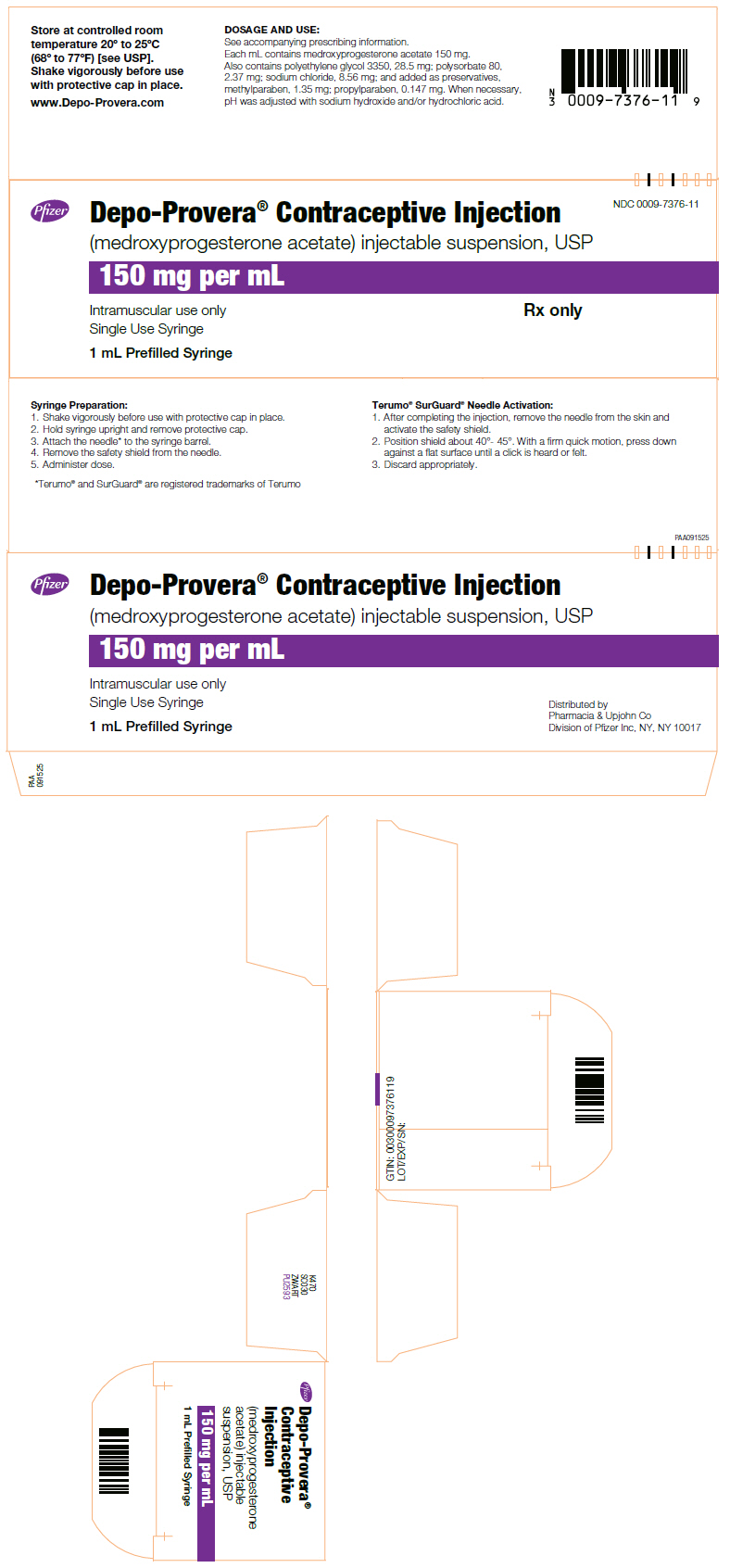
Contraceptive
Injection

Contraceptive
Injection
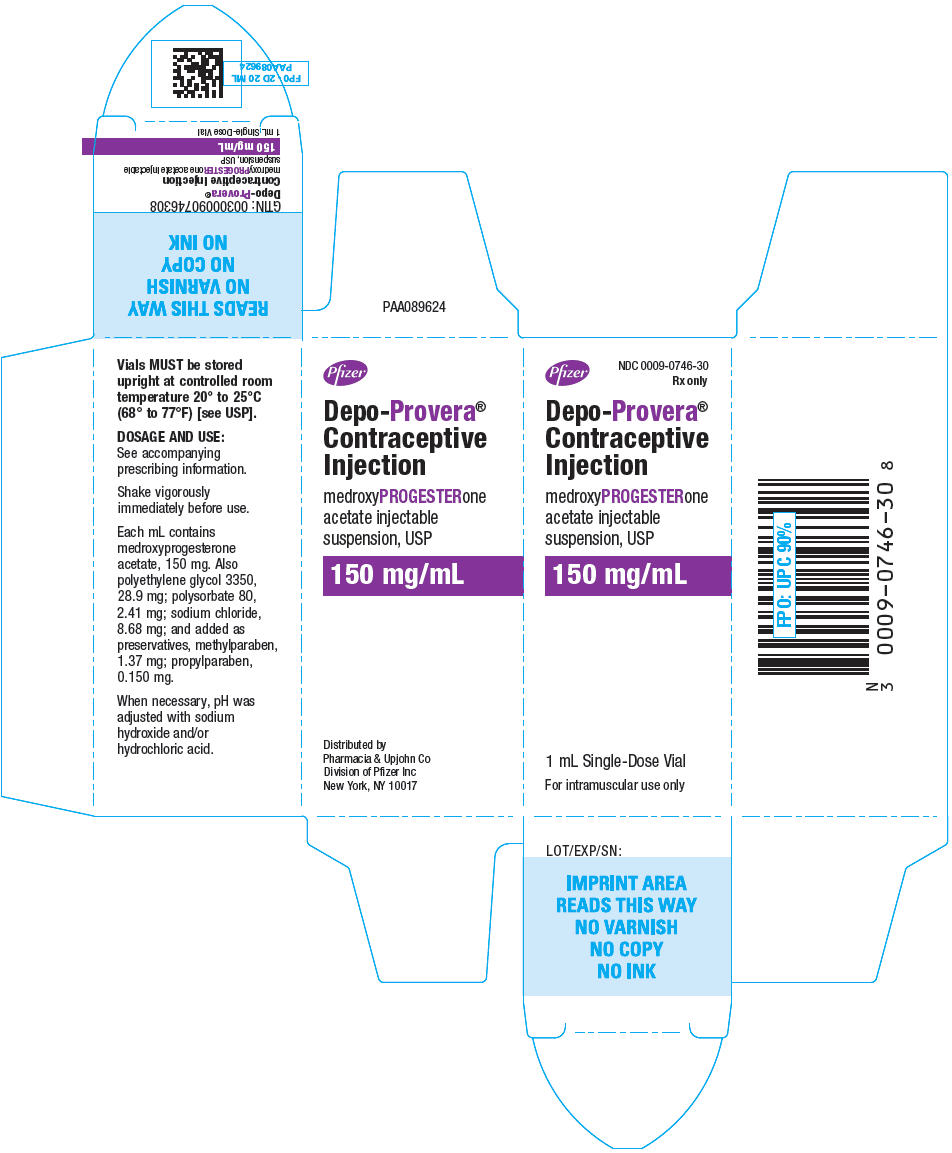
NDC 0009-7376-11
Rx only
Contraceptive Injection
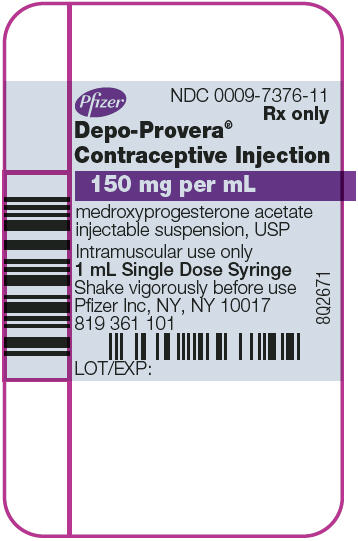
Depo-Provera
(medroxyprogesterone acetate) injectable suspension, USP