Viral Gastroenteritis Treatments

Find Viral Gastroenteritis Treatments

Generic Name

Sulfasalazine

Brand Names
Azulfidine, Azulfidine EN-tabs
FDA approval date: June 20, 1950
Classification: Aminosalicylate
Form: Tablet

What is Azulfidine (Sulfasalazine)?

AZULFIDINE Tablets are indicated: a) in the treatment of mild to moderate ulcerative colitis, and as adjunctive therapy in severe ulcerative colitis; and b) for the prolongation of the remission period between acute attacks of ulcerative colitis.
Save this treatment for later
Sign Up
Not sure about your diagnosis?
Check Your Symptoms
Tired of the same old research?
Check Latest Advances

Related Clinical Trials

Treatment of Rheumatoid Arthritis With Disease-modifying Antirheumatic Drugs (DMARDs): Predictors of Response

Summary: Rheumatoid arthritis (RA) is a common disease with approximately 1% prevalence. RA is also a chronic, progressive disease with no cure. Current treatment goals are to minimize pain, limit joint damage, and prevent loss of function. Drugs used to treat RA include non-steroidal anti-inflammatory drugs (NSAIDS), glucocorticoids, and disease-modifying anti-rheumatic drugs (DMARDs), including biologics...

The Effect of Sulfasalazine on CRH Levels in Pregnant Women With a History of Pre-Term Birth: A Randomized Controlled Trial

Summary: The goal of this randomized clinical trial is to assess sulfasalazine as a potential treatment to prevent recurrent preterm birth. The main questions it aims to answer are: * Does sulfasalazine down regulate corticotropin releasing hormone (CRH) levels in pregnant persons with a prior history of preterm birth? * Does sulfasalazine reduce the incidence of recurrent preterm birth in pregnant persons...

Randomized Controlled Clinical Trial Evaluating Methotrexate or Leflunomide + Targeted Therapy Versus Methotrexate or Leflunomide + Sulfasalazine + Hydroxychloroquine in Patients With Rheumatoid Arthritis and Insufficient Response to Methotrexate or Leflunomide

Summary: Approximately, 40 to 50% of patients with rheumatoid arthritis (RA), the most frequent inflammatory arthritide, are non responders to the consensual 1st line of treatment : methotrexate. In these patients, it is well demonstrated that the addition of other immunomodulatory drug(s) often results in a significant improvement. However, the best option regarding the drug(s) to add remains unclear. Rhe...

Brand Information

    Azulfidine (Sulfasalazine)
    1DESCRIPTION
    AZULFIDINE Tablets contain sulfasalazine, 500 mg, for oral administration.
    Therapeutic Classification: Anti-inflammatory agent.
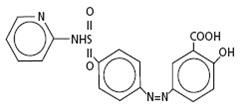
    Chemical Designation: 5-([p-(2-pyridylsulfamoyl)phenyl]azo) salicylic acid.
    Chemical Structure:
    Chemical Structure
    Molecular Formula: C18H14N4O5S
    Inactive ingredients: magnesium stearate, povidone, silica (colloidal anhydrous), starch (pregelatinized).
    2INDICATIONS AND USAGE
    AZULFIDINE Tablets are indicated:
    • in the treatment of mild to moderate ulcerative colitis, and as adjunctive therapy in severe ulcerative colitis; and
    • for the prolongation of the remission period between acute attacks of ulcerative colitis.
    3CONTRAINDICATIONS
    AZULFIDINE Tablets are contraindicated in:
    • Patients with intestinal or urinary obstruction,
    • Patients with porphyria as sulfonamides have been reported to precipitate an acute attack,
    • Patients hypersensitive to sulfasalazine, its metabolites, sulfonamides, or salicylates.
    4ADVERSE REACTIONS
    The most common adverse reactions associated with sulfasalazine are anorexia, headache, nausea, vomiting, gastric distress, and apparently reversible oligospermia. These occur in about one-third of the patients. Less frequent adverse reactions are skin rash, pruritus, urticaria, fever, Heinz body anemia, hemolytic anemia, and cyanosis, which may occur at a frequency of one in every thirty patients or less. Experience suggests that with a daily dosage of 4 g or more, or total serum sulfapyridine levels above 50 µg/mL, the incidence of adverse reactions tends to increase.
    Although the listing which follows includes a few adverse reactions which have not been reported with this specific drug, the pharmacological similarities among the sulfonamides require that each of these reactions be considered when AZULFIDINE Tablets are administered. Less common or rare adverse reactions include:
    Blood dyscrasias: aplastic anemia, agranulocytosis, leukopenia, megaloblastic (macrocytic) anemia, purpura, thrombocytopenia, hypoprothrombinemia, methemoglobinemia, congenital neutropenia, and myelodysplastic syndrome.
    Hypersensitivity reactions: erythema multiforme, epidermal necrolysis (SJS/TEN) with corneal damage, exfoliative dermatitis, DRESS, anaphylaxis, serum sickness syndrome, interstitial lung disease, pneumonitis with or without eosinophilia, vasculitis, fibrosing alveolitis, pleurisy/pleuritis, pericarditis with or without tamponade, allergic myocarditis, polyarteritis nodosa, lupus erythematosus-like syndrome, hepatitis and hepatic necrosis with or without immune complexes, fulminant hepatitis, sometimes leading to liver transplantation, parapsoriasis varioliformis acuta (Mucha-Haberman syndrome), rhabdomyolysis, photosensitization, arthralgia, periorbital edema, conjunctival and scleral injection, and alopecia.
    Gastrointestinal reactions: hepatitis, hepatic failure, pancreatitis, bloody diarrhea, impaired folic acid absorption, impaired digoxin absorption, stomatitis, diarrhea, abdominal pains, and neutropenic enterocolitis.
    Central nervous system reactions: transverse myelitis, convulsions, meningitis, transient lesions of the posterior spinal column, cauda equina syndrome, Guillian-Barre syndrome, peripheral neuropathy, mental depression, vertigo, hearing loss, insomnia, ataxia, hallucinations, tinnitus, and drowsiness.
    Renal reactions: toxic nephrosis with oliguria and anuria, nephritis, nephrotic syndrome, urinary tract infections, hematuria, crystalluria, proteinuria, and hemolytic-uremic syndrome.
    Other reactions: urine discoloration and skin discoloration.
    The sulfonamides bear certain chemical similarities to some goitrogens, diuretics (acetazolamide and the thiazides), and oral hypoglycemic agents. Goiter production, diuresis and hypoglycemia have occurred rarely in patients receiving sulfonamides. Cross-sensitivity may exist with these agents. Rats appear to be especially susceptible to the goitrogenic effects of sulfonamides and long-term administration has produced thyroid malignancies in this species.
    4.1Postmarketing Reports
    The following events have been identified during post-approval use of products which contain (or are metabolized to) mesalamine in clinical practice. Because they are reported voluntarily from a population of unknown size, estimates of frequency cannot be made. These events have been chosen for inclusion due to a combination of seriousness, frequency of reporting, or potential causal connection to mesalamine:
    Blood dyscrasias: pseudomononucleosis
    Cardiac disorders: myocarditis
    Hepatobiliary disorders: reports of hepatotoxicity, including elevated liver function tests (SGOT/AST, SGPT/ALT, GGT, LDH, alkaline phosphatase, bilirubin), jaundice, cholestatic jaundice, cirrhosis, hepatitis cholestatic, cholestasis and possible hepatocellular damage including liver necrosis and liver failure. Some of these cases were fatal. One case of Kawasaki-like syndrome, which included hepatic function changes, was also reported.
    Immune system disorders: anaphylaxis
    Metabolism and nutrition system disorders: folate deficiency
    Renal and urinary disorders: nephrolithiasis
    Respiratory, thoracic and mediastinal disorders: oropharyngeal pain
    Skin and subcutaneous tissue disorders: angioedema, purpura, SJS/TEN, DRESS, and AGEP
    Vascular disorders: pallor
    5DRUG ABUSE AND DEPENDENCE
    None reported.
    6OVERDOSAGE
    There is evidence that the incidence and severity of toxicity following overdosage are directly related to the total serum sulfapyridine concentration. Symptoms of overdosage may include nausea, vomiting, gastric distress, and abdominal pains. In more advanced cases, central nervous system symptoms such as drowsiness, convulsions, etc., may be observed. Serum sulfapyridine concentrations may be used to monitor the progress of recovery from overdosage.
    There are no documented reports of deaths due to ingestion of large single doses of sulfasalazine.
    Doses of Azulfidine tablets of 16 g per day have been given to patients without mortality. A single oral dose of 12 g/kg was not lethal to mice.
    6.1Instructions for Overdosage
    Gastric lavage or emesis plus catharsis as indicated. Alkalinize urine. If kidney function is normal, force fluids. If anuria is present, restrict fluids and salt, and treat appropriately. Catheterization of the ureters may be indicated for complete renal blockage by crystals. The low molecular weight of sulfasalazine and its metabolites may facilitate their removal by dialysis.
    7DOSAGE AND ADMINISTRATION
    The dosage of AZULFIDINE Tablets should be adjusted to each individual's response and tolerance.
    7.1Initial Therapy
    Adults: 3 to 4 g daily in evenly divided doses with dosage intervals not exceeding eight hours. In some cases, it is advisable to initiate therapy with a smaller dosage, e.g., 1 to 2 g daily, to reduce possible gastrointestinal intolerance. If daily doses exceeding 4 g are required to achieve desired effects, the increased risk of toxicity should be kept in mind.
    Children, six years of age and older: 40 to 60 mg/kg body weight in each 24-hour period, divided into 3 to 6 doses.
    7.2Maintenance Therapy
    Adults: 2 g daily.
    Children, six years of age and older: 30 mg/kg body weight in each 24-hour period, divided into 4 doses.
    The response of acute ulcerative colitis to AZULFIDINE Tablets can be evaluated by clinical criteria, including the presence of fever, weight changes, and degree and frequency of diarrhea and bleeding, as well as by sigmoidoscopy and the evaluation of biopsy samples. It is often necessary to continue medication even when clinical symptoms, including diarrhea, have been controlled. When endoscopic examination confirms satisfactory improvement, the dosage of AZULFIDINE should be reduced to a maintenance level. If diarrhea recurs, the dosage should be increased to previously effective levels. If symptoms of gastric intolerance (anorexia, nausea, vomiting, etc.) occur after the first few doses of AZULFIDINE, they are probably due to increased serum levels of total sulfapyridine and may be alleviated by halving the daily dose of AZULFIDINE and subsequently increasing it gradually over several days. If gastric intolerance continues, the drug should be stopped for 5 to 7 days, then reintroduced at a lower daily dose.
    Some patients may be sensitive to treatment with sulfasalazine. Various desensitization-like regimens have been reported to be effective in 34 of 53 patients,
    8HOW SUPPLIED
    AZULFIDINE Tablets, 500 mg, are round, gold-colored, scored tablets, monogrammed "101" on one side and "KPh" on the other. They are available in the following package sizes:
    Store at 25° C (77° F); excursions permitted to 15–30° C (59–86° F) [see USP Controlled Room Temperature].
    Sulfasalazine is also available as AZULFIDINE EN-tabs
    9REFERENCES
    1. Mogadam M, et al. Pregnancy in inflammatory bowel disease: effect of sulfasalazine and corticosteroids on fetal outcome. Gastroenterology 1981;80:72–6.
    2. Kaufman DW, editor. Birth defects and drugs during pregnancy. Littleton, MA: Publishing Sciences Group, Inc, 1977: 296–313.
    3. Jarnerot G. Fertility, sterility and pregnancy in chronic inflammatory bowel disease. Scand J Gastroenterol 1982;17:1–4.
    4. Korelitz B, et al. Desensitization to sulfasalazine in allergic patients with IBD: an important therapeutic modality. Gastroenterology 1982;82:1104.
    5. Holdworth CG. Sulphasalazine desensitization. Br Med J 1981;282:110.
    6. Taffet SL, Das KM. Desensitization of patients with inflammatory bowel disease to sulfasalazine. Am J Med 1982;73:520–4.
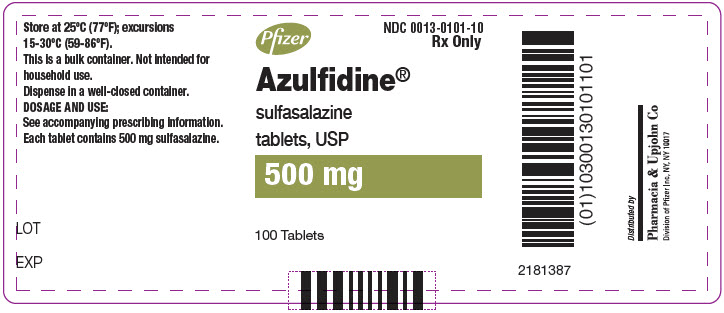
    10PRINCIPAL DISPLAY PANEL - 500 mg Tablet Bottle Label
    Pfizer
    Azulfidine
    sulfasalazine
    500 mg
    100 Tablets
    PRINCIPAL DISPLAY PANEL - 500 mg Tablet Bottle Label
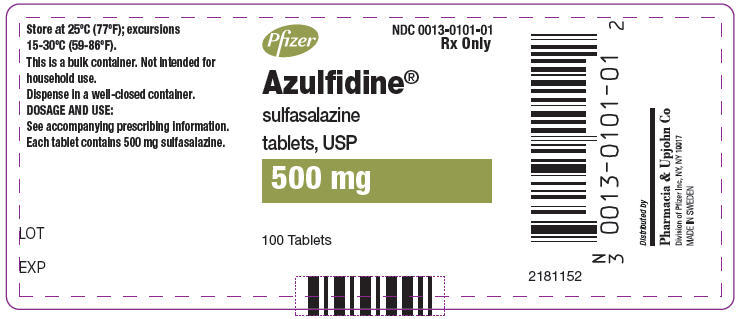
    11PRINCIPAL DISPLAY PANEL - 500 mg Tablet Bottle Label - 0101-10
    Pfizer
    Azulfidine
    (sulfasalazine)
    500 mg
    100 Tablets
    PRINCIPAL DISPLAY PANEL - 500 mg Tablet Bottle Label - 0101-10
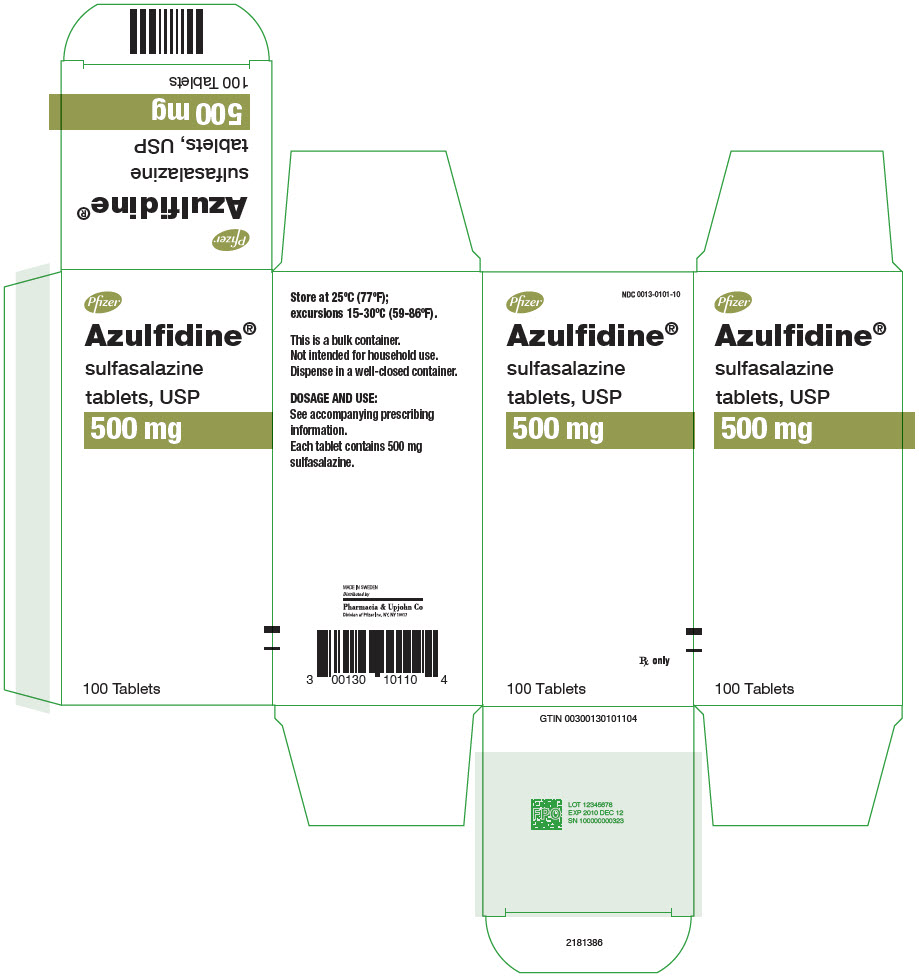
    12PRINCIPAL DISPLAY PANEL - 500 mg Tablet Bottle Carton - 0101-10
    Pfizer
    Azulfidine
    (sulfasalazine)
    500 mg
    Rx only
    100 Tablets
    PRINCIPAL DISPLAY PANEL - 500 mg Tablet Bottle Carton - 0101-10