Tacrolimus
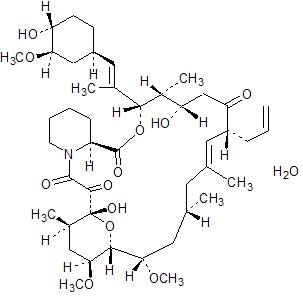
What is Envarsus (Tacrolimus)?
Approved To Treat


Related Clinical Trials
Summary: This phase II trial studies how well naive T-cell depletion works in preventing chronic graft-versus-host disease in children and young adults with blood cancers undergoing donor stem cell transplant. Sometimes the transplanted white blood cells from a donor attack the body's normal tissues (called graft versus host disease). Removing a particular type of T cell (naive T cells) from the donor cell...
Summary: The purpose of this study is to assess Tacrolimus/Methotrexate/Ruxolitinib versus Post-Transplant Cyclophosphamide/Tacrolimus/Mycophenolate Mofetil in Non-Myeloablative/Reduced Intensity Conditioning Allogeneic Peripheral Blood Stem Cell Transplantation
Background: \- GATA2 deficiency is a disease caused by mutations in the GATA2 gene. It can cause different types of leukemia and other diseases. Researchers want to see if a stem cell transplant can be used to treat this condition. A stem cell transplant will give stem cells from a matching donor (related or unrelated) to a recipient. It will allow the donor stem cells to produce healthy bone marrow and blood...
Related Latest Advances
Brand Information
- 0.75 mg extended-release tablet: debossed with “0.75” on the other side.
- 1 mg extended-release tablet: debossed with “1” on the other side.
- 4 mg extended-release tablet: debossed with “4” on the other side.
- Lymphoma and Other Malignancies
- Serious Infections
- New Onset Diabetes after Transplant
- Nephrotoxicity due to ENVARSUS XR and Drug Interactions
- Neurotoxicity
- Hyperkalemia
- Hypertension
- QT Prolongation
- Pure Red Cell Aplasia
- Thrombotic Microangiopathy, Including Hemolytic Uremic Syndrome and Thrombotic Thrombocytopenic Purpura
- Blood and Lymphatic System Disorders: Agranulocytosis, decreased blood fibrinogen, disseminated intravascular coagulation, hemolytic anemia, hemolytic uremic syndrome, leukopenia, febrile neutropenia, pancytopenia, prolonged activated partial thromboplastin time, pure red cell aplasia
- Cardiac Disorders: Atrial fibrillation, atrial flutter, cardiac arrhythmia, cardiac arrest, electrocardiogram T wave abnormal, flushing, myocardial hypertrophy, myocardial infarction, myocardial ischaemia, pericardial effusion, QT prolongation, supraventricular extrasystoles, supraventricular tachycardia,
- Ear Disorders: Hearing loss including deafness
- Eye Disorders: Blindness, optic neuropathy, photophobia, optic atrophy
- Gastrointestinal Disorders: Abdominal pain, colitis, dysphagia, gastrointestinal perforation, impaired gastric emptying, intestinal obstruction, mouth ulceration, peritonitis, stomach ulcer
- Hepatobiliary Disorders: Bile duct stenosis, cholangitis, cirrhosis, fatty liver, hepatic cytolysis, hepatic failure, hepatic necrosis, hepatic steatosis, jaundice, hemorrhagic pancreatitis, necrotizing pancreatitis, venoocclusive liver disease, hepatitis (acute and chronic)
- Hypersensitivity Reactions: Hypersensitivity, Stevens-Johnson syndrome, toxic epidermal necrolysis, urticaria
- Immune System Disorders: Graft versus host disease (acute and chronic)
- Metabolism and Nutrition Disorders: Glycosuria, increased amylase, pancreatitis
- Musculoskeletal and Connective Tissue Disorders: Myalgia, polyarthritis, rhabdomyolysis
- Neoplasms: Lymphoma including EBV-associated lymphoproliferative disorder, PTLD
- Nervous System Disorders: Carpal tunnel syndrome, cerebral infarction, coma, dysarthria, flaccid paralysis, hemiparesis, mental disorder, mutism, nerve compression, posterior reversible encephalopathy syndrome (PRES)
- Renal and Urinary Disorder: Acute renal failure, hemorrhagic cystitis, hemolytic uremic syndrome, micturition disorder
- Respiratory, Thoracic and Mediastinal Disorders: Acute respiratory distress syndrome, interstitial lung disease, lunginfiltration, pulmonary embolism, pulmonary hypertension, respiratory distress, respiratory failure
- Skin and Subcutaneous Tissue Disorders: Hyperpigmentation, photosensitivity, pruritus, rash
- nervous system disorders (tremor, headache, confusional state, balance disorders, encephalopathy, lethargy andsomnolence)
- gastrointestinal disturbances (nausea, vomiting, and diarrhea)
- abnormal renal function (increased blood urea nitrogen and elevated serum creatinine)
- urticaria
- hypertension
- peripheral edema, and
- infections (one fatal postmarketing case of bilateral pneumopathy and CMV infection was attributed totacrolimus extended-release capsules overdose).
Store at 25 °C (77 °F); excursions permitted to 15 °C to 30 °C (59 °F to 86 °F) [see USP Controlled Room Temperature].
- Inspect their ENVARSUS XR medicine when they receive a new prescription and before taking it. If the appearanceof the tablet is not the same as usual, or if dosage instructions have changed, advise patients to contact theirhealthcare provider as soon as possible to make sure that you have the right medicine. Other tacrolimus productscannot be substituted for ENVARSUS XR
- Take once-daily ENVARSUS XR at the same time every day (preferably in the morning) on an empty stomach. atleast 1 hour before or at least 2 hours after a meal to ensure consistent and maximum possible drug concentrations inthe blood.
- Swallow tablet whole with liquid, preferably water. Do not chew, divide or crush tablet.
- Avoid alcoholic beverages, grapefruit, and grapefruit juice while on ENVARSUS XR
- Take a missed dose as soon as possible but not more than 15 hours after the scheduled time (i.e., for a missed 8 AMdose, take it no later than 10 PM). Beyond the 15-hour timeframe, instruct the patient to wait until the usualscheduled time the following morning to take the next regularly scheduled dose. Do not take two doses at the sametime