Brand Name

Baraclude

Generic Name
Entecavir
View Brand Information
FDA approval date: March 29, 2005
Classification: Hepatitis B Virus Nucleoside Analog Reverse Transcriptase Inhibitor
Form: Tablet, Solution

What is Baraclude (Entecavir)?

Entecavir tablets are indicated for the treatment of chronic hepatitis B virus infection in adults and pediatric patients 2 years of age and older with evidence of active viral replication and either evidence of persistent elevations in serum aminotransferases or histologically active disease. Entecavir is a hepatitis B virus nucleoside analogue reverse transcriptase inhibitor indicated for the treatment of chronic hepatitis B virus infection in adults and children at least 2 years of age with evidence of active viral replication and either evidence of persistent elevations in serum aminotransferases or histologically active disease.

Approved To Treat

Save this treatment for later
Sign Up
Not sure about your diagnosis?
Check Your Symptoms

Related Clinical Trials

Long-term Outcomes of Anti-viral Therapies in Patients With Chronic Viral Hepatitis B: A Multicenter, Real-world Study

Summary: The goal of this observational, multicenter , real-world study is to evaluate the long-term outcomes of different antiviral therapies in adults with chronic hepatitis B (CHB). The main questions it aims to answer are: What is the 5-year incidence of hepatocellular carcinoma (HCC) under various treatment regimens? How do rates of HBsAg seroclearance, decompensated cirrhosis, liver fibrosis progress...

Observation Study on Reducing the Risk of Liver Cancer Associated With Hepatitis B (Zhiyuan) Project.

Summary: This study is a multicenter, prospective, observational real-world study designed to investigate and analyze the current treatment patterns of chronic hepatitis B (CHB) across 200 hospitals in China. By comparing patient outcomes under different therapeutic regimens, it aims to provide high-quality evidence-based medical data to optimize CHB treatment strategies and follow-up protocols, ultimately...

Real-world Study Evaluating the Long-term Outcomes of Pegylated Interferon α-2b Treatment in the Families With Clusters of HBV Infection and Unfavorable Prognosis - A Prospective, Controlled, Multicenter, Cohort Study

Summary: Chronic hepatitis B can develop into cirrhosis and liver cancer, which seriously endangers the life and health of people. In China, HBV is mainly transmitted from mother to child, showing the phenomenon of family clusters. Similarly, cirrhosis and hepatocellular carcinoma occur in familial clusters. Familial clusters of HBV infection with unfavorable prognoses refers to HBV-infected patients from ...

Brand Information

BARACLUDE (entecavir)
WARNING: SEVERE ACUTE EXACERBATIONS OF HEPATITIS B, PATIENTS CO-INFECTED WITH HIV AND HBV, and LACTIC ACIDOSIS AND HEPATOMEGALY
Severe acute exacerbations of hepatitis B have been reported in patients who have discontinued anti-hepatitis B therapy, including entecavir. Hepatic function should be monitored closely with both clinical and laboratory follow-up for at least several months in patients who discontinue anti-hepatitis B therapy. If appropriate, initiation of anti-hepatitis B therapy may be warranted
Limited clinical experience suggests there is a potential for the development of resistance to HIV (human immunodeficiency virus) nucleoside reverse transcriptase inhibitors if BARACLUDE is used to treat chronic hepatitis B virus (HBV) infection in patients with HIV infection that is not being treated. Therapy with BARACLUDE is not recommended for HIV/HBV co-infected patients who are not also receiving highly active antiretroviral therapy (HAART)
Lactic acidosis and severe hepatomegaly with steatosis, including fatal cases, have been reported with the use of nucleoside analogue inhibitors alone or in combination with antiretrovirals
1INDICATIONS AND USAGE
BARACLUDE
2DOSAGE FORMS AND STRENGTHS
  • BARACLUDE 0.5 mg film-coated tablets are white to off-white, triangular-shaped, and debossed with “BMS” on one side and “1611” on the other side.
  • BARACLUDE 1 mg film-coated tablets are pink, triangular-shaped, and debossed with “BMS” on one side and “1612” on the other side.
  • BARACLUDE oral solution, 0.05 mg/mL, is a ready-to-use, orange-flavored, clear, colorless to pale yellow, aqueous solution. Ten milliliters of the oral solution provides a 0.5 mg dose and 20 mL provides a 1 mg dose of entecavir.
3CONTRAINDICATIONS
None.
4ADVERSE REACTIONS
The following adverse reactions are discussed in other sections of the labeling:
  • Exacerbations of hepatitis after discontinuation of treatment
  • Lactic acidosis and severe hepatomegaly with steatosis
4.1Clinical Trial Experience
Because clinical trials are conducted under widely varying conditions, adverse reaction rates observed in the clinical trials of a drug cannot be directly compared to rates in the clinical trials of another drug and may not reflect the rates observed in practice.
4.1.1Clinical Trial Experience in Pediatric Subjects
The safety of BARACLUDE in pediatric subjects 2 to less than 18 years of age is based on two clinical trials in subjects with chronic HBV infection (one Phase 2 pharmacokinetic trial [AI463028] and one Phase 3 trial [AI463189]). These trials provided experience in 168 HBeAg-positive subjects treated with BARACLUDE for a median duration of 72 weeks. The adverse reactions observed in pediatric subjects who received treatment with BARACLUDE were consistent with those observed in clinical trials of BARACLUDE in adults. Adverse drug reactions reported in greater than 1% of pediatric subjects included abdominal pain, rash events, poor palatability (“product taste abnormal”), nausea, diarrhea, and vomiting.
5DRUG INTERACTIONS
Since entecavir is primarily eliminated by the kidneys
6OVERDOSAGE
There is limited experience of entecavir overdosage reported in patients. Healthy subjects who received single entecavir doses up to 40 mg or multiple doses up to 20 mg/day for up to 14 days had no increase in or unexpected adverse events. If overdose occurs, the patient must be monitored for evidence of toxicity, and standard supportive treatment applied as necessary.
Following a single 1 mg dose of entecavir, a 4-hour hemodialysis session removed approximately 13% of the entecavir dose.
7DESCRIPTION
BARACLUDE
Entecavir Chemical Structure
Entecavir is a white to off-white powder. It is slightly soluble in water (2.4 mg/mL), and the pH of the saturated solution in water is 7.9 at 25° C ± 0.5° C.
BARACLUDE film-coated tablets are available for oral administration in strengths of 0.5 mg and 1 mg of entecavir. BARACLUDE 0.5 mg and 1 mg film-coated tablets contain the following inactive ingredients: lactose monohydrate, microcrystalline cellulose, crospovidone, povidone, and magnesium stearate. The tablet coating contains titanium dioxide, hypromellose, polyethylene glycol 400, polysorbate 80 (0.5 mg tablet only), and iron oxide red (1 mg tablet only). BARACLUDE Oral Solution is available for oral administration as a ready-to-use solution containing 0.05 mg of entecavir per milliliter. BARACLUDE Oral Solution contains the following inactive ingredients: maltitol, sodium citrate, citric acid, methylparaben, propylparaben, and orange flavor.
8HOW SUPPLIED/STORAGE AND HANDLING
BARACLUDE
BARACLUDE Oral Solution is a ready-to-use product; dilution or mixing with water or any other solvent or liquid product is not recommended. Each bottle of the oral solution is accompanied by a dosing spoon that is calibrated in 0.5 mL increments up to 10 mL.
9PATIENT COUNSELING INFORMATION
See FDA-approved patient labeling (Patient Information).
10Patient Information
BARACLUDE® (BEAR ah klude)
(entecavir)
Tablets
BARACLUDE® (BEAR ah klude)
(entecavir)
Oral Solution
Read this Patient Information before you start taking BARACLUDE and each time you get a refill. There may be new information. This information does not take the place of talking with your healthcare provider about your medical condition or treatment.
What is the most important information I should know about BARACLUDE?
  1. Your hepatitis B virus (HBV) infection may get worse if you stop taking BARACLUDE. This usually happens within 6 months after stopping BARACLUDE.
  2. Take BARACLUDE exactly as prescribed.
  3. Do not run out of BARACLUDE.
  4. Do not stop BARACLUDE without talking to your healthcare provider.
  5. Your healthcare provider should monitor your health and do regular blood tests to check your liver if you stop taking BARACLUDE.
  6. If you have or get HIV that is not being treated with medicines while taking BARACLUDE, the HIV virus may develop resistance to certain HIV medicines and become harder to treat. You should get an HIV test before you start taking BARACLUDE and anytime after that when there is a chance you were exposed to HIV.
BARACLUDE can cause serious side effects including:
  1. Lactic acidosis (buildup of acid in the blood). Some people who have taken BARACLUDE or medicines like BARACLUDE (a nucleoside analogue) have developed a serious condition called lactic acidosis. Lactic acidosis is a serious medical emergency that can cause death. Lactic acidosis must be treated in the hospital. Reports of lactic acidosis with BARACLUDE generally involved patients who were seriously ill due to their liver disease or other medical condition.

    Call your healthcare provider right away if you get any of the following signs or symptoms of lactic acidosis:
  2. You feel very weak or tired.
  3. You have unusual (not normal) muscle pain.
  4. You have trouble breathing.
  5. You have stomach pain with nausea and vomiting.
  6. You feel cold, especially in your arms and legs.
  7. You feel dizzy or light-headed.
  8. You have a fast or irregular heartbeat.
  9. Serious liver problems. Some people who have taken medicines like BARACLUDE have developed serious liver problems called hepatotoxicity, with liver enlargement (hepatomegaly) and fat in the liver (steatosis). Hepatomegaly with steatosis is a serious medical emergency that can cause death.
  10. Your skin or the white part of your eyes turns yellow (jaundice).
  11. Your urine turns dark.
  12. Your bowel movements (stools) turn light in color.
  13. You don’t feel like eating food for several days or longer.
  14. You feel sick to your stomach (nausea).
  15. You have lower stomach pain.
You may be more likely to get lactic acidosis or serious liver problems if you are female, very overweight, or have been taking nucleoside analogue medicines, like BARACLUDE, for a long time.
What is BARACLUDE?
BARACLUDE is a prescription medicine used to treat chronic hepatitis B virus (HBV) in adults and children 2 years of age and older who have active liver disease.
  • BARACLUDE will not cure HBV.
  • BARACLUDE may lower the amount of HBV in the body.
  • BARACLUDE may lower the ability of HBV to multiply and infect new liver cells.
  • BARACLUDE may improve the condition of your liver.
  • It is not known whether BARACLUDE will reduce your chances of getting liver cancer or liver damage (cirrhosis), which may be caused by chronic HBV infection.
  • It is not known if BARACLUDE is safe and effective for use in children less than 2 years of age.
What should I tell my healthcare provider before taking BARACLUDE?
Before you take BARACLUDE, tell your healthcare provider if you:
  • have kidney problems. Your BARACLUDE dose or schedule may need to be changed.
  • have received medicine for HBV before. Some people, especially those who have already been treated with certain other medicines for HBV infection, may develop resistance to BARACLUDE. These people may have less benefit from treatment with BARACLUDE and may have worsening of hepatitis after resistant virus appears. Your healthcare provider will test the level of the hepatitis B virus in your blood regularly.
  • have any other medical conditions.
  • are pregnant or plan to become pregnant. It is not known if BARACLUDE will harm your unborn baby. Talk to your healthcare provider if you are pregnant or plan to become pregnant.
  • are breastfeeding or plan to breastfeed. It is not known if BARACLUDE can pass into your breast milk. You and your healthcare provider should decide if you will take BARACLUDE or breastfeed.
Tell your healthcare provider about all the medicines you take, including prescription and over-the-counter medicines, vitamins, and herbal supplements. Especially tell your healthcare provider if you have taken a medicine to treat HBV in the past.
Know the medicines you take. Keep a list of your medicines with you to show your healthcare provider and pharmacist when you get a new medicine.
How should I take BARACLUDE?
  • Take BARACLUDE exactly as your healthcare provider tells you to.
  • Your healthcare provider will tell you how much BARACLUDE to take.
  • Your healthcare provider will tell you when and how often to take BARACLUDE.
  • Take BARACLUDE on an empty stomach, at least 2 hours after a meal and at least 2 hours before the next meal.
  • BARACLUDE Oral Solution should be swallowed directly from the dosing spoon.
  • BARACLUDE Oral Solution should not be mixed with water or any other liquid.
  • After each use, rinse the dosing spoon with water and allow it to air dry.
  • If you lose the dosing spoon, call your pharmacist or healthcare provider for instructions.
  • Do not change your dose or stop taking BARACLUDE without talking to your healthcare provider.
  • If you miss a dose of BARACLUDE, take it as soon as you remember and then take your next dose at its regular time. If it is almost time for your next dose, skip the missed dose. Do not take two doses at the same time. Call your healthcare provider or pharmacist if you are not sure what to do.
  • When your supply of BARACLUDE starts to run low, call your healthcare provider or pharmacy for a refill.
  • If you take too much BARACLUDE, call your healthcare provider or go to the nearest emergency room right away.
What are the possible side effects of BARACLUDE?
BARACLUDE may cause serious side effects. See “What is the most important information I should know about BARACLUDE?
The most common side effects of BARACLUDE include:
  • headache
  • tiredness
  • dizziness
  • nausea
Tell your healthcare provider if you have any side effect that bothers you or that does not go away.
These are not all the possible side effects of BARACLUDE. For more information, ask your healthcare provider or pharmacist.
Call your doctor for medical advice about side effects. You may report side effects to the FDA at 1-800-FDA-1088.
How should I store BARACLUDE?
  • Store BARACLUDE Tablets or Oral Solution at room temperature, between 68°F and 77°F (20°C and 25°C).
  • Keep BARACLUDE Tablets in a tightly closed container.
  • Store BARACLUDE Tablets or BARACLUDE Oral Solution in the original carton, and keep the carton out of the light.
  • Safely throw away BARACLUDE that is out of date or no longer needed. Dispose of unused medicines through community take-back disposal programs when available or place BARACLUDE in an unrecognizable closed container in the household trash.
Keep BARACLUDE and all medicines out of the reach of children.
General information about the safe and effective use of BARACLUDE
BARACLUDE does not stop you from spreading the hepatitis B virus (HBV) to others by sex, sharing needles, or being exposed to your blood. Talk with your healthcare provider about safe sexual practices that protect your partner. Never share needles. Do not share personal items that can have blood or body fluids on them, like toothbrushes or razor blades. A shot (vaccine) is available to protect people at risk from becoming infected with HBV.
Medicines are sometimes prescribed for purposes other than those listed in a Patient Information leaflet. Do not use BARACLUDE for a condition for which it was not prescribed. Do not give BARACLUDE to other people, even if they have the same symptoms you have. It may harm them.
This Patient Information leaflet summarizes the most important information about BARACLUDE. If you would like more information, talk with your healthcare provider. You can ask your healthcare provider or pharmacist for information about BARACLUDE that is written for health professionals.
For more information, go to
What are the ingredients in BARACLUDE?
Active ingredient: entecavir
Inactive ingredients in BARACLUDE Tablets: lactose monohydrate, microcrystalline cellulose, crospovidone, povidone, magnesium stearate.
Tablet film-coat: titanium dioxide, hypromellose, polyethylene glycol 400, polysorbate 80 (0.5 mg tablet only), and iron oxide red (1 mg tablet only).
Inactive ingredients in BARACLUDE Oral Solution: maltitol, sodium citrate, citric acid, methylparaben, propylparaben, and orange flavor.
Distributed by:
This Patient Information has been approved by the U.S. Food and Drug Administration.
Revised: August 2015
11BARACLUDE 0.5 mg Tablets Representative Packaging
See
30 Tablets NDC 0003-1611-12
barac-30ct-halfmg-car
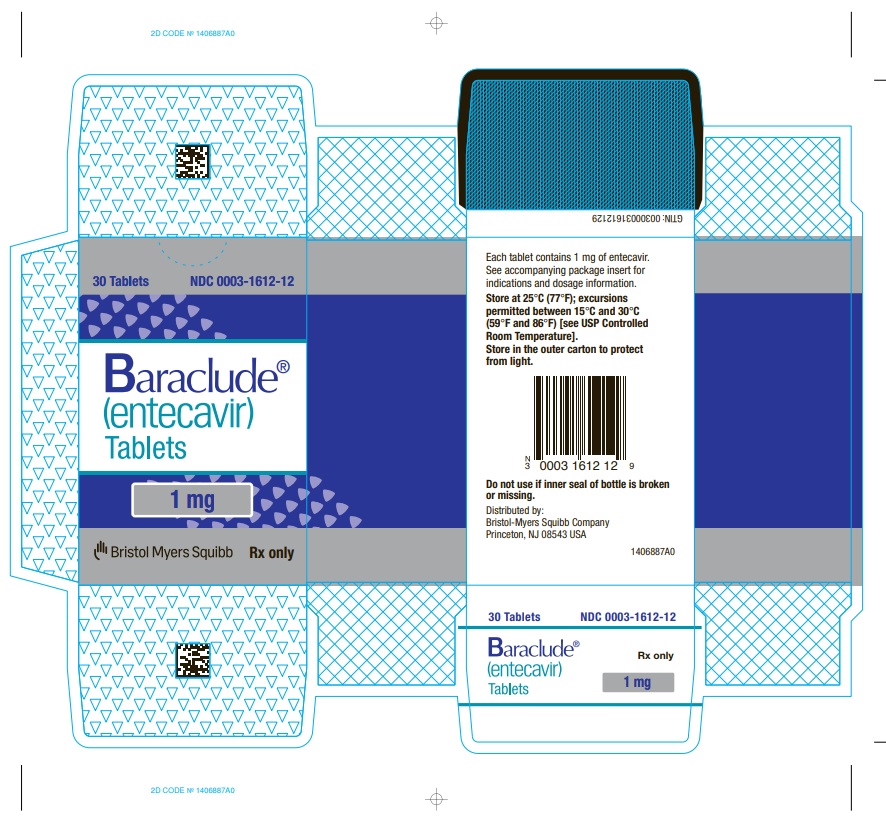
12BARACLUDE 1 mg Tablets Representative Packaging
30 Tablets NDC 0003-1612-12
barac-30ct-1mg-car
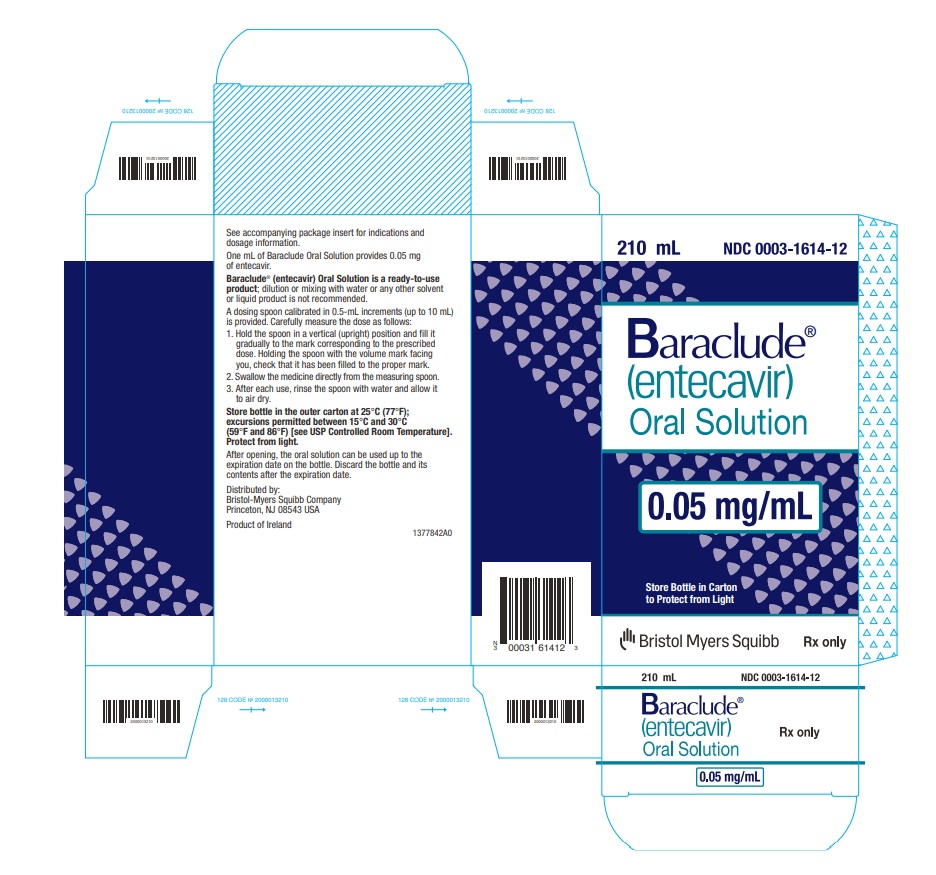
13BARACLUDE 0.05 mg/mL Oral Solution Representative Packaging
210 mL NDC 0003-1614-12
barac-os-halfmgml-car