Brand Name

Tivicay

Generic Name
Dolutegravir
View Brand Information
FDA approval date: August 13, 2013
Classification: Human Immunodeficiency Virus Integrase Strand Transfer Inhibitor
Form: Tablet

What is Tivicay (Dolutegravir)?

‑ TIVICAY and TIVICAY PD are indicated in combination with: other antiretroviral agents for the treatment of human immunodeficiency virus type 1 infection in adults and in pediatric patients (treatment-naïve or -experienced but integrase strand transfer inhibitor -naïve)aged at least 4 weeks and weighing at least 3 kg [ see Microbiology ( 1.

Approved To Treat

Save this treatment for later
Sign Up
Not sure about your diagnosis?
Check Your Symptoms

Related Clinical Trials

A Phase 2 Randomized Cross-Over Design Study of the Early Metabolic Effects of Dolutegravir or Tenofovir Alafenamide in Healthy Volunteers

Background: People with HIV take drugs to keep the amount of virus in their body low. One type of these drugs, called integrase strand transfer inhibitors (INSTIs), can cause weight gain over time. Weight gain can cause diabetes, heart disease, and other serious issues. Researchers want to understand how INSTIs cause weight changes.

Dolutegravir Plus Lamivudine (DTG/3TC) Dual Therapy Versus Dolutegravir With TDF-lamivudine (DTG + TDF/3TC) Among Antiretroviral naïve People With HIV and TB Receiving Rifampin-based TB Treatment

Summary: This will be a Phase IIIb Clinical Trial, an international multicenter, randomized, three-arm, non-comparative trial of efficacy, safety, and tolerability of the dual therapy regimen dolutegravir plus lamivudine either twice daily or DTG/3TC ( Dovato) in the morning +dolutegravir (DTG) in the evening, versus standard of care (SOC) twice-daily dolutegravir plus 2 once-daily Nucleoside reverse-trans...

Switch to Dolutegravir Plus Lamivudine Dual-therapy in Transgender Women Living With HIV on Virologically Suppressive Antiretroviral Therapy (TRANS-SWITCH)

Summary: This single-arm, open label study is aimed to assess efficacy and safety of dolutegravir plus lamivudine as a switch strategy among TGW with HIV receiving suppresive antiretroviral therapy.

Brand Information

Tivicay PD (dolutegravir sodium)
1INDICATIONS AND USAGE
TIVICAY and TIVICAY PD are indicated in combination with other antiretroviral agents for the treatment of HIV‑1 infection in adults (treatment-naïve or -experienced) and in pediatric patients (treatment-naïve or -experienced but integrase strand transfer inhibitor [INSTI]-naïve) aged at least 4 weeks and weighing at least 3 kg
TIVICAY is indicated in combination with rilpivirine as a complete regimen for the treatment of HIV-1 infection in adults to replace the current antiretroviral regimen in those who are virologically suppressed (HIV-1 RNA less than 50 copies/ mL) on a stable antiretroviral regimen for at least 6 months with no history of treatment failure or known substitutions associated with resistance to either antiretroviral agent.
2DOSAGE FORMS AND STRENGTHS
TIVICAY Tablets:
10 mg: Each tablet contains 10 mg of dolutegravir (as dolutegravir sodium). Tablets are white, round, film-coated, biconvex tablets debossed with “SV 572” on one side and “10” on the other side.
25 mg: Each tablet contains 25 mg of dolutegravir (as dolutegravir sodium). Tablets are pale yellow, round, film-coated, biconvex tablets debossed with “SV 572” on one side and “25” on the other side.
50 mg: Each tablet contains 50 mg of dolutegravir (as dolutegravir sodium). Tablets are yellow, round, film-coated, biconvex tablets debossed with “SV 572” on one side and “50” on the other side.
TIVICAY PD Tablets for Oral Suspension:
Each tablet contains 5 mg of dolutegravir (as dolutegravir sodium). Tablets are white, round, strawberry cream flavored, film-coated, biconvex tablets debossed with “SV H7S” on one side and “5” on the other side.
3CONTRAINDICATIONS
TIVICAY and TIVICAY PD are contraindicated in patients:
  • with previous hypersensitivity reaction to dolutegravir
  • receiving dofetilide due to the potential for increased dofetilide plasma concentrations and the risk for serious and/or life-threatening events
4ADVERSE REACTIONS
The following serious adverse drug reactions are discussed in other sections of the labeling:
  • Hypersensitivity reactions
  • Hepatotoxicity
  • Immune Reconstitution Syndrome
4.1Clinical Trials Experience
Because clinical trials are conducted under widely varying conditions, adverse reaction rates observed in the clinical trials of a drug cannot be directly compared with rates in the clinical trials of another drug and may not reflect the rates observed in practice.
Clinical Trials Experience in Adult Subjects
Treatment-Naïve Subjects: The safety assessment of TIVICAY in HIV‑1–infected treatment-naïve subjects is based on the analyses of data from 2 international, multicenter, double-blind trials, SPRING-2 (ING113086) and SINGLE (ING114467) and data from the international, multicenter, open-label FLAMINGO (ING114915) trial.
In SPRING-2, 822 subjects were randomized and received at least 1 dose of either TIVICAY 50 mg once daily or raltegravir 400 mg twice daily, both in combination with fixed-dose dual nucleoside reverse transcriptase inhibitor (NRTI) treatment (either abacavir sulfate and lamivudine [EPZICOM] or emtricitabine/tenofovir [TRUVADA]). There were 808 subjects included in the efficacy and safety analyses. Through 96 weeks, the rate of adverse events leading to discontinuation was 2% in both treatment arms.
In SINGLE, 833 subjects were randomized and received at least 1 dose of either TIVICAY 50 mg with fixed-dose abacavir sulfate and lamivudine (EPZICOM) once daily or fixed-dose efavirenz/emtricitabine/tenofovir (ATRIPLA) once daily (study treatment was blinded through Week 96 and open-label from Week 96 through Week 144). Through 144 weeks, the rates of adverse events leading to discontinuation were 4% in subjects receiving TIVICAY 50 mg once daily + EPZICOM and 14% in subjects receiving ATRIPLA once daily.
Treatment‑emergent adverse reactions of moderate to severe intensity observed in at least 2% of subjects in either treatment arm in SPRING-2 and SINGLE trials are provided in
In addition, Grade 1 insomnia was reported by 1% and less than 1% of subjects receiving TIVICAY and raltegravir, respectively, in SPRING-2; whereas in SINGLE the rates were 7% and 4% for TIVICAY and ATRIPLA, respectively. These events were not treatment limiting.
In a multicenter, open-label trial (FLAMINGO), 243 subjects received TIVICAY 50 mg once daily versus 242 subjects who received darunavir 800 mg/ritonavir 100 mg once daily, both in combination with investigator-selected NRTI background regimen (either EPZICOM or TRUVADA). There were 484 subjects included in the efficacy and safety analyses. Through 96 weeks, the rates of adverse events leading to discontinuation were 3% in subjects receiving TIVICAY and 6% in subjects receiving darunavir/ritonavir. The adverse reactions observed in FLAMINGO were generally consistent with those seen in SPRING-2 and SINGLE.
Treatment-Experienced, Integrase Strand Transfer Inhibitor-Naïve Subjects: In an international, multicenter, double-blind trial (ING111762, SAILING), 719 HIV‑1–infected, antiretroviral treatment-experienced adults were randomized and received either TIVICAY 50 mg once daily or raltegravir 400 mg twice daily with investigator-selected background regimen consisting of up to 2 agents, including at least one fully active agent. At 48 weeks, the rates of adverse events leading to discontinuation were 3% in subjects receiving TIVICAY 50 mg once daily + background regimen and 4% in subjects receiving raltegravir 400 mg twice daily + background regimen.
The only treatment‑emergent adverse reaction of moderate to severe intensity with at least 2% frequency in either treatment group was diarrhea, 2% (6 of 354) in subjects receiving TIVICAY 50 mg once daily + background regimen and 1% (5 of 361) in subjects receiving raltegravir 400 mg twice daily + background regimen.
Treatment-Experienced, Integrase Strand Transfer Inhibitor-Experienced Subjects: In a multicenter, open-label, single‑arm trial (ING112574, VIKING-3), 183 HIV‑1–infected, antiretroviral treatment-experienced adults with virological failure and current or historical evidence of raltegravir and/or elvitegravir resistance received TIVICAY 50 mg twice daily with the current failing background regimen for 7 days and with optimized background therapy from Day 8. The rate of adverse events leading to discontinuation was 4% of subjects at Week 48.
Treatment‑emergent adverse reactions in VIKING-3 were generally similar compared with observations with the 50-mg once-daily dose in adult Phase III trials.
Virologically Suppressed Subjects: The adverse reactions observed for TIVICAY plus rilpivirine in the Week 48 analysis of pooled data from 2 identical, international, multicenter, open-label trials (SWORD-1 and SWORD-2) of 513 HIV-1–infected, virologically suppressed subjects switching from their current antiretroviral regimen to TIVICAY plus rilpivirine, were consistent with the adverse reaction profiles and severities for the individual components when administered with other antiretroviral agents. There were no adverse reactions (Grades 2 to 4) with an incidence of at least 2% in either treatment arm at Week 48. The safety profile during the additional follow-up period through Week 148 were consistent with Week 48. The rate of adverse events leading to discontinuation through Week 48 was 4% in subjects receiving TIVICAY plus rilpivirine once daily and less than 1% in subjects who remained on their current antiretroviral regimen. In the pooled analyses, the proportion of subjects receiving TIVICAY plus rilpivirine who discontinued treatment due to an adverse event through Week 148 was 8%.
Less Common Adverse Reactions Observed in Treatment-Naïve and Treatment-Experienced Trials: The following adverse reactions occurred in less than 2% of treatment-naïve or treatment-experienced subjects receiving TIVICAY in a combination regimen in any one trial. These events have been included because of their seriousness and assessment of potential causal relationship.
           Gastrointestinal Disorders: Abdominal pain, abdominal discomfort, flatulence, upper abdominal pain, vomiting.
Hepatobiliary Disorders: Hepatitis.
Musculoskeletal Disorders: Myositis.
           Psychiatric Disorders: Suicidal ideation, attempt, behavior, or completion. These events were observed primarily in subjects with a pre-existing history of depression or other psychiatric illness.
Renal and Urinary Disorders: Renal impairment.
Skin and Subcutaneous Tissue Disorders: Pruritus.
Laboratory Abnormalities:
Treatment-Naïve Subjects: Selected laboratory abnormalities (Grades 2 to 4) with a worsening grade from baseline and representing the worst-grade toxicity in at least 2% of subjects are presented in Table 6. The mean change from baseline observed for selected lipid values is presented in Table 7. Side-by-side tabulation is to simplify presentation; direct comparisons across trials should not be made due to differing trial designs.
Laboratory abnormalities observed in the FLAMINGO trial were generally consistent with observations in SPRING-2 and SINGLE.
         Treatment-Experienced, Integrase Strand Transfer Inhibitor-Naïve Subjects: Laboratory abnormalities observed in SAILING were generally similar compared with observations seen in the treatment-naïve (SPRING-2 and SINGLE) trials.
         Treatment-Experienced, Integrase Strand Transfer Inhibitor-Experienced Subjects: The most common treatment-emergent laboratory abnormalities (greater than 5% for Grades 2 to 4 combined) observed in VIKING-3 at Week 48 were elevated ALT (9%), AST (8%), cholesterol (10%), creatine kinase (6%), hyperglycemia (14%), and lipase (10%). Two percent (4 of 183) of subjects had a Grade 3 to 4 treatment-emergent hematology laboratory abnormality, with neutropenia (2% [3 of 183]) being the most frequently reported.
         Virologically Suppressed Adults: Laboratory abnormalities observed in SWORD-1 and SWORD-2 were generally similar compared with observations seen in the other Phase III trials.
         Hepatitis B and/or Hepatitis C Virus Co-infection: In Phase III trials, subjects with hepatitis B and/or C virus co-infection were permitted to enroll provided that baseline liver chemistry tests did not exceed 5 times the upper limit of normal. Overall, the safety profile in subjects with hepatitis B and/or C virus co-infection was similar to that observed in subjects without hepatitis B or C co-infection, although the rates of AST and ALT abnormalities were higher in the subgroup with hepatitis B and/or C virus co-infection for all treatment groups. Grades 2 to 4 ALT abnormalities in hepatitis B and/or C co-infected compared with HIV mono-infected subjects receiving TIVICAY were observed in 18% vs. 3% with the 50-mg once-daily dose and 13% vs. 8% with the 50-mg twice-daily dose. Liver chemistry elevations consistent with immune reconstitution syndrome were observed in some subjects with hepatitis B and/or C at the start of therapy with TIVICAY, particularly in the setting where anti-hepatitis therapy was withdrawn [see Warnings and Precautions (.
Changes in Serum Creatinine: Dolutegravir has been shown to increase serum creatinine due to inhibition of tubular secretion of creatinine without affecting renal glomerular function [see Clinical Pharmacology (. Increases in serum creatinine occurred within the first 4 weeks of treatment and remained stable through 96 weeks. In treatment-naïve subjects, a mean change from baseline of 0.15 mg/dL (range: -0.32 mg/dL to 0.65 mg/dL) was observed after 96 weeks of treatment. Creatinine increases were comparable by background NRTIs and were similar in treatment-experienced subjects.
Clinical Trials Experience in Pediatric Subjects
The safety and pharmacokinetics of TIVICAY and TIVICAY PD in HIV-1–infected pediatric subjects aged at least 4 weeks and weighing at least 3 kg was evaluated in the IMPAACT P1093 trial and 2 weight-band-based pharmacokinetic substudies of the ODYSSEY trial
IMPAACT P1093 is an ongoing, multicenter, open-label, non-comparative trial of HIV‑1–infected pediatric subjects aged 4 weeks to less than 18 years
The safety analysis based on subjects (n = 75) who received the recommended dose (determined by weight and age) through Week 24 showed that 11% of subjects experienced drug-related clinical adverse reactions. The only Grade 1 to 2 drug-related clinical adverse reactions reported by more than one subject was immune reconstitution inflammatory syndrome (IRIS) (n = 2). There were no Grade 3 or 4 drug-related adverse reactions reported. No adverse reactions led to discontinuation.
The Grade 3 or 4 laboratory abnormalities reported in more than one subject were decreased neutrophil count (n = 11), decreased blood bicarbonate (n = 4), decreased hemoglobin (n = 3), increased lipase (n = 2), and increased blood potassium (n = 2). These laboratory events were not considered to be drug-related. Median laboratory values were similar at baseline and Week 24. Changes in median serum creatinine were similar to those observed in adults.
4.2Postmarketing Experience
In addition to adverse reactions reported from clinical trials, the following adverse reactions have been identified during postmarketing use. Because these reactions are reported voluntarily from a population of uncertain size, it is not always possible to reliably estimate their frequency or establish a causal relationship to drug exposure.
Blood and Lymphatic Systems
Sideroblastic anemia.
Hepatobiliary Disorders
Acute liver failure, hepatotoxicity.
Investigations
Weight increased.
Musculoskeletal
Arthralgia, myalgia.
Psychiatric
Anxiety.
5OVERDOSAGE
There is no known specific treatment for overdose with TIVICAY or TIVICAY PD. If overdose occurs, the patient should be monitored, and standard supportive treatment applied as required. As dolutegravir is highly bound to plasma proteins, it is unlikely that it will be significantly removed by dialysis.
6DESCRIPTION
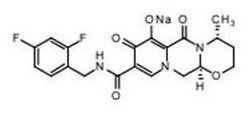
TIVICAY contains dolutegravir, as dolutegravir sodium, an HIV INSTI. The chemical name of dolutegravir sodium is sodium (4
Dolutegravir chemical structure
Dolutegravir sodium is a white to light yellow powder and is slightly soluble in water.
Each film-coated tablet of TIVICAY for oral administration contains 10.5, 26.3, or 52.6 mg of dolutegravir sodium, which is equivalent to 10, 25, or 50 mg dolutegravir free acid, respectively, and the following inactive ingredients: D-mannitol, microcrystalline cellulose, povidone K29/32, sodium starch glycolate, and sodium stearyl fumarate. The tablet film‑coating contains the inactive ingredients iron oxide yellow (25-mg and 50-mg tablets only), macrogol/PEG, polyvinyl alcohol-part hydrolyzed, talc, and titanium dioxide.
Each TIVICAY PD tablet for oral suspension contains 5.26 mg of dolutegravir sodium, which is equivalent to 5 mg dolutegravir free acid, and the following inactive ingredients: calcium sulfate dihydrate, crospovidone, mannitol, microcrystalline cellulose, povidone K29/32, silicified microcrystalline cellulose, sodium starch glycolate, strawberry cream flavor, sucralose, and sodium stearyl fumarate. The tablet film-coating contains hypromellose, polyethylene glycol, and titanium dioxide.
7HOW SUPPLIED/STORAGE AND HANDLING
TIVICAY tablets, 10 mg, are white, round, film-coated, biconvex tablets debossed with “SV 572” on one side and “10” on the other side. Bottle of 30 tablets with child-resistant closure and containing a desiccant. NDC 49702-226-13.
Store and dispense the 10-mg tablets in the original package, protect from moisture, and keep the bottle tightly closed. Do not remove desiccant.
TIVICAY tablets, 25 mg, are pale yellow, round, film-coated, biconvex tablets debossed with “SV 572” on one side and “25” on the other side. Bottle of 30 tablets with child-resistant closure. NDC 49702-227-13.
TIVICAY tablets, 50 mg, are yellow, round, film-coated, biconvex tablets debossed with “SV 572” on one side and “50” on the other side. Bottle of 30 tablets with child-resistant closure. NDC 49702-228-13.
Store TIVICAY tablets at 25°C (77°F); excursions permitted 15° to 30°C (59° to 86°F) [See USP Controlled Room Temperature].
TIVICAY PD tablets for oral suspension, 5 mg, are white, round, strawberry cream flavored, film-coated, biconvex tablets debossed with “SV H7S” on one side and “5” on the other side. Bottle of 60 tablets with child-resistant closure containing a desiccant. Each bottle is packaged with one 30-mL dosing cup and one 10-mL oral dosing syringe with 1-mL gradations. NDC 49702-255-37.
Store TIVICAY PD tablets for oral suspension below 30°C (86°F). Store and dispense the 5-mg tablets in the original bottle, protect from moisture, and keep the bottle tightly closed. Do not remove desiccant.
8PATIENT COUNSELING INFORMATION
Advise the patient to read the FDA-approved patient labeling (Patient Information and Instructions for Use).
Drug Interactions
TIVICAY or TIVICAY PD may interact with other drugs; therefore, advise patients to report to their healthcare provider the use of any other prescription or nonprescription medication or herbal products, including St. John’s wort
Hypersensitivity Reactions
Advise patients to immediately contact their healthcare provider if they develop rash. Instruct patients to immediately stop taking TIVICAY or TIVICAY PD and other suspect agents, and seek medical attention if they develop a rash associated with any of the following symptoms, as it may be a sign of a more serious reaction such as severe hypersensitivity: fever; generally ill feeling; extreme tiredness; muscle or joint aches; blisters or peeling of the skin; oral blisters or lesions; eye inflammation; facial swelling; swelling of the eyes, lips, tongue, or mouth; breathing difficulty; and/or signs and symptoms of liver problems (e.g., yellowing of the skin or whites of the eyes, dark or tea-colored urine, pale-colored stools or bowel movements, nausea, vomiting, loss of appetite, or pain, aching, or sensitivity on the right side below the ribs)
Hepatotoxicity
Inform patients that hepatotoxicity has been reported with dolutegravir
Immune Reconstitution Syndrome
Advise patients to inform their healthcare provider immediately of any signs or symptoms of infection as inflammation from previous infection may occur soon after combination antiretroviral therapy, including when TIVICAY or TIVICAY PD is started
Different Formulations Are Not Bioequivalent
Advise patients that TIVICAY and TIVICAY PD are not bioequivalent and are not substitutable on a milligram-per-milligram basis. Advise patients or their care provider that patients switching from one formulation to the other must adjust the dose for the new dosage formulation
Pregnancy Registry
Inform patients that there is an antiretroviral pregnancy registry to monitor fetal outcomes in those exposed to TIVICAY or TIVICAY PD during pregnancy
Lactation
Inform individuals with HIV-1 infection that the potential risks of breastfeeding include: (1) HIV-1 transmission (in HIV-1–negative infants), (2) developing viral resistance (in HIV-1–positive infants), and (3) adverse reactions in a breastfed infant similar to those seen in adults
Administration Instructions
To avoid a dosing error from using the wrong formulation of dolutegravir, strongly advise patients and caregivers to visually inspect the tablets to verify the correct formulation each time the prescription is filled
Inform patients and caregivers that TIVICAY PD tablets for oral suspension may be swallowed whole or dispersed in drinking water and should not be chewed, cut or crushed. The amount of water needed to disperse the tablet will depend on the dose (number of tablets prescribed).
Instruct patients and caregivers that if a dose of TIVICAY or TIVICAY PD is missed, to take it as soon as they remember. Advise patients and caregivers not to double the next dose or take more than the prescribed dose
Storage
Instruct patients and caregivers to store the TIVICAY 10-mg tablets and TIVICAY PD 5-mg tablets for oral suspension in the original package, keep the bottle tightly closed, and protect from moisture. Do not remove desiccant
TIVICAY, TIVICAY PD, EPZICOM, JULUCA, and TRIUMEQ are trademarks owned by or licensed to the ViiV Healthcare group of companies.
The other brands listed are trademarks owned by or licensed to their respective owners and are not owned by or licensed to the ViiV Healthcare group of companies. The makers of these brands are not affiliated with and do not endorse the ViiV Healthcare group of companies or its products.
Manufactured for:
ViiV Healthcare
Durham, NC 27701
©2025 ViiV Healthcare group of companies or its licensor.
TVC:20PI
PHARMACIST‑DETACH HERE AND GIVE INSTRUCTIONS TO PATIENT