Brand Name

Tegsedi

Generic Name
Inotersen
View Brand Information
FDA approval date: October 05, 2018
Classification: Transthyretin-directed RNA Interaction
Form: Injection

What is Tegsedi (Inotersen)?

Living with hereditary transthyretin amyloidosis (hATTR) can be overwhelming. This rare, inherited disorder slowly damages nerves and organs, leading to weakness, pain, numbness, and difficulty with daily activities. For many patients, even simple movements can become a challenge. Tegsedi (inotersen) was developed to help slow this progressive disease, offering patients renewed hope for maintaining independence and quality of life. 

Tegsedi is a targeted RNA-based therapy designed to treat polyneuropathy caused by hereditary transthyretin-mediated amyloidosis (hATTR) in adults. It belongs to a class of medications known as antisense oligonucleotides, which work at the genetic level to reduce the production of harmful proteins that cause disease. Approved by the U.S. Food and Drug Administration (FDA) in 2018, Tegsedi represents a specialized and innovative treatment option for people with this rare and often debilitating condition. 

What does Tegsedi do? 

Tegsedi is used to treat hATTR amyloidosis with polyneuropathy, a genetic disorder in which the liver produces a faulty protein called transthyretin (TTR). This abnormal protein forms sticky deposits known as amyloid, which build up in the body’s tissues and nerves. Over time, these deposits cause nerve damage, leading to symptoms such as pain, numbness, muscle weakness, loss of balance, and problems with digestion or blood pressure regulation. 

Tegsedi helps by reducing the amount of TTR protein produced in the liver. Lowering these protein levels slows the formation of amyloid deposits, which in turn helps prevent further nerve damage and may improve nerve function. 

In clinical studies, patients taking Tegsedi showed significant slowing of disease progression compared with those not receiving treatment. Many reported improved ability to walk, less pain, and better control over daily activities. These results demonstrate that, while Tegsedi may not cure hATTR, it can substantially improve both symptoms and quality of life for many patients (FDA, 2024; NIH, 2024). 

How does Tegsedi work? 

Tegsedi’s active ingredient, inotersen, is an antisense oligonucleotide, a short synthetic strand of genetic material designed to target messenger RNA (mRNA). In simple terms, it works by interfering with the liver’s ability to produce the abnormal transthyretin protein responsible for amyloid buildup. 

Here’s how it works step by step: 

  1. Tegsedi binds to the mRNA that carries instructions for making TTR protein. 
     
  1. Once bound, it signals the body to break down that mRNA, preventing the production of new TTR protein. 
     
  1. As a result, TTR levels in the blood drop, reducing the amount of amyloid that can form and deposit in tissues. 

This mechanism matters clinically because it directly targets the root cause of hATTR, not just the symptoms. By slowing or halting further nerve damage, Tegsedi helps preserve nerve function and mobility. 

This precision-based approach represents a major advance in the treatment of genetic amyloidosis and reflects a growing shift toward genomic medicine, where treatments address disease at the molecular level. 

Tegsedi side effects 

Like all powerful medications, Tegsedi can cause side effects, some of which require careful monitoring. The most important potential risks involve low platelet counts and kidney problems, both of which can be serious if not detected early. 

Common side effects include: 

  • Injection site reactions (pain, redness, or swelling) 
     
  • Nausea or vomiting 
     
  • Fatigue or headache 
     
  • Cough or joint pain 

Serious side effects (less common) may include: 

  • Thrombocytopenia (low platelet count), which may increase the risk of bleeding or bruising 
     
  • Glomerulonephritis (kidney inflammation), which can affect kidney function 
     
  • Allergic reactions, such as rash, swelling, or difficulty breathing 

Tegsedi patients are enrolled in a REMS program due to risks. This requires regular monitoring of platelet counts, kidney function, and liver health through blood and urine tests. Report unusual bruising, nosebleeds, dark urine, swelling, or severe fatigue to your doctor immediately, as these could indicate low platelets or kidney problems. 

Patients with preexisting kidney disease or bleeding disorders may not be good candidates for Tegsedi and should discuss alternatives with their healthcare provider. 

Tegsedi dosage 

Tegsedi is a once-weekly subcutaneous injection, available in pre-filled syringes. Patients or caregivers can be trained for at-home administration, rotating injection sites (abdomen, upper arm, or thigh) to prevent skin irritation. 

Regular blood and urine tests are crucial for Tegsedi treatment, monitoring platelet counts, kidney function, and liver enzymes to ensure safety and efficacy. Abnormalities may lead to treatment adjustments or temporary cessation.  

Older adults tolerate Tegsedi well but need closer monitoring if they have kidney or blood conditions. Patients must not skip monitoring appointments or self-adjust doses due to potential serious complications. 

Does Tegsedi have a generic version? 

As of 2025, Tegsedi (inotersen) does not have a generic version available in the United States or internationally. It is marketed exclusively under its brand name by Ionis Pharmaceuticals. However, international versions may exist in other markets. 

Generic Tegsedi, if developed, must meet FDA standards for safety, effectiveness, and quality due to its complex RNA-based nature. Patients needing financial aid for Tegsedi can check manufacturer programs or insurance, often with help from providers or pharmacies. 

Conclusion 

Tegsedi (inotersen) is a breakthrough treatment for adults with hereditary transthyretin-mediated amyloidosis (hATTR) with polyneuropathy. By targeting the disease at its genetic source, it helps reduce the buildup of harmful amyloid deposits and preserve nerve function offering meaningful improvements in mobility, independence, and overall quality of life. 

While requiring careful monitoring, Tegsedi effectively slows disease progression and offers hope for patients with this rare condition. When supervised by an experienced provider, it’s a powerful, science-driven treatment. Openly discuss goals, monitoring, and concerns with your medical team. Staying informed, consistent with therapy, and proactive monitoring ensure the safest, most successful outcomes. 

References 

  1. U.S. Food and Drug Administration (FDA). (2024). Tegsedi (inotersen) prescribing information. Retrieved from https://www.accessdata.fda.gov 
     
  1. Mayo Clinic. (2024). Inotersen (subcutaneous route) description and precautions. Retrieved from https://www.mayoclinic.org 
     
  1. MedlinePlus. (2024). Inotersen injection: Drug information. National Library of Medicine. Retrieved from https://medlineplus.gov 
     
  1. National Institutes of Health (NIH). (2024). Transthyretin amyloidosis and RNA-targeted therapies. Retrieved from https://www.nih.gov 

Approved To Treat

Save this treatment for later
Sign Up
Not sure about your diagnosis?
Check Your Symptoms

Related Clinical Trials

A Prospective, Non-interventional, Long-term, Multinational Cohort Safety Study of Patients With Hereditary Transthyretin Amyloidosis With Polyneuropathy (hATTR-PN)

Summary: This is a prospective, non-interventional, Long-term, multinational cohort safety study of patients with Hereditary Transthyretin Amyloidosis with Polyneuropathy (hATTR-PN). The overarching goal of this study is to further characterize the long-term safety of TEGSEDI (inotersen) in patients with hATTR-PN under real-world conditions.

Brand Information

Tegsedi (inotersen)
WARNING: THROMBOCYTOPENIA AND GLOMERULONEPHRITIS
Thrombocytopenia
TEGSEDI causes reductions in platelet count that may result in sudden and unpredictable thrombocytopenia, which can be life-threatening. One clinical trial patient died from intracranial hemorrhage.
TEGSEDI is contraindicated in patients with a platelet count below 100 x 10
Prior to starting TEGSEDI, obtain a platelet count
If a patient develops signs or symptoms of thrombocytopenia, obtain a platelet count as soon as possible. The patient should not receive additional TEGSEDI unless a platelet count is determined to be interpretable and acceptable by a medical professional
Following discontinuation of treatment for any reason, continue to monitor platelet count for 8 weeks, or longer if platelet counts are less than 100 x 10
Glomerulonephritis
TEGSEDI can cause glomerulonephritis that may require immunosuppressive treatment and may result in dialysis-dependent renal failure. One clinical trial patient who developed glomerulonephritis and did not receive immunosuppressive treatment remained dialysis-dependent. In clinical trials, cases of glomerulonephritis were accompanied by nephrotic syndrome, which can have manifestations of edema, hypercoagulability with venous or arterial thrombosis, and increased susceptibility to infection
TEGSEDI should generally not be initiated in patients with urinary protein to creatinine ratio (UPCR) of 1000 mg/g or higher
Prior to starting TEGSEDI, measure the serum creatinine, estimated glomerular filtration rate (eGFR), urine protein to creatinine ratio (UPCR), and perform a urinalysis
If a dose is held, once eGFR increases to ≥45 mL/minute/1.73 m
TEGSEDI REMS Program
Because of the risks of serious bleeding caused by severe thrombocytopenia and because of glomerulonephritis, both of which require frequent monitoring, TEGSEDI is available only through a restricted distribution program under a Risk Evaluation and Mitigation Strategy (REMS) called the TEGSEDI REMS Program
1INDICATIONS AND USAGE
TEGSEDI is indicated for the treatment of the polyneuropathy of hereditary transthyretin-mediated amyloidosis in adults.
2DOSAGE FORMS AND STRENGTHS
Injection: 284 mg/1.5 mL clear, colorless to pale yellow solution in a single-dose prefilled syringe.
3CONTRAINDICATIONS
TEGSEDI is contraindicated in patients with:
  • Platelet count below 100 x 10
  • History of acute glomerulonephritis caused by TEGSEDI
  • History of a hypersensitivity reaction to TEGSEDI
4ADVERSE REACTIONS
The following serious adverse reactions are discussed in greater detail in other sections of the labeling:
  • Thrombocytopenia
  • Glomerulonephritis and Renal Toxicity
  • Stroke and Cervicocephalic Arterial Dissection
  • Inflammatory and Immune Effects
  • Liver Injury
  • Hypersensitivity
  • Reducted Serum Vitamin A Levels and Recommended Supplementation
4.1Clinical Trials Experience
Because clinical trials are conducted under widely varying conditions, adverse reaction rates observed in the clinical trials of TEGSEDI cannot be directly compared to rates in clinical trials of other drugs and may not reflect the rates observed in practice.
A total of 112 adult patients with polyneuropathy caused by hereditary transthyretin-mediated amyloidosis (hATTR) received TEGSEDI in Study 1 and 60 patients received placebo. The, mean age of the study patients was 59 years (27 to 78 years of age). Of the TEGSEDI-treated patients, 69% were male and 94% were Caucasian, with a mean exposure of 385 days, and median exposure of 449 days. Baseline disease characteristics were largely similar in TEGSEDI-treated patients and patients in the placebo control group. Sixty-seven percent of patients were in Stage 1 of the disease at baseline, and 33% in Stage 2. Fifty-two percent of patients had Val30Met mutations in the TTR gene, with the remaining 48% comprised of 26 different other point mutations.
Table 2 presents common adverse reactions that occurred in at least 5% of TEGSEDI-treated patients and that occurred at least 5% more frequently or two times more frequently than on placebo.
The most common adverse reactions that occurred in at least 20% of TEGSEDI-treated patients and more frequently than on placebo were injection site reactions, nausea, headache, fatigue, thrombocytopenia, and fever. Serious adverse reactions were more frequent in TEGSEDI-treated patients (32%) than in patients on placebo (21%). The most common adverse reactions leading to discontinuation were thrombocytopenia and cachexia.
4.2Immunogenicity
The detection of antibody formation is highly dependent on the sensitivity and specificity of the assay. In addition, the observed incidence of antibody (including neutralizing antibody) positivity in an assay may be influenced by several factors, including assay methodology, sample handling, timing of sample collection, concomitant medications, and underlying disease. For these reasons, comparison of the incidence of antibodies to TEGSEDI in the studies described below with the incidence of antibodies in other studies or to other products may be misleading.
In Study 1, 30% of TEGSEDI-treated patients tested positive for anti-drug antibodies (ADA) following 65 weeks of treatment
5DESCRIPTION
Inotersen is an antisense oligonucleotide (ASO) inhibitor of human transthyretin (TTR) protein synthesis.
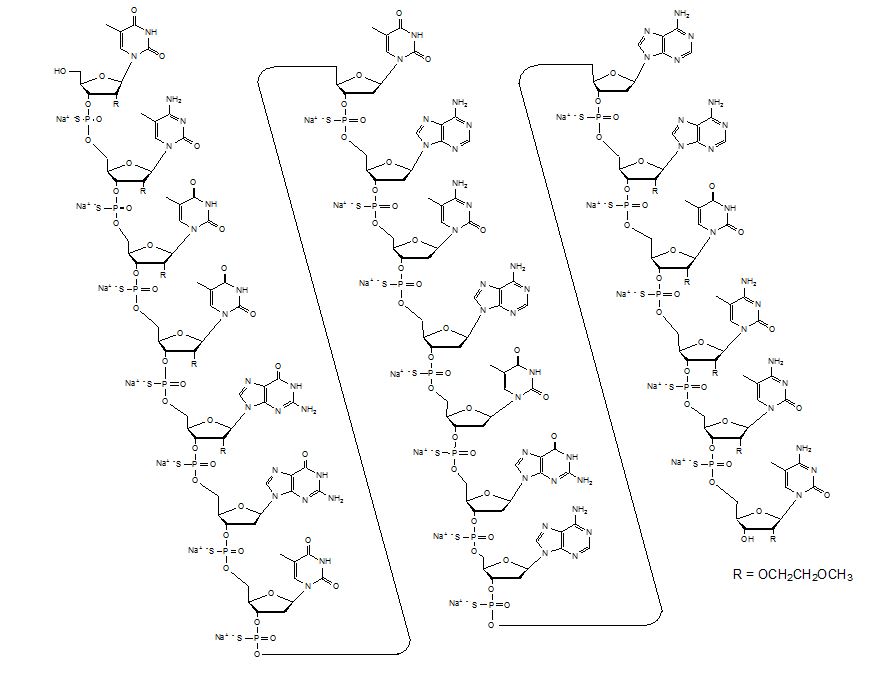
TEGSEDI contains inotersen sodium as the active ingredient. Inotersen sodium is a white to pale yellow solid and it is freely soluble in water and in phosphate buffer (pH 7.5 to 8.5). The chemical name of inotersen sodium is DNA, d(
Chemical Structure
The molecular formula of inotersen free base is C
TEGSEDI is a sterile, preservative-free, aqueous solution for subcutaneous injection. It is supplied in a prefilled syringe (PFS). Each PFS contains 1.5 mL of solution containing 284 mg inotersen (equivalent to 300 mg inotersen sodium salt) TEGSEDI is formulated in Water for Injection and may include hydrochloric acid and/or sodium hydroxide for pH adjustment to 7.5-8.5.
6CLINICAL STUDIES
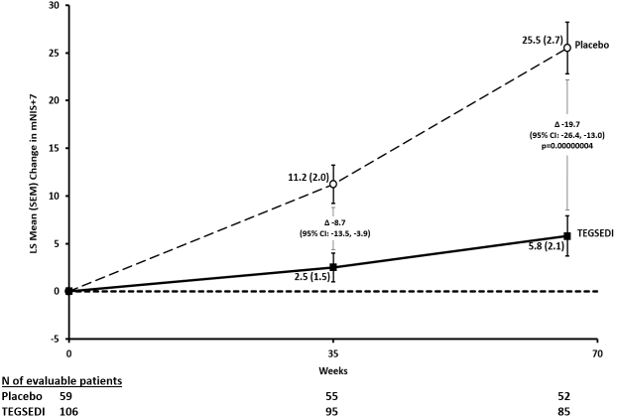
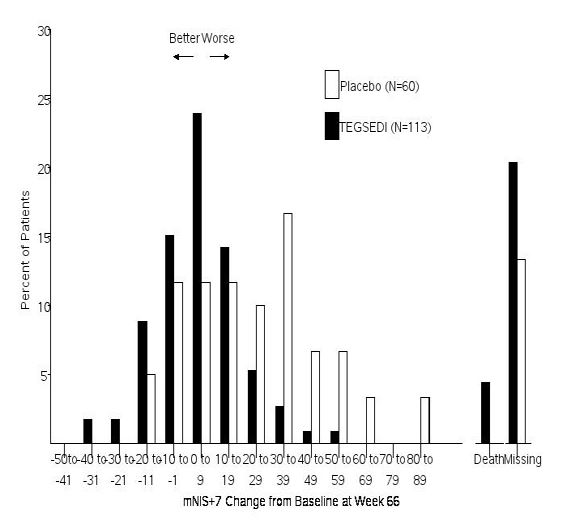
The efficacy of TEGSEDI was demonstrated in a randomized, double-blind, placebo-controlled, multicenter clinical trial in adult patients with polyneuropathy caused by hATTR amyloidosis (Study 1; NCT 01737398). Patients were randomized in a 2:1 ratio to receive either TEGSEDI (284 mg inotersen) (N=113) or placebo (N=60), respectively, as a subcutaneous injection administered once per week for 65 weeks (3 doses were administered during the first week of treatment). Seventy seven percent of TEGSEDI-treated patients and 87% of patients on placebo completed 66 weeks of the assigned treatment.
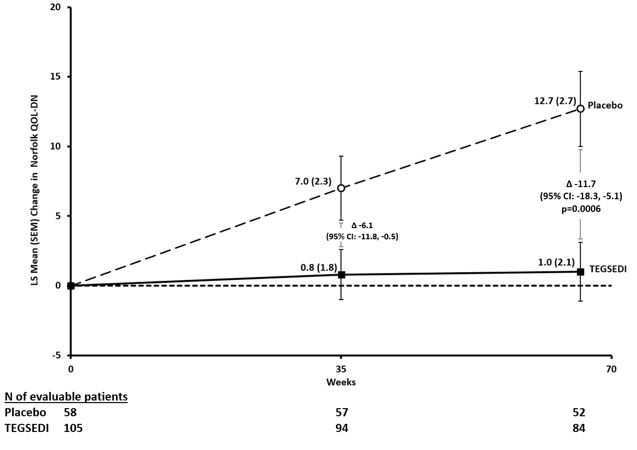
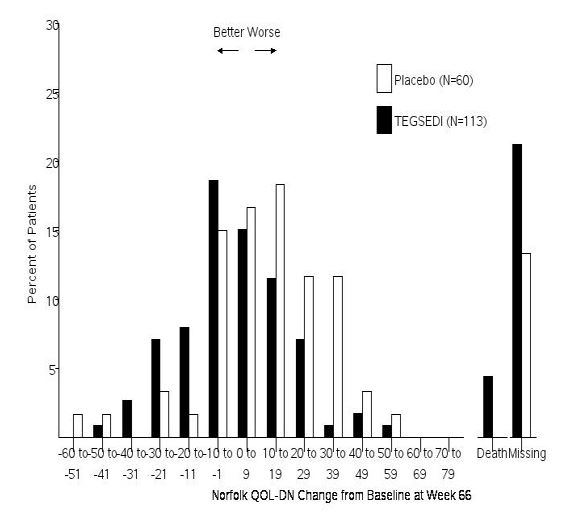
The co-primary efficacy endpoints were the change from baseline to Week 66 in the modified Neuropathy Impairment Scale+7 (mNIS+7) composite score and the Norfolk Quality of Life-Diabetic Neuropathy (QoL-DN) total score
The mNIS+7 is an objective assessment of neuropathy, and comprises the NIS and Modified +7 composite scores. In the version of the mNIS+7 used in the trial, the NIS objectively measures deficits in cranial nerve function, muscle strength, reflexes, and sensations, and the Modified +7 assesses heart rate response to deep breathing, postural blood pressure, quantitative sensory testing (touch-pressure and heat-pain), and peripheral nerve electrophysiology. The maximum possible score was 346.32 points, with higher scores representing a greater severity of disease.
The clinical meaningfulness of effects on the mNIS+7 was assessed by the change from baseline to Week 66 in Norfolk Quality of Life-Diabetic Neuropathy (QoL-DN) total score. The Norfolk QoL-DN scale is a patient-reported assessment that evaluates the subjective experience of neuropathy in the following domains: physical functioning/large fiber neuropathy, activities of daily living, symptoms, small fiber neuropathy, and autonomic neuropathy. The version of the Norfolk QoL-DN that was used in the trial had a maximum possible total score of 136 points, with higher scores representing greater impairment.
The changes from baseline to Week 66 on both the mNIS+7 and the Norfolk QoL-DN significantly favored TEGSEDI (
Figure 1: Change from Baseline in mNIS+7
Figure 2: Histogram of mNIS+7 Change from Baseline at Week 66
Figure 3: Change from Baseline in Norfolk QoL-DN Score
Figure 4: Histogram of Norfolk QoL-DN Change from Baseline at Week 66
Patients receiving TEGSEDI experienced similar improvements relative to placebo in mNIS+7 and Norfolk QoL-DN score across all subgroups including age, sex, race, region, NIS score, Val30Met mutation status, and disease stage.
7HOW SUPPLIED/STORAGE AND HANDLING
TEGSEDI is a clear, colorless to pale yellow solution supplied in a single-dose, prefilled syringe with a SSD. Each prefilled syringe of TEGSEDI is filled to deliver 1.5 mL of solution containing 284 mg of inotersen (equivalent to 300 mg inotersen sodium salt).
TEGSEDI is available in cartons containing 1 or 4 prefilled syringes supplied in individual trays.
  • Pack of 1 prefilled syringe: NDC 72126-007-03
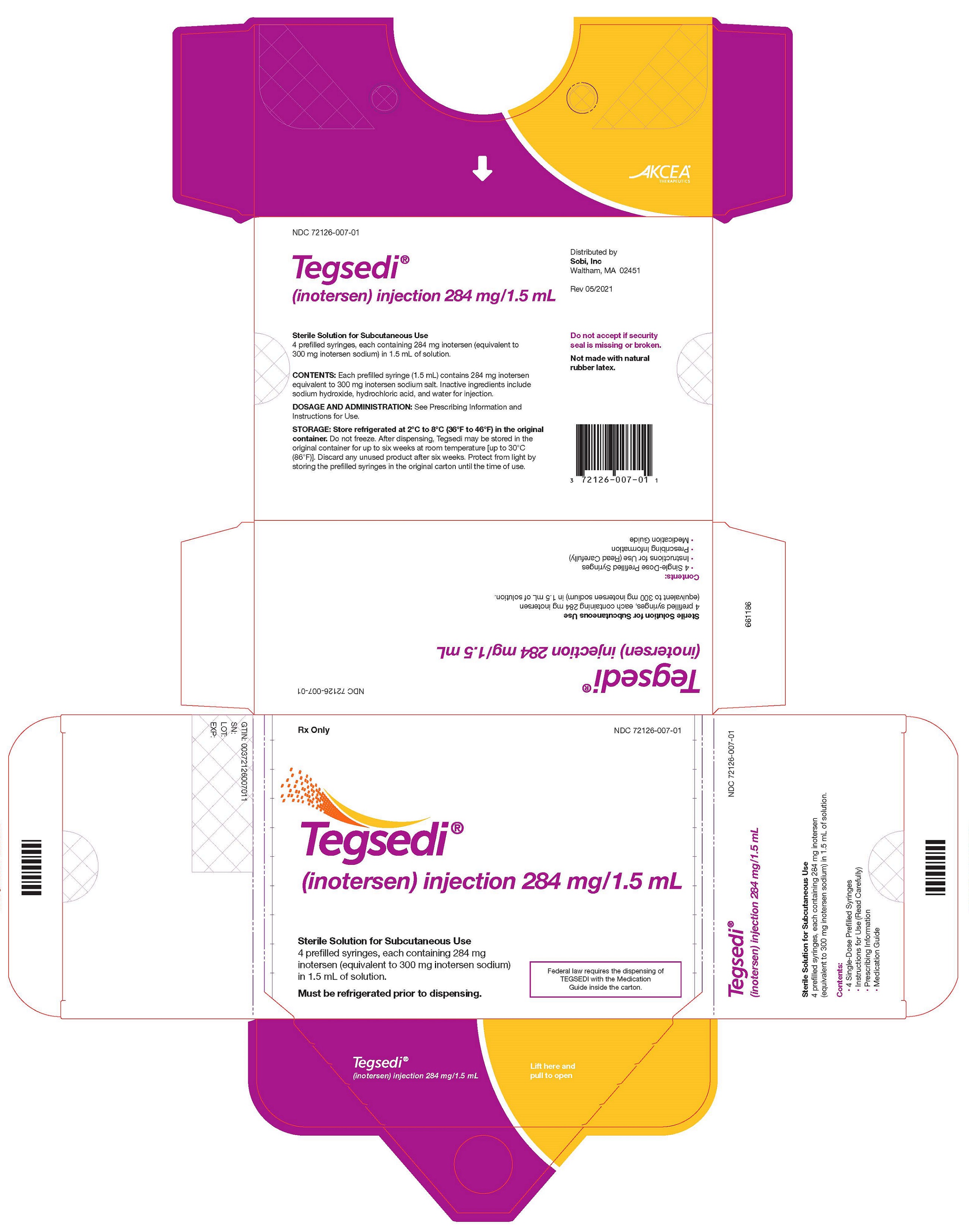
  • Pack of 4 prefilled syringes: NDC 72126-007-01
The individual tray of 1 syringe is NDC 72126-007-02.
Pharmacy
Store refrigerated at 2°C to 8°C (36°F to 46°F) in the original container and protect from direct light. Do not freeze.
For Patients/Caregivers
Store refrigerated at 2°C to 8°C (36°F to 46°F) in the original container. Do not freeze. TEGSEDI can be kept at room temperature (up to 30°C [86°F]) in the original container for up to 6 weeks; if not used within the 6 weeks, discard TEGSEDI.
Remove from refrigerated storage (2°C to 8°C [36°F to 46°F]) at least 30 minutes before use. [TEGSEDI] prefilled syringe should be allowed to reach room temperature prior to injection.
Avoid exposure to temperatures above 30°C (86°F).
8PATIENT COUNSELING INFORMATION
Advise the patient and caregiver to read the FDA-approved patient labeling (
Thrombocytopenia
Inform patients that TEGSEDI can cause reductions in platelet count that may result in thrombocytopenia. Instruct patients to notify a healthcare provider immediately if they show symptoms of thrombocytopenia (e.g., unusual or prolonged bleeding, neck stiffness, or atypical severe headache). Advise patients of the importance of monitoring during treatment with TEGSEDI
Glomerulonephritis and Renal Toxicity
Inform patients that glomerulonephritis has occurred in patients treated with TEGSEDI. Advise patients of the importance of monitoring of urine protein to creatinine ratio (UPCR during treatment with TEGSEDI)
TEGSEDI REMS Program
TEGSEDI is available only through a restricted program called the TEGSEDI REMS Program
  • Patients must enroll in the program and comply with ongoing monitoring requirements.
  • TEGSEDI is available only from certified pharmacies participating in the program. Therefore, provide patients with the telephone number and website for information on how to obtain the product.
Stroke and Cervicocephalic Arterial Dissection
Educate patient on symptoms of stroke and central nervous system arterial dissection and instruct them to seek help as soon as possible if symptoms of these or other serious neurologic adverse reactions occur
Liver Injury
Instruct patients to inform a healthcare professional of symptoms suggestive of hepatic dysfunction that occur after administration of TEGSEDI
Hypersensitivity
Instruct patients to inform a healthcare professional of symptoms suggestive of hypersensitivity that occur after administration of TEGSEDI
Recommended Vitamin A Supplementation
Inform patients that TEGSEDI treatment leads to a decrease in vitamin A levels measured in the serum. Instruct patients to take the recommended daily allowance of vitamin A. Advise patients to contact their healthcare provider if they experience ocular symptoms suggestive of vitamin A deficiency (e.g., night blindness) and refer them to an ophthalmologist if they develop these symptoms
Administration Instructions
Train patients and caregivers on proper subcutaneous administration technique and how to use the single-dose prefilled syringe. Instruct patients and/or caregivers to read and follow the Instructions for Use each time they use TEGSEDI.
Pregnancy
Instruct patients that if they are pregnant or plan to become pregnant while taking TEGSEDI they should inform their healthcare provider. Advise female patients of childbearing potential of the potential risk to the fetus. Encourage patients to enroll in the TEGSEDI Pregnancy Registry if they become pregnant while taking TEGSEDI
For more information about TEGSEDI, go to www.TEGSEDIREMS.com or call 1-844-483-4736
Distributed by:
TEGSEDI is a registered trademark of Akcea Therapeutics, Inc.
9PRINCIPAL DISPLAY PANEL - NDC: 72126-007-02 - Syringe Label
Syringe Label
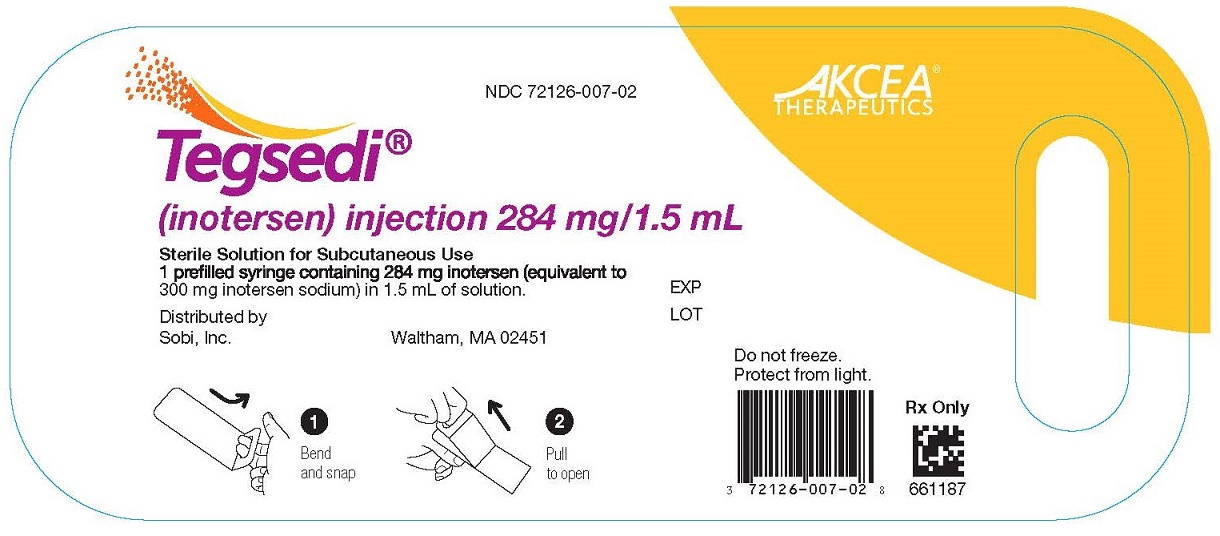
10PRINCIPAL DISPLAY PANEL - NDC: 72126-007-02 - 1-count Tray Label
1-count Tray Label
11PRINCIPAL DISPLAY PANEL - NDC: 72126-007-01 - 4-count Carton Label
4-count Carton Label