Visudyne
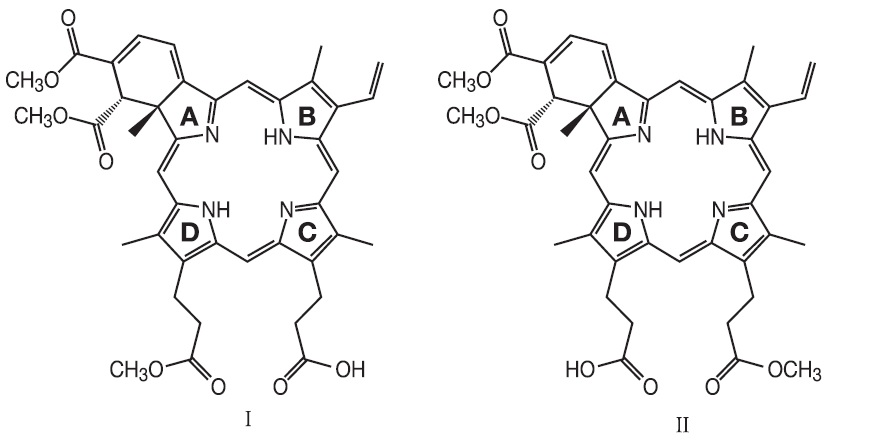
What is Visudyne (Verteporfin)?
Approved To Treat
Top Global Experts


Related Clinical Trials
Summary: The goal of this study is to obtain safety data, establish dose parameters, and effectiveness of treatment for the SpectraCure P18 System with IDOSE®, together with verteporfin for injection (VFI) as photosensitizer, for the treatment of primary localized prostate cancer. The study will be divided into two parts, with Phase I, dose-escalation, to study safety and establish an effective light dose,...
Summary: The rationale for the study is to obtain safety and efficacy data as well as to establish dose parameters for the SpectraCure P18 System with IDOSE®, with verteporfin for injection (VFI) as photosensitizer for the treatment of recurrent prostate cancer.
Summary: This phase I/II trial studies the side effects of interstitial photodynamic therapy following palliative radiotherapy and how well it works in treating patients with inoperable malignant central airway obstruction. Patients who have advanced stage cancer tumors in the lung can often have the breathing passages to the lung partially or completely blocked. These tumors could be due to lung cancer or...
Related Latest Advances
Brand Information
- Local Adverse Reactions – Extravasation
- Exposure to Sun or Direct Light
- Decreased Vision after Treatment
- Porphyria and Hypersensitivity
- NDC 24208-560-15
Bausch & Lomb Americas Inc.
Bridgewater, NJ 08807 USA
Manufactured by:
Alcami Carolinas Corporation
Charleston, SC 29405 USA
(verteporfin
for injection)
15 mg/vial
1 Single-Use Dose Vial