Norethindrone Acetate
What is Sharobel (Norethindrone Acetate)?
Many women experience hormonal changes that can lead to irregular periods, heavy bleeding or painful symptoms associated with endometriosis. These conditions can disrupt daily routines and emotional well-being. Norethindrone acetate, a well-established hormonal medication, helps restore balance and stability to the menstrual cycle. By mimicking the natural hormone progesterone, it provides predictable relief for women struggling with hormone-related issues.
Norethindrone acetate belongs to a class of medications known as progestins, synthetic forms of the hormone progesterone. It has been used for decades as part of women’s health management and remains a trusted treatment for a variety of gynecologic and reproductive conditions.
What does Norethindrone Acetate do?
Norethindrone acetate helps regulate menstrual cycles and reduce hormone-related symptoms. Doctors commonly prescribe it to manage:
- Endometriosis, where tissue like the uterine lining grows outside the uterus and causes pain.
- Abnormal uterine bleeding, helping stabilize the uterine lining and control excessive or irregular periods.
- Secondary amenorrhea, or the absence of menstrual periods in women who previously had regular cycles.
In some cases, it’s also used in hormone replacement therapy (HRT) to protect the uterus from the effects of estrogen.
For women with endometriosis, Norethindrone acetate often reduces pain and bleeding by slowing the growth of misplaced uterine tissue. Clinical studies show significant improvements in pelvic pain and menstrual regularity for many patients after several months of consistent use (FDA, 2022).
How does Norethindrone Acetate work?
Norethindrone acetate works by replicating the natural effects of progesterone, a hormone that prepares the uterus for a possible pregnancy each month. When progesterone levels drop, the uterine lining sheds resulting in menstruation.
This medication helps maintain a steady hormonal environment, preventing the sudden fluctuations that cause irregular or heavy bleeding. In endometriosis, it suppresses the hormones that fuel the growth of endometrial tissue outside the uterus, reducing inflammation and pain.
Clinically, this mechanism is valuable because it allows doctors to control abnormal hormone activity without the need for stronger hormonal suppression therapies. For many women, this leads to better cycle control and a significant improvement in quality of life.
Norethindrone Acetate side effects
Like all hormone-based treatments, Norethindrone acetate can cause side effects, though many are mild and temporary. Common side effects include:
- Headache or mild dizziness
- Breast tenderness
- Nausea or bloating
- Changes in menstrual flow
- Mild mood changes or spotting
Less common side effects may include acne, weight changes or decreased libido.
Serious side effects are rare but may involve:
- Sudden vision changes or severe headache
- Chest pain or shortness of breath (possible signs of blood clot)
- Yellowing of the skin or eyes (possible liver issue)
Women who have a history of blood clots, liver disease, certain cancers or unexplained vaginal bleeding should not take Norethindrone acetate. It should also be avoided during pregnancy unless prescribed for a specific medical reason (MedlinePlus, 2024).
Patients should seek medical help immediately if they experience symptoms like swelling, chest pain, severe abdominal pain or vision changes, which could signal a serious reaction.
Norethindrone Acetate dosage
Norethindrone acetate is available in oral tablet form and is typically taken once daily, with or without food. The exact dose and duration depend on the condition being treated whether it’s endometriosis, menstrual irregularities or part of hormone therapy.
To ensure safety and effectiveness, doctors may:
- Monitor liver function through routine blood tests.
- Track blood pressure and weight during follow-up visits.
- Assess symptom control and cycle regularity to fine-tune treatment.
It’s important to take the medication consistently at the same time each day. Missing doses or stopping suddenly can lead to breakthrough bleeding or recurrence of symptoms.
For most women, improvements are noticeable within the first few treatment cycles.
Does Norethindrone Acetate have a generic version?
Yes. Generic versions of Norethindrone acetate are FDA-approved and contain the same active ingredient as brand-name products such as Aygestin.
Generics meet the same quality and safety standards as brand-name formulations, offering a more affordable option for long-term use. Patients may also encounter combination formulations that include estrogen and norethindrone acetate, especially in hormone therapy products (Mayo Clinic, 2023).
Switching between brand-name and generic versions should always be done under a doctor’s guidance, as inactive ingredients and pill appearance may vary slightly.
Conclusion
Norethindrone acetate plays an essential role in supporting women’s hormonal health, helping manage menstrual irregularities, control endometriosis pain, and restore normal cycles. For many, it brings stability and comfort during what can otherwise be a frustrating and painful experience.
While side effects can occur, most are mild and manageable. When taken as prescribed and monitored by a healthcare provider, Norethindrone acetate is a safe, effective, and time-tested treatment that continues to help countless women regain control over their reproductive health.
Patients should maintain open communication with their doctor about any changes in symptoms, mood, or bleeding patterns. Staying informed and proactive is key to achieving the best possible outcome with this therapy.
References
- U.S. Food and Drug Administration (FDA). Norethindrone Acetate Prescribing Information, 2022. https://www.fda.gov/
- MedlinePlus. Norethindrone Acetate – Drug Information, National Library of Medicine, 2024. https://medlineplus.gov/
- Mayo Clinic. Norethindrone (Oral Route) Description and Precautions, 2023. https://www.mayoclinic.org/
Approved To Treat
Top Global Experts
There are no experts for this drug
Related Clinical Trials
There is no clinical trials being done for this treatment
Related Latest Advances
There is no latest advances for this treatment
Brand Information

- Known or suspected pregnancy
- Known or suspected carcinoma of the breast
- Undiagnosed abnormal genital bleeding
- Hypersensitivity to any component of this product
- Benign or malignant liver tumors
- Acute liver disease
- Menstrual irregularity is the most frequently reported side effect.
- Frequent and irregular bleeding are common, while long duration of bleeding episodes and amenorrhea are less likely.
- Headache, breast tenderness, nausea, and dizziness are increased among progestin-only oral contraceptive users in some studies.
- Androgenic side effects such as acne, hirsutism, and weight gain occur rarely.
- It’s best to take your fi rst POP on the fi rst day of your menstrual period (Day 1 Start). If you use a Day 1 Start, you are protected from becoming pregnant as soon as you take your first pill.
- If you decide to take your first POP on another day, use a backup method (such as a condom and/or a spermicide) every time you have sex during the next 48 hours.
- Pick the day label sticker that starts with the fi rst day of your period.
- Place this day label sticker over the area on the plastic compact which already has the days of the week (starting with Sunday) imprinted and press firmly.
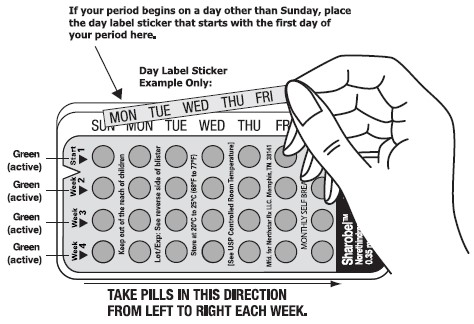
- To remove a tablet, i) ensure the blister is properly placed into the compact with the entire blister locked on the right V notch and placed under the six plastic lips of the compact, ii) press down the tablet with even pressure with your thumb or fi nger. The tablet will be pushed through the back of the compact tablet dispenser. Do not press with your thumbnail, fi ngernail, or any other sharp object.
- Swallow the pill. You will take one pill each day. POPs must be taken at the same time every day, so choose a time and then take the pill at that same time every day. Every time you take a pill late, and especially if you miss a pill, you are more likely to get pregnant.
- Wait 24 hours to take your next pill. POPs must be taken at the same time every day, so choose a time and then take the pill at that same time every day. Every time you take a pill late, and especially if you miss a pill, you are more likely to get pregnant. Continue to take one pill each day whether bleeding or not until all the pills have been taken.
- Take your pill at the same time every day. It is important to take the correct pill eachday and not miss any pills. To help you remember, take your pill at the same time as another daily activity, like turning off your alarm clock or brushing your teeth.
- You will start a new blister pack on the day after your blister pack is empty.
- THE FIRST PILL IN EVERY BLISTER PACK WILL ALWAYS BE TAKEN ON THE SAME DAY OF THE WEEK, NO MATTER WHEN YOUR NEXT PERIOD STARTS.
- If you are more than 3 hours late or you miss one or more POPs:
- If you are not sure what to do about the pills you have missed, keep taking POPs and use a backup method until you can talk to your healthcare professional.
- POPs must be taken at the same time every day, so choose a time and then take the pill at that same time every day. Every time you take a pill late, and especially if you miss a pill, you are more likely to get pregnant.
- Start the next pack the day after the last pack is finished. There is no break between packs. Always have your next pack of pills ready.
- You may have some menstrual spott ing between periods. Do not stop taking your pills if this happens.
- If you vomit soon after taking a pill, use a backup method (such as a condom and/or a spermicide) for 48 hours.
- If you want to stop taking POPs, you can do so at any time, but, if you remain sexually active and don’t wish to become pregnant, be certain to use another birth control method.
- If you are not sure about how to take POPs, ask your healthcare professional.