Brand Name

Repatha

Generic Name
Evolocumab
View Brand Information
FDA approval date: October 09, 2018
Classification: PCSK9 Inhibitor
Form: Injection

What is Repatha (Evolocumab)?

REPATHA is indicated: To reduce the risk of major adverse cardiovascular events in adults with established cardiovascular disease As an adjunct to diet, alone or in combination with other low-density lipoprotein cholesterol -lowering therapies, in adults with primary hyperlipidemia, including heterozygous familial hypercholesterolemia , to reduce LDL-C As an adjunct to diet and other LDL-C-lowering therapies in pediatric patients aged 10 years and older with HeFH, to reduce LDL-C As an adjunct to other LDL-C-lowering therapies in adults and pediatric patients aged 10 years and older with homozygous familial hypercholesterolemia , to reduce LDL-C REPATHA is a PCSK9 inhibitor indicated: To reduce the risk of major adverse cardiovascular events in adults with established cardiovascular disease as an adjunct to diet, alone or in combination with other low-density lipoprotein cholesterol -lowering therapies, in adults with primary hyperlipidemia, including heterozygous familial hypercholesterolemia , to reduce LDL-C as an adjunct to diet and other LDL-C-lowering therapies in pediatric patients aged 10 years and older with HeFH, to reduce LDL-C as an adjunct to other LDL-C-lowering therapies in adults and pediatric patients aged 10 years and older with homozygous familial hypercholesterolemia , to reduce LDL-C

Related Clinical Trials

A Real-world, Prospective, Observational Study Assessing the Effectiveness of Repatha® Used in Combination With Standard of Care Compared With Standard of Care Alone on Major Cardiovascular Events in Chinese Patients With Established Atherosclerotic Cardiovascular Disease

Summary: The primary objective of the study is to evaluate real-world effectiveness of treatment with Repatha® in combination with SOC, compared with SOC alone, on the risk for cardiovascular (CV) death, myocardial infarction (MI), stroke, hospitalization for unstable angina, or coronary revascularization, whichever occurs first, in participants with established atherosclerotic CV disease (ASCVD) treated w...

A Phase 2 Study to Evaluate the Effect of Obicetrapib Alone and in Combination With Evolocumab (Repatha®) on Lipoprotein (a) in Patients With Mild Dyslipidemia: The VINCENT Study

Summary: The goal of this open label 16 week trial is to evaluate Lp(a) levels for patients with elevated Lp(a) being treated with obicetrapib and obiceptrapib/evolocumab Patients will: Have baseline Lp(a) tested at randomization Take 10mg/dL obiceptrapib daily for 8 weeks and have Lp(a) tested at Week 8 Take 10 mg/dL obicetrapib daily/evolocumab 140 every other week for 8 weeks and have Lp(a) retested at ...

Lipoprotein(a) Levels in Patients With Atherosclerotic Cardiovascular Diseases in Russia

Summary: This study has the purpose to answer how the Lipoprotein(a) (Lp(a)) level is distributed among Atherosclerotic cardiovascular disease (ASCVD) patients in Russia, and what is the connection between elevated levels of this parameter and the cardiovascular disease (CVD) risk.

Brand Information

REPATHA (Evolocumab)
1INDICATIONS AND USAGE
REPATHA is indicated:
  • To reduce the risk of major adverse cardiovascular (CV) events (CV death, myocardial infarction, stroke, unstable angina requiring hospitalization, or coronary revascularization) in adults at increased risk for these events.
  • As an adjunct to diet and exercise to reduce low-density lipoprotein cholesterol (LDL-C) in:
  • adults with hypercholesterolemia.
  • adults and pediatric patients aged 10 years and older with heterozygous familial hypercholesterolemia (HeFH).
  • adults and pediatric patients aged 10 years and older with homozygous familial hypercholesterolemia (HoFH).
2DOSAGE FORMS AND STRENGTHS
REPATHA is a clear to opalescent, colorless to pale yellow solution available as follows:
  • Injection: 140 mg/mL solution in a prefilled single-dose SureClick
  • Injection: 140 mg/mL solution in a prefilled single-dose syringe
  • Injection: 420 mg/3.5 mL solution in a single-dose Pushtronex
3CONTRAINDICATIONS
REPATHA is contraindicated in patients with a history of a serious hypersensitivity reaction to evolocumab or any of the excipients in REPATHA. Serious hypersensitivity reactions including angioedema have occurred in patients treated with REPATHA
4ADVERSE REACTIONS
The following adverse reactions are also discussed in other sections of the label:
  • Hypersensitivity Reactions
4.1Clinical Trials Experience
Because clinical trials are conducted under widely varying conditions, adverse reaction rates observed in the clinical trials of a drug cannot be directly compared to rates in the clinical trials of another drug and may not reflect the rates observed in clinical practice.
Adverse Reactions in Adults with Primary Hypercholesterolemia
The data described below reflect exposure to REPATHA in 8 placebo-controlled trials that included 2651 patients treated with REPATHA, including 557 exposed for 6 months and 515 exposed for 1 year (median treatment duration of 12 weeks)
Adverse Reactions in a 52-Week Controlled Trial
In a 52-week, double-blind, randomized, placebo-controlled trial, 599 patients received 420 mg of REPATHA subcutaneously once monthly
Adverse Reactions in Seven Pooled 12-Week Controlled Trials
In seven pooled 12-week, double-blind, randomized, placebo-controlled trials, 993 patients received 140 mg of REPATHA subcutaneously every 2 weeks and 1059 patients received 420 mg of REPATHA subcutaneously monthly. The mean age was 57 years (range: 18 to 80 years), 29% were older than 65 years, 49% women, 85% White, 5% Black, 9% Asian; 5% identified as Hispanic ethnicity. Adverse reactions reported in at least 1% of REPATHA-treated patients, and more frequently than in placebo-treated patients, are shown in Table 2.
Adverse Reactions in Eight Pooled Controlled Trials (Seven 12-Week Trials and One 52-Week Trial)
The adverse reactions described below are from a pool of the 52-week trial and seven 12-week trials. The mean and median exposure durations of REPATHA in this pool of eight trials were 20 weeks and 12 weeks, respectively.
Local Injection Site Reactions
Injection site reactions occurred in 3.2% and 3.0% of REPATHA-treated and placebo-treated patients, respectively. The most common injection site reactions were erythema, pain, and bruising. The proportions of patients who discontinued treatment due to local injection site reactions in REPATHA-treated patients and placebo-treated patients were 0.1% and 0%, respectively.
Hypersensitivity Reactions
Hypersensitivity reactions occurred in 5.1% and 4.7% of REPATHA-treated and placebo-treated patients, respectively. The most common hypersensitivity reactions were rash (1.0% versus 0.5% for REPATHA and placebo, respectively), eczema (0.4% versus 0.2%), erythema (0.4% versus 0.2%), and urticaria (0.4% versus 0.1%).
Adverse Reactions in the Cardiovascular Outcomes Trial
In a double-blind, randomized, placebo-controlled cardiovascular outcomes trial, 27,525 patients received at least one dose of REPATHA or placebo
The safety profile of REPATHA in this trial was generally consistent with the safety profile described above in the 12- and 52-week controlled trials involving patients with primary hypercholesterolemia. Common adverse reactions (> 5% of patients treated with REPATHA and occurring more frequently than placebo) included diabetes mellitus (8.8% REPATHA, 8.2% placebo), nasopharyngitis (7.8% REPATHA, 7.4% placebo), and upper respiratory tract infection (5.1% REPATHA, 4.8% placebo).
Among the 16,676 patients without diabetes mellitus at baseline, the incidence of new-onset diabetes mellitus during the trial was 8.1% in patients treated with REPATHA compared with 7.7% in patients that received placebo.
Adverse Reactions in Pediatric Patients with HeFH
In a 24-week, randomized, placebo-controlled, double-blind trial of 157 pediatric patients with HeFH, 104 patients received 420 mg REPATHA subcutaneously once monthly
  • Nasopharyngitis (12% versus 11%)
  • Headache (11% versus 2%)
  • Oropharyngeal pain (7% versus 0%)
  • Influenza (6% versus 4%)
  • Upper respiratory tract infection (6% versus 2%)
Adverse Reactions in Adults and Pediatric Patients with HoFH
In a 12-week, double-blind, randomized, placebo-controlled trial of 49 patients with HoFH, 33 patients received 420 mg of REPATHA subcutaneously once monthly
  • Upper respiratory tract infection (9.1% versus 6.3%)
  • Influenza (9.1% versus 0%)
  • Gastroenteritis (6.1% versus 0%)
  • Nasopharyngitis (6.1% versus 0%)
In a multicenter, open-label 5-year extension study, 106 patients with HoFH, including 14 pediatric patients, received 420 mg of REPATHA subcutaneously once monthly or every 2 weeks
4.2Immunogenicity
As with all therapeutic proteins, there is potential for immunogenicity. The detection of antibody formation is highly dependent on the sensitivity and specificity of the assay. Additionally, the observed incidence of antibody (including neutralizing antibody) positivity in an assay may be influenced by several factors including assay methodology, sample handling, timing of sample collection, concomitant medications, and underlying disease. For these reasons, comparison of the incidence of antibodies to REPATHA in the studies described below with the incidence of antibodies in other studies or to other products may be misleading.
The immunogenicity of REPATHA has been evaluated using an electrochemiluminescent bridging screening immunoassay for the detection of binding anti-drug antibodies. For patients whose sera tested positive in the screening immunoassay, an
In a pool of placebo- and active-controlled clinical trials, 0.3% (48 out of 17,992) of adult patients treated with at least one dose of REPATHA tested positive for the development of binding antibodies. Patients whose sera tested positive for binding antibodies were further evaluated for neutralizing antibodies; none of the patients tested positive for neutralizing antibodies.
The development of anti-evolocumab antibodies was not detected in clinical trials of pediatric patients treated with REPATHA.
There was no evidence that the presence of anti-drug binding antibodies impacted the pharmacokinetic profile, clinical response, or safety of REPATHA.
4.3Postmarketing Experience
The following additional adverse reactions have been identified during post-approval use of REPATHA. Because these reactions are reported voluntarily from a population of uncertain size, it is not always possible to reliably estimate their frequency or establish a causal relationship to drug exposure.
  • Hypersensitivity reactions: Angioedema
  • Influenza-like illness
5DESCRIPTION
Evolocumab is a human monoclonal immunoglobulin G2 (IgG2) directed against human proprotein convertase subtilisin kexin type 9 (PCSK9). Evolocumab has an approximate molecular weight (MW) of 144 kDa and is produced in genetically engineered mammalian (Chinese hamster ovary) cells.
REPATHA is a sterile, preservative-free, clear to opalescent, colorless to pale yellow solution for subcutaneous use. Each 1 mL prefilled single-dose SureClick
6CLINICAL STUDIES
Adult Patients with Established Cardiovascular Disease
Study 1 (FOURIER, NCT01764633) was a double-blind, randomized, placebo-controlled, event-driven trial in 27,564 (13,784 REPATHA, 13,780 placebo) adult patients with established cardiovascular disease and with LDL-C ≥ 70 mg/dL and/or non-HDL-C ≥ 100 mg/dL despite high- or moderate-intensity statin therapy. Patients were randomly assigned 1:1 to receive either subcutaneous injections of REPATHA (140 mg every 2 weeks or 420 mg once monthly) or placebo; 86% used the every-2-week regimen throughout the trial. The median follow-up duration was 26 months. Overall, 99.2% of patients were followed until the end of the trial or death.
The mean (SD) age at baseline was 63 (9) years, with 45% being at least 65 years old; 25% were women. The trial population was 85% White, 2% Black, and 10% Asian; 8% identified as Hispanic ethnicity. Regarding prior diagnoses of cardiovascular disease, 81% had prior myocardial infarction, 19% prior non-hemorrhagic stroke, and 13% had symptomatic peripheral arterial disease. Selected additional baseline risk factors included hypertension (80%), diabetes mellitus (1% type 1; 36% type 2), current daily cigarette smoking (28%), New York Heart Association class I or II congestive heart failure (23%), and eGFR < 60 mL/min per 1.73 m
REPATHA significantly reduced the risk for the primary composite endpoint (time to first occurrence of cardiovascular death, myocardial infarction, stroke, hospitalization for unstable angina, or coronary revascularization; p < 0.0001) and the key secondary composite endpoint (time to first occurrence of cardiovascular death, myocardial infarction, or stroke; p < 0.0001). The Kaplan-Meier estimates of the cumulative incidence of the primary and key secondary composite endpoints over time are shown in Figure 1 and Figure 2 below.
The results of primary and secondary efficacy endpoints are shown in Table 3 below.
The difference between REPATHA and placebo in mean percent change in LDL-C from baseline to Week 12 was −63% (95% CI: −63%, −62%) and from baseline to Week 72 was −57% (95% CI: −58%, −56%). At Week 48, the median [Q1, Q3] LDL-C was 26 [15, 46] mg/dL in the REPATHA group, with 47% of patients having LDL-C < 25 mg/dL.
In EBBINGHAUS (NCT02207634), a substudy of 1974 patients enrolled in the FOURIER trial, REPATHA was non-inferior to placebo on selected cognitive function domains as assessed with the use of neuropsychological function tests over a median follow-up of 19 months.
Primary Hypercholesterolemia
Study 2 (LAPLACE-2, NCT01763866) was a multicenter, double-blind, randomized controlled 12-week trial in which patients were initially randomized to an open-label specific statin regimen for a 4-week lipid stabilization period followed by random assignment to subcutaneous injections of REPATHA 140 mg every 2 weeks, REPATHA 420 mg once monthly, or placebo for 12 weeks. The trial included 1896 patients with hypercholesterolemia who received REPATHA, placebo, or ezetimibe as add-on therapy to daily doses of statins (atorvastatin, rosuvastatin, or simvastatin). Ezetimibe was also included as an active control only among those assigned to background atorvastatin. Overall, the mean age at baseline was 60 years (range: 20 to 80 years), 35% were ≥ 65 years old, 46% women, 94% White, 4% were Black, and 1% Asian; 5% identified as Hispanic or Latino ethnicity. After 4 weeks of background statin therapy, the mean baseline LDL-C ranged between 77 and 127 mg/dL across the five background therapy arms.
The difference between REPATHA and placebo in mean percent change in LDL-C from baseline to Week 12 was −71% (95% CI: −74%, −67%; p < 0.0001) and −63% (95% CI: −68%, −57%; p < 0.0001) for the 140 mg every 2 weeks and 420 mg once monthly dosages, respectively. The difference between REPATHA and ezetimibe in mean percent change in LDL-C from baseline to Week 12 was −45% (95% CI: −52%, −39%; p < 0.0001) and −41% (95% CI: −47%, −35%; p < 0.0001) for the 140 mg every 2 weeks and 420 mg once monthly dosages, respectively. For additional results, see
Study 3 (DESCARTES, NCT01516879) was a multicenter, double-blind, randomized, placebo-controlled, 52-week trial that included 901 patients with hypercholesterolemia who received protocol-determined background lipid-lowering therapy of a cholesterol-lowering diet either alone or in addition to atorvastatin (10 mg or 80 mg daily) or the combination of atorvastatin 80 mg daily with ezetimibe. After stabilization on background therapy, patients were randomly assigned to the addition of placebo or REPATHA 420 mg administered subcutaneously once monthly. Overall, the mean age at baseline was 56 years (range: 25 to 75 years), 23% were ≥ 65 years, 52% women, 80% White, 8% Black, and 6% Asian; 6% identified as Hispanic or Latino ethnicity. After stabilization on the assigned background therapy, the mean baseline LDL-C ranged between 90 and 117 mg/dL across the four background therapy groups.
In these patients with hypercholesterolemia on a protocol-determined background therapy, the difference between REPATHA 420 mg once monthly and placebo in mean percent change in LDL-C from baseline to Week 52 was −55% (95% CI: −60%, −50%; p < 0.0001) (Table 5 and Figure 4). For additional results, see
Study 4 (MENDEL-2, NCT01763827) was a multicenter, double-blind, randomized, placebo- and active-controlled, 12-week trial that included 614 patients with hypercholesterolemia who were not taking lipid-lowering therapy at baseline. Patients were randomly assigned to receive subcutaneous injections of REPATHA 140 mg every 2 weeks, REPATHA 420 mg once monthly, or placebo for 12 weeks. Blinded administration of ezetimibe was also included as an active control. Overall, the mean age at baseline was 53 years (range: 20 to 80 years), 18% were ≥ 65 years old, 66% were women, 83% White, 7% Black, and 9% Asian; 11% identified as Hispanic or Latino ethnicity. The mean baseline LDL-C was 143 mg/dL.
The difference between REPATHA and placebo in mean percent change in LDL-C from baseline to Week 12 was −55% (95% CI: −60%, −50%; p < 0.0001) and −57% (95% CI: −61%, −52%; p < 0.0001) for the 140 mg every 2 weeks and 420 mg once monthly dosages, respectively. The difference between REPATHA and ezetimibe in mean percent change in LDL-C from baseline to Week 12 was −37% (95% CI: −42%, −32%; p < 0.0001) and −38% (95% CI: −42%, −34%; p < 0.0001) for the 140 mg every 2 weeks and 420 mg once monthly dosages, respectively. For additional results, see
Study 5 (RUTHERFORD-2, NCT01763918) was a multicenter, double-blind, randomized, placebo-controlled, 12-week trial in 329 patients with HeFH on statins with or without other lipid-lowering therapies. Patients were randomized to receive subcutaneous injections of REPATHA 140 mg every two weeks, 420 mg once monthly, or placebo. HeFH was diagnosed by the Simon Broome criteria (1991). In Study 5, 38% of patients had clinical atherosclerotic cardiovascular disease. The mean age at baseline was 51 years (range: 19 to 79 years), 15% of the patients were ≥ 65 years old, 42% were women, 90% were White, 5% were Asian, and 1% were Black. The average LDL-C at baseline was 156 mg/dL with 76% of the patients on high-intensity statin therapy.
The differences between REPATHA and placebo in mean percent change in LDL-C from baseline to Week 12 was −61% (95% CI: −67%, −55%; p < 0.0001) and −60% (95% CI: −68%, −52%; p < 0.0001) for the 140 mg every 2 weeks and 420 mg once monthly dosages, respectively. For additional results, see
Pediatric Patients with HeFH
Study 6 (HAUSER-RCT, NCT02392559) was a randomized, multicenter, placebo-controlled, double-blind, 24-week trial in 157 pediatric patients aged 10 to 17 years with HeFH
The difference between REPATHA and placebo in mean percent change in LDL-C from baseline to Week 24 was −38% (95% CI: −45%, −31%; p < 0.0001). For additional results, see
Adults and Pediatric Patients with HoFH
Study 7 (TESLA, NCT01588496) was a multicenter, double-blind, randomized, placebo-controlled, 12-week trial in 49 patients (not on lipid-apheresis therapy) with HoFH. In this trial, 33 patients received subcutaneous injections of 420 mg of REPATHA once monthly and 16 patients received placebo as an adjunct to other lipid-lowering therapies (e.g., statins, ezetimibe). The mean age at baseline was 31 years, 49% were women, 90% White, 4% were Asian, and 6% other. The trial included 10 adolescents (ages 13 to 17 years), 7 of whom received REPATHA. The mean LDL-C at baseline was 349 mg/dL with all patients on statins (atorvastatin or rosuvastatin) and 92% on ezetimibe. The diagnosis of HoFH was made by genetic confirmation or a clinical diagnosis based on a history of an untreated LDL-C concentration > 500 mg/dL together with either xanthoma before 10 years of age or evidence of HeFH in both parents.
The difference between REPATHA and placebo in mean percent change in LDL-C from baseline to Week 12 was −31% (95% CI: −44%, −18%; p < 0.0001). For additional results, see
Patients known to have two LDL-receptor negative alleles (little to no residual function) did not respond to REPATHA.
Study 8 (TAUSSIG, NCT01624142) was a multicenter, open-label 5-year extension study with REPATHA in 106 patients with HoFH, who were treated with REPATHA as an adjunct to other lipid-lowering therapies. The study included 14 pediatric patients (ages 13 to 17 years). All patients in the study were initially treated with REPATHA 420 mg once monthly except for those receiving lipid apheresis at enrollment, who began with REPATHA 420 mg every 2 weeks. Dose frequency in non-apheresis patients could be titrated up to 420 mg once every 2 weeks based on LDL-C response and PCSK9 levels.
A total of 48 patients with HoFH received REPATHA 420 mg once monthly for at least 12 weeks in Study 8 followed by REPATHA 420 mg every 2 weeks for at least 12 weeks. Mean percent change from baseline in LDL-C were −20% at Week 12 of 420 mg once monthly treatment and −30% at Week 12 of 420 mg every 2 weeks treatment, based on available data.
Study 9 (HAUSER-OLE, NCT02624869) was an open-label, single-arm, multicenter, 80-week study to evaluate the safety, tolerability, and efficacy of REPATHA for LDL-C reduction in pediatric patients aged 10 to 17 years with HoFH
7HOW SUPPLIED/STORAGE AND HANDLING
REPATHA is a clear to opalescent, colorless to pale yellow solution supplied as follows:
8PATIENT COUNSELING INFORMATION
Advise the patient and/or caregiver to read the FDA-Approved Patient Labeling (Patient Information and Instructions for Use).
Hypersensitivity
Inform patients that serious hypersensitivity reactions (e.g., angioedema) have been reported in patients treated with REPATHA. Advise patients on the symptoms of hypersensitivity reactions and instruct them to discontinue REPATHA and seek medical attention promptly, if such symptoms occur.
Latex-Sensitivity
Instruct patients to inform their healthcare provider if they are sensitive to latex. Inform patients that REPATHA is available as prefilled single-dose SureClick
Pregnancy
Advise women who are exposed to REPATHA during pregnancy that there is a pregnancy safety study that monitors pregnancy outcomes. Encourage these patients to report their pregnancy to Amgen at 1-800-77-AMGEN (1-800-772-6436) or https://wwwext.amgen.com/products/global-patient-safety/adverse-event-reporting
Administration
Provide guidance to patients and caregivers on proper subcutaneous administration technique and how to use the prefilled single-dose SureClick
The single-dose on-body infusor with prefilled cartridge is not made with natural rubber latex.
9INSTRUCTIONS FOR USE REPATHA®[ri-PAth-a] (evolocumab) injection, for subcutaneous use mg/mL prefilled single-dose SureClick®autoinjector (contains dry natural rubber)
This Instructions for Use contains information on how to inject REPATHA with a SureClick autoinjector.
If your healthcare provider decides that you or a caregiver may be able to give your injections of REPATHA at home, you should receive training on the right way to prepare and inject REPATHA. Do not try to inject yourself until you have been shown the right way to give the injections by your healthcare provider or nurse.
The medicine in the REPATHA autoinjector is for injection under the skin (subcutaneous injection). See the REPATHA
Additional information about your sharps disposal container
  • made of a heavy-duty plastic,
  • can be closed with a tight-fitting, puncture-resistant lid, without sharps being able to come out,
  • upright and stable during use,
  • leak-resistant, and
  • properly labeled to warn of hazardous waste inside the container.
Disposing of sharps disposal containers:
When your sharps disposal container is almost full, you will need to follow your community guidelines for the right way to dispose of your sharps disposal container.
There may be state or local laws about how you should throw away used needles and syringes.
For more information about safe sharps disposal, and for specific information about sharps disposal in the state that you
Do not dispose of your used sharps disposal container in your household trash unless your community guidelines permit this.
Do not recycle your used sharps disposal container.
Keep the autoinjector and sharps disposal container out of the sight and reach of children.
For more information or help call 1-844-REPATHA (1-844-737-2842).
REPATHA (evolocumab)
Manufactured by:
© 2015-2022, 2024-2025 Amgen Inc.
10INSTRUCTIONS FOR USE REPATHA®[ri-PAth-a] (evolocumab) injection, for subcutaneous use mg/mL prefilled single-dose SureClick®autoinjector
This Instructions for Use contains information on how to inject REPATHA with a SureClick autoinjector.
If your healthcare provider decides that you or a caregiver may be able to give your injections of REPATHA at home, you should receive training on the right way to prepare and inject REPATHA. Do not try to inject yourself until you have been shown the right way to give the injections by your healthcare provider or nurse.
The medicine in the REPATHA autoinjector is for injection under the skin (subcutaneous injection). See the REPATHA
Additional information about your sharps disposal container
  • made of a heavy-duty plastic,
  • can be closed with a tight-fitting, puncture-resistant lid, without sharps being able to come out,
  • upright and stable during use,
  • leak-resistant, and
  • properly labeled to warn of hazardous waste inside the container.
Disposing of sharps disposal containers:
When your sharps disposal container is almost full, you will need to follow your community guidelines for the right way to dispose of your sharps disposal container.
There may be state or local laws about how you should throw away used needles and syringes.
For more information about safe sharps disposal, and for specific information about sharps disposal in the state that you
Do not dispose of your used sharps disposal container in your household trash unless your community guidelines permit this.
Do not recycle your used sharps disposal container.
Keep the autoinjector and sharps disposal container out of the sight and reach of children.
For more information or help call 1-844-REPATHA (1-844-737-2842).
REPATHA (evolocumab)
Manufactured by:
© 2024-2025 Amgen Inc.
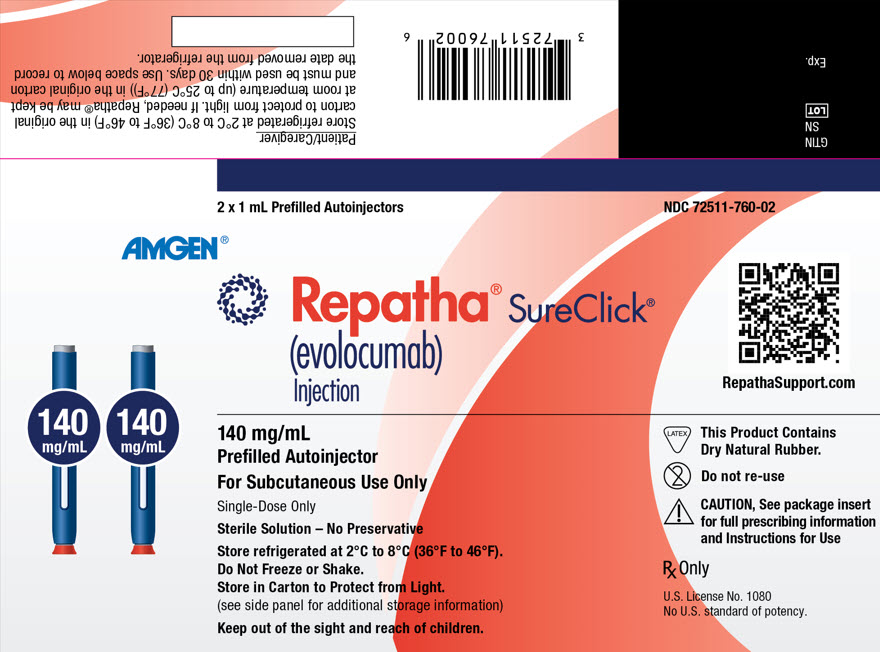
11PRINCIPAL DISPLAY PANEL - 2 x 140 mg/mL Autoinjector Carton - NDC 72511-760-02
AMGEN
2 x Prefilled Single-Dose Autoinjectors
Repatha
repathainjection.com
140 mg/mL
For Subcutaneous Use Only
Sterile Solution – No Preservative
140
CAUTION, See package insert
This Product Contains
Do not re-use
Refrigerate
Keep out of the sight
Rx Only
U.S. License No. 1080
NDC 72511-760-02
PRINCIPAL DISPLAY PANEL - 2 x 140 mg/mL Autoinjector Carton - NDC 72511-760-02
12PRINCIPAL DISPLAY PANEL - 1 x 140 mg/mL Autoinjector Carton - NDC 72511-760-91
AMGEN
1 x Prefilled Single-Dose Autoinjector
Repatha
Not for Sale
repathainjection.com
140 mg/mL
For Subcutaneous Use Only
Sterile Solution – No Preservative
140
CAUTION, See package insert
This Product Contains
Do not re-use
Refrigerate
Keep out of the sight
Rx Only
U.S. License No. 1080
NDC 72511-760-91
PRINCIPAL DISPLAY PANEL - 1 x 140 mg/mL Autoinjector Carton - NDC 72511-760-91
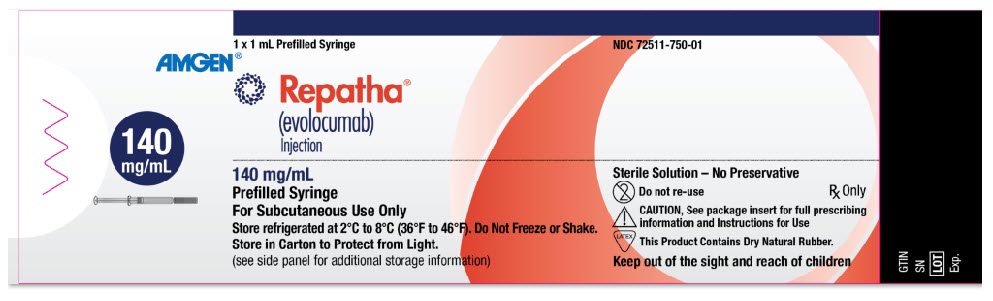
13PRINCIPAL DISPLAY PANEL - 140 mg/mL Syringe Carton
1 x 1 mL Prefilled Syringe
AMGEN
Repatha
140 mg/mL
For Subcutaneous Use Only
Store refigerated at 2°C to 8°C (36°F to 46°F). Do Not Freeze or Shake.
Sterile Solution – No Preservative
Do not re-use
CAUTION, See package insert for full prescribing
This Product Contains Dry Natural Rubber.
Keep out of the sight and reach of children
PRINCIPAL DISPLAY PANEL - 140 mg/mL Syringe Carton
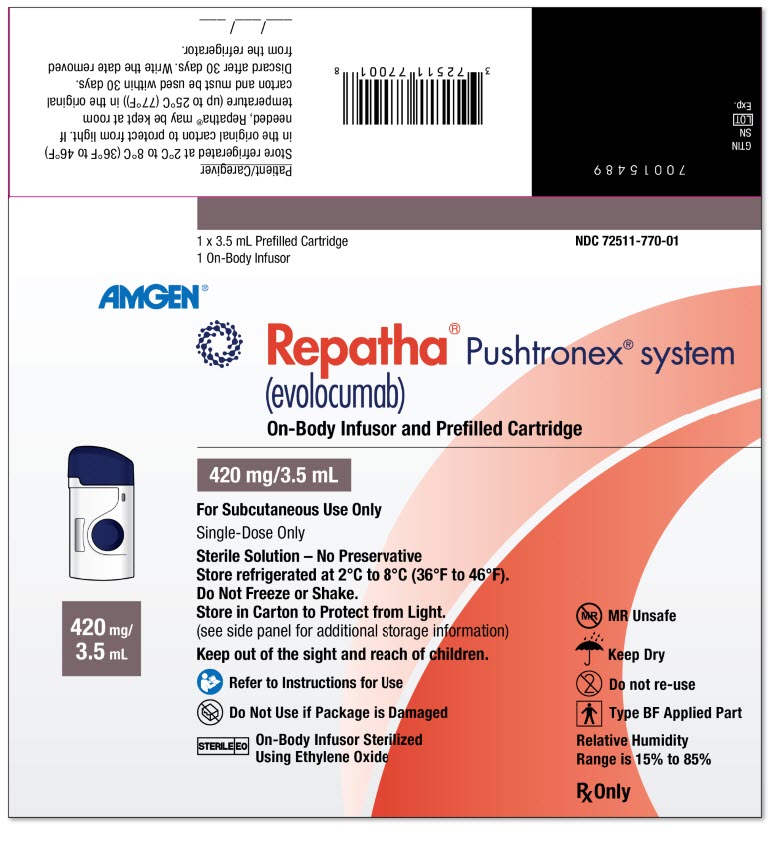
14PRINCIPAL DISPLAY PANEL - Kit Carton
1 x 3.5 mL Prefilled Cartridge
AMGEN
Repatha
420 mg/3.5 mL
For Subcutaneous Use Only
Single-Dose Only
Sterile Solution – No Preservative
Keep out of the sight and reach of children.
Refer to Instructions for Use
Do Not Use if Package is Damaged
On-Body Infusor Sterilized
420 mg/
MR Unsafe
Keep Dry
Do not re-use
Type BF Applied Part
Relative Humidity
Rx Only
PRINCIPAL DISPLAY PANEL - Kit Carton
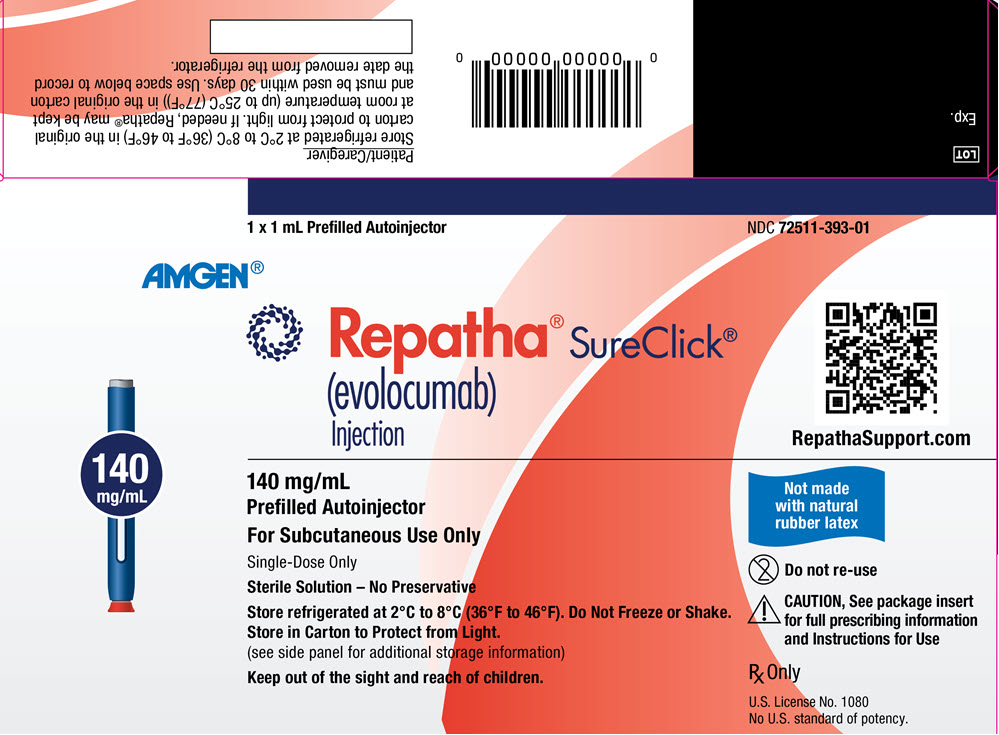
15PRINCIPAL DISPLAY PANEL - 1 x 140 mg/mL Autoinjector Carton - NDC 72511-393-01
AMGEN
1 x Prefilled Single-Dose Autoinjector
Repatha
repathainjection.com
140 mg/mL
For Subcutaneous Use Only
Sterile Solution – No Preservative
140
Not made with
CAUTION, See package insert
Do not re-use
Refrigerate
Keep out of the sight
Rx Only
U.S. License No. 1080
NDC 72511-393-01
PRINCIPAL DISPLAY PANEL - 1 x 140 mg/mL Autoinjector Carton - NDC 72511-393-01
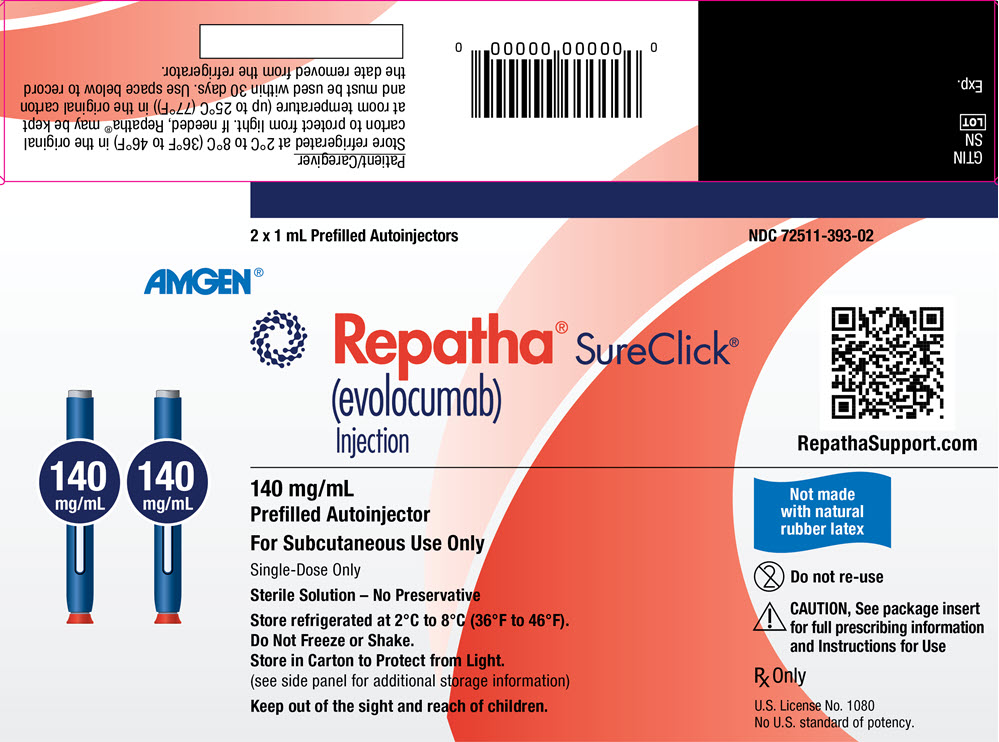
16PRINCIPAL DISPLAY PANEL - 2 x 140 mg/mL Autoinjector Carton - NDC 72511-393-02
AMGEN
2 x Prefilled Single-Dose Autoinjectors
Repatha
repathainjection.com
140 mg/mL
For Subcutaneous Use Only
Sterile Solution – No Preservative
140
Not made with
CAUTION, See package insert
Do not re-use
Refrigerate
Keep out of the sight
Rx Only
U.S. License No. 1080
NDC 72511-393-02
PRINCIPAL DISPLAY PANEL - 2 x 140 mg/mL Autoinjector Carton - NDC 72511-393-02
17PRINCIPAL DISPLAY PANEL - 1 x 140 mg/mL Autoinjector Carton - NDC 72511-393-96
AMGEN
1 x Prefilled Single-Dose Autoinjector
Repatha
Not for Sale
repathainjection.com
140 mg/mL
For Subcutaneous Use Only
Sterile Solution – No Preservative
140
Not made with
CAUTION, See package insert
Do not re-use
Refrigerate
Keep out of the sight
Rx Only
U.S. License No. 1080
NDC 72511-393-96
PRINCIPAL DISPLAY PANEL - 1 x 140 mg/mL Autoinjector Carton - NDC 72511-393-96
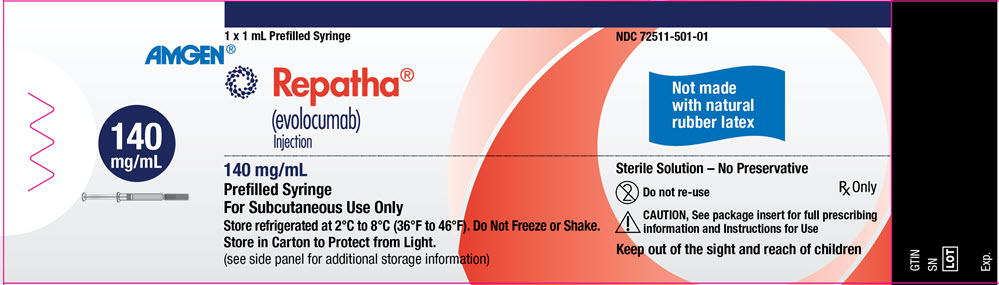
18PRINCIPAL DISPLAY PANEL - 140 mg/mL Syringe Carton - NDC 72511-501-01
1 x 1 mL Prefilled Syringe
AMGEN
140
Repatha
Not made
140 mg/mL
For Subcutaneous Use Only
Store refrigerated at 2°C to 8°C (36°F to 46°F). Do Not Freeze or Shake.
Sterile Solution – No Preservative
Rx Only
Do not re-use
CAUTION, See package insert for full prescribing
Keep out of the sight and reach of children
GTIN
PRINCIPAL DISPLAY PANEL - 140 mg/mL Syringe Carton - NDC 72511-501-01