Nayzilam
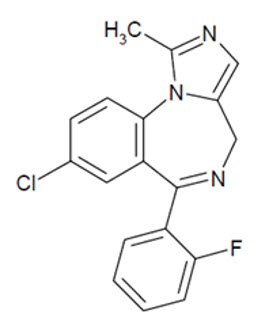
What is Nayzilam (Midazolam)?
Approved To Treat
Top Global Experts


Related Clinical Trials
Summary: This study aims to compare the effects of conscious sedation and intravenous general anesthesia on cardiovascular events in frail patients undergoing digestive endoscopy diagnosis and treatment.
Summary: Very preterm neonates (born before 32 weeks' gestation) often require invasive mechanical ventilation (IMV) to manage respiratory insufficiency. In France, around 8,250 infants are born annually at \<32 weeks, with an estimated 5,000 needing IMV. Although non-invasive support such as continuous positive airway pressure (CPAP) has become more common, a substantial proportion of these neonates still...
Summary: Chronic daily headaches (CDH) poses a significant burden on patients, healthcare systems and the society. Intravenous (IV) ketamine infusion, an intervention that is widely available and scalable, can treat CDH by reversing receptor-mediated sensitization. This study is a multicenter, placebo-controlled, parallel group randomized trial with blinding of participants and observers with the goal of c...
Related Latest Advances
Brand Information
- Concomitant use of benzodiazepines and opioids may result in profound sedation, respiratory depression, coma, and death
- The use of benzodiazepines, including NAYZILAM, exposes users to risks of abuse, misuse, and addiction, which can lead to overdose or death. Abuse and misuse of benzodiazepines commonly involve concomitant use of other medications, alcohol, and/or illicit substances, which is associated with an increased frequency of serious adverse outcomes. Before prescribing NAYZILAM and throughout treatment, assess each patient's risk for abuse, misuse, and addiction
- The continued use of benzodiazepines may lead to clinically significant physical dependence. The risks of dependence and withdrawal increase with longer treatment duration and higher daily dose. Although NAYZILAM is indicated only for intermittent use
- Known hypersensitivity to midazolam.
- Acute narrow-angle glaucoma
- Risks from Concomitant Use with Opioids
- Abuse, Misuse, and Addiction
- Dependence and Withdrawal Reactions After Use of NAYZILAM More Frequently Than Recommended
- Risks of Cardiorespiratory Adverse Reactions
- CNS Depression from Concomitant Use with Other CNS Depressants or Moderate or Strong CYP3A4 Inhibitors
- Suicidal Behavior and Ideation
- Impaired Cognitive Function
- Glaucoma
- Neonatal Sedation and Withdrawal Syndrome
- Other Adverse Reactions