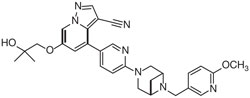
Retevmo
What is Retevmo (Selpercatinib)?
Approved To Treat


Related Clinical Trials
Summary: Papillary thyroid cancer (PTC) is the most common form of differentiated thyroid cancer (DTC). The traditional first line treatment for patients with advanced DTC after surgical resection is radioactive iodine (RAI) therapy. However, less than a quarter of patients with lung metastases will achieve a complete response to RAI therapy, and this therapy carries the risk of pulmonary fibrosis and an i...
Summary: This multicenter observational study aims to evaluate the safety and efficacy of neoadjuvant therapy in patients with locally advanced thyroid cancer, focusing on imaging, biochemical, and pathological responses, as well as short-term surgical outcomes and long-term prognosis.
Summary: This is a retrospective and prospective real-world clinical study of molecular typing in the treatment of advanced thyroid cancer. The retrospective study : Patients with advanced thyroid cancer who received precise treatment in the 24 participated hospitals from January 2020 to December 2023 were retrieved. The number of previous treatment lines was not limited. Patients who met the inclusion cri...
Related Latest Advances
Brand Information
- 40 mg: gray opaque capsule imprinted with “Lilly”, “3977” and “40 mg” in black ink.
- 80 mg: blue opaque capsule imprinted with “Lilly”, “2980” and “80 mg” in black ink.
- 40 mg: light gray, film coated, round tablet debossed with “Ret 40” on one side and “5340” on the other side.
- 80 mg: dark red-purple, film coated, round tablet debossed with “Ret 80” on one side and “6082” on the other side.
- 120 mg: light purple, film coated, round tablet debossed with “Ret 120” on one side and “6120” on the other side.
- 160 mg: light pink, film coated, round tablet debossed with “Ret 160” on one side and “5562” on the other side.
- Hepatotoxicity
- Interstitial Lung Disease / Pneumonitis
- Hypertension
- QT Interval Prolongation
- Hemorrhagic Events
- Hypersensitivity
- Tumor Lysis Syndrome
- Risk of Impaired Wound Healing
- Hypothyroidism
- Slipped Capital Femoral Epiphysis/Slipped Upper Femoral Epiphysis in Adolescent Patients