ARIPiprazole
What is Abilify (ARIPiprazole)?


Related Clinical Trials
Summary: This study is being done to understand the effect of aripiprazole on adults who stutter. Stuttering is a disorder that affects speech fluency. This study aims to understand sensorimotor pathways of stuttering and possible interventions.
Summary: The effectiveness and efficacy of the combination of pharmacotherapy with the two new recovery-oriented programs, RECOVERYTRSGR for patients with treatment- resistant schizophrenia and RECOVERYTRSBDGR for patients with treatment- resistant bipolar disorder.
Summary: Schizophrenia is a serious mental disorder with a global prevalence of 1%. The main cause of this condition is dysfunction in the signaling of neurotransmitters dopamine, serotonin, glutamate and Gamma-aminobutyric acid .According to recent research, a disturbed cellular energy state caused by mitochondrial dysfunction is thought to be a factor in the development of schizophrenia. The aim of the t...
Related Latest Advances
Brand Information
- Schizophrenia
- Acute Treatment of Manic and Mixed Episodes associated with Bipolar I Disorder
- Adjunctive Treatment of Major Depressive Disorder
- Irritability Associated with Autistic Disorder
- Treatment of Tourette's Disorder
- Increased Mortality in Elderly Patients with Dementia-Related Psychosis
- Cerebrovascular Adverse Events, Including Stroke
- Suicidal Thoughts and Behaviors in Children, Adolescents, and Young Adults
- Neuroleptic Malignant Syndrome (NMS)
- Tardive Dyskinesia
- Metabolic Changes
- Pathological Gambling and Other Compulsive Behaviors
- Orthostatic Hypotension
- Falls
- Leukopenia, Neutropenia, and Agranulocytosis
- Seizures/Convulsions
- Potential for Cognitive and Motor Impairment
- Body Temperature Regulation
- Suicide
- Dysphagia
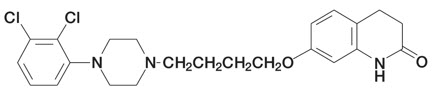
- Four short-term trials and one maintenance trial in adult patients and one short-term trial in adolescents (ages 13 to 17 years) with schizophrenia
- Four short-term monotherapy trials and one 6-week adjunctive trial in adult patients and one short-term monotherapy trial in pediatric patients (ages 10 to 17 years) with manic or mixed episodes
- One maintenance monotherapy trial and one maintenance adjunctive trial in adult patients with bipolar I disorder
- Two short-term trials in adult patients with MDD who had an inadequate response to antidepressant therapy during the current episode
- Two short-term trials in pediatric patients (ages 6 to 17 years) for the treatment of irritability associated with autistic disorder
- Two short-term trials in pediatric patients (ages 6 to 18 years) with Tourette's Disorder