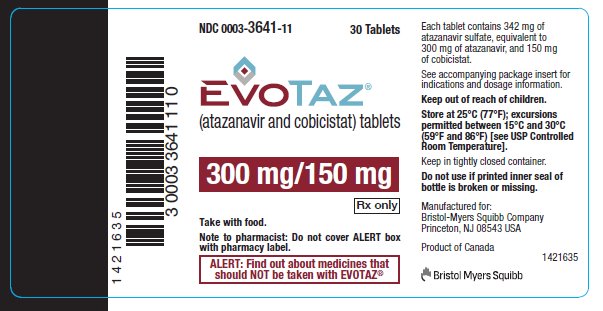
Atazanavir
What is Evotaz (Atazanavir)?
Approved To Treat
Top Global Experts


Related Clinical Trials
Summary: The choice of autograft for ACL reconstruction continues to be debated. To date, there has only be one completed randomized controlled trial with quad tendon to BTB and the tendon included a bone plug. There has been no study to date comparing an all soft tissue quad tendon to patellar tendon in a randomized controlled trial for ACL reconstruction.
Summary: The goal of this clinical study is to provide continued access to the study drug(s) to children and adolescents with human immunodeficiency virus type 1 (HIV-1) who completed their participation in an applicable parent study and to monitor for adverse events. The primary objectives of this study are as follows: * To provide continued access to the study drug received in the parent protocol or swit...
Summary: This randomized controlled trial aims to evaluate the effectiveness of a newly developed Modified Structured Telerehabilitation Intervention Protocol (MSTITP) compared with conventional in-person physical therapy in patients recovering from Total Knee Arthroplasty (TKA). The study also explores whether a hybrid rehabilitation approach may further optimize patient outcomes. A total of eligible part...
Related Latest Advances
Brand Information
- in patients with previously demonstrated clinically significant hypersensitivity (e.g., Stevens-Johnson syndrome, erythema multiforme, or toxic skin eruptions) to any of the components of this product
- when coadministered with drugs that strongly induce CYP3A4, which may lead to lower exposure of EVOTAZ resulting in potential loss of efficacy and development of possible resistance (Table 5).
- when coadministered with drugs that are highly dependent on CYP3A or UGT1A1 for clearance, and for which elevated plasma concentrations of the interacting drugs are associated with serious and/or life-threatening events (see Table 5).
- Coadministration is contraindicated with, but not limited to, the following drugs:
- cardiac conduction abnormalities
- rash
- effects on serum creatinine
- new onset or worsening renal impairment when used with tenofovir DF
- chronic kidney disease
- nephrolithiasis and cholelithiasis
- hepatotoxicity
- hyperbilirubinemia
- atazanavir coadministered with cobicistat and emtricitabine/tenofovir DF (N=344) or
- atazanavir coadministered with ritonavir and emtricitabine/tenofovir DF (N=348).
b Rash events include dermatitis allergic, drug hypersensitivity, pruritus generalized, eosinophilic pustular folliculitis, rash, rash generalized, rash macular, rash maculopapular, rash morbilliform, rash papular, and urticaria.


(atazanavir and cobicistat) tablet