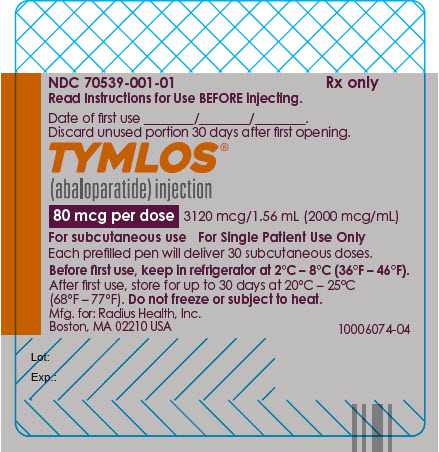
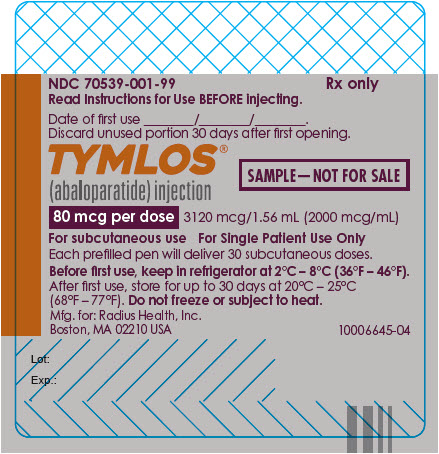
Tymlos
What is Tymlos (Abaloparatide)?
As we age, our bones naturally lose strength, a process that can lead to osteoporosis, a condition marked by weak, fragile bones that fracture easily. For many postmenopausal women and some men, the fear of a hip or spine fracture can affect daily confidence and mobility. Tymlos (abaloparatide) offers a proactive solution, helping rebuild bone and reduce the risk of serious fractures.
Tymlos belongs to a class of medications known as parathyroid hormone, related protein (PTHrP) analogs. It’s designed to stimulate new bone formation rather than merely slowing bone loss, making it a valuable option for those at high risk of fractures. Approved by the U.S. Food and Drug Administration (FDA) in 2017, Tymlos represents an important advancement in osteoporosis treatment, especially for patients who haven’t responded well to other therapies.
What does Tymlos do?
Tymlos is prescribed primarily for:
- Postmenopausal women with osteoporosis who are at high risk for bone fractures
- Men with osteoporosis, in certain cases, who have not improved with other treatments or cannot tolerate them
Unlike traditional osteoporosis medications that prevent further bone breakdown, Tymlos actively stimulates bone growth, improving both bone density and strength.
In clinical studies, Tymlos significantly reduced the risk of spine and non-spine fractures, including hip fractures, over an 18-month treatment period (FDA, 2017; Miller et al., 2018).
Patients who complete a Tymlos course often transition to a bone-protective maintenance medication, such as a bisphosphonate, to preserve their new bone mass.
For many, Tymlos can mean fewer fractures, greater independence, and renewed confidence in daily activities.
How does Tymlos work?
Healthy bones are constantly being remodeled, old bone tissue breaks down, and new bone forms. In osteoporosis, bone breakdown happens faster than new bone growth, leading to thinning and fragility.
Tymlos (abaloparatide) mimics the natural parathyroid hormone-related protein (PTHrP), which plays a key role in regulating calcium and bone metabolism.
When Tymlos is injected, it binds to specific receptors in bone cells, triggering the body to build new bone tissue. This process increases bone mineral density (BMD) and strengthens the bone’s microstructure, reducing fracture risk.
Clinically, this mechanism matters because it directly addresses the underlying problem in osteoporosis, insufficient bone formation rather than merely slowing bone loss.
Tymlos side effects
Like all medications, Tymlos can cause side effects. Most are mild to moderate and improve as the body adjusts to treatment.
Common side effects include:
- Dizziness or lightheadedness (especially after injection)
- Nausea
- Headache
- Fatigue
- Increased heart rate shortly after injection
Less common side effects:
- Joint or muscle pain
- Redness, swelling, or itching at the injection site
- Mild increase in calcium levels in blood or urine
Serious but rare side effects:
- Orthostatic hypotension: a sudden drop in blood pressure when standing up
- Hypercalcemia (high calcium levels): may cause weakness, confusion, or irregular heartbeat
- Osteosarcoma (bone cancer): seen in animal studies with long-term use, though not observed in humans at therapeutic doses
Because of this theoretical cancer risk, Tymlos should not be used for more than two years during a patient’s lifetime (FDA, 2024).
Who should avoid Tymlos:
- Individuals with a history of bone cancer, radiation exposure to bones, or metabolic bone diseases other than osteoporosis
- Patients with unexplained high calcium levels or Paget’s disease
If dizziness occurs, patients should sit or lie down immediately after injection and rise slowly. Healthcare providers can help manage side effects or adjust timing to improve tolerance.
Tymlos dosage
Tymlos is given as a once-daily injection under the skin (subcutaneous), usually in the abdomen. The medication comes in a prefilled injection pen that patients can use at home after proper instruction from their healthcare provider.
To maintain its bone-building benefits, Tymlos should be used continuously for up to two years, followed by a transition to another antiresorptive medication (like alendronate or denosumab) to maintain gains in bone density.
Monitoring: During treatment, your doctor may:
- Measure bone mineral density (BMD) using a DEXA scan
- Monitor calcium levels in blood and urine
- Evaluate for dizziness or blood pressure changes after injections
- Review your progress and decide when to switch to a maintenance therapy
For older adults or those with kidney problems, healthcare providers may monitor more closely, though Tymlos is generally well tolerated in these populations.
Patients should avoid injecting immediately before bedtime or driving until they know how the medication affects them.
Does Tymlos have a generic version?
As of 2025, Tymlos (abaloparatide) does not have an FDA-approved generic version. However, international versions may exist in other markets. Tymlos is a patented, brand-name medication manufactured by Radius Health (now part of Gurnet Point Capital and Patriot Biotech).
Generic or biosimilar forms may become available once patent exclusivity expires, but for now, Tymlos is the only brand of abaloparatide approved in the United States.
Some patients may qualify for manufacturer assistance programs or insurance coverage options that help reduce out-of-pocket costs. Your healthcare provider or pharmacist can guide you to available financial support resources.
Conclusion
Tymlos (abaloparatide) is an innovative osteoporosis treatment that helps rebuild bone from within, reducing the risk of fractures and improving bone strength. By mimicking natural bone-forming hormones, it provides a unique and powerful approach for patients at high fracture risk or those who haven’t responded to traditional therapies.
Although side effects such as dizziness or nausea may occur, most are manageable and temporary. With proper training, regular monitoring, and adherence to your doctor’s plan, Tymlos can play a crucial role in restoring bone health and confidence.
When prescribed and monitored by a qualified healthcare professional, Tymlos is a safe and effective therapy that empowers patients to take control of their bone health and maintain an active, independent lifestyle.
References
- U.S. Food and Drug Administration (FDA). (2024). Tymlos (abaloparatide) – Prescribing Information. https://www.fda.gov/
- Mayo Clinic. (2024). Abaloparatide (subcutaneous route): Description and side effects. https://www.mayoclinic.org/
- National Institutes of Health (NIH). (2024). Osteoporosis: Overview and management. https://www.nih.gov/
Approved To Treat
Top Global Experts
Related Clinical Trials
Summary: Osteoporosis is a systemic skeletal disorder affecting approximately 10% of individuals over 50 years of age. It is characterised by an increased risk of fragility fractures, which constitute a major source of morbidity, mortality, and healthcare burden worldwide. A range of pharmacological therapies has been approved for osteoporosis, with demonstrated efficacy in reducing fracture risk. These in...
Summary: 12-month prospective, open-label, multicenter, international, observational study evaluating sequential treatments after osteoanabolics
Related Latest Advances
Brand Information
- Hypersensitivity Reactions
- Risk of Osteosarcoma
- Orthostatic Hypotension
- Hypercalcemia
- Hypercalciuria and Urolithiasis
- Abdominal distension, abdominal pain
- Constipation, diarrhea, vomiting
- Asthenia, lethargy, malaise
- Insomnia
- Hypersensitivity and anaphylactic reactions, dyspnea (in the context of allergic reactions)
- Pruritus, rash
- Generalized pain and pain in bone, joint, back, and extremity
- Blood pressure increased
- Muscle spasms of the leg and back
- Injection site reactions including bruising, hemorrhage, pruritus, and rash
- Ala-Val-Ser-Glu-His-Gln-Leu-Leu-His-Asp-Lys-Gly-Lys-Ser-Ile-Gln-Asp-Leu-Arg-Arg-Arg-Glu-Leu-Leu-Glu-Lys-Leu-Leu-Aib-Lys-Leu-His-Thr-Ala-NH