Brand Name

Simulect

Generic Name
Basiliximab
View Brand Information
FDA approval date: May 12, 1998
Classification: Interleukin-2 Receptor Blocking Antibody
Form: Injection

What is Simulect (Basiliximab)?

For people receiving a life-saving organ transplant, one of the biggest challenges isn’t the surgery itself, it’s what comes afterward. The body’s immune system naturally tries to reject a new organ, seeing it as foreign. Without proper medication, this rejection can cause the transplanted kidney or liver to fail. Simulect (basiliximab) is a medication designed to prevent this, helping patients keep their new organ healthy and functioning for years to come. 

Simulect is a monoclonal antibody used to prevent acute organ rejection in people receiving a kidney transplant. It is given as part of an immunosuppressive regimen, usually alongside other medications such as corticosteroids and calcineurin inhibitors (like cyclosporine or tacrolimus). Developed by Novartis and approved by the U.S. Food and Drug Administration (FDA), Simulect is a targeted therapy that works by calming the immune system in a precise way reducing the risk of rejection without overly weakening the body’s natural defenses. 

What does Simulect do? 

Simulect helps prevent the immune system from attacking a transplanted organ, most often a kidney. When someone receives an organ from a donor, their immune system identifies it as foreign and tries to destroy it. This immune attack, called acute rejection, can occur within days or weeks after transplantation and is a leading cause of early transplant failure. 

Simulect is given around the time of the transplant surgery to lower this risk. It is not used to treat ongoing rejection but rather to prevent rejection from occurring in the first place. The drug works best when used in combination with other long-term immunosuppressants that maintain immune control over time. 

Clinical studies have shown that patients who received Simulect as part of their transplant regimen had significantly lower rates of acute kidney rejection compared with those who did not. By improving early transplant outcomes, Simulect plays a vital role in helping patients recover safely and maintain good organ function (FDA, 2024; NIH, 2024). 

How does Simulect work? 

Simulect (basiliximab) is a monoclonal antibody, a laboratory-made protein that specifically targets one part of the immune system. It works by blocking the interleukin-2 receptor (IL-2R) found on the surface of certain white blood cells called T-lymphocytes. 

T-lymphocytes (T-cells) are central players in the immune response. After a transplant, these cells recognize the new organ as foreign and become activated to attack it. Interleukin-2 (IL-2) is a key chemical signal that tells T-cells to multiply and mount this attack. 

Simulect binds tightly to the IL-2R, preventing IL-2 from activating T-cells. By stopping this activation early in the process, Simulect helps prevent the chain reaction that leads to rejection. Importantly, it does this without completely shutting down the immune system, making it a selective and well-tolerated option for transplant patients. 

Clinically, this mechanism matters because it reduces the need for high doses of other immunosuppressants, which often carry more severe long-term side effects like infections or kidney toxicity. 

Simulect side effects 

Most patients tolerate Simulect well, especially since it is given only for a short period around the time of transplantation. However, like all medications that affect the immune system, it can cause side effects. 

Common side effects may include: 

  • Constipation or nausea 
     
  • Headache 
     
  • Tremors 
     
  • Swelling in the hands, feet, or ankles (fluid retention) 
     
  • High blood pressure 
     
  • Anemia or changes in blood cell counts 

Serious but less common side effects: 

  • Severe allergic reaction (rash, itching, swelling, difficulty breathing) 
     
  • Signs of infection such as fever, chills, or sore throat 
     
  • Chest pain or irregular heartbeat 
     
  • Unusual bleeding or bruising 

Simulect, combined with other immunosuppressants, poses a low risk of infections or rare cancers like lymphoma or skin cancer, especially with proper dosing and monitoring. 

Who should avoid Simulect: 
Basiliximab is contraindicated for those with severe allergic reactions to it or its components. It’s not recommended for non-kidney organ transplants unless directed by a specialist.  

Patients should seek immediate medical attention for breathing difficulties, facial swelling, or anaphylaxis post-administration. 

Simulect dosage 

Simulect, an IV infusion given in a hospital, is not a daily medication. Most transplant patients receive two doses: one before surgery and one a few days later, to protect against organ rejection. Doctors monitor vital signs, kidney function, and infection markers for safety and effectiveness.. 

Simulect doesn’t need blood-level monitoring due to predictable absorption and clearance. However, regular checkups and lab tests are still necessary to assess immune function and organ health. Older adults and those with liver or kidney impairment typically don’t require dose adjustments but need close supervision to prevent infections or complications. 

Does Simulect have a generic version? 

As of 2025, Simulect (basiliximab) does not have an FDA-approved generic version in the United States. It is only sold as the brand-name medication manufactured by Novartis Pharmaceuticals. However, international versions may exist in other markets. 

Biosimilar basiliximab versions are being developed globally, offering comparable safety, purity, and potency to the original drug. These biosimilars, once approved, will provide more affordable options for hospitals and transplant programs, maintaining clinical effectiveness and meeting strict quality standards. 

Conclusion 

Simulect (basiliximab) is a vital medication that helps protect transplanted kidneys from immune system attack. By blocking a key pathway that activates immune cells, it helps patients avoid early organ rejection and improves long-term transplant success. 

Administered under medical supervision, Simulect is generally well-tolerated and vital for transplant medicine. Its targeted mechanism and strong safety record help patients focus on recovery rather than rejection. 

Simulect is part of a comprehensive treatment plan. Patients must maintain regular follow-ups, take prescribed medications, and communicate with their healthcare team for optimal outcomes. 

References 

  1. U.S. Food and Drug Administration (FDA). (2024). Simulect (basiliximab) prescribing information. Retrieved from https://www.accessdata.fda.gov 
     
  1. Mayo Clinic. (2024). Basiliximab injection: Uses and side effects. Retrieved from https://www.mayoclinic.org 
     
  1. MedlinePlus. (2024). Basiliximab: Drug information. National Library of Medicine. Retrieved from https://medlineplus.gov 
     
  1. National Institutes of Health (NIH). (2024). Immunosuppressive therapy in organ transplantation. Retrieved from https://www.nih.gov 

Approved To Treat

Save this treatment for later
Sign Up
Not sure about your diagnosis?
Check Your Symptoms

Related Clinical Trials

Multicenter Study on Integrated Treatment Regimen of Induction-Consolidation Chemotherapy and Transplantation for Adult Acute Lymphoblastic Leukemia

Summary: This study aims to evaluate an integrated treatment protocol for adults with Philadelphia chromosome-negative acute lymphoblastic leukemia (Ph- ALL), combining induction chemotherapy, consolidation therapy, and allogeneic hematopoietic stem cell transplantation (allo-HSCT) to improve treatment efficacy and survival rates. The single-arm, open-label, multicenter study will enroll 50 newly diagnosed...

A Phase 2 Trial of Yttrium-90 Labeled Anti-CD25 Monoclonal Antibody Combined With BEAM Chemotherapy (aTac-BEAM) Conditioning for Autologous Hematopoietic Cell Transplantation (AHCT) in Patients With Primary Refractory or Relapsed Hodgkin Lymphoma

Summary: This phase II trials studies the effects of yttrium-90 labeled anti-CD25 monoclonal antibody combined with BEAM chemotherapy conditioning in treating patients with Hodgkin lymphoma that does not response to treatment (refractory) or has come back (relapsed). Yttrium-90-labeled anti-CD25 is an antibody (proteins made by the immune system to fight infections) that is attached to a radioactive substa...

Allogeneic Regenerative Islet Transplantation for the Treatment of Brittle Type 1 Diabetes Mellitus: A Clinical Study Evaluating Safety and Efficacy

Summary: This is a single-center, single-arm Phase Investigational Intervention Trial (IIT) clinical trial aimed at evaluating the safety and efficacy of allogeneic regenerative islet transplantation for the treatment of brittle type 1 diabetes mellitus. Eighteen patients with brittle type 1 diabetes mellitus, who have inadequate blood glucose control despite intensified exogenous insulin therapy, will be ...

Brand Information

Simulect (basiliximab)
WARNING
Only physicians experienced in immunosuppression therapy and management of organ transplantation patients should prescribe Simulect
1DESCRIPTION
Basiliximab is a chimeric (murine/human) monoclonal antibody (IgG
Simulect
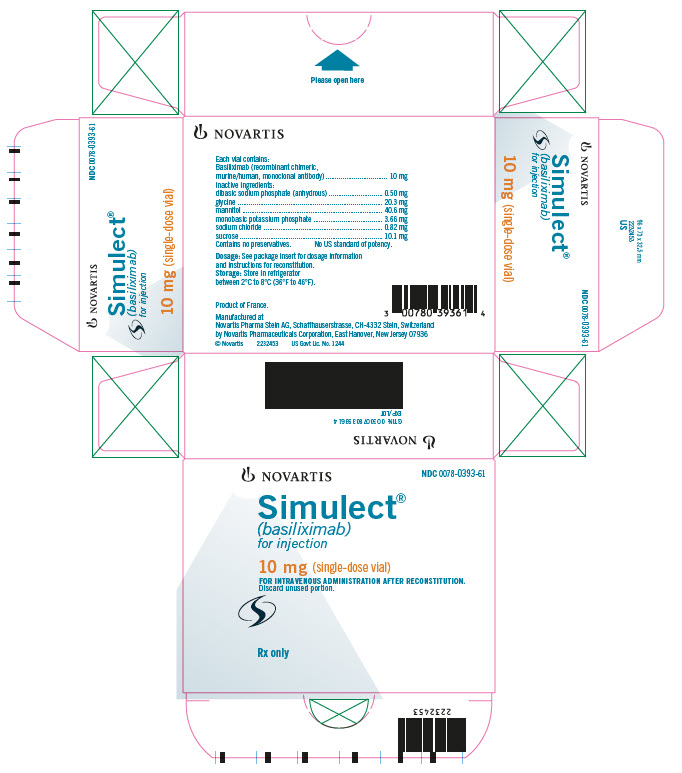
Each 10-mg vial contains 10 mg of basiliximab, and dibasic sodium phosphate (anhydrous) (0.50 mg), glycine (20.3 mg), mannitol (40.6 mg), monobasic potassium phosphate (3.66 mg), sodium chloride (0.82 mg), and sucrose (10.1 mg) to be reconstituted in 2.5 mL of Sterile Water for Injection, USP.
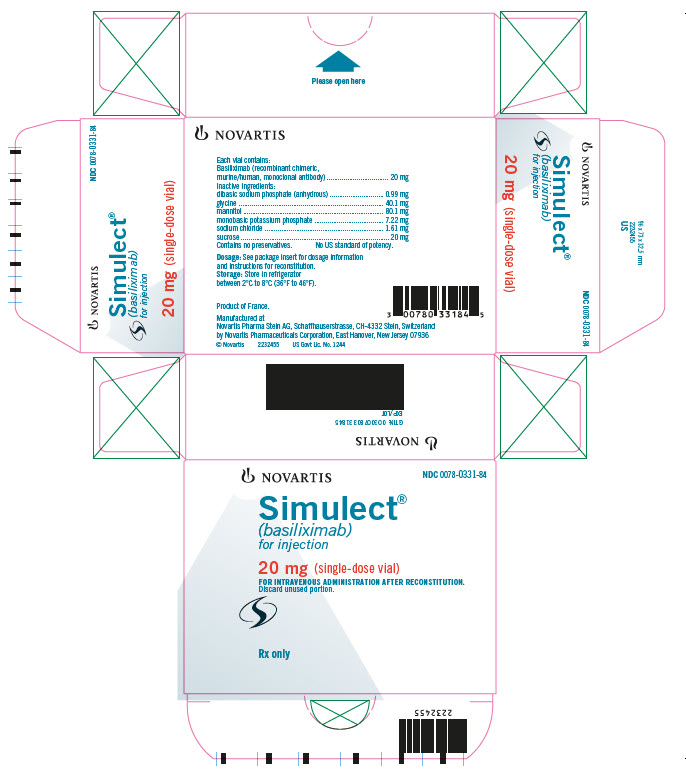
Each 20-mg vial contains 20 mg of basiliximab, and dibasic sodium phosphate (anhydrous) (0.99 mg), glycine (40.1 mg), mannitol (80.1 mg), monobasic potassium phosphate (7.22 mg), sodium chloride (1.61 mg), and sucrose (20 mg) to be reconstituted in 5 mL of Sterile Water for Injection, USP.
2CLINICAL STUDIES
The safety and efficacy of Simulect
Seven hundred twenty-nine patients were enrolled in the two studies using a dual maintenance immunosuppressive regimen comprised of cyclosporine, USP (MODIFIED) and corticosteroids, of which 363 patients were treated with Simulect and 358 patients were placebo-treated. Study 1 was conducted at 21 sites in Europe and Canada (EU/CAN Study); Study 2 was conducted at 21 sites in the USA (US Study). Patients 18-75 years of age undergoing first cadaveric- (Study 1 and Study 2) or living-donor (Study 2 only) renal transplantation, with ≥ 1 HLA mismatch, were enrolled.
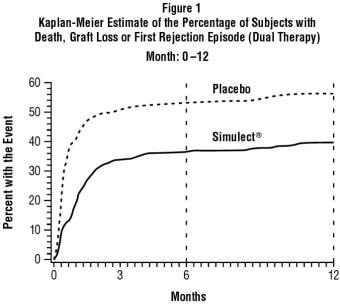
The primary efficacy endpoint in both studies was the incidence of death, graft loss or an episode of acute rejection during the first 6 months post-transplantation. Secondary efficacy endpoints included the primary efficacy variable measured during the first 12 months post-transplantation, the incidence of biopsy-confirmed acute rejection during the first 6 and 12 months post-transplantation and patient survival and graft survival, each measured at 12 months post-transplantation. Table 1 summarizes the results of these studies. Figure 1 displays the Kaplan-Meier estimates of the percentage of patients by treatment group experiencing the primary efficacy endpoint during the first 12 months post-transplantation for Study 2. Patients in both studies receiving Simulect experienced a significantly lower incidence of biopsy-confirmed rejection episodes at both 6 and 12 months post-transplantation. There was no difference in the rate of delayed graft function, patient survival, or graft survival between Simulect-treated patients and placebo-treated patients in either study.
There was no evidence that the clinical benefit of Simulect was limited to specific subpopulations based on age, gender, race, donor type (cadaveric or living donor allograft), or history of diabetes mellitus.
Figure 1: Kaplan-Meier Estimate of the Percentage of Subjects with Death, Graft Loss or First Rejection Episode (Dual Therapy)
Two double-blind, randomized, placebo-controlled studies (Study 3 and Study 4) assessed the safety and efficacy of Simulect
The results of Study 3 are shown in Table 2. These results are consistent with the findings from Study 1 and Study 2.
In Study 4, the percentage of patients experiencing biopsy-proven acute rejection by 6 months was 15% (9 of 59 patients) in the Simulect
In a multicenter, randomized, double-blind, placebo-controlled trial of Simulect
The efficacy of Simulect
2.1Long-Term Followup
Five-year patient survival and graft survival data were provided by 71% and 58% of the original subjects of Study 1 and Study 2, respectively. Subjects in both studies continued to receive a dual-therapy regimen with cyclosporine, USP (MODIFIED) and corticosteroid. No difference was observed between groups in the 5-year graft survival in either Study 1 (91% Simulect group, 92% placebo group) or Study 2 (85% Simulect group, 86% placebo group). In Study 1, patient survival was lower in the Simulect-treated patients compared to the placebo-treated patients (142/163 [87%] vs. 156/164 [95%], respectively). The cause of this difference in survival is unknown. The data do not indicate an increase in malignancy- or infection-related mortality. In Study 2, patient survival in the placebo group (90%) was the same compared to Simulect group (90%).
3INDICATIONS AND USAGE
Simulect
The efficacy of Simulect for the prophylaxis of acute rejection in recipients of other solid organ allografts has not been demonstrated.
4CONTRAINDICATIONS
Simulect
4.1General
Simulect
While neither the incidence of lymphoproliferative disorders nor opportunistic infections was higher in Simulect-treated patients than in placebo-treated patients, patients on immunosuppressive therapy are at increased risk for developing these complications and should be monitored accordingly.
4.1.1Hypersensitivity
Severe acute (onset within 24 hours) hypersensitivity reactions, including anaphylaxis have been observed both on initial exposure to Simulect and/or following re-exposure after several months. These reactions may include hypotension, tachycardia, cardiac failure, dyspnea, wheezing, bronchospasm, pulmonary edema, respiratory failure, urticaria, rash, pruritus, and/or sneezing. Extreme caution should be exercised in all patients previously given Simulect when being administered a subsequent course of Simulect. A subgroup of patients may be particularly at risk of developing severe hypersensitivity reactions on re-administration. These are patients in whom concomitant immunosuppression was discontinued prematurely (e.g., due to abandoned transplantation or early loss of the graft) following the initial administration of Simulect. If a severe hypersensitivity reaction occurs, therapy with Simulect should be permanently discontinued. Medications for the treatment of severe hypersensitivity reactions, including anaphylaxis should be available for immediate use.
5ADVERSE REACTIONS
Because clinical trials are conducted under widely varying conditions, adverse reaction rates observed in the clinical trials of a drug cannot be directly compared to rates in the clinical trials of another drug and may not reflect the rates observed in practice. The adverse reaction information from clinical trials does, however, provide a basis for identifying the adverse events that appear to be related to drug use and for approximating rates.
The incidence of adverse events for Simulect
Simulect did not appear to add to the background of adverse events seen in organ transplantation patients as a consequence of their underlying disease and the concurrent administration of immunosuppressants and other medications. Adverse events were reported by 96% of the patients in the placebo-treated group and 96% of the patients in the Simulect-treated group. In the four placebo-controlled studies, the pattern of adverse events in 590 patients treated with the recommended dose of Simulect was similar to that in 594 patients treated with placebo. Simulect did not increase the incidence of serious adverse events observed compared with placebo.
The most frequently reported adverse events were gastrointestinal disorders, reported in 69% of Simulect-treated patients and 67% of placebo-treated patients.
The incidence and types of adverse events were similar in Simulect-treated and placebo-treated patients. The following adverse events occurred in ≥ 10% of Simulect-treated patients:
The following adverse events, not mentioned above, were reported with an incidence of ≥ 3% and < 10% in pooled analysis of patients treated with Simulect
5.1Malignancies
The incidence of malignancies in the controlled clinical trials of renal transplant was not significantly different between groups at 1 year (9/590 Simulect-treated patients vs. 12/594 placebo-treated patients) or among patients with 5-year follow-up from Studies 1 and 2 (21/295 Simulect-treated patients vs. 21/291 placebo-treated patients). The incidence of lymphoproliferative disease was not significantly different between groups, and less than 1% in the Simulect-treated patients.
5.2Infections
The overall incidence of cytomegalovirus infection was similar in Simulect- and placebo-treated patients (15% vs. 17%) receiving a dual- or triple-immunosuppression regimen. However, in patients receiving a triple-immunosuppression regimen, the incidence of serious cytomegalovirus infection was higher in Simulect-treated patients compared to placebo-treated patients (11% vs. 5%). The rates of infections, serious infections, and infectious organisms were similar in the Simulect- and placebo-treatment groups among dual- and triple-therapy treated patients.
5.3Postmarketing Experience
Severe acute hypersensitivity reactions, including anaphylaxis characterized by hypotension, tachycardia, cardiac failure, dyspnea, wheezing, bronchospasm, pulmonary edema, respiratory failure, urticaria, rash, pruritus, and/or sneezing, as well as capillary leak syndrome and cytokine release syndrome, have been reported during post-marketing experience with Simulect.
6OVERDOSAGE
A maximum tolerated dose of Simulect
7DOSAGE AND ADMINISTRATION
Simulect
Simulect should only be administered once it has been determined that the patient will receive the graft and concomitant immunosuppression. Patients previously administered Simulect should only be re-exposed to a subsequent course of therapy with extreme caution due to the potential risk of hypersensitivity (see WARNINGS).
Parenteral drug products should be inspected visually for particulate matter and discoloration before administration. After reconstitution, Simulect should be a clear-to-opalescent, colorless solution. If particulate matter is present or the solution is colored, do not use.
Care must be taken to assure sterility of the prepared solution because the drug product does not contain any antimicrobial preservatives or bacteriostatic agents.
It is recommended that after reconstitution, the solution should be used immediately. If not used immediately, it can be stored at 2ºC to 8ºC (36ºF to 46ºF) for 24 hours or at room temperature for 4 hours. Discard the reconstituted solution if not used within 24 hours.
No incompatibility between Simulect and polyvinyl chloride bags or infusion sets has been observed. No data are available on the compatibility of Simulect with other intravenous substances. Other drug substances should not be added or infused simultaneously through the same intravenous line.
7.1Adults
In adult patients, the recommended regimen is two doses of 20 mg each. The first 20-mg dose should be given within 2 hours prior to transplantation surgery. The recommended second 20-mg dose should be given 4 days after transplantation. The second dose should be withheld if complications, such as severe hypersensitivity reactions to Simulect or graft loss occur.
7.2Pediatric
In pediatric patients weighing less than 35 kg, the recommended regimen is two doses of 10 mg each. In pediatric patients weighing 35 kg or more, the recommended regimen is two doses of 20 mg each. The first dose should be given within 2 hours prior to transplantation surgery. The recommended second dose should be given 4 days after transplantation. The second dose should be withheld if complications, such as severe hypersensitivity reactions to Simulect or graft loss occur.
7.3Reconstitution of 10 mg Simulect®Vial
To prepare the reconstituted solution, add 2.5 mL of Sterile Water for Injection, USP, using aseptic technique, to the vial containing the Simulect powder. Shake the vial gently to dissolve the powder.
The reconstituted solution is isotonic and may be given either as a bolus injection or diluted to a volume of 25 mL with 0.9% Sodium Chloride Injection, USP or 5% Dextrose Injection, USP for infusion. When mixing the solution, gently invert the bag in order to avoid foaming;
7.4Reconstitution of 20 mg Simulect®Vial
To prepare the reconstituted solution, add 5 mL of Sterile Water for Injection, USP, using aseptic technique, to the vial containing the Simulect powder. Shake the vial gently to dissolve the powder.
The reconstituted solution is isotonic and may be given either as a bolus injection or diluted to a volume of 50 mL with 0.9% Sodium Chloride Injection, USP or 5% Dextrose Injection, USP for infusion. When mixing the solution, gently invert the bag in order to avoid foaming;
8HOW SUPPLIED
Simulect
Each carton contains one of the following
1 Simulect 10 mg vial…………………………………………………….NDC 0078-0393-61
1 Simulect 20 mg vial…………………………………………………….NDC 0078-0331-84
Store lyophilized Simulect under refrigerated conditions at 2ºC to 8ºC (36ºF to 46ºF).
Do not use beyond the expiration date stamped on the vial.
9REFERENCES
  1. Kahan, B.D., Rajagopalan P.R. and Hall M., Transplantation, 67, 276-284 (1999).
  2. Nashan, B., Moore R., Amlot P., Schmidt A.-G., Abeywickrama K. and Soulillou J.-P., Lancet 350, 1193-1198 (1997).
Manufactured by:
US License No. 1244
© Novartis
T2020-125
Revised: August 2020
10PRINCIPAL DISPLAY PANEL
NOVARTIS            NDC 0078-0393-61
Simulect
10 mg (single-dose vial)
FOR INTRAVENOUS ADMINISTRATION AFTER RECONSTITUTION.
Rx only
NOVARTIS
							NDC 0078-0393-61
							Simulect®
							(basiliximab)
							for injection
							10 mg (single-dose vial)
							FOR INTRAVENOUS ADMINISTRATION AFTER RECONSTITUTION.
							Discard unused portion.
							Rx only
11PRINCIPAL DISPLAY PANEL
NOVARTIS            NDC 0078-0331-84
Simulect
20 mg (single-dose vial)
FOR INTRAVENOUS ADMINISTRATION AFTER RECONSTITUTION.
Rx only
NOVARTIS
							NDC 0078-0331-84
							Simulect®
							(basiliximab)
							for injection
							20 mg (single-dose vial)
							FOR INTRAVENOUS ADMINISTRATION AFTER RECONSTITUTION.
							Rx only