Xalkori
What is Xalkori (Crizotinib)?
Approved To Treat
Top Global Experts


Related Clinical Trials
Summary: ROS1 rearrangements are rare, accounting for only 1-2% of NSCLC cases, but have been associated with response to ROS1 inhibitors, such as crizotinib and entrectinib. However, many patients develop resistance to the tyrosine-kinase inhibitors (TKIs), creating a need for new treatments. Repotrectinib is a new-generation TKI designed against ROS1 or NTRK rearranged malignancies (Drilon 2018). Early p...
Summary: This is a Phase 1/2, multi-center, open-label basket study designed to evaluate the safety and anti-tumor activity of IDE196 in patients with solid tumors harboring GNAQ or GNA11 (GNAQ/11) mutations or PRKC fusions, including metastatic uveal melanoma (MUM), cutaneous melanoma, colorectal cancer, and other solid tumors. Phase 1 (dose escalation - monotherapy) will assess safety, tolerability and p...
Summary: The purpose of the study is to learn from the real world practice of prescribing targeted therapies to patients with advanced cancer whose tumor harbors a genomic variant known to be a drug target or to predict sensitivity to a drug. NOTE: Due to character limits, the arms section does NOT include all TAPUR Study relevant biomarkers. For additional information, contact TAPUR@asco.org, or if a pati...
Related Latest Advances
Brand Information
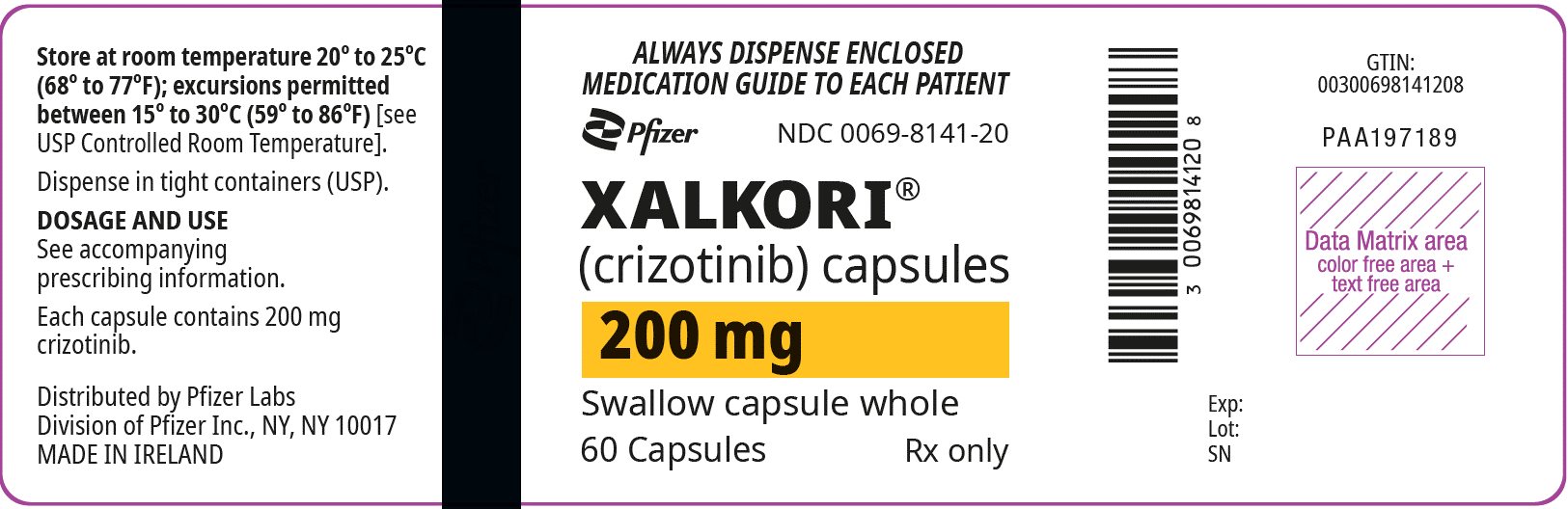
- 200 mg: hard gelatin capsule, size 1, white opaque body and pink opaque cap, with "Pfizer" on the cap and "CRZ 200" on the body.
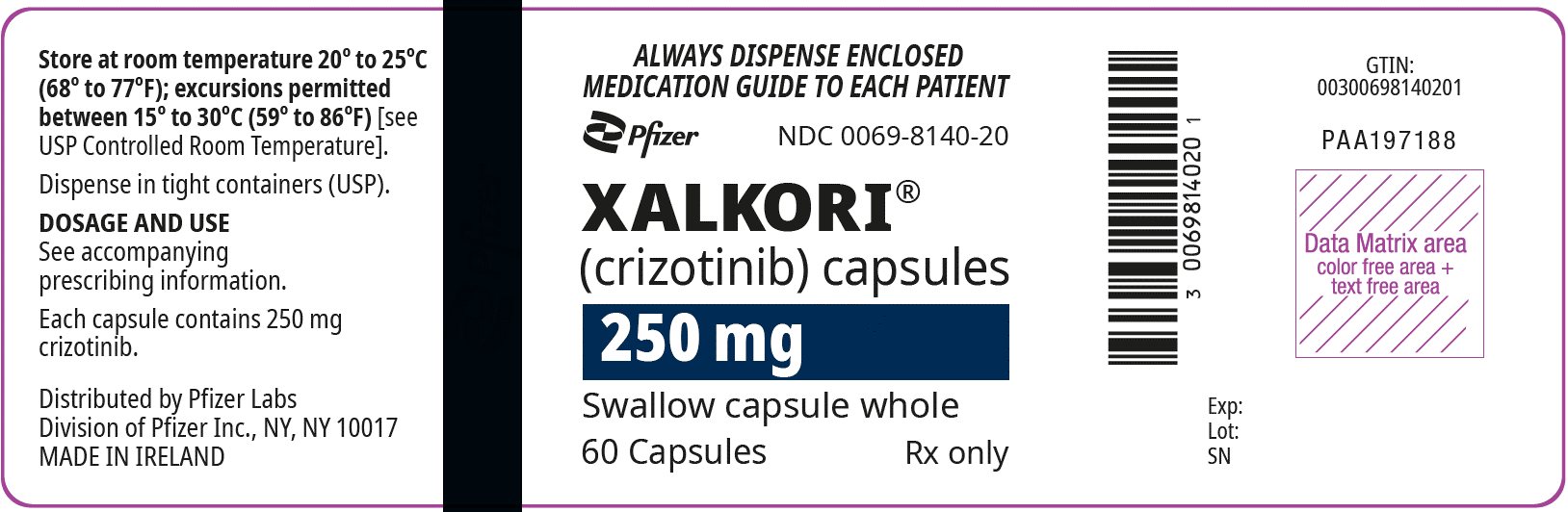
- 250 mg: hard gelatin capsule, size 0, pink opaque cap and body, with "Pfizer" on the cap and "CRZ 250" on the body.
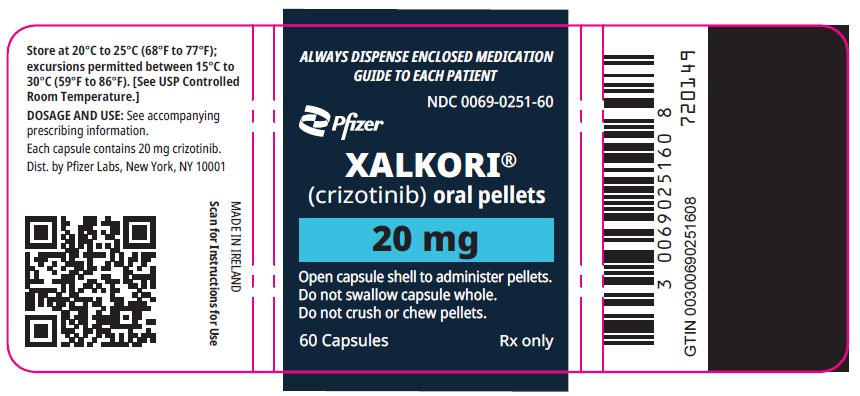
- 20 mg: hard gelatin capsule, size 4, white opaque body and light blue opaque cap, printed with black ink “Pfizer” on the cap and “CRZ 20” on the body.
- 50 mg: hard gelatin capsule, size 3, light gray opaque body and gray opaque cap, printed with black ink “Pfizer” on the cap and “CRZ 50” on the body.
- 150 mg: hard gelatin capsule, size 0, light blue opaque body and cap, printed with black ink “Pfizer” on the cap and “CRZ 150” on the body.
- Hepatotoxicity
- Interstitial Lung Disease/Pneumonitis
- QT Interval Prolongation
- Bradycardia
- Severe Visual Loss
- Gastrointestinal Toxicity in Pediatric and Young Adult Patients with ALCL or Pediatric Patients with IMT
- 200 mg capsules
- 250 mg capsules
- 20 mg oral pellets
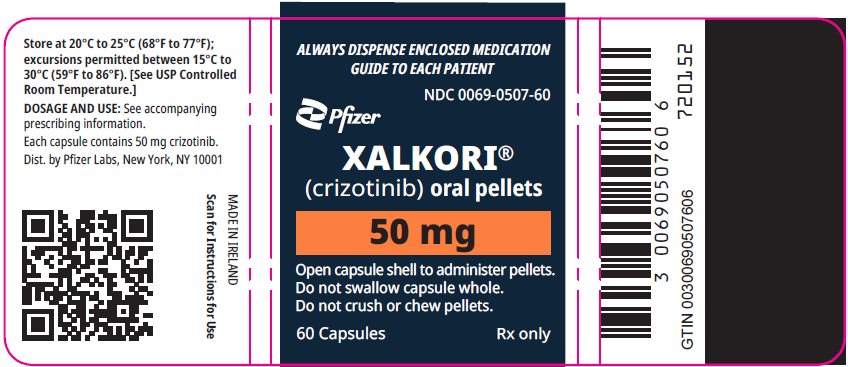
- 50 mg oral pellets
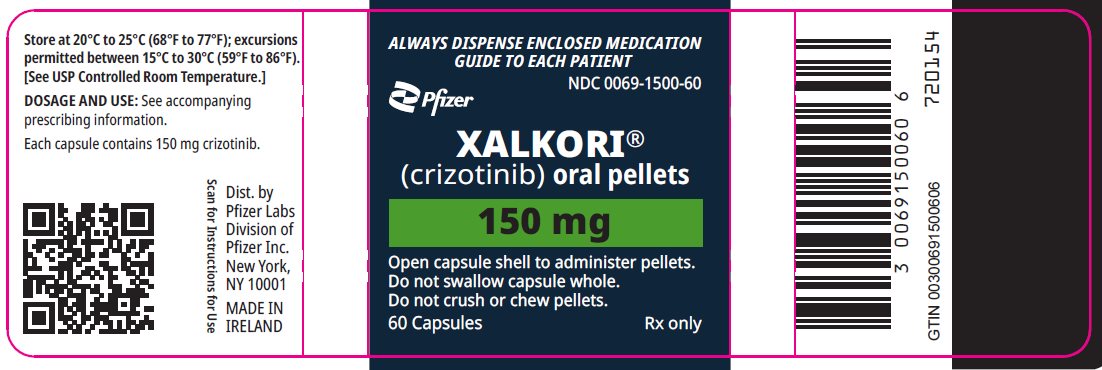
- 150 mg oral pellets
- XALKORI oral pellets come in a capsule “shell” that must be opened before giving or taking a dose.
- XALKORI oral pellets come in 3 dosage strengths: 20 mg, 50 mg, and 150 mg. Your healthcare provider may combine different strengths for your prescribed dose. No more than 4 XALKORI oral pellet shells are to be used for a single dose.
- Your healthcare provider will decide the right dose of XALKORI oral pellets for you or your child. Follow your healthcare provider’s instructions for the dose of XALKORI oral pellets to give your child or for you to take.
- Empty XALKORI oral pellets from the shells as described in Steps 1 to 4 below.
- Check the expiration date on the bottle containing XALKORI oral pellets.
- Ask your healthcare provider or pharmacist if you are not sure how to prepare and give or take the prescribed dose of XALKORI oral pellets.
- XALKORI oral pellet(s), as prescribed by your healthcare provider.
- Spoon or medicine cup (optional). See Step 4
- Store XALKORI oral pellets at room temperature between 68°F to 77°F (20°C to 25°C).
- Keep XALKORI oral pellets and all medicines out of the reach of children.
- Dispose of (throw away) the empty XALKORI oral pellet shell(s) in the household trash.
- Ask your pharmacist how to throw away medicines you no longer use or are expired.