FEIBA
What is FEIBA (Anti-Inhibitor)?
Living with hemophilia can mean living with constant uncertainty, a small cut or bruise can lead to prolonged bleeding, and for some patients, traditional treatments don’t work effectively. This is especially true for people who develop inhibitors, or antibodies, that neutralize the action of standard clotting factor therapies. FEIBA (Anti-Inhibitor Coagulant Complex) offers an important solution for these patients by helping the blood clot even when inhibitors are present.
FEIBA is a specialized clotting factor replacement therapy used to control and prevent bleeding episodes in people with hemophilia A or B who have developed inhibitors against factor VIII or factor IX. It belongs to a class of medications called bypassing agents, meaning it helps the blood form clots through an alternate pathway when regular factor replacement therapy fails.
As one of the first and most established bypassing agents approved by the U.S. Food and Drug Administration (FDA), FEIBA has played a crucial role in improving safety, mobility, and quality of life for patients with complex bleeding disorders.
What does FEIBA do?
FEIBA is prescribed to prevent or control bleeding in patients with hemophilia A or B who have developed inhibitors, immune system proteins that block the activity of infused clotting factors. These inhibitors make standard treatments ineffective, leaving patients vulnerable to dangerous or prolonged bleeding.
FEIBA helps manage:
- Spontaneous bleeding episodes (bleeding without injury)
- Bleeding after injury or surgery
- Routine prevention (prophylaxis) of bleeding in patients with frequent episodes
By improving the body’s ability to clot, FEIBA can help patients reduce bleeding frequency, experience faster recovery from bleeds, and maintain better joint health and mobility over time.
Clinical studies have shown that regular prophylactic use of FEIBA can significantly reduce the number of bleeding episodes compared to on-demand treatment (NIH, 2024). For many patients with inhibitors, it provides a reliable option to live more confidently and participate more fully in everyday activities.
How does FEIBA work?
FEIBA stands for Factor Eight Inhibitor Bypassing Activity, which describes exactly what it does, it “bypasses” the need for factor VIII or IX to help the blood clot.
Normally, blood clotting involves a series of steps in which different clotting factors work together in sequence. In people with hemophilia, one of these factors (usually factor VIII or IX) is missing or not functioning properly. When inhibitors develop, the body’s immune system attacks replacement therapy, making it ineffective.
FEIBA contains a balanced mix of activated and non-activated clotting factors, including factors II, VII, IX, and X. These components activate alternative parts of the clotting cascade, allowing the blood to form a stable clot even without factor VIII or IX.
In simpler terms, FEIBA provides a “shortcut” for the body to achieve clotting. This mechanism is clinically important because it allows for effective bleeding control even when inhibitors make standard therapies impossible to use.
FEIBA side effects
Like all powerful medications, FEIBA can cause side effects. Most are mild and temporary, but some require prompt medical attention.
Common side effects include:
- Headache or dizziness
- Fever or chills
- Nausea or vomiting
- Mild allergic reactions such as rash or itching
Serious side effects (rare but important):
- Blood clots (thrombosis), which can cause chest pain, shortness of breath, or swelling in the limbs
- Severe allergic reactions, including difficulty breathing, facial swelling, or rapid heartbeat
- Disseminated intravascular coagulation (DIC), a serious condition where abnormal clots form throughout the bloodstream
Doctors closely monitor patients on FEIBA for excessive clotting, especially those with cardiovascular disease or prolonged immobility, due to its clot-promoting nature.
Immediate medical attention is crucial for sudden chest pain, vision changes, difficulty breathing, or severe headaches, as these could signal serious clotting or allergic reactions.
Despite these risks, FEIBA, under careful medical supervision, has a strong safety record, with its benefits often outweighing potential risks for suitable patients in preventing life-threatening bleeding.
FEIBA dosage
FEIBA, an intravenous injection, is given in a hospital, infusion center, or at home with medical supervision. Dosage varies based on bleed type, severity, patient weight, and response. It can be administered rapidly for emergencies or preventatively on a regular schedule.
Since this medication affects clotting, regular monitoring is essential, including clotting time tests (like thromboelastography or aPTT), liver/kidney function tests, and clinical monitoring for thrombosis or allergic reactions.
Older adults or patients with pre-existing conditions may require adjusted dosing or more frequent monitoring. Patients and caregivers are trained to recognize treatment success (e.g., reduced bleeding) and report unusual reactions immediately.
Does FEIBA have a generic version?
As of 2025, FEIBA does not have a generic equivalent approved in the United States. It is manufactured and distributed by Takeda Pharmaceuticals (formerly Baxter Healthcare) and remains a brand-name biologic product. However, international versions may exist in other markets.
FEIBA is a complex biologic, not a small-molecule generic. Future alternatives would be biosimilars, which are highly similar and meet FDA standards. Currently, no FDA-approved biosimilar versions of FEIBA exist. Patients should discuss insurance and assistance options with their healthcare provider or pharmacist.
Conclusion
FEIBA is a life-saving therapy for people with hemophilia A or B who have developed inhibitors against standard clotting factor treatments. By bypassing the blocked pathway and helping the blood clot through alternative mechanisms, it allows patients to control and prevent bleeding episodes safely and effectively.
While it requires careful dosing and monitoring to minimize risks, FEIBA has a long history of success in both emergency and preventive care. It provides renewed confidence and stability for patients with complex bleeding disorders.
References
- U.S. Food and Drug Administration (FDA). (2024). FEIBA [Anti-Inhibitor Coagulant Complex] prescribing information. Retrieved from https://www.accessdata.fda.gov
- Mayo Clinic. (2024). FEIBA – Anti-Inhibitor Coagulant Complex: Uses, side effects, and safety information. Retrieved from https://www.mayoclinic.org
- MedlinePlus. (2024). Anti-Inhibitor Coagulant Complex (FEIBA) patient information. National Library of Medicine. Retrieved from https://medlineplus.gov
- National Institutes of Health (NIH). (2024). Management of hemophilia with inhibitors. Retrieved from https://www.nih.gov
Approved To Treat


Related Clinical Trials
Summary: The purpose of the aPCC-emicizumab safety study is to investigate the hemostatic efficacy as measured by thrombin generation, of a low personalized dose of aPCC (FEIBA) in children and adults with hemophilia A and inhibitors on emicizumab prophylaxis.
Summary: Coagulopathic-induced bleeding after cardiopulmonary bypass in cardiac surgery patients is common and is associated with adverse outcomes in cardiac surgery. The hypothesis of the study is that FEIBA will be a more effective treatment than standard of care (FFP) in cardiac surgery patients who have coagulopathic-induced bleeding. This study is being conducted to determine the efficacy of FEIBA ver...
Summary: This is a non-interventional, multicenter, observational, international study in male persons with haemophilia A who have developed inhibitors to any replacement coagulation factor VIII (FVIII) product. The purpose of the study is to capture different approaches in the management of persons with haemophilia A and FVIII inhibitors, document current immune tolerance induction approaches, and evaluat...
Related Latest Advances
Brand Information
- Thromboembolic events have been reported during postmarketing surveillance following infusion of FEIBA, particularly following the administration of high doses and/or in patients with thrombotic risk factors.
- Monitor patients receiving FEIBA for signs and symptoms of thromboembolic events.
- Control and prevention of bleeding episodes
- Perioperative management
- Routine prophylaxis to prevent or reduce the frequency of bleeding episodes.
- Dosage and duration of treatment depend on the location and extent of bleeding, and the patient's clinical condition. Careful monitoring of replacement therapy is necessary in cases of major surgery or life-threatening bleeding episodes.
- Each vial of FEIBA contains the labeled amount of factor VIII inhibitor bypassing activity in units.
- Base the dose and frequency of FEIBA on the individual clinical response. Clinical response to treatment with FEIBA may vary by patient and may not correlate with the patient's inhibitor titer.
- Record the name of the patient and batch number of the product in order to maintain a link between the patient and the batch of the product.
- Do not exceed a single dose of 100 units per kg body weight or a daily dose of 200 units per kg body weight
- Use aseptic technique throughout the entire reconstitution process.
- If the patient uses more than one vial per injection, reconstitute each vial according to the following instructions.
- Inspect the reconstituted FEIBA solution visually for particulate matter and discoloration prior to administration. The appearance of the solution should be colorless to slightly yellowish. Do not use if particulate matter or discoloration is observed.
- Flush venous access lines with isotonic saline prior to and after infusion of FEIBA. Do not administer in the same tubing or container with other medicinal products.
- Use plastic Luer lock syringes because protein such as FEIBA tends to stick to the surface of all-glass syringes.
- Known anaphylactic or severe hypersensitivity reactions to FEIBA or any of its components, including factors of the kinin generating system.
- Disseminated intravascular coagulation (DIC).
- Acute thrombosis or embolism (including myocardial infarction).
- Sjamsoedin LJ, Heijnen L, Mauser-Bunschoten EP, van Geijlswijk JL, van Houwelingen H, van Asten P, Sixma JJ. The effect of Activated Prothrombin-Complex Concentrate (FEIBA) on joint and muscle bleeding in patients with Hemophilia A and antibodies to Factor VIII. N Engl J Med. 1981;305(13): 717-721.
- Hilgartner MW, Knatterud GL. The use of Factor-Eight-Inhibitor-By-Passing-Activity (FEIBA IMMUNO) product for treatment of bleeding episodes in Hemophiliacs with inhibitors. Blood. 1983;61(1): 36-40.
- Antunes SV, Tangada S, Stasyshyn O, Mamonov V, Phillips J, Guzman-Becerra N, Grigorian A, Ewenstein B, Wong WY. Randomized comparison of prophylaxis and on-demand regimens with FEIBA NF in the treatment of haemophilia A and B with inhibitors. Haemophilia. 2013; DOI 10.1111/hae.12246.
- Turecek PL, Varadi K, Gritsch H, Auer W, Pichler L, Eder G, Schwarz HP. Factor Xa and prothrombin: mechanism of action of FEIBA. Vox Sanguinis 1999;77 Suppl 1:72-79.
- Turecek PL, Varadi K, Gritch H, Schwarz HP. FEIBA: Mode of action Haemophilia 2004;10: Suppl. 2:3-9
- Oldenburg et al. Emicizumab Prophylaxis in Hemophilia A with Inhibitors. N Engl J Med 2017:377:809-818.
- of the signs and symptoms of thrombosis, such as chest pain or pressure, shortness of breath, altered consciousness, vision, or speech, limb or abdomen swelling and/or pain. Advise patients to seek immediate medical attention if any of these symptoms occur.
- of the signs and symptoms of hypersensitivity reactions, such as urticaria, angioedema, gastrointestinal manifestations, bronchospasm, and hypotension. Advise patients to discontinue use of the product if these symptoms occur and seek immediate emergency treatment.
- that because FEIBA is made from human blood, it may carry a risk of transmitting infectious agents, e.g., viruses, the variant Creutzfeldt-Jakob disease (vCJD) agent, and theoretically, the Creutzfeldt-Jakob disease (CJD) agent.
- if they are on emicizumab prophylaxis therapy and need FEIBA to treat a breakthrough bleeding episode then they must be monitored by their hemophilia treating physician, preferably at the hemophilia treatment center (HTC).
- to report any adverse reactions or problems following FEIBA administration to their hemophilia treating physician.
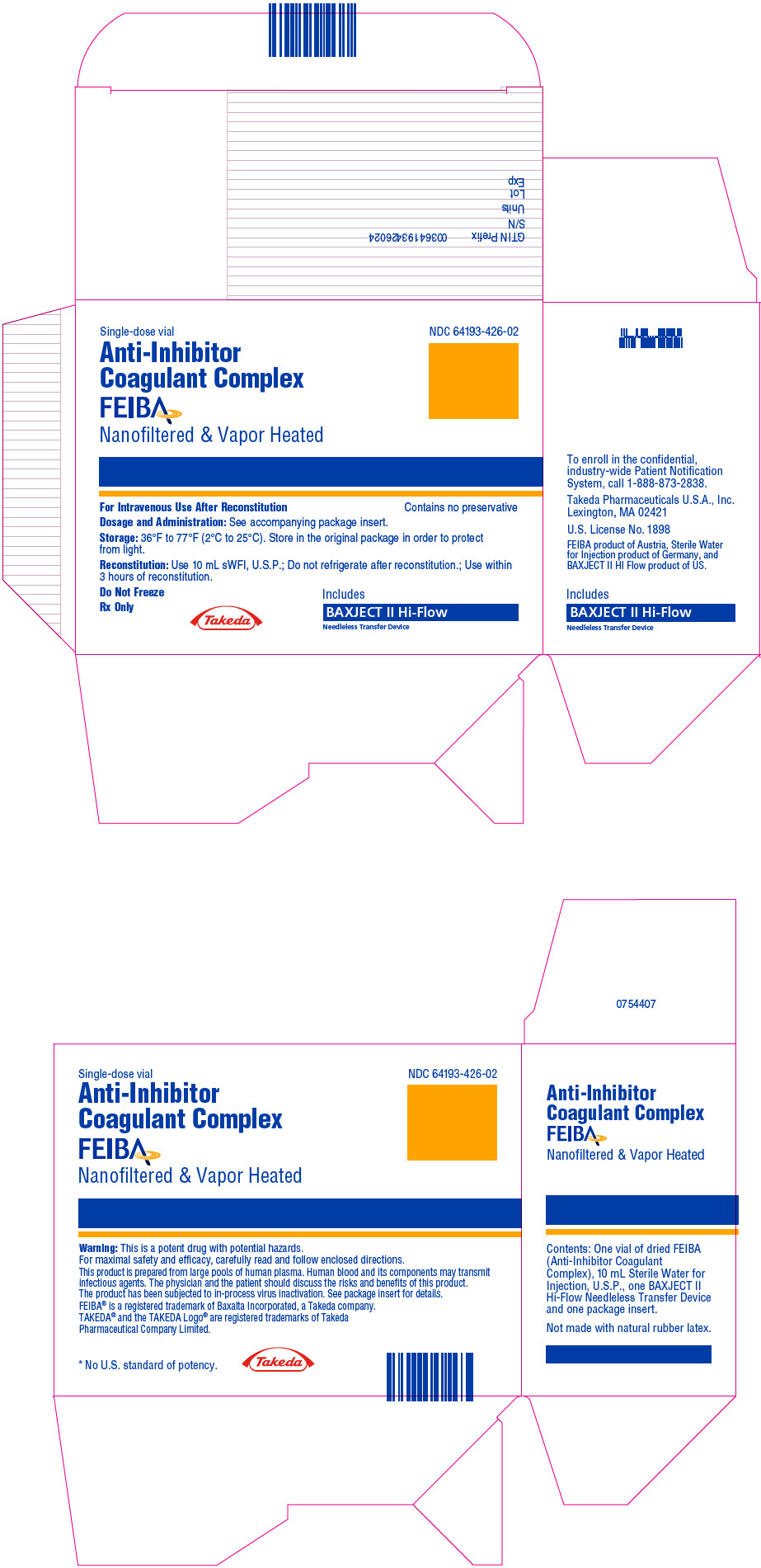
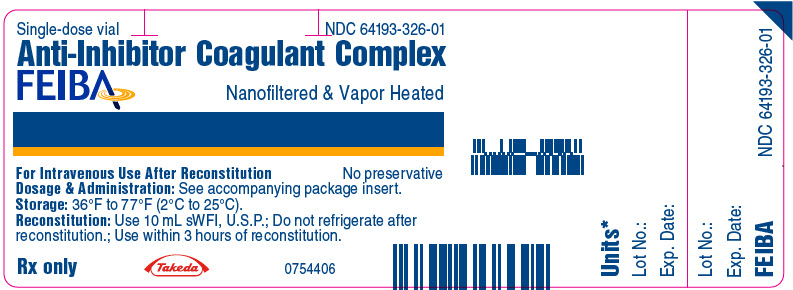
Contains no preservative
reconstitution.
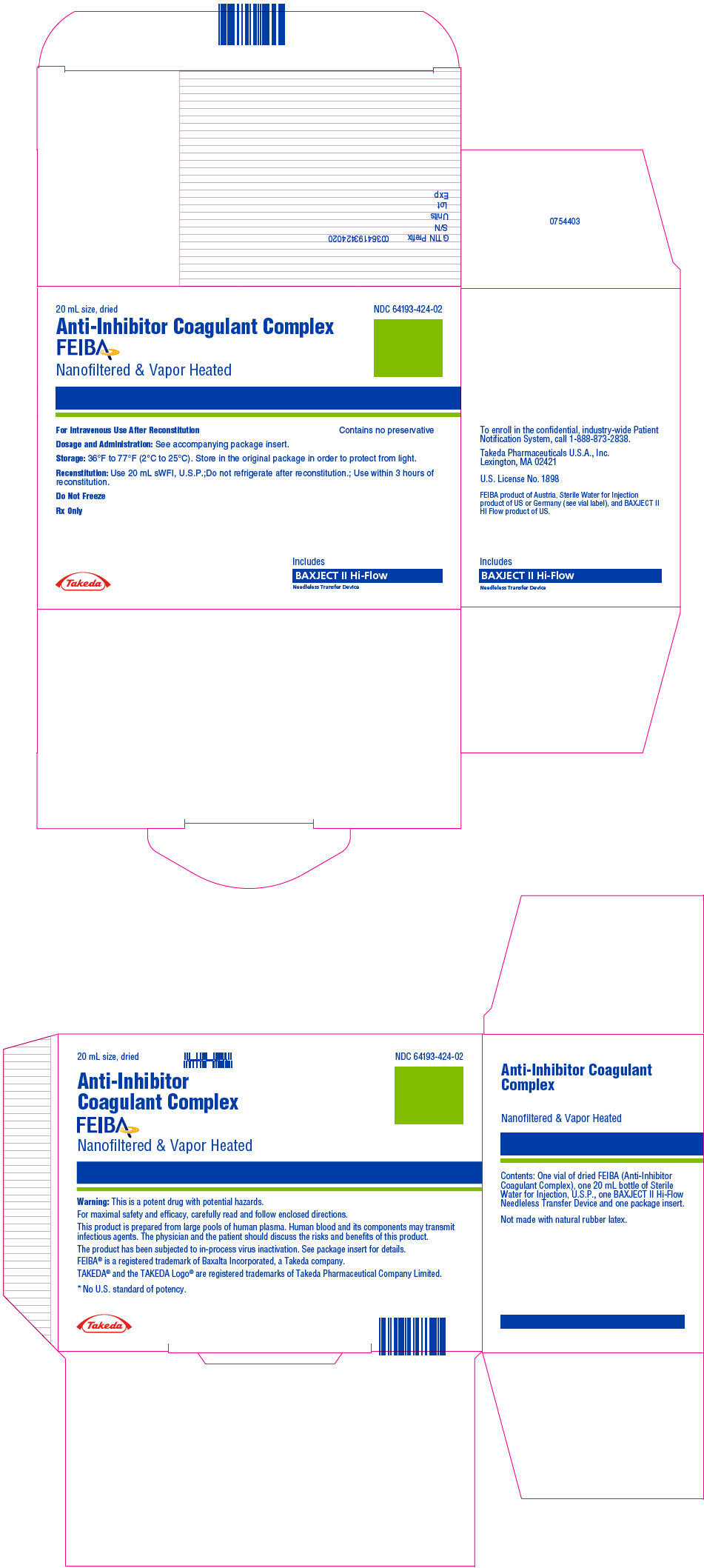
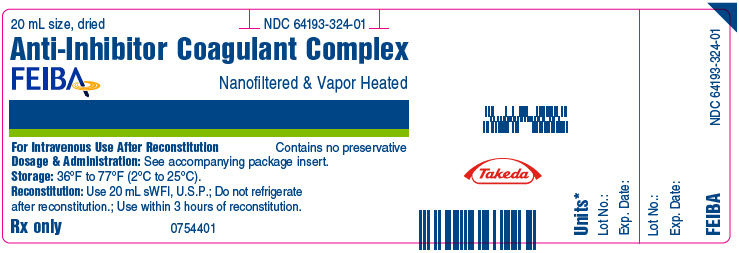
Contains no preservative
Store in the original package in order to protect from light.
reconstitution.
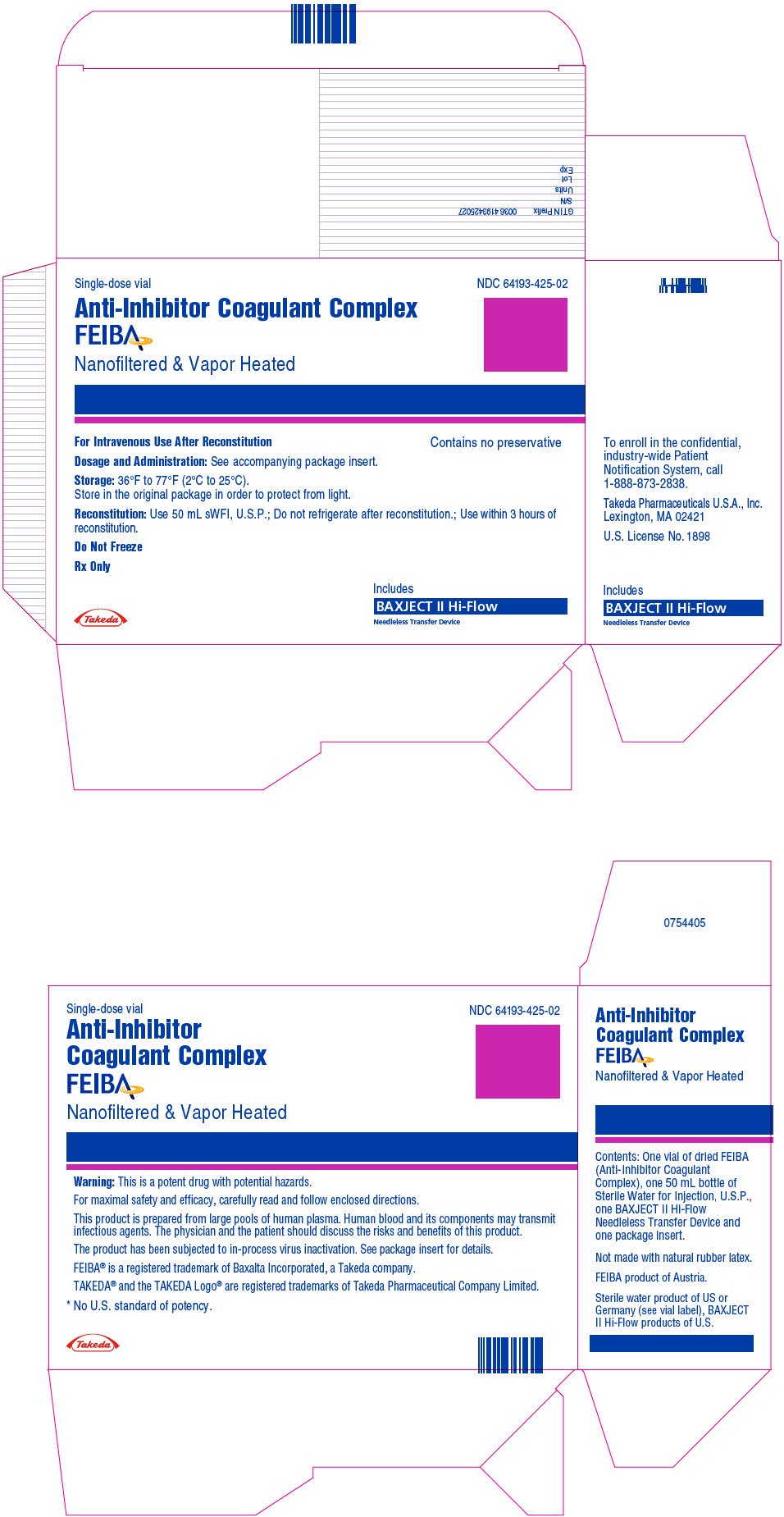
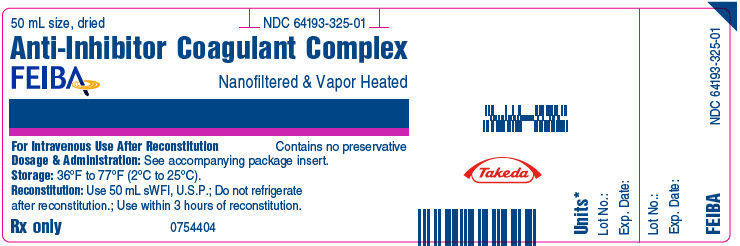
Contains no preservative
from light.
3 hours of reconstitution.