Brand Name

Aranesp

Generic Name
Darbepoetin
View Brand Information
FDA approval date: June 07, 2006
Classification: Erythropoiesis-stimulating Agent
Form: Injection, Solution

What is Aranesp (Darbepoetin)?

Aranesp is an erythropoiesis-stimulating agent indicated for the treatment of anemia due to: Chronic Kidney Disease in patients on dialysis and patients not on dialysis.

Approved To Treat

Save this treatment for later
Sign Up
Not sure about your diagnosis?
Check Your Symptoms

Related Clinical Trials

Anemia Therapy in Patients With Infective Endocarditis (POET-IRON)

Summary: Infective endocarditis (IE) is a bacterial infection of the heart valves, inserted material or surrounding struc-tures and is associated with a high morbidity and mortality. In patients with IE, anemia is considered to result from the underlying infection, prolonged sustained inflammatory response due to the often slow natural course of the disease, and coexisting comorbidities. Previous studies h...

Trial of Darbepoetin Plus Slow-release Intravenous Iron to Decrease Transfusions and Improve Iron Status and Neurodevelopment in Preterm Infants

Summary: In this phase II trial, the investigators overarching goal is to demonstrate the feasibility and potential benefit of darbepoetin (Darbe) plus slow-release intravenous (IV) iron to decrease transfusions, maintain iron sufficiency and improve the neurodevelopmental outcomes of preterm infants. Investigators hypothesize that in infants \< 32 completed weeks of gestation, combined treatment with Darb...

Effect of Single vs Repeated Cycles of a Combination of Granulocyte Colony Stimulating Factor and Darbepoetin vs Standard Medical Treatment on Immunometabolic Profile in Patient With Early Decompensated Cirrhosis -A Pilot Randomised Controlled Trial.

Summary: Exogenous growth factor-mobilized bone marrow (BM) stem cells(G-CSF) and DARBEPOETIN use have shown a differential response in the management of decompensated cirrhosis (DC) with improved survival, CTP and MELD scores. This study was designed to evaluate potential clinical benefit of repeated cycles of granulocyte-colony stimulating factor (G-CSF) and DARBEPOETIN versus single cycle on delta chang...

Brand Information

ARANESP (darbepoetin alfa)
WARNING: ESAs INCREASE THE RISK OF DEATH, MYOCARDIAL INFARCTION, STROKE, VENOUS THROMBOEMBOLISM, THROMBOSIS OF VASCULAR ACCESS ANDTUMOR PROGRESSION OR RECURRENCE
Chronic Kidney Disease:
  • In controlled trials, patients experienced greater risks for death, serious adverse cardiovascular reactions, and stroke when administered erythropoiesis-stimulating agents (ESAs) to target a hemoglobin level of greater than 11 g/dL [see Warnings and Precautions (5.1)].
  • No trial has identified a hemoglobin target level, Aranesp dose, or dosing strategy that does not increase these risks[see Dosage and Administration (2.2)].
  • Use the lowest Aranesp dose sufficient to reduce the need for red blood cell (RBC) transfusions [see Warnings and Precautions (5.1)].
Cancer:
  • ESAs shortened overall survival and/or increased the risk of tumor progression or recurrence in clinical studies of patients with breast, non-small cell lung, head and neck, lymphoid, and cervical cancers [see Warnings and Precautions (5.2)].
  • To decrease these risks, as well as the risk of serious cardiovascular and thromboembolic reactions, use the lowest dose needed to avoid RBC transfusions [see Dosage and Administration (2.3)].
  • Use ESAs only for anemia from myelosuppressive chemotherapy [see Indications and Usage (1.2)].
  • ESAs are not indicated for patients receiving myelosuppressive chemotherapy when the anticipated outcome is cure [see Indications and Usage (1.3)].
  • Discontinue following the completion of a chemotherapy course [see Dosage and Administration (2.3)].
1DOSAGE FORMS AND STRENGTHS
Aranesp is a clear, colorless solution available as:
Single-dose vials
  • Injection: 25 mcg, 40 mcg, 60 mcg, 100 mcg, and 200 mcg
Single-dose prefilled syringes
  • Injection: 10 mcg/0.4 mL,  25 mcg/0.42 mL,  40 mcg/0.4 mL,  60 mcg/0.3 mL,  100 mcg/0.5 mL,
2CONTRAINDICATIONS
Aranesp is contraindicated in patients with:
  • Uncontrolled hypertension
  • Pure red cell aplasia (PRCA) that begins after treatment with Aranesp or other erythropoietin protein drugs 
  • Serious allergic reactions to Aranesp
3ADVERSE REACTIONS
The following clinically significant adverse reactions are discussed in greater detail in other sections of the label:
  • Increased Mortality, Myocardial Infarction, Stroke, and Thromboembolism
  • Increased Mortality and/or Increased Risk of Tumor Progression or Recurrence in Patients with Cancer 
  • Hypertension 
  • Seizures
  • Pure Red Cell Aplasia 
  • Serious Allergic Reactions 
  • Severe Cutaneous Reactions
3.1Clinical Trial Experience
Because clinical trials are conducted under widely varying conditions, adverse reaction rates observed in the clinical trials of a drug cannot be directly compared to rates in the clinical trials of other drugs and may not reflect the rates observed in practice.
Patients with Chronic Kidney Disease
Adult Patients
Adverse reactions were determined based on pooled data from 5 randomized, active-controlled studies of Aranesp with a total of 1357 patients (Aranesp 766, epoetin alfa 591). The median duration of exposure for patients receiving Aranesp was 340 days, with 580 patients exposed for greater than 6 months and 360 patients exposed for greater than 1 year. The median (25
Table 5 lists adverse reactions occurring in ≥ 5% of patients treated with Aranesp.
Rates of adverse reactions with Aranesp therapy were similar to those observed with other recombinant erythropoietins in these studies.
Pediatric Patients
Adverse reactions were determined based on pooled data from 2 randomized, controlled trials 
Patients with Cancer Receiving Chemotherapy
Adverse reactions were based on data from a randomized, double-blind, placebo-controlled study of Aranesp in 597 patients (Aranesp 301, placebo 296) with extensive stage small cell lung cancer (SCLC) receiving platinum-based chemotherapy. All patients were white, 64% were male, and the median age was 61 years (range: 28 to 82 years); 25% of the study population were from North America, Western Europe, and Australia. Patients received Aranesp at a dose of 300 mcg or placebo weekly for 4 weeks then every 3 weeks for a total of 24 weeks, and the median duration of exposure was 19 weeks (range: 1 to 26 weeks).
Adverse reactions
* “Cerebrovascular disorders” encompasses central nervous system (CNS) hemorrhages and cerebrovascular accidents (ischemic and hemorrhagic). Events in this category may also be included under “thromboembolic adverse reactions.”
In addition to the thrombovascular adverse reactions, abdominal pain and edema occurred at a higher incidence in patients taking Aranesp compared to patients on placebo.  Among all placebo-controlled studies, abdominal pain (13.2% vs. 9.4%) and edema (12.8% vs. 9.7%) were reported more frequently in patients receiving Aranesp compared to the placebo group.  In the SCLC study the incidence of abdominal pain (10.3% vs. 3.4%) and edema (5.6% vs. 5.1%) in the Aranesp-treated patients compared to those receiving placebo.
3.2Postmarketing Experience
The following adverse reactions have been identified during postmarketing use of Aranesp.
Because postmarketing reporting of adverse reactions is voluntary and from a population of uncertain size, it is not always possible to reliably estimate their frequency or establish a causal relationship to drug exposure.
  • Seizures
  • Pure Red Cell Aplasia 
  • Serious Allergic Reactions 
  • Severe Cutaneous Reactions
3.3Immunogenicity
As with all therapeutic proteins, there is a potential for immunogenicity.
In clinical studies, the percentage of patients with antibodies to Aranesp was examined using the Biacore
None of the patients had antibodies capable of neutralizing the activity of Aranesp or endogenous erythropoietin at baseline or at end of study. No clinical sequelae consistent with PRCA were associated with the presence of these antibodies.
The incidence of antibody formation is highly dependent on the sensitivity and specificity of the assay. Additionally, the observed incidence of antibody (including neutralizing antibody) positivity in an assay may be influenced by several factors, including assay methodology, sample handling, timing of sample collection, concomitant medications, and underlying disease. For these reasons, comparison of the incidence of antibodies to Aranesp with the incidence of antibodies to other products may be misleading.
Neutralizing antibodies to darbepoetin alfa that cross-react with endogenous erythropoietin and other ESAs can result in PRCA or severe anemia (with or without other cytopenias)
4OVERDOSAGE
Aranesp
5DESCRIPTION
Darbepoetin alfa is an erythropoiesis-stimulating protein that is produced in Chinese hamster ovary (CHO) cells by recombinant DNA technology. Darbepoetin alfa is a 165-amino acid protein that differs from recombinant human erythropoietin in containing 5 N-linked oligosaccharide chains, whereas recombinant human erythropoietin contains 3 chains. The 2 additional N-glycosylation sites result from amino acid substitutions in the erythropoietin peptide backbone. The approximate molecular weight of darbepoetin alfa is 37,000 daltons.
Aranesp (darbepoetin alfa) injection is formulated as a sterile, colorless, preservative-free solution containing polysorbate for intravenous or subcutaneous administration. Each 1 mL contains polysorbate 80 (0.05 mg), sodium chloride (8.18 mg), sodium phosphate dibasic anhydrous (0.66 mg), and sodium phosphate monobasic monohydrate (2.12 mg) in Water for Injection, USP (pH 6.2 ± 0.2).
6CLINICAL STUDIES
Clinical studies in the nephrology and chemotherapy-induced anemia clinical programs are designated with the prefixes “N” and “C”, respectively.
6.1Patients with Chronic Kidney Disease
Patients with chronic kidney disease on dialysis: ESA effects on rates of transfusion
In early clinical studies conducted in patients with CKD on dialysis, ESAs have been shown to reduce the use of RBC transfusions. These studies enrolled patients with mean baseline hemoglobin levels of approximately 7.5 g/dL and ESAs were generally titrated to achieve a hemoglobin level of approximately 12 g/dL. Fewer transfusions were given during the ESA treatment period when compared to a pre-treatment interval.
In the Normal Hematocrit Study, the yearly transfusion rate was 51.5% in the lower hemoglobin group (10 g/dL) and 32.4% in the higher hemoglobin group (14 g/dL).
Patients with chronic kidney disease not on dialysis: ESA effects on rates of transfusion
In TREAT, a randomized, double-blind trial of 4038 patients with CKD and type 2 diabetes not on dialysis, a post-hoc analysis showed that the proportion of patients receiving RBC transfusions was lower in patients administered Aranesp to target a hemoglobin of 13 g/dL compared to the control arm in which Aranesp was administered intermittently if hemoglobin concentration decreased to less than 9 g/dL (15% versus 25%, respectively).  In CHOIR, a randomized open-label study of 1432 patients with CKD not on dialysis, use of an ESA to target a higher (13.5 g/dL) versus lower (11.3 g/dL) hemoglobin goal did not reduce the use of RBC transfusions.  In each trial, no benefits occurred for the cardiovascular or end-stage renal disease outcomes.  In each trial, the potential benefit of ESA therapy was offset by worse cardiovascular safety outcomes resulting in an unfavorable benefit-risk profile 
ESA Effects on quality of life
Aranesp use has not been demonstrated in controlled clinical trials to improve quality of life, fatigue, or patient well-being.
ESA Effects on rates of death and other serious cardiac adverse events
Three randomized outcome trials (Normal Hematocrit Study [NHS], Correction of Anemia with Epoetin Alfa in Chronic Kidney Disease [CHOIR], and Trial of Darbepoetin Alfa in Type 2 Diabetes and CKD [TREAT]) have been conducted in patients with CKD using Epogen/PROCRIT/Aranesp to target higher vs. lower hemoglobin levels.  Though these trials were designed to establish a cardiovascular or renal benefit of targeting higher hemoglobin levels, in all 3 studies, patients randomized to the higher hemoglobin target experienced worse cardiovascular outcomes and showed no reduction in progression to ESRD. In each trial, the potential benefit of ESA therapy was offset by worse cardiovascular safety outcomes resulting in an unfavorable benefit-risk profile
Other ESA trials
Three studies (2 in adults and 1 in pediatric patients) evaluated the safety and efficacy of the
De Novo Use of Aranesp
Adult Patients
Once Weekly Aranesp Starting Dose
In 2 randomized, open-label studies, Aranesp or epoetin alfa was administered for the correction of anemia in patients with CKD who had not been receiving prior treatment with exogenous erythropoietin. Study N1 evaluated patients with CKD receiving dialysis; Study N2 evaluated patients not requiring dialysis. In both studies, the starting dose of Aranesp was 0.45 mcg/kg administered once weekly. The starting dose of epoetin alfa was 50 Units/kg 3 times weekly in Study N1 and 50 Units/kg twice weekly in Study N2. When necessary, dosage adjustments were instituted to maintain hemoglobin in the study target range of 11 to 13 g/dL. (Note: The recommended hemoglobin target range is lower than the target range of these studies
In Study N1, the primary efficacy endpoint was achieved by 72% (95% CI: 62%, 81%) of the 90 patients treated with Aranesp and 84% (95% CI: 66%, 95%) of the 31 patients treated with epoetin alfa. The mean increase in hemoglobin over the initial 4 weeks of Aranesp treatment was 1.1 g/dL (95% CI: 0.82 g/dL, 1.37 g/dL).
In Study N2, the primary efficacy endpoint was achieved by 93% (95% CI: 87%, 97%) of the 129 patients treated with Aranesp and 92% (95% CI: 78%, 98%) of the 37 patients treated with epoetin alfa. The mean increase in hemoglobin from baseline through the initial 4 weeks of Aranesp treatment was 1.38 g/dL (95% CI: 1.21 g/dL, 1.55 g/dL).
Once Every 2Week Aranesp Starting Dose
In 2 single-arm studies (N3 and N4), Aranesp was administered for the correction of anemia in patients with CKD not receiving dialysis. In both studies, the starting dose of Aranesp was 0.75 mcg/kg administered once every 2 weeks.
In Study N3 (study duration of 18 weeks), the hemoglobin goal (hemoglobin concentration ≥ 11 g/dL) was achieved by 92% (95% CI: 86%, 96%) of the 128 patients treated with Aranesp.
In Study N4 (study duration of 24 weeks), the hemoglobin goal (hemoglobin concentration of 11 to 13 g/dL) was achieved by 85% (95% CI: 77%, 93%) of the 75 patients treated with Aranesp.
Pediatric Patients
Study N8 was a double-blind, randomized, controlled study in 114 pediatric patients from 1 to 18 years of age receiving darbepoetin alfa. In this study, pediatric patients with CKD receiving or not receiving dialysis who were anemic (hemoglobin [Hb] < 10.0 g/dL) and not being treated with an erythropoiesis stimulating agent (ESA) received darbepoetin alfa weekly or once every 2 weeks for the correction of anemia. 
The primary efficacy endpoint was proportion of patients having hemoglobin corrected to ≥ 10.0 g/dL at any time point after the first dose without receiving any red blood cell transfusions after randomization and within 90 days prior to the Hb measurement.  For pediatric patients receiving QW dosing, 98% (95% CI: 91%-100%), had hemoglobin concentrations corrected to ≥ 10 g/dL. For those receiving Q2W dosing, 84% (95% CI: 72%-92%), had hemoglobin concentrations corrected to ≥ 10 g/dL. The study was designed to assess the safety and effectiveness of Aranesp but not to support conclusions regarding comparisons between the 2 regimens.
Conversion from Other Recombinant Erythropoietins
Two studies of adults (N5 and N6) and 1 study in pediatric patients (N7) were conducted in patients who had been receiving other recombinant erythropoietins for treatment of the anemia due to CKD. The studies compared the abilities of Aranesp and other erythropoietins to maintain hemoglobin concentrations within a study target range of 9 to 13 g/dL in adults and 10 to 12.5 g/dL in pediatric patients. (Note: The recommended hemoglobin target is lower than the target range of these studies
Adult Patients
Study N5
In Study N5, a median weekly dose of 0.53 mcg/kg Aranesp (25
Pediatric Patients
Study N7 was an open-label, randomized study conducted in the United States in pediatric patients from 1 to 18 years of age with CKD receiving or not receiving dialysis. Eighty-one patients with hemoglobin concentrations that were stable on epoetin alfa received Aranesp (subcutaneously or intravenously),
6.2Patients with Cancer Receiving Chemotherapy
The safety and efficacy of Aranesp was assessed in two multicenter, randomized studies in patients with anemia due to the effect of concomitantly administered cancer chemotherapy. Study C1 was a randomized (1:1), placebo-controlled, double-blind, multinational study conducted in 314 patients where Aranesp was administered weekly. Study C2 was a randomized (1:1), double-blind, double-dummy, active-controlled, multinational study conducted in 705 patients where Aranesp was administered either every week or every 3 weeks. Efficacy was demonstrated by a statistically significant reduction in the proportion of patients receiving RBC transfusions among patients who were on study therapy for more than 28 days.
Study C1
Study C1 was conducted in anemic patients (hemoglobin ≤ 11 g/dL) with non-small cell lung cancer or small cell lung cancer who were scheduled to receive at least 12 weeks of a platinum-containing chemotherapy regimen. Randomization was stratified by tumor type and region (Australia vs. Canada vs. Europe). Patients received Aranesp 2.25 mcg/kg or placebo as a weekly subcutaneous injection commencing on the first day of the chemotherapy cycle. Efficacy was determined by a reduction in the proportion of patients who received RBC transfusions between week 5 (day 29) and end of treatment period (12 weeks) in the subset of 297 randomized patients (148 Aranesp and 149 placebo) who were on-study at the beginning of study week 5. All 297 patients were white, 72% were male, 71% had non-small cell histology, and the median age was 62 years (range: 36 to 80).  A significantly lower proportion of patients in the Aranesp arm received RBC transfusions during week 5 to the end of treatment compared to patients in the placebo arm (crude percentages: 26% vs. 50%; p < 0.001, based on a comparison of the difference in Kaplan-Meier proportions using the Cochran-Mantel-Haenszel strata-adjusted Chi-square test). 
Study C2
Study C2 was conducted in anemic patients (hemoglobin < 11 g/dL) with non-myeloid malignancies receiving chemotherapy. Randomization was stratified by region (Western vs. Central/Eastern Europe), tumor type (lung and gynecological vs. others), and baseline hemoglobin (< 10 vs. ≥ 10 g/dL); all patients received double-dummy placebo and either Aranesp
Efficacy was determined by a comparison of the proportion of patients who received at least 1 RBC transfusion between week 5 (day 29) and the end of treatment. Three hundred thirty-five patients in the every 3 week dosing arm and 337 patients in the weekly dosing arm remained on study through or beyond day 29 and were evaluable for efficacy. Two hundred thirty-eight patients (71%) in the every 3-week arm and 261 patients (77%) patients in the weekly arm required dose reductions. Twenty-three percent (95% CI: 18%, 28%) of patients in the every 3-week treatment schedule and 28% (95% CI: 24%, 34%) in the weekly schedule received at least 1 RBC transfusion. The observed difference in the RBC transfusion rates (every 3 week minus weekly) was -5.8% (95% CI: -12.4%, 0.8%).
Study C3
Lack of Efficacy in Improving Survival
Study C3 was conducted in patients required to have a hemoglobin concentration ≥ 9 g/dL and ≤ 13 g/dL with previously untreated extensive-stage small cell lung cancer (SCLC) receiving platinum and etoposide chemotherapy.  Randomization was stratified by region (Western Europe, Australia/North America, and rest of world), Eastern Cooperative Oncology Group (ECOG) performance status (0 or 1 vs. 2), and lactate dehydrogenase (below vs. above the upper limit of normal).  Patients were randomized to receive Aranesp (n = 298) at a dose of 300 mcg once weekly for the first 4 weeks, followed by 300 mcg once every 3 weeks for the remainder of the treatment period or placebo (n = 298). 
This study was designed to detect a prolongation in overall survival (from a median of 9 months to a median of 12 months). For the final analysis, there was no evidence of improved survival (p = 0.43, log-rank test).
7HOW SUPPLIED/STORAGE AND HANDLING
Store at 36°F to 46°F (2°C to 8°C). Do not freeze.
Do not shake. Protect from light; store Aranesp in the carton until use.
Do not use Aranesp that has been shaken or frozen.
Aranesp is a clear, colorless solution available in the following packages:
Single-dose Vial
Single-dose Prefilled Syringe (SingleJect®) with a 27-gauge, ½-inch needle with an UltraSafe® Needle Guard that is manually activated to cover the needle during disposal
8PATIENT COUNSELING INFORMATION
Advise the patient to read the FDA-approved patient labeling (
Review the steps for direct patient administration with patients and caregivers. Training should aim to ensure that patients and caregivers can successfully perform all of the steps in the Instructions for Use of Aranesp prefilled syringe, including showing the patient or caregiver how to measure the required dose, particularly if a patient is on a dose other than the entire prefilled syringe. If a patient or caregiver is not able to demonstrate that they can measure the dose and administer the product successfully, you should consider whether the patient is an appropriate candidate for self-administration of Aranesp or whether the patient would benefit from a different Aranesp presentation.
Inform patients:
  • Of the increased risks of mortality, serious cardiovascular reactions, thromboembolic reactions, stroke, and tumor progression
  • To undergo regular blood pressure monitoring, adhere to prescribed anti-hypertensive regimen and follow recommended dietary restrictions.
  • To contact their healthcare provider for new-onset neurologic symptoms or change in seizure frequency.
  • Of the need to have regular laboratory tests for hemoglobin.
Instruct patients who self-administer Aranesp of the:
  • Importance of following the Instructions for Use.
  • Dangers of reusing needles, syringes, or unused portions of single-dose vials.
  • Proper disposal of used syringes, needles, and unused vials, and of the full container.
  • Importance of informing healthcare provider if difficulty occurs when measuring or administering partial doses from the Aranesp prefilled syringe. If difficulty occurs, use of other syringes or Aranesp vial may be considered.
ARANESP
Manufactured by:
Amgen Inc.
One Amgen Center Drive
Thousand Oaks, CA 91320-1799 U.S.A.
U.S. License Number 1080
Patent: http://pat.amgen.com/aranesp/
© 2001-2019, 2024 Amgen Inc. All rights reserved.
*UltraSafe
1xxxxxx- v38
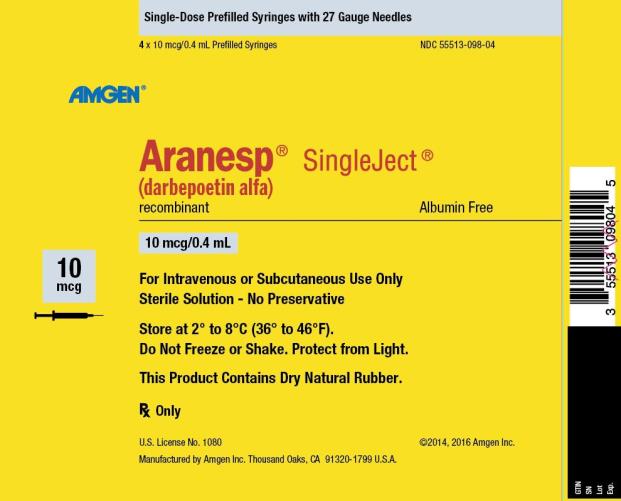
9PRINCIPAL DISPLAY PANEL - 10 mcg/0.4 mL Syringe Blister Pack Package
Single-Dose Prefilled Syringes with 27 Gauge Needles
4 x 10 mcg/0.4 mL Prefilled Syringes
NDC 55513-098-04
AMGEN
10 mcg
Aranesp
recombinant
10 mcg/0.4 mL
For Intravenous or Subcutaneous Use Only
Store at 2° to 8°C (36° to 46°F).
Do not re-use
Keep out of sight and reach of children
Rx Only
U.S. License No. 1080
Manufactured by Amgen Inc. Thousand Oaks, CA 91320-1799 U.S.A.
PRINCIPAL DISPLAY PANEL - 10 mcg/0.4 mL Syringe Blister Pack Package
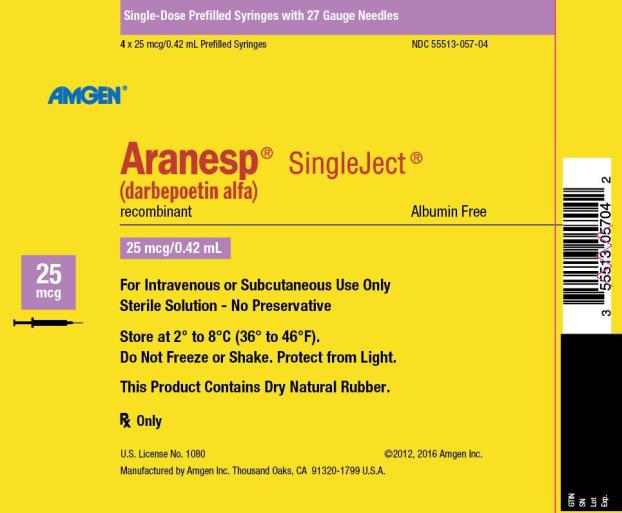
10PRINCIPAL DISPLAY PANEL - 25 mcg/0.42 mL Syringe Blister Pack Package
Single-Dose Prefilled Syringes with 27 Gauge Needles
4 x 25 mcg/0.42 mL Prefilled Syringes
NDC 55513-057-04
AMGEN
25 mcg
Aranesp
recombinant
25 mcg/0.42 mL
For Intravenous or Subcutaneous Use Only
Store at 2° to 8°C (36° to 46°F).
Do not re-use
Keep out of sight and reach of children
Rx Only
U.S. License No. 1080
Manufactured by Amgen Inc. Thousand Oaks, CA 91320-1799 U.S.A.
PRINCIPAL DISPLAY PANEL - 25 mcg/0.42 mL Syringe Blister Pack Package
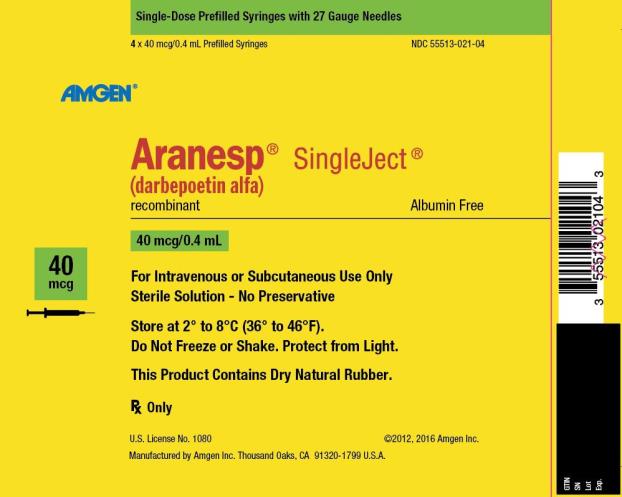
11PRINCIPAL DISPLAY PANEL - 40 mcg/0.4 mL Syringe Blister Pack Package
Single-Dose Prefilled Syringes with 27 Gauge Needles
4 x 40 mcg/0.4 mL Prefilled Syringes
NDC 55513-021-04
AMGEN
40 mcg
Aranesp
recombinant
40 mcg/0.4 mL
For Intravenous or Subcutaneous Use Only
Store at 2° to 8°C (36° to 46°F).
Do not re-use
Keep out of sight and reach of children
Rx Only
U.S. License No. 1080
Manufactured by Amgen Inc. Thousand Oaks, CA 91320-1799 U.S.A.
PRINCIPAL DISPLAY PANEL - 40 mcg/0.4 mL Syringe Blister Pack Package
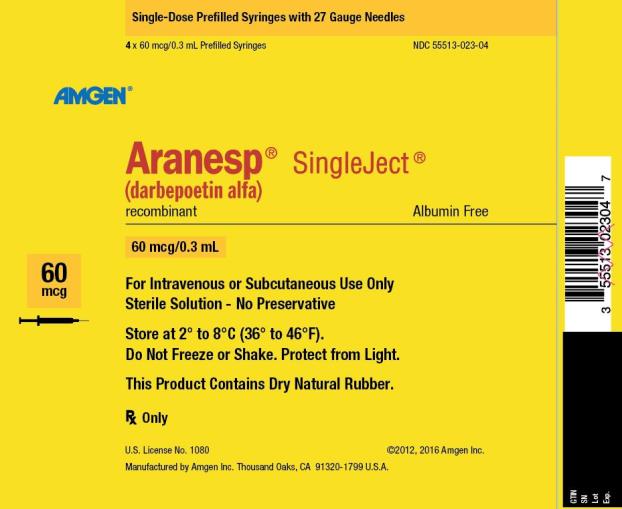
12PRINCIPAL DISPLAY PANEL - 60 mcg/0.3 mL Syringe Blister Pack Package
Single-Dose Prefilled Syringes with 27 Gauge Needles
4 x 60 mcg/0.3 mL Prefilled Syringes
NDC 55513-023-04
AMGEN
60 mcg
Aranesp
recombinant
60 mcg/0.3 mL
For Intravenous or Subcutaneous Use Only
Store at 2° to 8°C (36° to 46°F).
Do not re-use
Keep out of sight and reach of children
Rx Only
U.S. License No. 1080
Manufactured by Amgen Inc. Thousand Oaks, CA 91320-1799 U.S.A.
PRINCIPAL DISPLAY PANEL - 60 mcg/0.3 mL Syringe Blister Pack Package
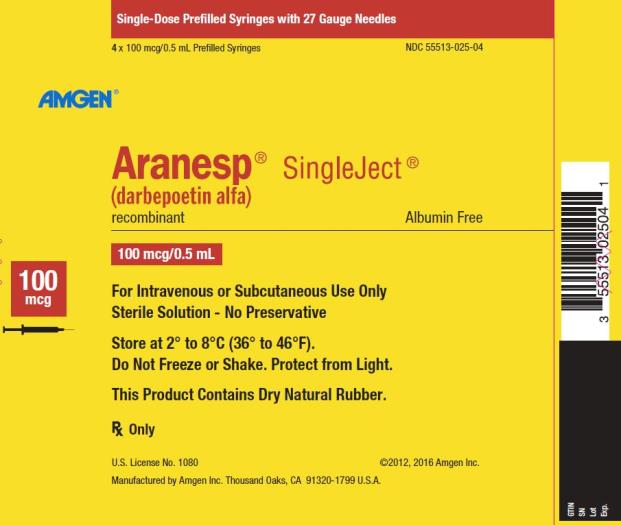
13PRINCIPAL DISPLAY PANEL - 100 mcg/0.5 mL Syringe Blister Pack Package
Single-Dose Prefilled Syringes with 27 Gauge Needles
4 x 100 mcg/0.5 mL Prefilled Syringes
NDC 55513-025-04
AMGEN
100 mcg
Aranesp
recombinant
100 mcg/0.5 mL
For Intravenous or Subcutaneous Use Only
Store at 2° to 8°C (36° to 46°F).
Do not re-use
Keep out of sight and reach of children
Rx Only
U.S. License No. 1080
Manufactured by Amgen Inc. Thousand Oaks, CA 91320-1799 U.S.A.
PRINCIPAL DISPLAY PANEL - 100 mcg/0.5 mL Syringe Blister Pack Package
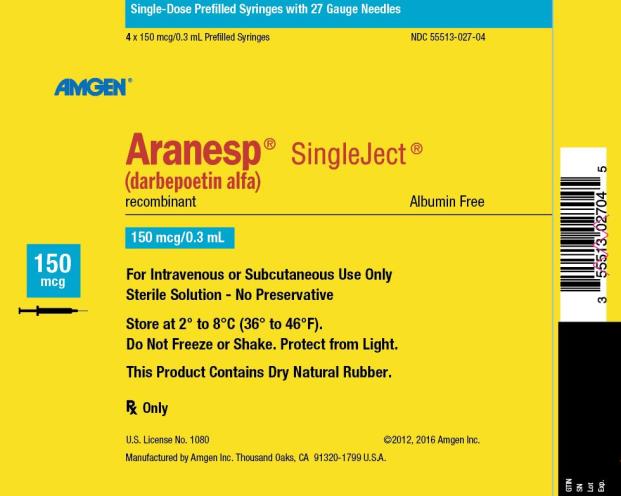
14PRINCIPAL DISPLAY PANEL - 150 mcg/0.3 mL Syringe Blister Pack Package
Single-Dose Prefilled Syringes with 27 Gauge Needles
4 x 150 mcg/0.3 mL Prefilled Syringes
NDC 55513-027-04
AMGEN
150 mcg
Aranesp
recombinant
150 mcg/0.3 mL
For Intravenous or Subcutaneous Use Only
Store at 2° to 8°C (36° to 46°F).
Do not re-use
Keep out of sight and reach of children
Rx Only
U.S. License No. 1080
Manufactured by Amgen Inc. Thousand Oaks, CA 91320-1799 U.S.A.
PRINCIPAL DISPLAY PANEL - 150 mcg/0.3 mL Syringe Blister Pack Package
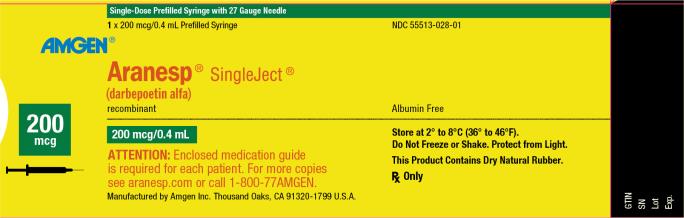
15PRINCIPAL DISPLAY PANEL - 200 mcg/0.4 mL Syringe Blister Pack Package
Single-Dose Prefilled Syringe with 27 Gauge Needle
1 x 200 mcg/0.4 mL Prefilled Syringe
NDC 55513-028-01
AMGEN
200 mcg
Aranesp
recombinant
200 mcg/0.4 mL
ATTENTION: Enclosed medication guide is required for each patient. For more copies see aranesp.com or call 1-800-77AMGEN.
Store at 2° to 8°C (36° to 46°F).
This Product Contains Dry Natural Rubber.
Do not re-use
Keep out of sight and reach of children
Rx Only
Manufactured by Amgen Inc. Thousand Oaks, CA 91320-1799 U.S.A.
PRINCIPAL DISPLAY PANEL - 200 mcg/0.4 mL Syringe Blister Pack Package
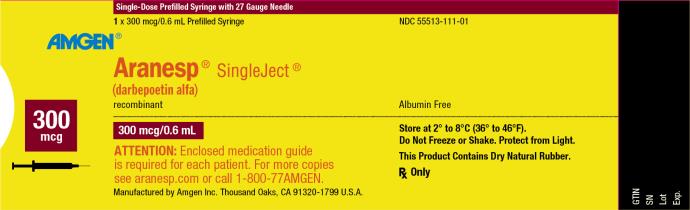
16PRINCIPAL DISPLAY PANEL - 300 mcg/0.6 mL Syringe Blister Pack Package
Single-Dose Prefilled Syringe with 27 Gauge Needle
1 x 300 mcg/0.6 mL Prefilled Syringe
NDC 55513-111-01
AMGEN
300 mcg
Aranesp
recombinant
300 mcg/0.6 mL
ATTENTION: Enclosed medication guide is required for each patient. For more copies see aranesp.com or call 1-800-77AMGEN.
Store at 2° to 8°C (36° to 46°F).
This Product Contains Dry Natural Rubber.
Do not re-use
Keep out of sight and reach of children
Rx Only
Manufactured by Amgen Inc. Thousand Oaks, CA 91320-1799 U.S.A.
PRINCIPAL DISPLAY PANEL - 300 mcg/0.6 mL Syringe Blister Pack Package
17PRINCIPAL DISPLAY PANEL - 500 mcg/1 mL Syringe Blister Pack Package
Single-Dose Prefilled Syringe with 27 Gauge Needle
1 x 500 mcg/1 mL Prefilled Syringe
NDC 55513-032-01
AMGEN
500 mcg
Aranesp
recombinant
500 mcg/1 mL
ATTENTION: Enclosed medication guide is required for each patient. For more copies see aranesp.com or call 1-800-77AMGEN.
Store at 2° to 8°C (36° to 46°F).
This Product Contains Dry Natural Rubber.
Do not re-use
Keep out of sight and reach of children
Rx Only
Manufactured by Amgen Inc. Thousand Oaks, CA 91320-1799 U.S.A.
PRINCIPAL DISPLAY PANEL - 500 mcg/1 mL Syringe Blister Pack Package
18PRINCIPAL DISPLAY PANEL - 25 mcg/1 mL Vial Package
Single-Dose Vials
4 x 25 mcg/1 mL Single-Dose Vials
NDC 55513-002-04
AMGEN
25 mcg
Aranesp
recombinant
25 mcg/1 mL
For Intravenous or Subcutaneous Use Only
Sterile Solution – No Preservative
Store at 2° to 8°C (36° to 46°F). Do Not Freeze or Shake.
Protect from Light.
Rx Only
U.S. License No. 1080
Manufactured by Amgen Inc.
PRINCIPAL DISPLAY PANEL - 25 mcg/1 mL Vial Package
19PRINCIPAL DISPLAY PANEL - 40 mcg/1 mL Vial Package
Single-Dose Vials
4 x 40 mcg/1 mL Single-Dose Vials
NDC 55513-003-04
AMGEN
40 mcg
Aranesp
recombinant
40 mcg/1 mL
For Intravenous or Subcutaneous Use Only
Sterile Solution – No Preservative
Store at 2° to 8°C (36° to 46°F). Do Not Freeze or Shake.
Protect from Light.
Rx Only
U.S. License No. 1080
Manufactured by Amgen Inc.
PRINCIPAL DISPLAY PANEL - 40 mcg/1 mL Vial Package
20PRINCIPAL DISPLAY PANEL - 60 mcg/1 mL Vial Package
Single-Dose Vials
4 x 60 mcg/1 mL Single-Dose Vials
NDC 55513-004-04
AMGEN
60 mcg
Aranesp
recombinant
60 mcg/1 mL
For Intravenous or Subcutaneous Use Only
Sterile Solution – No Preservative
Store at 2° to 8°C (36° to 46°F). Do Not Freeze or Shake.
Protect from Light.
Rx Only
U.S. License No. 1080
Manufactured by Amgen Inc.
PRINCIPAL DISPLAY PANEL - 60 mcg/1 mL Vial Package
21PRINCIPAL DISPLAY PANEL - 100 mcg/1 mL Vial Package
Single-Dose Vials
4 x 100 mcg/1 mL Single-Dose Vials
NDC 55513-005-04
AMGEN
100 mcg
Aranesp
recombinant
100 mcg/1 mL
For Intravenous or Subcutaneous Use Only
Sterile Solution - No Preservative
Store at 2° to 8°C (36° to 46°F). Do Not Freeze or Shake.
Protect from Light.
Rx Only
U.S. License No. 1080
Manufactured by Amgen Inc.
PRINCIPAL DISPLAY PANEL - 100 mcg/1 mL Vial Package
22PRINCIPAL DISPLAY PANEL - 200 mcg/1 mL Vial Package
1 x 200 mcg/1 mL Single-Dose Vial
NDC 55513-006-21
AMGEN
200 mcg
Aranesp
recombinant
200 mcg/1 mL
Rx Only
Manufactured by Amgen Inc.
PRINCIPAL DISPLAY PANEL - 200 mcg/1 mL Vial Package