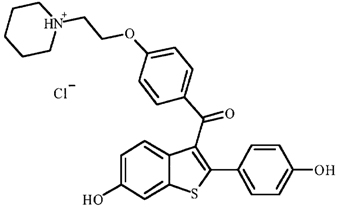
Evista
What is Evista (Raloxifene)?
For many women, menopause marks a major life transition, one that can bring not only hormonal changes but also long-term health challenges such as bone loss. Weakened bones, or osteoporosis, increase the risk of painful fractures that can limit independence and mobility. Evista (raloxifene) was developed to help protect women’s bone health during and after menopause, reducing the likelihood of fractures and supporting a stronger, more active life.
Evista is a selective estrogen receptor modulator (SERM), a medication that mimics some of estrogen’s beneficial effects while blocking others. It was approved by the U.S. Food and Drug Administration (FDA) as a treatment and preventive option for postmenopausal osteoporosis and to reduce the risk of certain types of breast cancer in postmenopausal women. Evista represents a well-established therapy that provides estrogen’s protective effects on bones without some of the risks associated with hormone replacement therapy.
What does Evista do?
Evista is primarily prescribed for postmenopausal women to treat or prevent osteoporosis, a condition where bones become thin and brittle due to decreased estrogen levels. Estrogen helps maintain bone density, and when its levels drop after menopause, bone loss accelerates. Evista helps slow this process, maintaining stronger bones and reducing the risk of fractures, especially in the spine.
In addition to its bone-protective effects, Evista also helps reduce the risk of invasive breast cancer in postmenopausal women who either have osteoporosis or are at high risk for breast cancer. It does not treat existing breast cancer but acts as a preventive therapy for certain hormone receptor–positive types.
Clinical studies, including large trials published by the National Institutes of Health, have shown that Evista significantly increases bone mineral density and lowers vertebral fracture risk by up to 50% in some patients. These outcomes translate into real-world benefits, fewer broken bones, greater mobility, and a better quality of life.
How does Evista work?
Evista works by selectively interacting with estrogen receptors in different parts of the body. In simple terms, it behaves like estrogen in some tissues (such as bones) and blocks estrogen’s effects in others (such as breast and uterine tissue).
In bones, Evista acts like estrogen to slow down bone breakdown and encourage bone formation. This helps preserve bone density and strength. In breast tissue, however, Evista blocks estrogen, reducing the stimulation of cells that could lead to tumor growth.
This dual action makes Evista unique, it provides the bone-strengthening benefits of estrogen without increasing the risk of breast or uterine cancer, which can be a concern with hormone therapy. Clinically, this mechanism matters because it enables doctors to protect bone health while minimizing potential hormonal risks.
Evista side effects
Most women tolerate Evista well, but like any medication, it can cause side effects. Understanding these helps patients use the medication confidently and safely.
Common side effects may include:
- Hot flashes or mild sweating
- Leg cramps
- Joint or muscle pain
- Mild swelling of the hands, feet, or ankles
- Flu-like symptoms
Serious side effects (less common) include:
- Blood clots (deep vein thrombosis or pulmonary embolism): Evista may slightly increase this risk, similar to estrogen therapy.
- Stroke risk: Rare, but possible, especially in women with cardiovascular risk factors.
- Severe allergic reactions: Signs may include rash, itching, swelling, or difficulty breathing.
Patients should seek immediate medical help if they develop sudden chest pain, shortness of breath, or leg swelling, as these may indicate a blood clot.
Evista is contraindicated in women with a history of blood clots, stroke, or active liver disease, and is not recommended for premenopausal or pregnant women. Due to increased clotting risk, doctors may recommend temporarily discontinuing Evista before surgery or prolonged bed rest. However, most patients experience few or no serious side effects when used as prescribed and monitored.
Evista dosage
Evista is a daily oral tablet, taken with or without food, ideally at the same time each day for consistent bone metabolism. Doctors advise adequate calcium and vitamin D intake (diet or supplements). Bone density benefits develop gradually over several months.
Healthcare providers typically monitor bone mineral density (BMD) using a DEXA scan every one to two years, along with blood tests to check calcium and vitamin D levels. These checks help ensure the treatment is working effectively and safely.
Older adults can generally use Evista safely, but those with limited mobility or prior clotting history require careful evaluation. In patients with mild liver impairment, dose adjustments may be necessary under close supervision.
Does Evista have a generic version?
Yes. Evista’s active ingredient, raloxifene hydrochloride, is available as an FDA-approved generic medication in the United States and many other countries. Generic raloxifene offers the same active ingredient, strength, safety, and effectiveness as the brand-name Evista but is often more affordable.
Both the brand-name and generic forms are available in tablet formulations and are typically dispensed interchangeably at pharmacies. Patients can feel confident using the generic version if prescribed, as it meets the same strict quality and performance standards established by the FDA.
Conclusion
Evista (raloxifene) is a trusted, well-researched medication that helps protect bone health and reduce fracture risk in postmenopausal women. Its additional benefit of lowering the risk of certain breast cancers makes it a valuable therapy for women seeking a non-hormonal option to maintain strength and health after menopause.
While blood clot risks exist, they are manageable with proper medical care. For many, the benefits of stronger bones and reduced fracture risk outweigh these downsides. By partnering with your doctor, maintaining checkups, and living a healthy lifestyle, you can enjoy confidence, mobility, and independence.
References
- U.S. Food and Drug Administration (FDA). (2024). Evista (raloxifene) prescribing information. Retrieved from https://www.accessdata.fda.gov
- Mayo Clinic. (2024). Raloxifene (oral route) drug information. Retrieved from https://www.mayoclinic.org
- MedlinePlus. (2024). Raloxifene: Uses, side effects, and precautions. National Library of Medicine. Retrieved from https://medlineplus.gov
- National Institutes of Health (NIH). (2024). Raloxifene in postmenopausal osteoporosis and breast cancer prevention. Retrieved from https://www.nih.gov
Approved To Treat
Top Global Experts


Related Clinical Trials
Summary: SRD5A2 is a critical enzyme for prostatic development and growth, and the SRD5A2 inhibitor, finasteride, is used to treat benign prostatic hyperplasia (BPH). SRD5A2 is absent in 30% of normal adult men, which explains the resistance of a subset of patients to this commonly prescribed drug. This project proposes new combination therapies (5-ARI+raloxifene) and evaluates novel non-invasive biomarker...
Summary: Randomized double-blind placebo-controlled trial (RCT) study, to determine the impact of XCHT on irinotecan-induced severe delayed-onset diarrhea (SDOD), and to determine the feasibility of using plasma raloxifene-4'-glucuronide as a probe for intestinal UGT activity.
Summary: Clomiphene citrate is a non-steroidal triphenylethylene derivative distantly related to diethylstilbestrol. It acts as a selective estrogen receptor modulator (SERM), similar to tamoxifen and raloxifene. All three drugs are competitive inhibitors of estrogen binding to estrogen receptors (ERs) and have mixed agonist and antagonist activity, depending upon the target tissue. Letrozole is a potent, ...
Related Latest Advances
Brand Information
- Increased risk of deep vein thrombosis and pulmonary embolism have been reported with EVISTA[see Warnings and Precautions (. Women with active or past history of venous thromboembolism should not take EVISTA[see Contraindications (
- Increased risk of death due to stroke occurred in a trial in postmenopausal women with documented coronary heart disease or at increased risk for major coronary events. Consider risk-benefit balance in women at risk for stroke[see Warnings and Precautions (