Brand Name

Cefoxitin

View Brand Information
FDA approval date: March 10, 2006
Classification: Cephalosporin Antibacterial
Form: Injection, Powder

What is Cefoxitin?

Treatment: CEFOXITIN FOR INJECTION, USP is indicated for the treatment of serious infections caused by susceptible strains of the designated microorganisms in the diseases listed below. Lower respiratory tract infections, including pneumonia and lung abscess, caused by Streptococcus pneumoniae, other streptococci (excluding enterococci, e.g., Enterococcus faecalis ), Staphylococcus aureus , Escherichia coli, Klebsiella species, Haemophilus influenzae, and Bacteroides species. Urinary tract infections caused by Escherichia coli, Klebsiella species, Proteus mirabilis, Morganella morganii, Proteus vulgaris and Providencia species . Intra-abdominal infections, including peritonitis and intra-abdominal abscess, caused by Escherichia coli, Klebsiella species, Bacteroides species including Bacteroides fragilis, and Clostridium species. Gynecological infections, including endometritis, pelvic cellulitis, and pelvic inflammatory disease caused by Escherichia coli, Neisseria gonorrhoeae , Bacteroides species including B. fragilis, Clostridium species, Peptococcus niger, Peptostreptococcus species, and Streptococcus agalactiae. CEFOXITIN FOR INJECTION, USP, like cephalosporins, has no activity against Chlamydia trachomatis. Therefore, when CEFOXITIN FOR INJECTION, USP is used in the treatment of patients with pelvic inflammatory disease and C. trachomatis is one of the suspected pathogens, appropriate anti-chlamydial coverage should be added. Septicemia caused by Streptococcus pneumoniae, Staphylococcus aureus , Escherichia coli, Klebsiella species, and Bacteroides species including B. fragilis. Bone and joint infections caused by Staphylococcus aureus . Skin and skin structure infections caused by Staphylococcus aureus , Staphylococcus epidermidis, Streptococcus pyogenes and other streptococci (excluding enterococci e.g., Enterococcus faecalis ), Escherichia coli, Proteus mirabilis, Klebsiella species, Bacteroides species including B. fragilis, Clostridium species, Peptococcus niger, and Peptostreptococcus species. Appropriate culture and susceptibility studies should be performed to determine the susceptibility of the causative organisms to CEFOXITIN FOR INJECTION, USP. Therapy may be started while awaiting the results of these studies. In randomized comparative studies, CEFOXITIN FOR INJECTION, USP and cephalothin were comparably safe and effective in the management of infections caused by gram-positive cocci and gram-negative rods susceptible to the cephalosporins. CEFOXITIN FOR INJECTION, USP has a high degree of stability in the presence of bacterial beta-lactamases, both penicillinases and cephalosporinases. Many infections caused by aerobic and anaerobic gram-negative bacteria resistant to some cephalosporins respond to CEFOXITIN FOR INJECTION, USP. Similarly, many infections caused by aerobic and anaerobic bacteria resistant to some penicillin antibiotics respond to treatment with CEFOXITIN FOR INJECTION, USP. Many infections caused by mixtures of susceptible aerobic and anaerobic bacteria respond to treatment with CEFOXITIN FOR INJECTION, USP. Prevention: CEFOXITIN FOR INJECTION, USP is indicated for the prophylaxis of infection in patients undergoing uncontaminated gastrointestinal surgery, vaginal hysterectomy, abdominal hysterectomy, or cesarean section. If there are signs of infection, specimens for culture should be obtained for identification of the causative organism so that appropriate treatment may be instituted. To reduce the development of drug-resistant bacteria and maintain the effectiveness of CEFOXITIN FOR INJECTION, USP and other antibacterial drugs, CEFOXITIN FOR INJECTION, USP should be used only to treat or prevent infections that are proven or strongly suspected to be caused by susceptible bacteria. When culture and susceptibility information are available, they should be considered in selecting or modifying antibacterial therapy. In the absence of such data, local epidemiology and susceptibility patterns may contribute to the empiric selection of therapy.
Save this treatment for later
Sign Up
Not sure about your diagnosis?
Check Your Symptoms

Related Clinical Trials

Finding the Optimal Regimen for Mycobacterium Abscessus Treatment (FORMaT)

Summary: Mycobacterium abscessus (MABS) is a group of rapid-growing, multi-drug resistant non-tuberculous mycobacteria (NTM) causing infections in humans. MABS pulmonary disease (MABS-PD) can result in significant morbidity, increased healthcare utilisation, accelerated lung function decline, impaired quality of life, more challenging lung transplantation, and increased mortality. While the overall numbers...

Intermittent Cefoxitin Administration Versus Loading Bolus Followed by Continuous Infusion for the Prevention of Surgical Site Infection in Colorectal Surgery: a Multicentre, Double-blind, Randomized Controlled Clinical Trial

Summary: The goal of this prospective, multicentre, double-blind, randomized clinical trial is to compare intermittent cefoxitin administration to loading bolus followed by continuous infusion for surgical antibiotic prophylaxis in colorectal surgery. The main objective is to demonstrate the superiority of a loading dose of cefoxitin followed by continuous infusion over standard of care boluses in reducing...

Brand Information

Cefoxitin (Cefoxitin Sodium)
1DESCRIPTION:
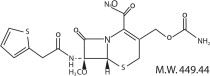
CEFOXITIN FOR INJECTION, USP contains cefoxitin sodium a semi-synthetic, broad-spectrum cephalosporin antibiotic for parenteral administration. It is derived from cephalosporin C, which is produced by
Structural Formula
CEFOXITIN FOR INJECTION, USP contains approximately 53.8 mg (2.3 milliequivalents) of sodium per gram of cefoxitin activity.
Solutions of CEFOXITIN FOR INJECTION, USP range from colorless to light amber in color.
The pH of freshly constituted solutions usually ranges from 4.2 to 7.0.
Each conventional vial contains sterile cefoxitin sodium, USP equivalent to 1 gram or 2 grams cefoxitin.
2CONTRAINDICATIONS:
CEFOXITIN FOR INJECTION is contraindicated in patients who have shown hypersensitivity to cefoxitin and the cephalosporin group of antibiotics.
3WARNINGS:
BEFORE THERAPY WITH CEFOXITIN FOR INJECTION IS INSTITUTED, CAREFUL INQUIRY SHOULD BE MADE TO DETERMINE WHETHER THE PATIENT HAS HAD PREVIOUS HYPERSENSITIVITY REACTIONS TO CEFOXITIN, CEPHALOSPORINS, PENICILLINS, OR OTHER DRUGS. THIS PRODUCT SHOULD BE GIVEN WITH CAUTION TO PENICILLIN-SENSITIVE PATIENTS. ANTIBIOTICS SHOULD BE ADMINISTERED WITH CAUTION TO ANY PATIENT WHO HAS DEMONSTRATED SOME FORM OF ALLERGY, PARTICULARLY TO DRUGS. IF AN ALLERGIC REACTION TO CEFOXITIN FOR INJECTION OCCURS, DISCONTINUE THE DRUG. SERIOUS HYPERSENSITIVITY REACTIONS MAY REQUIRE EPINEPHRINE AND OTHER EMERGENCY MEASURES.
Clostridium difficile associated diarrhea (CDAD) has been reported with the use of nearly all antibacterial agents, including cefoxitin, and may range in severity from mild diarrhea to fatal colitis. Treatment with antibacterial agents alters the normal flora of the colon leading to overgrowth of C. difficile.
C. difficile produces toxins A and B which contribute to the development of CDAD. Hypertoxin producing strains of C. difficile cause increased morbidity and mortality, as these infections can be refractory to antimicrobial therapy and may require colectomy. CDAD must be considered in all patients who present with diarrhea following antibiotic use. Careful medical history is necessary since CDAD has been reported to occur over two months after the administration of antibacterial agents.
If CDAD is suspected or confirmed, ongoing antibiotic use not directed against
4ADVERSE REACTIONS:
CEFOXITIN FOR INJECTION is generally well tolerated. The most common adverse reactions have been local reactions following intravenous injection. Other adverse reactions have been encountered infrequently.
Local Reactions:
Thrombophlebitis has occurred with intravenous administration.
Allergic Reactions:
Rash (including exfoliative dermatitis and toxic epidermal necrolysis), urticaria, flushing, pruritus, eosinophilia, fever, dyspnea, and other allergic reactions including anaphylaxis, interstitial nephritis and angioedema have been noted.
Cardiovascular:
Hypotension.
Gastrointestinal:
Diarrhea, including documented pseudomembranous colitis which can appear during or after antibiotic treatment. Nausea and vomiting have been reported rarely.
Neuromuscular:
Possible exacerbation of myasthenia gravis.
Blood:
Eosinophilia, leukopenia including granulocytopenia, neutropenia, anemia, including hemolytic anemia, thrombocytopenia, and bone marrow depression. A positive direct Coombs test may develop in some individuals, especially those with azotemia.
Liver Function:
Transient elevations in SGOT, SGPT, serum LDH, and serum alkaline phosphatase; and jaundice have been reported.
Renal Function:
Elevations in serum creatinine and/or blood urea nitrogen levels have been observed. As with the cephalosporins, acute renal failure has been reported rarely. The role of CEFOXITIN FOR INJECTION in changes in renal function tests is difficult to assess, since factors predisposing to prerenal azotemia or to impaired renal function usually have been present.
In addition to the adverse reactions listed above which have been observed in patients treated with CEFOXITIN FOR INJECTION, the following adverse reactions and altered laboratory test results have been reported for cephalosporin class antibiotics:
Urticaria, erythema multiforme, Stevens-Johnson syndrome, serum sickness-like reactions, abdominal pain, colitis, renal dysfunction, toxic nephropathy, false-positive test for urinary glucose, hepatic dysfunction including cholestasis, elevated bilirubin, aplastic anemia, hemorrhage, prolonged prothrombin time, pancytopenia, agranulocytosis, superinfection, vaginitis including vaginal candidiasis.
Several cephalosporins have been implicated in triggering seizures, particularly in patients with renal impairment when the dosage was not reduced (see
To report SUSPECTED ADVERSE EVENTS, contact Fresenius Kabi USA, LLC at 1-800-551-7176 or FDA at 1-800-FDA-1088 or
5OVERDOSAGE:
The acute intravenous LD
6HOW SUPPLIED:
CEFOXITIN FOR INJECTION, USP is a dry white to off-white powder supplied in conventional vials containing cefoxitin sodium as follows:
The container closure is not made with natural rubber latex.
6.1Special storage instructions:
CEFOXITIN FOR INJECTION, USP in the dry state should be stored between 2° to 25°C (36° to 77°F). Avoid exposure to temperatures above 50°C. The dry material as well as solutions tend to darken, depending on storage conditions; product potency, however, is not adversely affected.
7CLINICAL STUDIES:
A prospective, randomized, double-blind, placebo-controlled clinical trial was conducted to determine the efficacy of short-term prophylaxis with CEFOXITIN FOR INJECTION in patients undergoing cesarean section who were at high risk for subsequent endometritis because of ruptured membranes. Patients were randomized to receive either three doses of placebo (n=58), a single dose of CEFOXITIN FOR INJECTION (2 g) followed by two doses of placebo (n=64), or a three-dose regimen of CEFOXITIN FOR INJECTION (each dose consisting of 2 g) (n=60), given intravenously, usually beginning at the time of clamping of the umbilical cord, with the second and third doses given 4 and 8 hours post-operatively. Endometritis occurred in 16/58 (27.6%) patients given placebo, 5/63 (7.9%) patients given a single dose of CEFOXITIN FOR INJECTION and 3/58 (5.2%) patients given three doses of CEFOXITIN FOR INJECTION. The differences between the two groups treated with CEFOXITIN FOR INJECTION and placebo with respect to endometritis were statistically significant (p<0.01) in favor of CEFOXITIN FOR INJECTION. The differences between the one-dose and three-dose regimens of CEFOXITIN FOR INJECTION were not statistically significant.
Two double-blind, randomized studies compared the efficacy of a single 2 gram intravenous dose of CEFOXITIN FOR INJECTION to a single 2 gram intravenous dose of cefotetan in the prevention of surgical site-related infection (major morbidity) and non-site-related infections (minor morbidity) in patients following cesarean section. In the first study, 82/98 (83.7%) patients treated with CEFOXITIN FOR INJECTION and 71/95 (74.7%) patients treated with cefotetan experienced no major or minor morbidity. The difference in the outcomes in this study (95% CI: –0.03, +0.21) was not statistically significant. In the second study, 65/75 (86.7%) patients treated with CEFOXITIN FOR INJECTION and 62/76 (81.6%) patients treated with cefotetan experienced no major or minor morbidity. The difference in the outcomes in this study (95% CI: –0.08, +0.18) was not statistically significant.
In clinical trials of patients with intra-abdominal infections due to
Eradication rates for individual species are listed below:
Manufactured for:
Fresenius Kabi Logo
Lake Zurich, IL 60047
Made in Italy
www.fresenius-kabi.com/us
451232E
Revised: May 2021