Generic Name
Alpelisib
Brand Names
Vijoice, Piqray
FDA approval date: May 24, 2019
Form: Tablet, Kit, Granule
What is Vijoice (Alpelisib)?
PIQRAY is indicated in combination with fulvestrant for the treatment of adults with hormone receptor -positive, human epidermal growth factor receptor 2 -negative, PIK3CA-mutated, advanced or metastatic breast cancer as detected by an FDA-approved test following progression on or after an endocrine-based regimen. PIQRAY is a kinase inhibitor indicated in combination with fulvestrant for the treatment of adults with hormone receptor -positive, human epidermal growth factor receptor 2 -negative, PIK3CA-mutated, advanced or metastatic breast cancer as detected by an FDA-approved test following progression on or after an endocrine-based regimen.
Approved To Treat
Top Global Experts
There are no experts for this drug
Save this treatment for later
Not sure about your diagnosis?
Related Clinical Trials
There is no clinical trials being done for this treatment
Related Latest Advances
There is no latest advances for this treatment
Brand Information
VIJOICE (alpelisib)
1INDICATIONS AND USAGE
VIJOICE is indicated for the treatment of adult and pediatric patients 2 years of age and older with severe manifestations of PIK3CA-Related Overgrowth Spectrum (PROS) who require systemic therapy.
This indication is approved under accelerated approval based on response rate and duration of response. Continued approval for this indication may be contingent upon verification and description of clinical benefit in a confirmatory trial(s).
2DOSAGE FORMS AND STRENGTHS
Tablets
50 mg: Light yellow, unscored, round and curved with beveled edges film-coated tablet, debossed with “C7” on one side and “NVR” on the other side.
125 mg: Dark yellow, unscored, ovaloid and curved with beveled edges film-coated tablet, debossed with “Y7” on one side and “NVR” on the other side.
200 mg: Pale yellow, unscored, ovaloid and curved with beveled edges film-coated tablet, debossed with “CL7” on one side and “NVR” on the other side.
Oral Granules
50 mg: White to almost white free flowing mixture of powder and granules in packets.
3CONTRAINDICATIONS
VIJOICE is contraindicated in patients with severe hypersensitivity to alpelisib or any of its ingredients
4ADVERSE REACTIONS
The following clinically significant adverse reactions are discussed elsewhere in the labeling:
- Severe Hypersensitivity
- Severe Cutaneous Adverse Reactions
- Hyperglycemia
- Pneumonitis
- Diarrhea or Colitis
4.1Clinical Trial Experience
Because clinical trials are conducted under widely varying conditions, adverse reaction rates observed in the clinical trials of a drug cannot be directly compared to rates in the clinical trials of another drug and may not reflect the rates observed in practice.
The safety of VIJOICE was evaluated in EPIK-P1 (NCT04285723), a single-arm clinical study in patients who were treated as part of an expanded access program for compassionate use. Fifty-seven patients 2 years of age and older with severe or life-threatening PIK3CA-Related Overgrowth Spectrum (PROS) received VIJOICE based on age at dosages ranging from 50 mg to 250 mg orally once daily
The median age of patients who received VIJOICE was 14 years (range, 2 to 50); 58% were female; 12% were White and race was not reported for 88%.
Serious adverse reactions occurred in 12% of patients who received VIJOICE. Serious adverse reactions occurring in two or more patients included dehydration (n = 2) and cellulitis (n = 2).
Dosage interruption of VIJOICE due to an adverse reaction occurred in 11% of patients. Adverse reactions which required dosage interruption in two or more patients included dizziness (n = 2) and vomiting (n = 2). Dose reductions of VIJOICE due to an adverse reaction occurred in 5% of patients. Adverse reactions which required dose reduction included alopecia, memory impairment, and soft tissue infection.
The most common adverse reactions (≥ 10%) were diarrhea, stomatitis, and hyperglycemia. The most common Grade 3 or 4 laboratory abnormalities (≥ 2%) were increased glucose, decreased hemoglobin, decreased phosphate, increased bilirubin, decreased sodium, and decreased platelets.
Adverse reactions and laboratory abnormalities are listed in Table 10 and Table 11, respectively.
Clinically relevant adverse reactions in < 5% of patients who received VIJOICE included nausea, vomiting, dehydration, and mucosal dryness.
Other Clinical Trials Experience
The following additional adverse reactions and laboratory abnormality have been identified following administration of VIJOICE: hypersensitivity, lipase increased, dermatitis, and abdominal pain.
4.2Postmarketing Experience and Other Spontaneous Adverse Reaction Reports
The following adverse reactions have been identified with VIJOICE use in patients with PROS in an expanded access program for compassionate use. Because these reactions are reported from a population of uncertain size, it is not always possible to reliably estimate their frequency or establish a causal relationship to drug exposure.
Metabolism and nutrition disorders: Decreased appetite.
Skin and subcutaneous tissue disorders: Pruritus, rash (including rash maculo-papular, rash erythematous, rash papular, and rash pruritic), acne (including dermatitis acneiform).
5OVERDOSAGE
There is limited experience of overdose with alpelisib in clinical trials.
In cases where accidental overdosage of alpelisib was reported in the clinical studies, the adverse reactions associated with the overdose were consistent with the known safety profile of alpelisib and included hyperglycemia, nausea, asthenia, and rash.
Initiate general symptomatic and supportive measures in all cases of overdosage where necessary. There is no known antidote for VIJOICE.
6DESCRIPTION
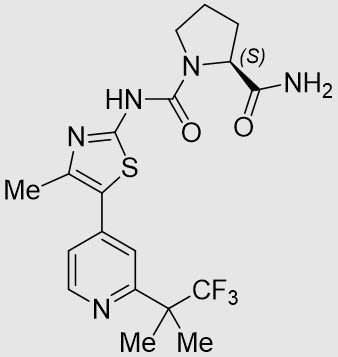
VIJOICE (alpelisib) is a kinase inhibitor. The chemical name of alpelisib is (2

VIJOICE film-coated tablets are supplied for oral administration with three strengths that contain 50 mg, 125 mg, and 200 mg of alpelisib. The tablets also contain hypromellose, magnesium stearate, mannitol, microcrystalline cellulose, and sodium starch glycolate. The film-coating contains hypromellose, iron oxide red (applicable only to 50 mg and 200 mg strengths), iron oxide yellow, macrogol/polyethylene glycol (PEG) 4000, talc, and titanium dioxide.
VIJOICE oral granules are supplied for oral administration with one strength that contains 50 mg of alpelisib. The granules also contain hypromellose, magnesium stearate, mannitol, microcrystalline cellulose, and sodium starch glycolate.
7CLINICAL STUDIES
The efficacy of VIJOICE was assessed in EPIK-P1 (NCT04285723), a single-arm clinical study in patients who were treated as part of an expanded access program for compassionate use which enrolled patients across seven sites in five countries (France, Spain, US, Ireland, and Australia). Eligible patients 2 years of age and older with PIK3CA-Related Overgrowth Spectrum (PROS) who received VIJOICE had clinical manifestations of PROS that were assessed by the treating physician as severe or life-threatening and necessitating systemic treatment and had documented evidence of mutation in the PIK3CA gene. Patients received VIJOICE at dosages based on age ranging from 50 mg to 250 mg orally once daily.
The efficacy of VIJOICE was evaluated in a total of 37 patients with at least one target lesion identified on imaging performed within 24 weeks prior to receipt of the first dose of VIJOICE. The median age of patients was 14 years (range: 2 to 38); 22% of patients were 2 to 5 years, 22% were 6 to 11 years, 27% were 12 to less than 18 years of age, and 30% were ≥ 18 years; 57% were female, 11% were White and race was not reported for 89%. Ninety-two percent of patients had congenital overgrowth and 8% had early childhood-onset. Patients had heterogeneous manifestations of PROS, including CLOVES (81%), Megalencephaly-Capillary Malformation Polymicrogyria (MCAP; 8%), Klippel-Trenaunay Syndrome (KTS; 2.7%), Facial Infiltrating Lipomatosis (FIL; 8%), and Other (5%). Five percent (5%) of patients had concurrent manifestations of CLOVES and MCAP.
The major efficacy outcome measure for the study was the proportion of patients with radiological response at Week 24 as determined by blinded independent central review (BICR), defined as a ≥ 20% reduction from baseline in the sum of measurable target lesion volume (1 to 3 lesions) confirmed by at least one subsequent imaging assessment, in the absence of a ≥ 20% increase from baseline in any target lesion, progression of non-target lesions, or appearance of a new lesion. An additional efficacy outcome measure was duration of response, defined as the time from the first documented response to the date of the first documented disease progression or death due to any cause.
Efficacy results are presented in Table 12.
8HOW SUPPLIED/STORAGE AND HANDLING
VIJOICE (alpelisib) 50 mg, 125 mg, and 200 mg film-coated tablets are available in blister packs based on daily dose as described in Table 13.
Store at 20°C to 25°C (68°F to 77°F), excursions permitted between 15°C and 30°C (59°F and 86°F) [see USP Controlled Room Temperature].
9PATIENT COUNSELING INFORMATION
Advise the patient and their caregivers to read the FDA-approved patient labeling (Patient Information).
Severe Hypersensitivity
Inform patients and their caregivers of the signs and symptoms of hypersensitivity. Advise patients and their caregivers to contact their healthcare provider immediately for signs and symptoms of hypersensitivity
Severe Cutaneous Adverse Reactions
Inform patients and their caregivers of the signs and symptoms of severe cutaneous adverse reactions (SCARs). Advise patients and their caregivers to contact their healthcare provider immediately for signs and symptoms of SCARs (e.g., a prodrome of fever, flu-like symptoms, mucosal lesions, progressive skin rash, or lymphadenopathy)
Hyperglycemia
Advise patients and their caregivers that VIJOICE may cause hyperglycemia and the need to monitor fasting glucose periodically during therapy. Advise patients and their caregivers of the signs and symptoms of hyperglycemia (e.g., excessive thirst, urinating more often than usual or higher amount of urine than usual, or increased appetite with weight loss)
Pneumonitis
Inform patients and their caregivers that VIJOICE may cause pneumonitis and to immediately report new or worsening respiratory symptoms
Diarrhea or Colitis
Advise patients and their caregivers that VIJOICE may cause diarrhea, which may be severe, and to start anti-diarrheal treatment, increase oral fluids, and notify their healthcare provider if diarrhea occurs while taking VIJOICE
Advise patients and their caregivers that VIJOICE may cause colitis and to notify their healthcare provider immediately of any symptoms of colitis, such as abdominal pain and mucus or blood in stool, while taking VIJOICE
Alopecia
Advise patients and caregivers that VIJOICE may cause alopecia
Embryo-Fetal Toxicity
- Inform pregnant women and females of reproductive potential of the potential risk to a fetus. Advise females to inform their healthcare provider of a known or suspected pregnancy
- Advise females of reproductive potential to use effective contraception during treatment with VIJOICE and for 1 week after the last dose
- Advise male patients with female partners of reproductive potential to use condoms and effective contraception during treatment with VIJOICE and for 1 week after the last dose
Lactation
Advise women not to breastfeed during treatment with VIJOICE and for 1 week after the last dose
Infertility
Advise males and females of reproductive potential that VIJOICE may impair fertility
Drug Interactions
Advise patients and their caregivers to inform their healthcare providers of all concomitant medications, herbal and dietary supplements
Dosing
Instruct patients and their caregivers of the following:
- Take VIJOICE with food at approximately the same time each day
- Swallow the tablets whole (tablets should not be crushed, chewed, or split prior to swallowing)
- For patients unable to swallow tablets, advise how to prepare an oral suspension using the tablets or how to take the oral granules (if applicable)
- If a dose of VIJOICE is missed, it can be taken with food within 9 hours after the time it is usually taken. After more than 9 hours, skip the dose for that day. The next day, take VIJOICE at the usual time. Instruct patients not to take 2 doses to make up for a missed dose
- If vomiting occurs after taking the dose of VIJOICE, they should not take an additional dose on that day and should resume the usual dosing schedule the next day at the usual time
Distributed by
© Novartis
T2025-38
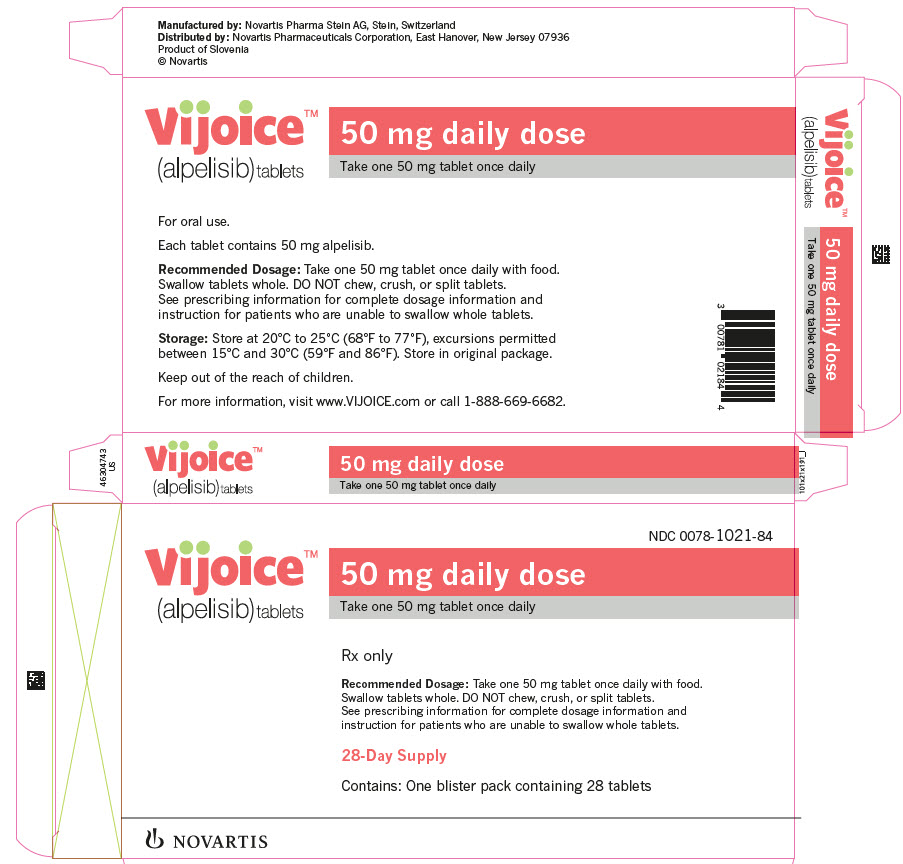
10PRINCIPAL DISPLAY PANEL
Vijoice
NDC 0078-1021-84
50 mg daily dose
Take one 50 mg tablet once daily
Rx only
Recommended Dosage: Take one 50 mg tablet once daily with food.
Directions: See enclosed Instructions for Use for administration
28-Day Supply
Contains: One blister pack containing 28 tablets
NOVARTIS

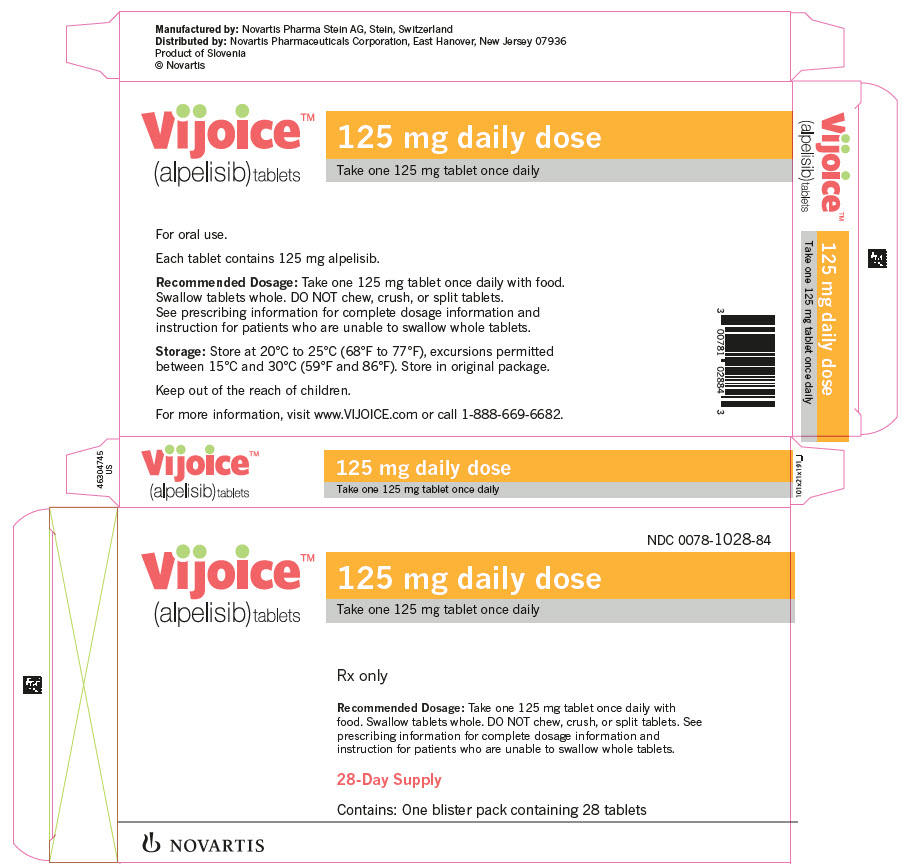
11PRINCIPAL DISPLAY PANEL
Vijoice
NDC 0078-1028-84
125 mg daily dose
Take one 125 mg tablet once daily
Rx only
Recommended Dosage: Take one 125 mg tablet once daily with food.
Directions: See enclosed Instructions for Use for administration
28-Day Supply
Contains: One blister pack containing 28 tablets
NOVARTIS

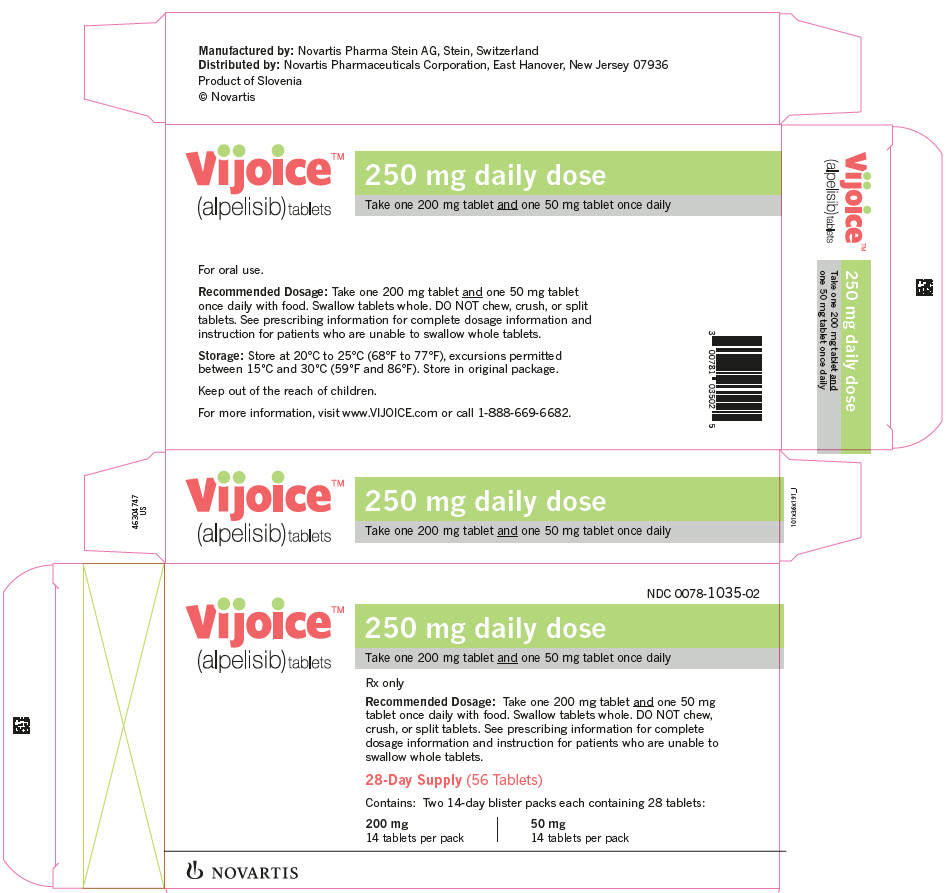
12PRINCIPAL DISPLAY PANEL
Vijoice
NDC 0078-1035-02
250 mg daily dose
Take one 200 mg tablet and one 50 mg tablet once daily
Rx only
Recommended Dosage: Take one 200 mg tablet and one 50 mg
Directions: See enclosed Instructions for Use for administration
28-Day Supply (56 Tablets)
Contains: Two 14-day blister packs each containing 28 tablets:
200 mg
50 mg
NOVARTIS

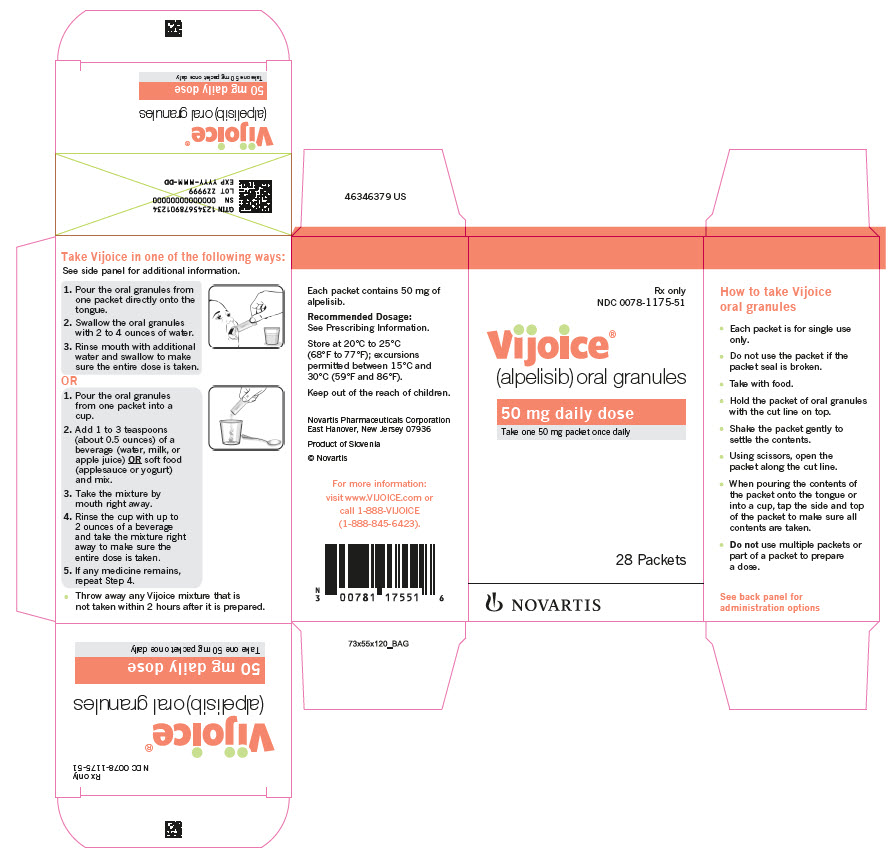
13PRINCIPAL DISPLAY PANEL
Rx only
NDC 0078-1175-51
Vijoice
50 mg daily dose
Take one 50 mg packet once daily
Directions: See enclosed Instructions For
28 Packets
NOVARTIS