Cytomel
What is Cytomel (Liothyronine)?
Feeling constantly tired, gaining weight without explanation or struggling with mood changes can all be signs of an underactive thyroid. For patients living with hypothyroidism, restoring thyroid hormone balance is key to regaining energy and well-being. Cytomel (liothyronine sodium) is a prescription medication that helps achieve this balance by replacing or supplementing thyroid hormones that the body can’t produce adequately.
Cytomel belongs to the class of drugs known as thyroid hormones and contains liothyronine, a synthetic form of triiodothyronine (T3), one of the two main hormones naturally made by the thyroid gland. It’s a long-established therapy used in patients whose thyroid function is low due to conditions like hypothyroidism, thyroid surgery, or certain types of goiter.
While levothyroxine (T4) is more commonly prescribed, Cytomel can be especially useful for patients who don’t respond fully to T4 therapy alone or who require a combination approach. Its faster onset of action also makes it valuable in specific short-term clinical settings.
What does Cytomel do?
Cytomel is prescribed to treat hypothyroidism, a condition where the thyroid gland does not produce enough thyroid hormones to meet the body’s needs. Thyroid hormones play an essential role in regulating metabolism, heart rate, energy production and even brain function.
By restoring normal thyroid hormone levels, Cytomel helps relieve symptoms such as fatigue, sluggish metabolism, weight gain, dry skin, sensitivity to cold and cognitive slowing. Patients typically notice increased energy, improved mental clarity and a more stable mood once hormone levels stabilize under proper supervision.
Cytomel may also be used to treat or prevent goiter (thyroid enlargement) and as part of testing or treatment plans for thyroid cancer, especially when thyroid-stimulating hormone (TSH) suppression is required.
Clinical studies and patient outcomes show that liothyronine therapy can be particularly beneficial for individuals whose bodies have difficulty converting T4 into active T3, helping them achieve better symptom relief and improved quality of life (Mayo Clinic, 2024).
How does Cytomel work?
To understand how Cytomel works, it helps to know how thyroid hormones function in the body. Normally, the thyroid gland releases two hormones, thyroxine (T4) and triiodothyronine (T3). T3 is the more active form and directly influences how cells use energy.
Cytomel contains synthetic T3, which acts just like natural T3 produced by the thyroid gland. Once taken orally, it enters the bloodstream and travels to body tissues, where it binds to thyroid hormone receptors inside cells. This interaction boosts metabolism, oxygen use, and protein synthesis, helping normalize body temperature, heart rate, and energy levels.
Clinically, Cytomel’s direct T3 action makes it faster acting than levothyroxine (T4), which must first be converted into T3 before the body can use it. This can be particularly helpful for patients who have conversion inefficiency or genetic variations affecting thyroid hormone metabolism.
Cytomel side effects
Cytomel is generally safe when prescribed and monitored properly, but excessive dosing can mimic symptoms of hyperthyroidism, a state of too much thyroid hormone.
Common side effects may include:
- Nervousness or anxiety
- Sweating or heat intolerance
- Mild tremors
- Headache
- Increased heart rate or palpitations
- Insomnia
Less common but serious side effects may include:
- Chest pain or irregular heartbeat
- Shortness of breath
- Unexplained weight loss
- Severe mood changes or restlessness
Older adults or those with heart disease, high blood pressure, or adrenal gland disorders may be more sensitive to thyroid hormone effects and require lower doses.
Patients should seek medical attention immediately if they experience chest pain, fast or irregular heartbeat, or severe nervousness, as these may indicate thyroid hormone overdose or cardiac strain.
When taken correctly, side effects are uncommon, and most patients tolerate Cytomel well once an appropriate maintenance dose is reached (FDA, 2024).
Cytomel dosage
Cytomel is available in oral tablet form and is usually taken once daily, ideally at the same time each morning on an empty stomach. The specific dose varies depending on age, weight, medical condition, and individual response to therapy.
Close monitoring of thyroid hormone levels (TSH, T3, T4) is vital, especially early in treatment, as these hormones impact nearly every organ. Doctors adjust Cytomel doses carefully when patients switch from other medications like levothyroxine. Special care is taken with older adults and heart disease patients, starting with lower doses and monitoring for side effects, as rapid hormone increases can strain the heart.
Does Cytomel have a generic version?
Yes. The generic version of Cytomel is called liothyronine sodium, and it is FDA-approved. Generic liothyronine is considered equally effective and safe as the brand-name drug, provided it is produced by a reputable manufacturer that meets FDA quality standards.
Cytomel is manufactured by Pfizer, but several generic versions are available in the United States and internationally. Patients can discuss with their doctor or pharmacist whether the brand or generic form is more suitable for them, especially if they notice differences in symptom control when switching formulations.
Conclusion
Cytomel (liothyronine sodium) is a trusted thyroid hormone replacement therapy that helps patients restore healthy hormone levels, boost metabolism, and regain energy when the thyroid gland isn’t functioning properly. As a synthetic form of T3, it provides a faster and more direct effect than many other thyroid medications, making it especially helpful for individuals who don’t fully respond to T4 therapy alone.
When used under medical supervision, Cytomel is both safe and highly effective. Routine monitoring and communication with your healthcare provider ensure that hormone levels stay balanced, minimizing side effects and supporting long-term well-being.
References
- U.S. Food and Drug Administration (FDA). (2024). Cytomel (liothyronine sodium): Prescribing Information. https://www.fda.gov/
- Mayo Clinic. (2024). Liothyronine (Oral Route): Uses, Side Effects, and Precautions. https://www.mayoclinic.org/
- National Institutes of Health (NIH). (2023). Thyroid Hormone Treatment Overview. https://www.nih.gov/
Top Global Experts
There are no experts for this drug
Related Clinical Trials
There is no clinical trials being done for this treatment
Related Latest Advances
There is no latest advances for this treatment
Brand Information
- Thyroid hormones, including CYTOMEL, either alone or with other therapeutic agents, should not be used for the treatment of obesity or for weight loss.
- In euthyroid patients, doses within the range of daily hormonal requirements are ineffective for weight reduction.
- Larger doses may produce serious or even life-threatening manifestations of toxicity, particularly when given in association with sympathomimetic amines such as those used for their anorectic effects
- 5 mcg: debossed with KPI on one side and 115 on the other side
- 25 mcg: scored on one side and debossed with KPI and 116 on the other side
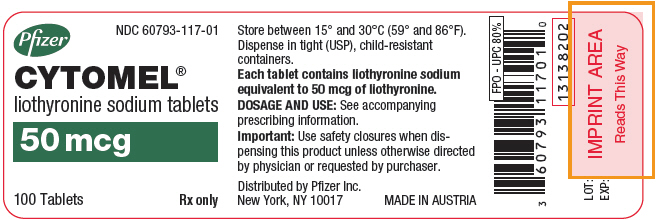
- 50 mcg: scored on one side and debossed with KPI and 117 on the other side

liothyronine sodium tablets
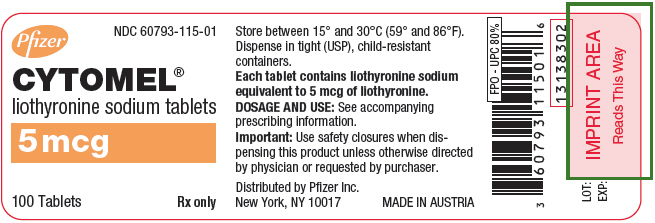
liothyronine sodium tablets
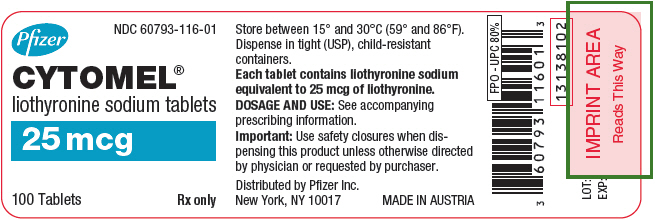
liothyronine sodium tablets